
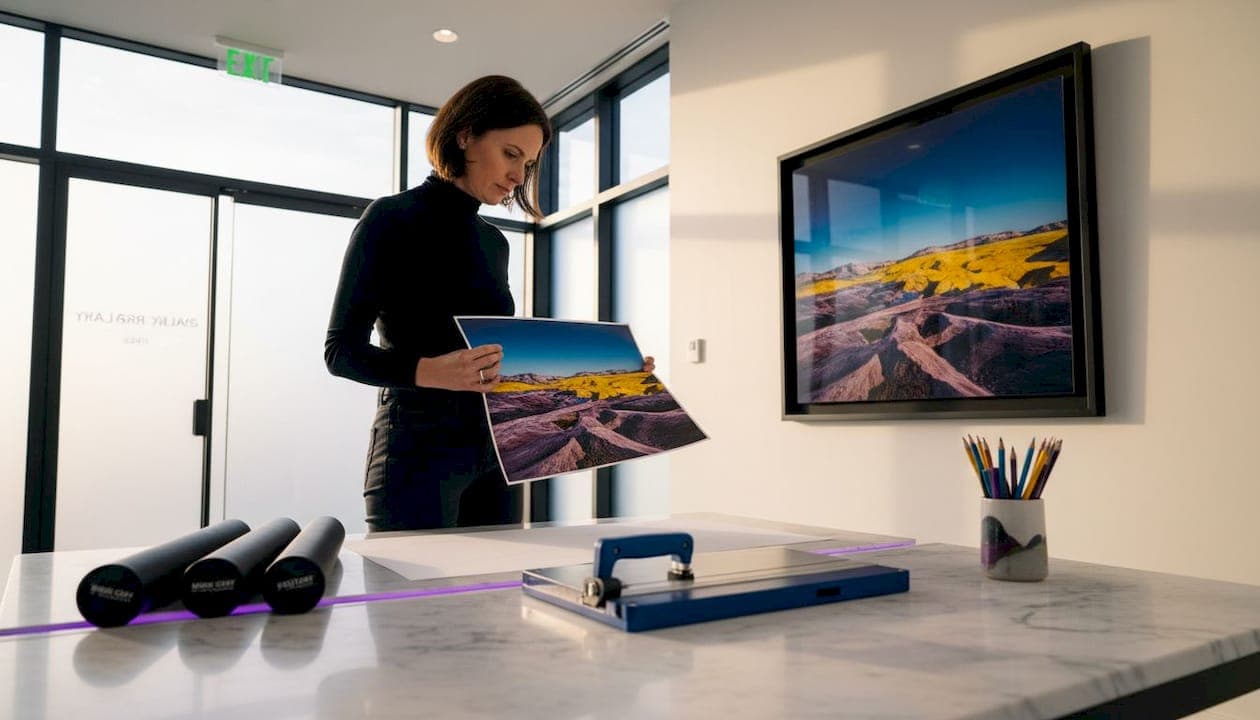
Few purchases puzzle collectors more than a landscape photography print. You find an image that stops you cold, then see the price and wonder: is this fair? Pricing landscape photography prints involves far more than ink on paper. Production costs, framing, edition size, shipping, and the photographer's reputation all layer together to produce a final number that can range from $50 to well over $3,000. This guide breaks down every component, gives you real formulas and benchmarks, and helps you buy, evaluate, or price prints with genuine confidence.
Table of Contents
- Understanding the cost components of landscape photography prints
- How to calculate your price: cost-plus and markup strategies
- Leveraging edition sizes and scarcity for premium pricing
- Accounting for shipping, packaging, and volatile costs in pricing models
- Building a pricing ladder and positioning your prints in the market
- Why pricing landscape photography prints well is a key to sustaining art and collector value
- Explore premium landscape photography prints and pricing insights at Mark Gray
- Frequently asked questions
Key Takeaways
| Point | Details |
|---|---|
| Multi-layered costs | Landscape print prices include production, framing, labor, shipping, and overhead costs combined. |
| Pricing formulas | Cost-plus pricing with 3-5x markups helps establish a reliable price floor and retail value. |
| Edition scarcity | Limited edition prints command premium prices due to collector demand and authenticity. |
| Shipping impacts profit | Including shipping and packaging costs in pricing preserves healthy profit margins. |
| Pricing ladder | A clear pricing ladder with tiered options maximizes sales and matches diverse buyer budgets. |
Understanding the cost components of landscape photography prints
Every price tag on a landscape print reflects a stack of real costs, not guesswork. Understanding what sits beneath that number is the first step to evaluating whether you are looking at fair value or a missed opportunity.
Print production is the foundation. Large format prints are more expensive than most buyers expect. Professional lab pricing for large landscape prints runs around $40.50 for a 20x30 inch print and $68.65 for a 24x36 inch print. These are base production costs before any markup, framing, or overhead.
Framing is where costs accelerate sharply. Premium custom frames add 30 to 50 percent to total print costs. For a large, gallery-quality piece, framing alone can exceed $1,000. The frame material, glass type (standard vs. UV-protective museum glass), and mat board all contribute to that number.
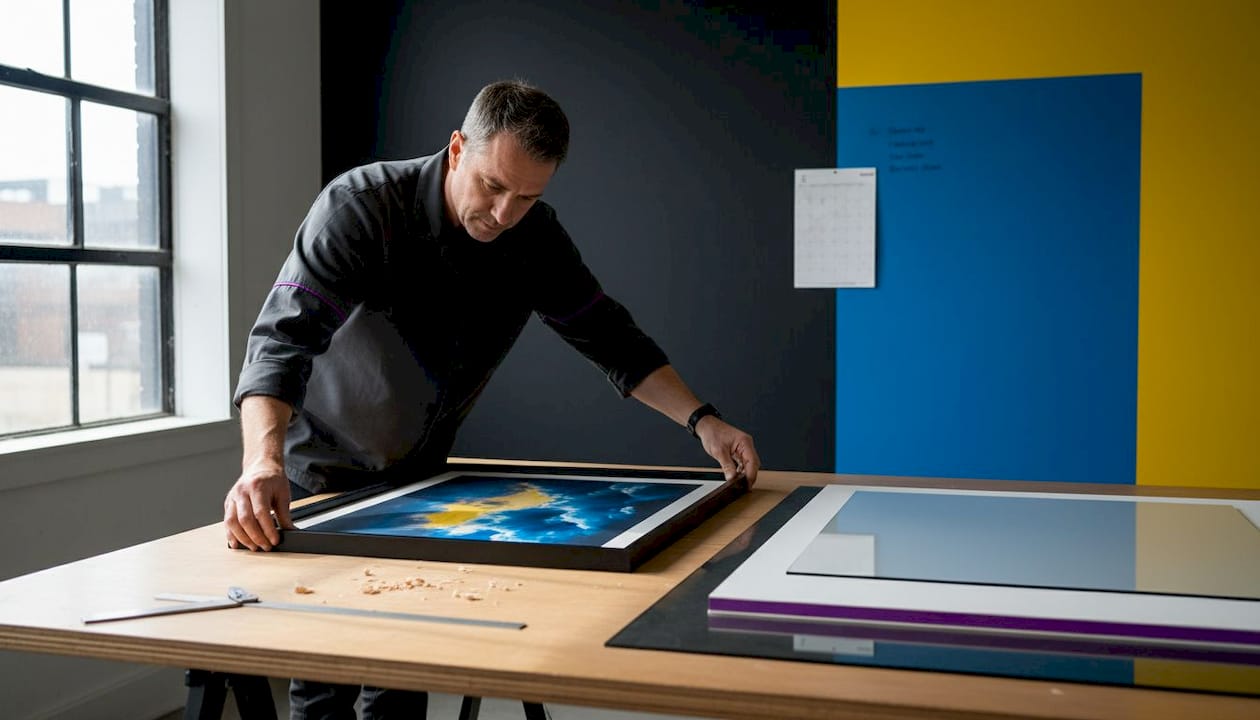
Labor, overhead, and materials round out the base cost. Packaging, studio time, website fees, and print management all count. Many photographers underestimate these, which is why underpricing is so common in this industry.
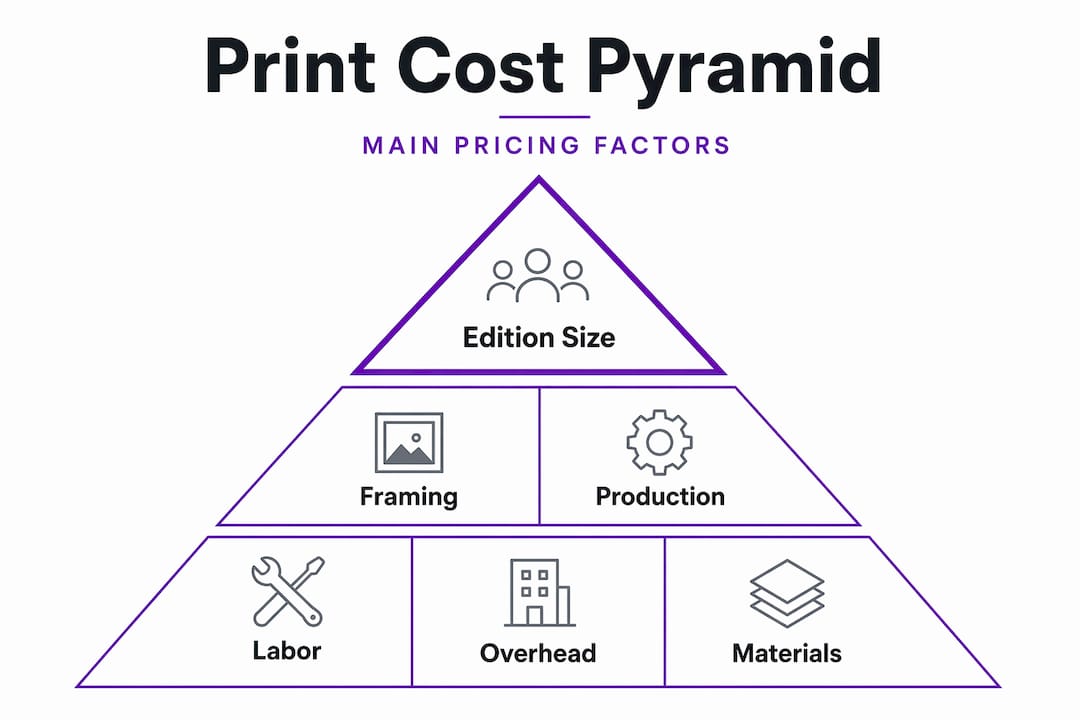
Here is a snapshot of typical base production costs before markup:
| Print size | Base production cost | Framing estimate | Total base cost |
|---|---|---|---|
| 8x10 inch | $8 to $15 | $80 to $150 | $88 to $165 |
| 16x20 inch | $20 to $35 | $200 to $400 | $220 to $435 |
| 20x30 inch | $40 to $55 | $350 to $600 | $390 to $655 |
| 24x36 inch | $65 to $90 | $500 to $1,000+ | $565 to $1,090+ |
Key cost components every buyer and seller should account for:
- Paper type and finish (matte, lustre, metallic, fine art cotton rag)
- Print size and aspect ratio
- Frame material (timber, metal, floater frame)
- Glass type and UV protection rating
- Mat board quality and depth
- Artist labor for quality checking and packaging
- Studio and overhead allocation
Pro Tip: When evaluating a framed landscape print, ask whether museum-grade UV glass was used. Standard glass transmits up to 65% of UV light, which fades prints within years. Museum glass blocks over 99% of UV and justifies a meaningful price premium on its own.
Exploring Mark Gray's landscape photography offers a strong real-world benchmark for how premium production choices translate into finished print quality.
How to calculate your price: cost-plus and markup strategies
With costs understood, the next step is applying a pricing formula that protects margins without alienating buyers.
The cost-plus method is the most reliable starting point. Here is how it works step by step:
- Calculate your total cost of goods sold (COGS): production + framing + packaging + labor allocation.
- Add a percentage for overhead: typically 15 to 25 percent of COGS.
- Apply your markup multiplier to arrive at retail price.
- Sanity-check against comparable prints in the market.
- Adjust upward for edition scarcity, artist reputation, or substrate premium.
The standard markup multiplier for loose prints is 3 to 4 times COGS. Framed or metal prints justify higher multipliers because of the additional materials and labor involved. A 3x to 5x production cost multiplier is the widely accepted industry shortcut for setting retail price.
Why does this range matter? A 3x multiplier suits open-edition prints sold at volume. A 5x multiplier is appropriate for limited editions, specialty substrates like aluminum or acrylic, or prints sold through physical galleries with higher overhead.
Here is how those multipliers play out in practice:
| Print type | COGS | Multiplier | Retail price range |
|---|---|---|---|
| Loose open edition (16x20) | $30 | 3x | $90 |
| Loose limited edition (16x20) | $30 | 5x | $150 |
| Framed open edition (20x30) | $450 | 3x | $1,350 |
| Framed limited edition (20x30) | $450 | 5x | $2,250 |
| Metal/acrylic print (24x36) | $200 | 4x to 5x | $800 to $1,000 |
Pro Tip: Labor is the most commonly forgotten cost. If you spend 45 minutes packaging, quality-checking, and shipping a single print, that time has real dollar value. At even $40 per hour, that is $30 per print. Multiply that across 100 orders and you have $3,000 in invisible costs that erode your margin.
Understanding these pricing strategies for premium prints is what separates photographers who sustain thriving businesses from those who burn out selling work below its true value.
Leveraging edition sizes and scarcity for premium pricing
Beyond base prices, edition size is one of the most powerful levers in landscape photography print pricing. It directly affects collector demand, resale value, and the price a buyer is willing to pay today.
Open editions have no production limit. They are printed on demand and priced accordingly. Because supply is theoretically unlimited, buyers have little urgency and prices stay modest.
Limited editions cap the total number of prints produced, ever. Once sold out, no more are made. This scarcity creates urgency and collector value that open editions simply cannot match.
Limited editions of 10 to 25 prints can sell at 5 to 10 times open-edition prices, with an additional 20 to 40 percent premium for signed and numbered prints. That is not marketing spin. It reflects real collector behavior driven by documented scarcity.
Here is how edition size typically maps to pricing multipliers:
| Edition size | Scarcity level | Price multiplier vs. open edition |
|---|---|---|
| Open edition | None | 1x (baseline) |
| 100 to 250 prints | Low | 1.5x to 2x |
| 50 to 99 prints | Moderate | 2x to 3x |
| 10 to 49 prints | High | 3x to 5x |
| 1 to 9 prints | Very high | 5x to 10x |
For collectors evaluating a limited edition landscape print, here is a practical checklist:
- Confirm the edition size is documented and verifiable.
- Ask for the certificate of authenticity, which should include the edition number, total run, and artist signature.
- Check how many prints from the edition have already sold. Fewer remaining copies increase urgency and value.
- Verify the print was produced on archival-grade materials to support long-term value.
- Research the artist's exhibition history and awards, as reputation directly affects resale potential.
Pro Tip: A certificate of authenticity is only as valuable as the artist's reputation for honoring it. When buying from established photographers with verifiable careers, that certificate carries genuine weight in the secondary market.
Accounting for shipping, packaging, and volatile costs in pricing models
Shipping and packaging are where many well-priced prints quietly lose money. These costs are real, variable, and often underestimated, especially for large-format landscape prints that require rigid packaging and careful handling.
Key shipping and packaging cost factors to consider:
- Rigid backing boards and foam corners to prevent damage in transit
- Custom-sized boxes or tubes, which add weight and dimensional surcharges
- Insurance for prints valued over $200, which carriers typically require for claims
- Signature-on-delivery fees for high-value pieces
- International customs duties and brokerage fees, which vary significantly by country
- Return shipping costs if damage occurs
Shipping can destroy profits if not included in the pricing model from the start. Postage, packaging, customs, and insurance all add volatility that flat-rate thinking cannot absorb. A print that costs $12 to ship domestically can cost $85 or more to ship internationally with insurance.
"Ignoring shipping in your pricing model is not just an accounting error. It is a slow erosion of everything your production and markup calculations worked to protect."
Some print businesses route orders to regional fulfillment partners to reduce transit time and cost. Fine art print fulfillment models often require buyers to cover return shipping unless the product arrives defective, which is a reasonable policy that collectors should understand before purchasing.
Pro Tip: If you sell internationally, build a tiered shipping fee into your print shipping and packaging model. Domestic, regional, and international tiers prevent any single order from absorbing an unexpected freight cost that wipes out the margin.
Building a pricing ladder and positioning your prints in the market
A pricing ladder is a deliberate structure of price points across your print range, designed to serve different buyer segments without undercutting your premium offerings. For collectors, it also signals how a photographer values their own work.
Pricing ladders help serve different buyers without collapsing margins. The goal is to offer entry-tier, mid-tier, and premium options that each feel appropriate for their audience and price point.
How to build a pricing ladder for landscape photography prints:
- Start with your smallest, most accessible open-edition prints as the entry tier. These attract new buyers and gift purchasers.
- Introduce mid-tier options with larger sizes, specialty finishes, or modest edition limits.
- Reserve your premium tier for the largest formats, finest substrates, and smallest edition sizes.
- Price each tier so it does not cannibalize the one above it. A gap of at least 40 to 60 percent between tiers is effective.
- Consider framed vs. unframed versions at each tier to add further options without adding new images.
Typical pricing ladders range from open editions at $25 to $65 at the entry level, limited editions at $75 to $250 in the mid-tier, and archival or premium editions above $300 at the top.
Here is how a well-structured ladder looks in practice:
| Tier | Format | Edition | Price range |
|---|---|---|---|
| Entry | 8x10 loose print | Open | $35 to $65 |
| Mid | 16x20 loose print | Limited (100) | $120 to $200 |
| Premium | 20x30 framed | Limited (25) | $500 to $900 |
| Exclusive | 24x36 framed | Limited (10) | $1,200 to $2,500+ |
Additional factors that justify moving a print up the ladder:
- Substrate upgrade (metal, acrylic, or fine art cotton rag vs. standard photo paper)
- Artist reputation and exhibition history
- Sales channel (gallery vs. direct online vs. art fair)
- Geographic exclusivity or regional subject matter
Exploring the print pricing ladder at Mark Gray Gallery demonstrates how a thoughtfully structured range serves both first-time buyers and serious collectors without compromise.
Why pricing landscape photography prints well is a key to sustaining art and collector value
Here is something the standard pricing guides rarely say plainly: pricing is not just math. It is a statement of value, and getting it wrong in either direction damages the entire ecosystem around a photographer's work.
Underpricing is the more common and more damaging mistake. When a photographer prices prints below their true cost, they are not being generous. They are subsidizing buyers with their own time, energy, and long-term sustainability. Pricing that respects both cost and market keeps artists sustainable and buyers confident in what they are purchasing.
There is also a collector trust dimension that rarely gets discussed. When a photographer raises prices significantly after years of underpricing, collectors who bought early feel misled. When prices are set thoughtfully from the start, increases feel natural and even affirming. They signal that the work is growing in value, not that the artist finally figured out they were selling themselves short.
Transparent pricing also builds the kind of collector relationship that sustains a career. Buyers who understand why a limited edition of 10 costs what it does become advocates, not skeptics. They share the work, refer others, and return for future releases.
Pro Tip: Review your print prices at least once a year. Paper costs, framing materials, and shipping rates shift constantly. A price set in 2023 may be quietly losing money in 2026 without any obvious signal. Annual reviews protect your margins and keep your ladder honest.
"The photographers who sustain long careers are not the ones who priced cheapest. They are the ones who priced fairly, explained their value clearly, and built collectors who believed in the work."
Explore premium landscape photography prints and pricing insights at Mark Gray
If you want to see these pricing principles applied to world-class landscape photography, Mark Gray's collection is an outstanding reference point. Mark Gray is an internationally recognized Australian photographer whose limited edition landscape prints span locations including Australia, New Zealand, Norway, Iceland, French Polynesia, Spain, and the United Kingdom.
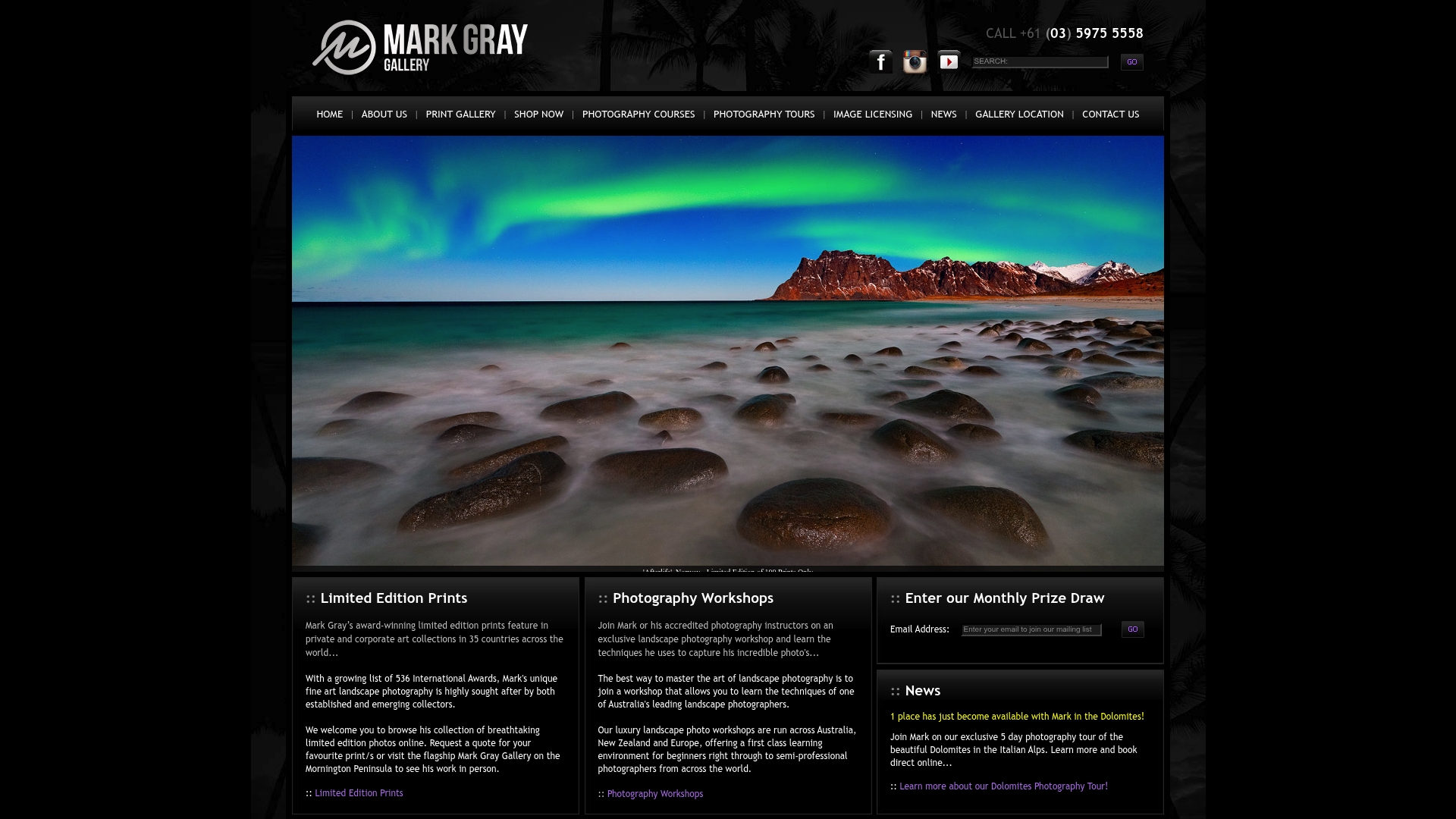
Each print in the Mark Gray Gallery collection reflects the cost components, edition structures, and quality standards covered in this guide. The range includes gift options such as jigsaw puzzles and acrylic blocks alongside premium wall art, making it accessible at multiple price points. For collectors benchmarking their own purchasing decisions, or photographers studying how premium print pricing is executed at a professional level, the Mark Gray Gallery collection is a genuinely instructive example.
Pro Tip: Use Mark Gray's edition sizes and pricing tiers as a real-world benchmark when evaluating other landscape photography prints. If a comparable print from an unknown photographer is priced similarly to a Mark Gray limited edition, ask what justifies that equivalence.
Frequently asked questions
What factors most affect the price of landscape photography prints?
Print size, framing, edition size, and labor are the primary drivers, alongside paper quality, substrate choice, and associated shipping costs. Each factor compounds the others, which is why two prints of the same image can vary dramatically in price.
Why are limited edition prints more expensive than open editions?
Limited editions of 10 to 25 prints sell at 5 to 10 times open-edition prices because scarcity, signed authentication, and documented rarity drive collector demand in ways unlimited supply simply cannot replicate.
Should shipping costs be included in the print price?
Yes. Shipping can destroy profits if not priced in from the start. Including postage, packaging, and insurance in your cost calculations, or building a transparent shipping fee structure, protects your margins and gives buyers a cleaner purchasing experience.
How often should an artist review their print prices?
Pricing should be reviewed annually or whenever material costs, labor rates, or market demand shift meaningfully. Waiting longer risks quietly selling below cost without realizing it.
What markup is typical for unframed versus framed landscape prints?
A 3 to 4 times markup on COGS is standard for loose unframed prints. Framed and premium substrate prints justify higher multipliers because the additional materials, labor, and perceived value all support a stronger retail price.