
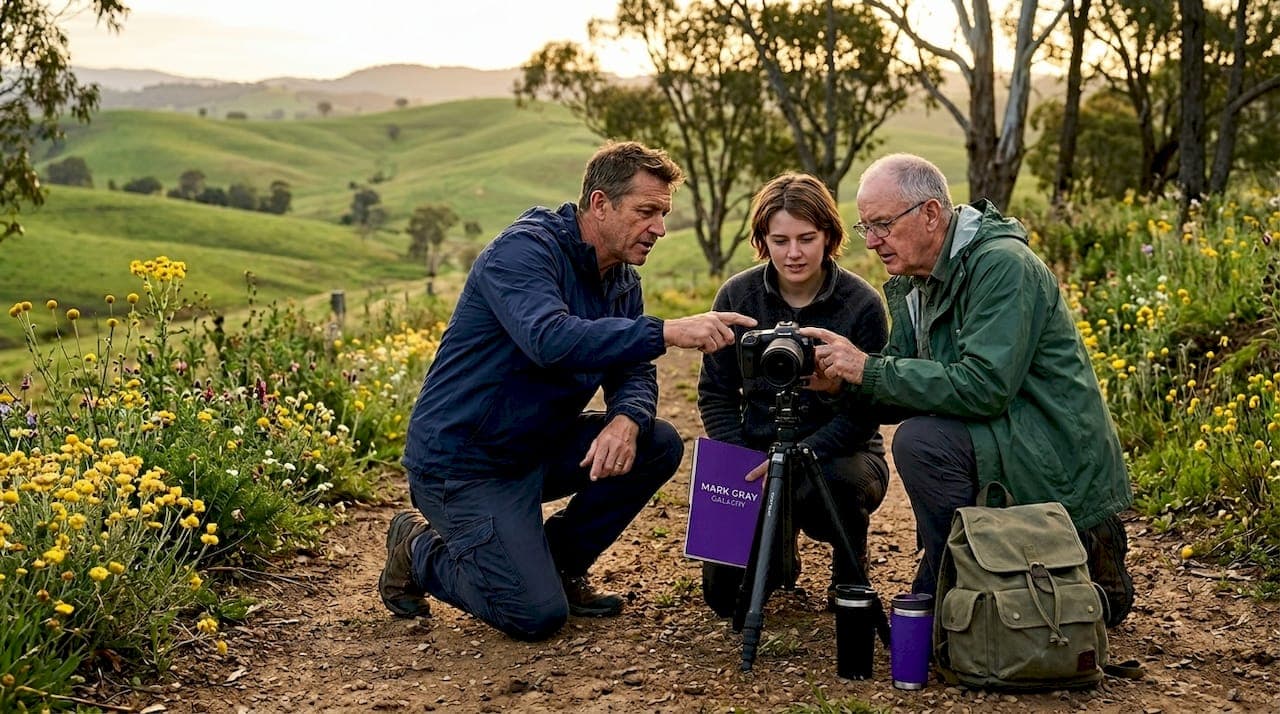
Choosing the right photography workshop in regional Australia is harder than it looks. The options range from casual photo tours with little structure to intensive, small-group landscape photography workshops that genuinely transform how you see and shoot. For photographers at any level, the difference between a forgettable day out and a skill-changing experience often comes down to a handful of criteria most people never think to check before booking. This guide cuts through the noise and gives you exactly what you need to find, compare, and choose the best regional workshop for where you are right now.
Table of Contents
- How to evaluate photography workshops in regional Australia
- Top photography workshops in regional Australia: detailed options
- Comparison of regional photography workshops: features and benefits
- Choosing the right workshop for your photography goals
- Rethinking small group workshops: why size truly matters
- Enhance your skills with expert-led landscape photography workshops
- Frequently asked questions
Key Takeaways
| Point | Details |
|---|---|
| Small group benefit | Workshops capped at small numbers provide more personalized teaching and shooting time. |
| Evaluate carefully | Assess workshops by curriculum focus, location accessibility, and instructor expertise. |
| Match goals | Choose workshops that fit your skill level, style, and logistical needs for best outcomes. |
| Location matters | Regional settings offer unique landscapes that enrich photography learning experiences. |
| Professional options | Opt for award-winning workshops that balance technique, composition, and artistic growth. |
How to evaluate photography workshops in regional Australia
Not all workshops are created equal, and the marketing rarely tells the full story. Before you commit your time and money, there are specific factors that separate a genuinely instructional experience from a guided photo walk dressed up as a course.
Group size is the single most important factor. When a workshop caps enrollment at six participants, you get real shooting time, real feedback, and real conversations about your images. When a group swells to twenty, you spend half the session waiting for your turn at the viewpoint. Small groups are not just a comfort preference; they are a structural requirement for effective learning.
Instructor expertise and teaching style matter enormously. A world-class photographer who cannot explain why a composition works is a far less valuable teacher than a skilled educator who also shoots at a high level. Look for instructors who publish their own work, have competition credentials, and can speak to both the technical and artistic sides of landscape photography techniques.
Here are the core criteria to evaluate before booking any regional photography workshop:
- Group size: Look for workshops capped at six to eight participants for meaningful individual attention
- Curriculum structure: A clear session plan covering composition, exposure, and post-processing beats an open-ended "shoot what you like" approach
- Location suitability: The terrain should match your fitness level and the landscape should offer genuine photographic variety
- Equipment support: Does the workshop provide tripods, filters, or backup gear? This matters especially for beginners
- Workshop duration: Multi-day landscape photography workshops allow for golden hour, blue hour, and weather variation that single-day courses simply cannot replicate
- Instructor credentials: Published work, competition wins, and a teaching history are all positive signals
Pro Tip: Ask any workshop organizer directly how much individual shooting time each participant gets. If they cannot give you a specific answer, that is a red flag about how the session is structured.
When assessing outdoor photography workshops specifically, also consider the seasonal timing. Australia's regional landscapes shift dramatically between seasons. The Kimberley in the wet season is inaccessible to most; the Flinders Ranges in summer is punishing. A good workshop provider will schedule sessions to take advantage of the best light and conditions for each specific location.
With these criteria in mind, let's examine some standout workshops available in regional Australia.
Top photography workshops in regional Australia: detailed options
Australia's regional diversity is extraordinary, and the best regional Australian photography workshops are designed to exploit that diversity rather than simply use it as a backdrop.
One of the most well-regarded options in the Gold Coast hinterland is the Natural Bridge Photography Tour offered by Thurtell Photography. Small-group teaching with structured composition coverage and capped group sizes are explicitly built into the program to maximize individual teaching time. The Natural Bridge location inside Springbrook National Park offers waterfalls, rainforest canopy, and the remarkable natural rock arch, giving participants a genuinely varied set of subjects within a compact area.
For younger or newer photographers, Arts Margaret River in Western Australia runs photography workshops for participants aged nine to twelve, covering foundational camera skills and basic composition in one of Australia's most visually inspiring regions. This kind of beginner-focused, age-appropriate instruction is rare and valuable for families or educators looking to introduce photography as a serious creative practice.
In regional New South Wales, street photography workshops in Griffith combine structured lectures with on-location shooting sessions, demonstrating that regional workshops are not limited to pure landscape work. This hybrid format, part classroom and part field session, works particularly well for photographers who want to understand the why behind their decisions before they pick up the camera.
Key advantages shared by the best regional workshops include:
- Focused curriculum that covers composition, light reading, and camera settings in sequence rather than ad hoc
- Expert guidance from photographers who know their specific location intimately
- Small cohorts that allow genuine critique and discussion of each participant's images
- Varied subjects within a single location, reducing travel time and maximizing shooting time
Now that we have explored individual options, a direct comparison can help clarify which workshop might fit different photographer needs best.
Comparison of regional photography workshops: features and benefits
Side-by-side comparisons reveal what marketing copy tends to obscure. Here is how several notable regional workshop formats stack up:
| Workshop | Location | Group size | Skill focus | Duration | Physical demand |
|---|---|---|---|---|---|
| Natural Bridge Photography Tour | Springbrook, QLD | Capped at 6 | Intermediate, landscape | Half day | Moderate (1km sealed track) |
| Arts Margaret River Youth Workshop | Margaret River, WA | Small group | Beginner, foundational | Single day | Low |
| Griffith Street Photography Workshop | Griffith, NSW | Varies | Intermediate, street | Single day | Low to moderate |
| Mark Gray Landscape Workshop Tours | Multiple regions, Australia | Small group | All levels, landscape | Multi-day | Varies by location |
The group size capped at six participants is a clear instructional advantage, and it shows up in participant feedback consistently. More shooting time per person, more direct feedback, and more opportunity to ask questions mid-session all compound over the course of a day.
Additional factors worth weighing when comparing workshops:
- Included amenities: Some workshops include transport, meals, or printed guides; others are purely instruction-focused
- Post-session support: Does the instructor offer image review after the workshop? This is rare but extraordinarily valuable
- Location diversity: Multi-day landscape photography retreats across Australian regions expose you to different light conditions, terrain types, and compositional challenges in a single program
- Accessibility: Physical requirements vary significantly, from flat coastal walks to steep mountain terrain
Pro Tip: When comparing composition and photographic techniques taught across workshops, ask for a sample itinerary. A workshop that can show you a detailed hour-by-hour plan is one that has been thoughtfully designed, not improvised.
"The best regional photography workshops are not about the location. They are about what a skilled instructor helps you see within it."
With a better understanding of how these workshops compare, let's discuss how to choose the best fit for your personal photography goals.
Choosing the right workshop for your photography goals
Matching a workshop to your actual needs requires honest self-assessment. Most photographers either overestimate their technical knowledge or underestimate how much structured instruction can accelerate their growth.
Follow this process to narrow your options:
- Assess your current skill level honestly. Can you shoot in full manual mode confidently? Do you understand how focal length affects compression in a landscape? Your answers determine whether you need a beginner photography course or an advanced fine art photography course with critique components.
- Define your learning objective. Are you trying to improve composition? Master long-exposure technique? Understand how to read natural light? A clear objective helps you match the workshop curriculum to your actual gap.
- Check the physical requirements. Nature photography workshops in remote Australian regions can involve early starts, uneven terrain, and extended walking. Confirm the fitness level required before booking, not after.
- Evaluate instructor access. In a group of twelve, you might get five minutes of individual feedback. In a group of six, you might get thirty. That difference is the difference between a workshop that changes your photography and one that does not.
- Factor in duration and logistics. Multi-day photography retreats in Australia offer depth that single-day sessions cannot match, but they require more planning around travel and accommodation. Budget accordingly.
- Consider what is included. Transport, meals, and gear support all affect the real cost and convenience of a workshop. A slightly more expensive program that includes transport to a remote location may represent better value than a cheaper option that leaves logistics entirely to you.
When selecting regional workshops, prioritize instructional quality over location glamour. A stunning location with a poor instructor is a wasted opportunity. A modest location with an exceptional teacher will produce images and skills that last.
Pro Tip: Prioritize workshops with a focused curriculum over casual photo tours. The distinction is simple: a curriculum tells you what you will learn; a tour tells you where you will go. You want both, but the learning must come first.
Having these selection strategies in mind, hear our unique perspective on what often gets overlooked in regional photography workshops.
Rethinking small group workshops: why size truly matters
Here is what most workshop marketing does not say plainly: group size is the most reliable predictor of how much you will actually improve. Not the location. Not the instructor's Instagram following. Not the number of hours in the itinerary. The number of people standing next to you when the instructor is talking.
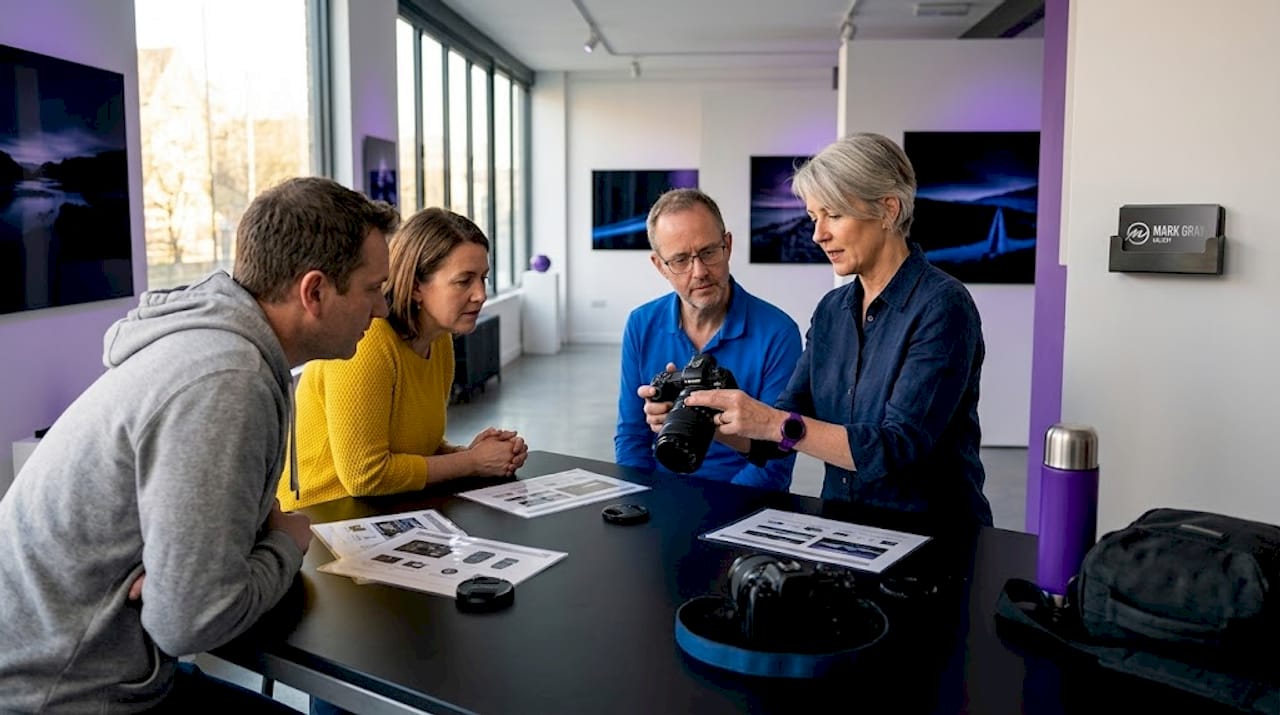
Small group sizing is repeatedly treated as an instructional advantage in regional workshops, yet most photographers still choose workshops based on location first. This is backwards. A waterfall in a national park looks the same whether you are in a group of four or a group of twenty. What changes is how much time you spend shooting versus waiting, how much direct feedback you receive, and how deeply you can discuss photography composition techniques with someone who can look at your specific image and tell you specifically what to change.
Large group workshops create a particular kind of frustration that is hard to articulate until you have experienced it. You arrive at a location, the instructor demonstrates a technique, and then fifteen people try to replicate it simultaneously. The instructor moves on before half the group has had a chance to try it properly. You leave with a handful of images and a vague sense that you missed something important.
This is not a minor inconvenience. It is a structural failure of the learning environment. Photography education as a professional service requires the same conditions as any other skilled instruction: adequate time per student, the ability to observe and correct in real time, and a setting where questions are welcomed rather than rushed past.
The workshops that produce real growth are almost always the ones where the instructor knows your name, has seen your previous images, and can give you a specific note at the end of the day that applies to you and nobody else in the group. That level of attention is only possible in small groups. When you are evaluating your next outdoor photography workshop, count the seats before you read the itinerary.
Enhance your skills with expert-led landscape photography workshops
If you are serious about developing your landscape photography skills in some of Australia's most inspiring regional settings, Mark Gray's workshops are designed precisely for that purpose.
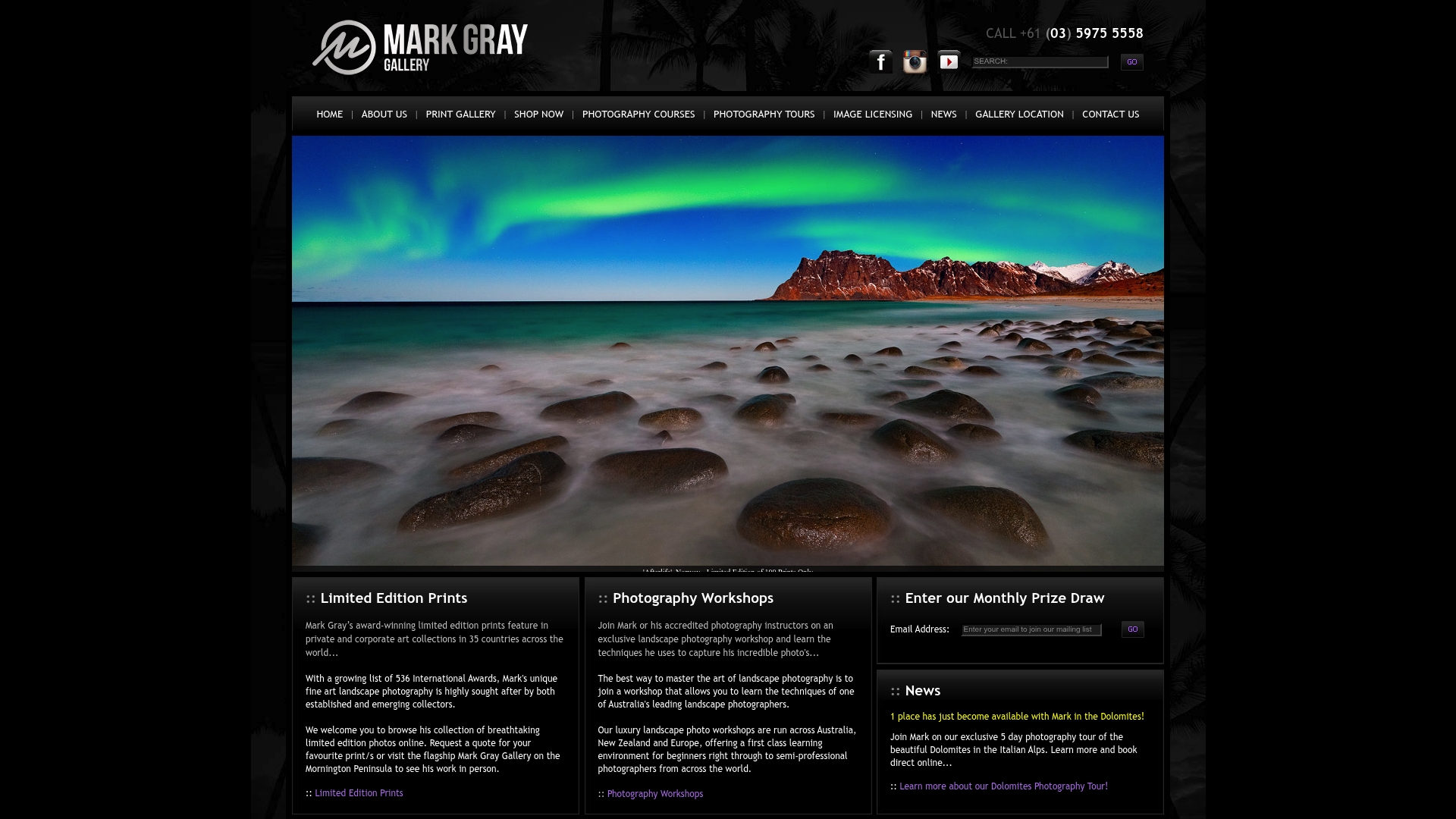
Mark Gray's landscape photography workshops combine award-winning artistic vision with structured technical instruction, covering composition, light reading, and location-specific technique in intimate group settings across multiple Australian regions. Whether you are an enthusiastic amateur looking to move beyond auto mode or an experienced photographer seeking to refine your fine art approach, these workshops deliver the personalized guidance and immersive field experience that genuinely elevate your work. Bookings are straightforward, workshop details are clearly outlined, and early registration is strongly recommended given the deliberately small group sizes.
Frequently asked questions
What makes small group photography workshops beneficial?
Small group workshops allow more individual attention from instructors, enabling personalized feedback and increased shooting time. As noted in regional workshop design, capping group sizes is a deliberate instructional strategy, not simply a logistical choice.
Are these regional workshops suitable for beginners?
Many regional workshops offer beginner-friendly sessions covering basic camera skills and composition, including youth-focused programs for photographers aged nine to twelve in locations like Margaret River, Western Australia.
What should I consider regarding the physical demands of regional workshops?
Workshop accessibility varies considerably; some involve moderate fitness requirements such as a 1km sealed loop track with frequent stops, while others have minimal physical demands, so always confirm specifics before booking.
How do I know which workshop style suits me best?
Consider your current skill level, preferred photography style, desired learning outcomes, and practical factors like group size and location to select a workshop that genuinely aligns with your goals rather than simply appealing to your travel wishlist.
Are professional workshops available in regional Australia?
Yes, established photographers like Mark Gray offer award-winning workshops designed to elevate landscape photography skills across multiple regional Australian settings, catering to both amateurs and working professionals.