
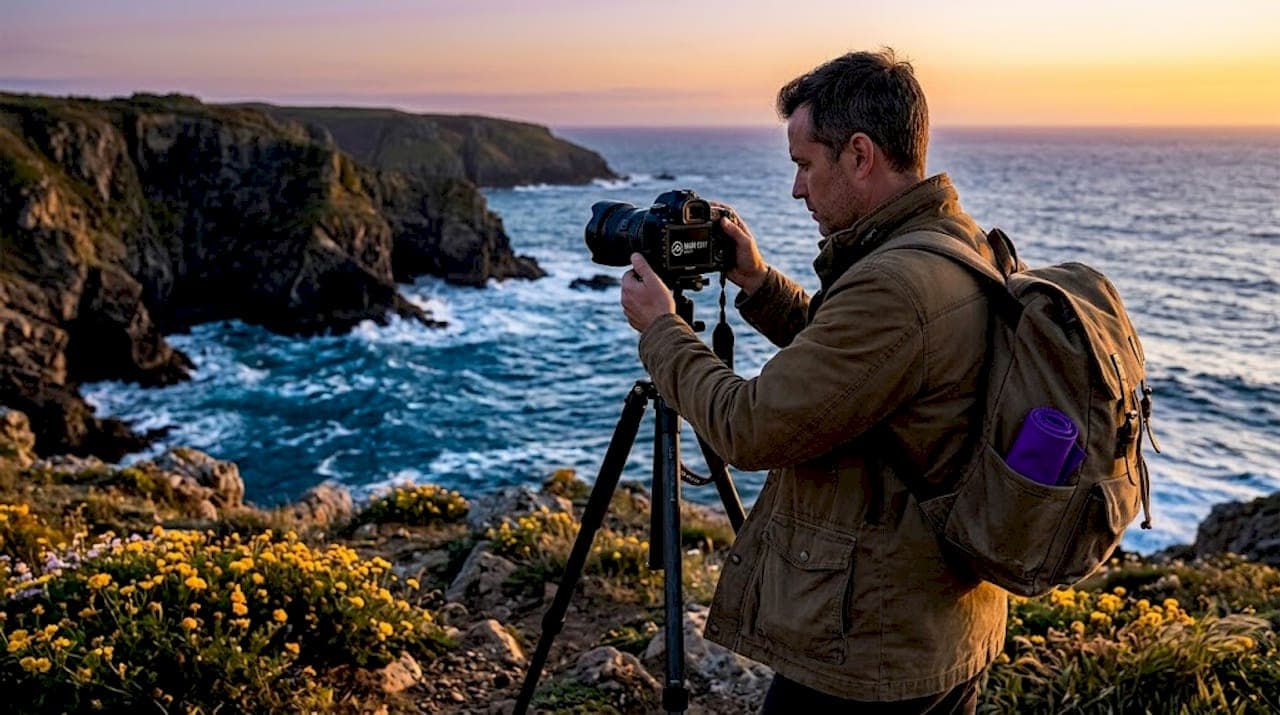
Landscape photography rewards those who show up prepared, but knowing which of the many types of landscape photography techniques to use in any given situation is where most enthusiasts get stuck. Should you focus on composition layering, long exposure, or HDR merging? The answer changes with every location, every light, and every creative goal. This guide breaks down the major technique categories, evaluates each against real criteria, and gives you a clear framework for choosing what to use and when. Whether you are just starting out or ready to push your work into advanced territory, the right method makes all the difference.
Table of Contents
- Key criteria to evaluate landscape photography techniques
- Composition techniques for compelling landscapes
- Mastering focus and camera settings for sharpness
- Creative long-exposure techniques in landscape photography
- Exposure bracketing and HDR for dynamic landscapes
- Night and blue hour landscape photography techniques
- Smartphone landscape photography techniques
- Comparing landscape photography techniques: Strengths and best uses
- Our perspective: Why technique mastery is not the finish line
- Take your landscape photography further with Mark Gray
- Frequently asked questions
Key Takeaways
| Point | Details |
|---|---|
| Four key technique pillars | Landscape photography techniques revolve around composition, light, location, and camera settings. |
| Aperture sweet spot | Using apertures around f/8 to f/11 balances sharpness and depth of field effectively. |
| Focus methods | Hyperfocal distance focusing and focus stacking improve sharpness across scenes with varying depth. |
| Long exposure creativity | ND filters and slow shutter speeds create effects like silky water and light trails. |
| Blue hour advantage | Shooting during blue hour enhances color and ambient light balance for night landscapes. |
Key criteria to evaluate landscape photography techniques
Before you can confidently choose between different styles of landscape photography, you need a framework. Not every technique suits every situation, and knowing what to weigh before you shoot saves you frustration in the field.
Landscape photography techniques commonly group into four main pillars: composition, light, location, and technical camera settings. Think of these as the four questions you ask before pressing the shutter.
Here is what each pillar covers:
- Composition guides how you arrange visual elements for maximum impact and depth
- Light quality determines mood, texture, and color rendering in the final image
- Location shapes what subjects and conditions are available to you
- Camera settings control sharpness, exposure, and creative rendering
Composition is about intention. A technically perfect exposure of a cluttered scene will always disappoint. Light is arguably more powerful than any gear you carry. The same canyon at noon versus golden hour looks like two entirely different photographs. Understanding landscape photography print pricing also helps you appreciate why certain techniques produce prints worthy of a gallery wall, while others result in images suited only for a phone screen.
With a clear framework in place, let's explore the major landscape photography techniques organized by these criteria.
Composition techniques for compelling landscapes
Composition is where creative landscape shooting techniques begin. Before any camera setting matters, the arrangement of elements within your frame determines whether a viewer stays or scrolls past.
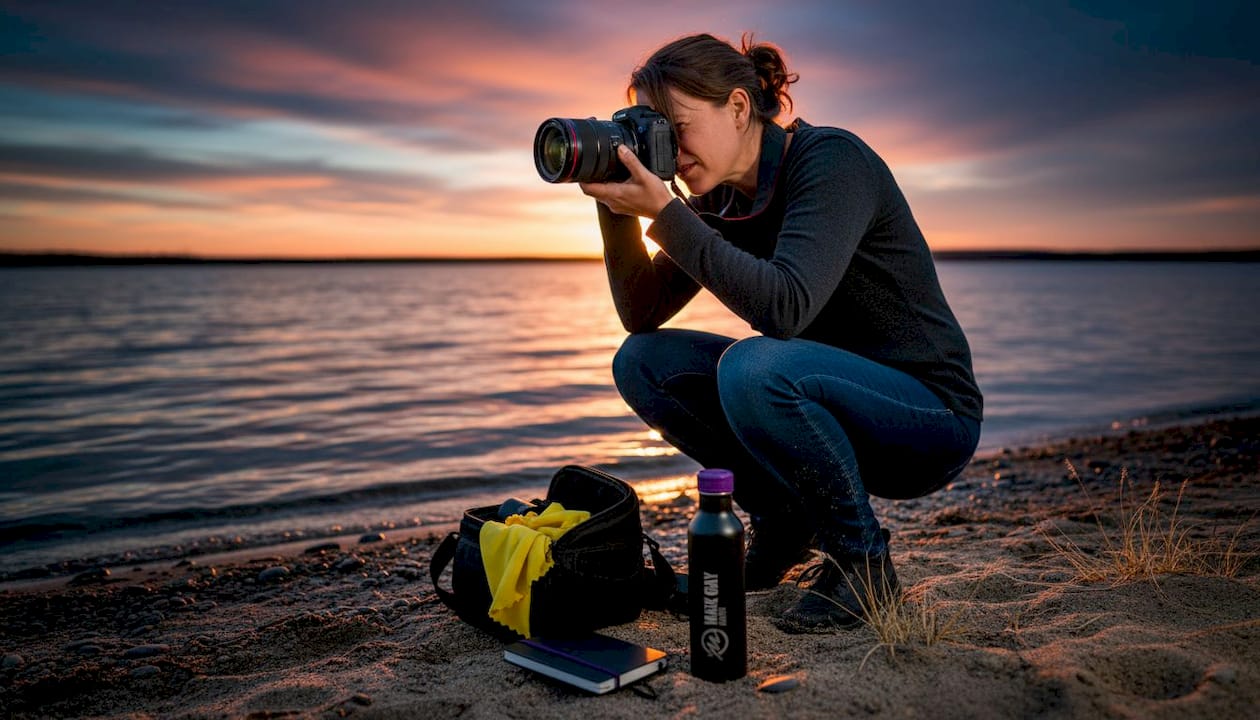
Composition styles in landscape photography include layered composition, natural framing, symmetry and pattern-based arrangements, and lens-choice-driven perspective shifts. Each creates a distinct visual experience.
Key composition techniques worth mastering:
- Layered composition places a strong foreground subject, a defined midground, and a compelling background to create genuine depth
- Natural framing uses trees, rock arches, doorways, or cave openings to enclose and draw attention to the main subject
- Symmetry and patterns capitalize on repeating natural forms like sand ripples, reflections, or rows of trees for graphic impact
- Wide-angle lenses (14mm to 24mm) exaggerate depth and foreground size, pulling viewers into the scene
- Telephoto lenses (100mm and above) compress distances, stacking mountain layers or isolating a distant subject with dramatic effect
The lens you choose is itself a compositional decision, not just a technical one. Pairing a 16mm wide-angle with a textured foreground rock creates a very different image than a 200mm shot of the same rock face from a distance. Both can be compelling. Neither is wrong. Knowing the difference and choosing deliberately is what separates a snapshot from a considered photograph. You can study composition techniques in depth to sharpen your eye further.
Pro Tip: Before setting up your tripod, walk the location for five minutes. The first composition you see is rarely the strongest one. Moving even three feet sideways can eliminate a distracting element or reveal a more powerful foreground.
Next, we delve into camera and focus techniques that maximize image sharpness across scenes.
Mastering focus and camera settings for sharpness
Technical precision here separates images that look almost right from images that demand a second look. Sharpness in landscape photography is not simply about the camera, it is about informed decisions at every step.
Use a small aperture around f/8 to f/16, a low ISO around 100 to 200, and adjust shutter speed based on conditions for consistent, clean results. Here is a quick reference:
| Setting | Recommended range | Purpose |
|---|---|---|
| Aperture | f/8 to f/11 | Sharpness sweet spot |
| ISO | 100 to 200 | Minimize digital noise |
| Shutter speed | Varies by scene | Exposure and motion control |
| Focus point | Hyperfocal distance | Maximum depth of field |
Key technical techniques for landscape sharpness:
- Aperture sweet spot at f/8 to f/11 balances sharpness with diffraction control
- Hyperfocal distance focusing sets focus at the closest point where infinity remains sharp, maximizing front-to-back clarity
- Focus stacking involves capturing multiple images focused at different distances and merging them to create a composite with extended depth of field, ideal for extreme foreground-to-background scenes
- Mirror lockup or live view reduces vibration on DSLR cameras
- Remote shutter release eliminates any contact-induced camera shake
Step-by-step for setting hyperfocal distance in the field:
- Set aperture to f/11
- Use a hyperfocal distance calculator app with your lens focal length
- Set focus manually to that distance
- Confirm focus on both near foreground and distant horizon in live view
Pro Tip: Focus stacking is especially powerful in macro-style foreground work, such as wildflowers or tidal pools in the immediate foreground. Three images focused at the flower, mid-rock, and horizon will produce a result that no single aperture can match.
Beyond focus and exposure, mastering long-exposure techniques unlocks creative landscape effects.
Creative long-exposure techniques in landscape photography
Long exposure is one of the most visually dramatic landscape photo techniques available. It transforms ordinary scenes into something otherworldly, turning rushing water into silk and churning clouds into painterly streaks.
"The camera sees time differently than the eye. Long exposure is how you show the viewer what only patience can reveal."
Daytime long exposures for water and clouds generally require ND (neutral density) filters, while nighttime long exposures are feasible without ND because ambient light is already low.
Exposure guide by subject:
| Subject | Shutter speed | ND filter needed | Effect |
|---|---|---|---|
| Silky waterfall | 0.5 to 2 seconds | 3 to 6 stop | Smooth flowing water |
| Smooth ocean | 15 to 120 seconds | 6 to 10 stop | Glassy, mirror-like sea |
| Cloud streaking | 60 to 300 seconds | 10 stop | Dramatic swept clouds |
| Night light trails | 10 to 30 seconds | None | Urban or coastal glow |
| Star trails | 20 to 60 minutes | None | Circular star arcs |
Key long-exposure tips:
- Always use a sturdy tripod and a remote shutter release
- Wait for consistent wind before shooting cloud streaks
- Use live view to frame and focus before attaching your ND filter
- Check your histogram after every shot to confirm exposure
Pro Tip: When shooting silky water in bright conditions, combine a polarizing filter with your ND filter. The polarizer cuts glare and boosts color saturation, while the ND extends your exposure. The combination is a game-changer for waterfall and river photography.
Having learned how to use slow shutter speeds creatively, let's review exposure methods that tackle dynamic range challenges.
Exposure bracketing and HDR for dynamic landscapes
Sunrise and sunset landscapes are among the most photographed subjects in the world, and also among the most technically challenging. The sky can be three to five stops brighter than the foreground, well beyond what any single exposure can handle gracefully.
HDR and bracketing methods involve shooting multiple exposures and combining them in post-processing to control highlights and shadows across the full tonal range of a scene.
How to approach bracketing effectively:
- Shoot three to five exposures at one-stop intervals, centered on the metered exposure
- Use continuous bracketing mode to minimize time between frames and reduce cloud movement
- Merge in post-processing using software such as Lightroom or Photoshop for a balanced result
- Use subtle blending to avoid the over-processed, artificial HDR look that was popular in the early 2000s and is now widely considered dated
- A graduated ND filter can achieve a similar single-shot result in scenes with a clean horizon line
Pro Tip: For the most natural-looking HDR results, use luminosity masking rather than automatic HDR merging. It gives you precise control over how shadow and highlight detail blend, producing images that look like an idealized version of what the human eye actually sees in high-contrast light.
We now turn to specialized techniques for capturing landscapes at night and twilight stages.
Night and blue hour landscape photography techniques
The period most photographers call "blue hour" is genuinely one of the best-kept secrets in how to photograph landscapes. The drama of a full sunset often overshadows what comes after, but the 20 to 40 minutes following sunset offer something distinct.
Blue hour is about 20 to 40 minutes after sunset or before sunrise, balancing colored sky with ambient light for foreground detail. That means you can expose for both sky and land in a single frame without bracketing.
Recommended settings by scenario:
- Blue hour general scene: ISO 200, f/8, 2 seconds
- Full moon landscape: ISO 1600, f/4, 20 seconds
- Nightscape with stars: ISO 1600 to 3200, f/2.8, 20 to 30 seconds
- Light trail capture: f/8 to f/16, 10 to 30 seconds, ISO 100
Additional night photography practices worth adopting:
- Use a red light headlamp to preserve night vision when composing
- Allow your camera sensor to cool between long exposures to reduce noise
- Shoot in RAW format for maximum flexibility in noise reduction during editing
Pro Tip: Arrive at your night location at least 30 minutes before full darkness. Use blue hour light to nail your composition and focus, then simply wait for the sky to darken without needing to reframe or refocus.
With technique variety covered, let's examine how smartphone landscape photography techniques fit into this landscape.
Smartphone landscape photography techniques
The best landscape photography tips are only useful if you act on them, and for many enthusiasts, the camera in their pocket is the one they use most. Modern smartphones are surprisingly capable landscape tools when you understand their limits and strengths.
Use the highest-resolution setting available and optical zoom such as 10x for distant scenes. Low-angle shooting enhances scale and detail in nature shots by bringing the viewer closer to the ground-level story of the scene.
Practical smartphone landscape techniques:
- Shoot in RAW or ProRAW if your phone supports it for better editing latitude
- Use optical zoom only and avoid digital zoom, which degrades sharpness
- Shoot from low angles to introduce foreground interest and a sense of scale
- Use a small tripod or gorilla pod to stabilize for low-light or long-exposure modes
- Use the native camera app's Pro mode to manually control ISO, shutter speed, and white balance
- Editing apps such as Lightroom Mobile can transform a flat smartphone RAW into a polished image
Pro Tip: Use your smartphone's histogram in Pro mode just as you would on a dedicated camera. Blown highlights are the most common smartphone landscape error, and the histogram catches them before you leave the scene.
To wrap up, let's see a side-by-side comparison of these main technique types to aid your decision-making.
Comparing landscape photography techniques: Strengths and best uses
| Technique | Strengths | Challenges | Best scenario | Key gear |
|---|---|---|---|---|
| Layered composition | Depth and dimension | Requires scouting | Any location, any light | Any camera, wide lens |
| Long exposure | Creative motion effects | Setup time, ND filters needed | Water, clouds, night | Tripod, ND filter, remote |
| Focus stacking | Maximum sharpness | Requires post-processing | Extreme foreground detail | Tripod, editing software |
| Exposure bracketing | Full tonal range | Wind can misalign frames | Sunrise, sunset, high contrast | Tripod, editing software |
| Blue hour shooting | Balanced sky and land | Short window of 20 to 40 min | Coastal, urban, mountain scenes | Tripod, fast wide lens |
| Smartphone techniques | Accessibility and speed | Limited dynamic range | Travel, spontaneous shots | Tripod adapter, editing app |
A few selection principles worth holding onto:
- Match the technique to the light, not the other way around. Blue hour and bracketing suit high-contrast moments. Long exposure suits movement.
- Composition decisions come first, technical execution second.
- One strong technique executed well always beats three techniques done halfway.
With this comparison, you'll better understand how to choose techniques suited to your landscape photography goals.
Our perspective: Why technique mastery is not the finish line
Here is an honest observation earned from years of working with serious landscape photographers and leading workshops across Australia and beyond. Most enthusiasts plateau not because they lack technique knowledge, but because they apply techniques mechanically rather than responsively.
Long exposure is a perfect example. Many photographers learn the settings, buy the ND filters, and then apply long exposure to every waterfall they encounter. The result is technically correct and creatively forgettable. The technique became a habit instead of a choice.
The photographers who produce inspiring, award-worthy work use technique as a response to what the scene is actually doing. They show up, read the light, observe the movement, and then select the method. The composition comes from walking, not from setting up a tripod at the first promising spot. The exposure decision comes from watching the scene for ten minutes, not from recalling a setting list.
This is precisely why in-person workshop experiences, guided by a photographer who has worked in Iceland, Norway, French Polynesia, and across Australia, are so different from studying technique lists. Watching someone make real-time decisions in unpredictable conditions is a different kind of learning entirely. You absorb decision-making, not just knowledge. The techniques covered in this guide are the vocabulary. The landscape, the light, and your creative instincts form the sentence.
Take your landscape photography further with Mark Gray
If this guide has sparked your ambition to move beyond technique lists and into genuine creative mastery, Mark Gray's workshops and courses are designed exactly for that next step.
Mark Gray is an internationally recognized Australian photographer whose limited edition prints span Australia, New Zealand, Iceland, Norway, French Polynesia, Spain, and the United Kingdom. His 1-day photography courses and multi-day workshop tours are available across Australia and worldwide, offering hands-on instruction in real landscapes with real light. Whether you are refining your long-exposure work, learning composition for the first time, or ready for a dedicated landscape photography journey, the gallery and education offerings at markgray.com.au are worth exploring. Premium limited edition prints are also available for those ready to bring the landscape home.
Frequently asked questions
What aperture setting is best for landscape photography?
Most lenses produce their sharpest results between f/8 and f/11, giving you a sharp image with excellent depth of field and minimal diffraction softness.
How does focus stacking improve landscape images?
Focus stacking merges multiple images captured at different focus distances into one composite that is sharp from the immediate foreground all the way to the horizon, something a single aperture setting cannot reliably achieve.
When should I use ND filters in landscape photography?
ND filters are used during daylight hours when you need a slow shutter speed for silky water or streaking clouds but the ambient light is too bright to allow a long exposure without overexposing the image.
What is the blue hour and why is it good for landscape photos?
Blue hour is the 20 to 40 minute window after sunset or before sunrise when the sky holds a deep blue tone and ambient light is balanced enough to expose both sky and foreground detail in a single frame.
Can I take great landscape photos with a smartphone?
Yes. By using the highest resolution settings available, optical zoom for distant subjects, and low-angle positioning for foreground interest, smartphone photographers can capture genuinely impressive landscape images.