
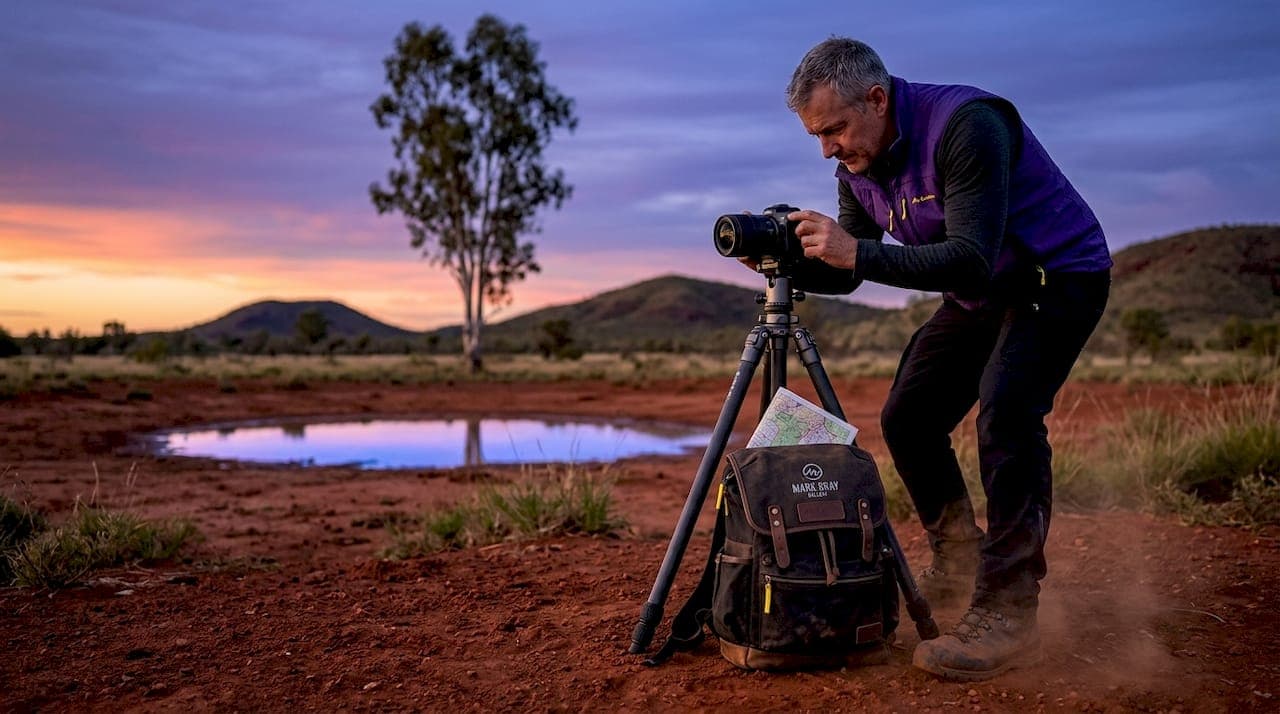
Red earth is one of the most recognized visual signatures in Australian landscape photography, yet most people treat it as pure spectacle. The role of red earth Australian photography runs far deeper than striking color. It carries centuries of settler colonial history, tens of thousands of years of Indigenous cultural meaning, and a set of technical and ethical considerations that every serious photographer and art lover needs to understand. This article unpacks all of it, from the visual politics of the 19th century to the practical craft decisions you make in the field today.
Table of Contents
- Key takeaways
- The role of red earth Australian photography in settler history
- Indigenous perspectives on red earth in photography and art
- Aesthetic qualities and technical craft for red earth landscapes
- Ethical and cultural responsibilities in red earth photography
- Settler versus Indigenous visual narratives compared
- My perspective on photographing red earth landscapes
- Explore Mark Gray's red earth landscape photography
- FAQ
Key takeaways
| Point | Details |
|---|---|
| Cultural duality of red earth | Red earth imagery reflects both settler colonial narratives and profound Indigenous spiritual significance simultaneously. |
| Iron oxide drives the color | The vivid red pigment comes from iron oxide in the soil, changing dramatically in appearance across different times of day and seasons. |
| Ethical photography is non-negotiable | Photographing Country requires awareness of cultural protocols, site restrictions, and community permissions before you press the shutter. |
| Two distinct visual narratives exist | Settler photography framed land as empty and available; Indigenous photography expresses relationship, law, and living connection to place. |
| Technical mastery matters | Sunrise and sunset lighting, weather awareness, and thoughtful composition are the three pillars of capturing red earth landscapes effectively. |
The role of red earth Australian photography in settler history
When you look at 19th century landscape photography from Australia, the red earth outback appears framed as majestic, open, and uninhabited. That framing was not accidental. Settler colonial photography treated nature as beautiful, available, and empty, actively supporting settler fantasies of ownership and dominion over the land.
Photographers like Nicholas Caire and John Beattie produced images that circulated widely through settler society, newspapers, and promotional materials. Their work made the red earth outback look like a blank canvas waiting to be claimed. The images did political work by rendering Indigenous presence invisible, which made dispossession easier to justify and romanticize at the same time.
The impact of this visual framing on Australian landscape photography cannot be overstated. It established an aesthetic tradition where red earth terrain was celebrated for its grandeur without acknowledgment of whose Country it actually was. That tradition persisted well into the 20th century and shaped how collectors, galleries, and the general public learned to see these landscapes.
Key characteristics of settler colonial red earth photography included:
- Empty foregrounds that erased signs of Indigenous habitation and use
- Heroic scale compositions presenting the land as vast and unconquered
- Circulation through institutions including newspapers, exhibitions, and government publications to reinforce settler belonging
- Romanticized color treatment that emphasized the beauty of red earth while avoiding its human and cultural complexity
"Settler-era landscape photography not only shaped visual aesthetics but also served as a tool to reinforce narratives of ownership, control, and erase Indigenous presence through images of empty land." (Landscape photography in colonial Australia and New Zealand)
Understanding this history does not mean dismissing these images. It means seeing them fully, with all their beauty and all their politics visible at once.
Indigenous perspectives on red earth in photography and art
The significance of red earth in Aboriginal culture predates photography by an extraordinary margin. Red ochre, derived from iron-oxide pigments in the earth, holds layered symbolic meanings including blood, family ties, land connection, vitality, and ceremonial purpose. Ochre is not simply pigment. It is a living link between people, story, and Country.
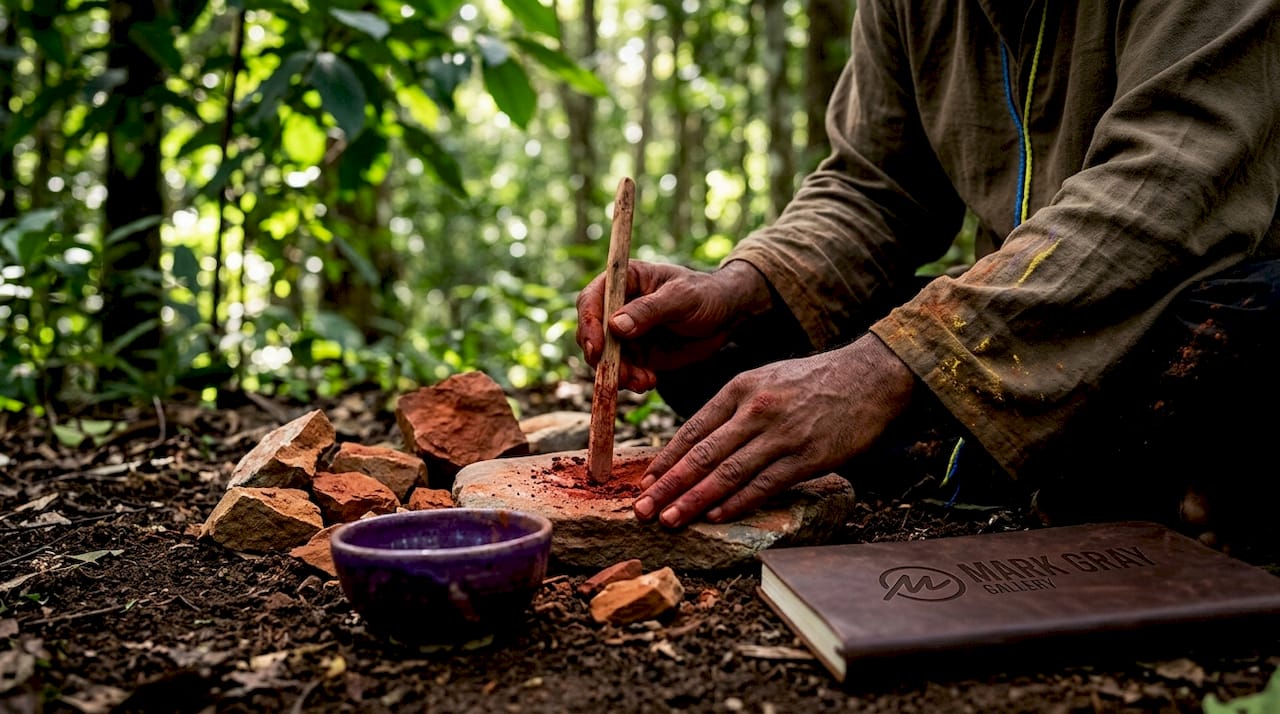
Ochre sites are sacred in many Aboriginal traditions. The act of collecting, preparing, and applying ochre is inseparable from spiritual practice, cultural law, and ancestral connection. When contemporary Indigenous photographers work with red earth imagery, they carry this entire framework into the frame. The earth is not a backdrop. It is a participant.
The significance of red earth extends into how contemporary Indigenous artists and photographers challenge conventional visual narratives. Exhibitions like Brook Andrew's ROLLERCOASTER: winhangadurinya in motion at the Museum of Australian Photography exemplify Indigenous-curated narratives that foreground alternative ways of knowing time, history, and place. These exhibitions actively push back against colonial visual conventions by insisting that land carries memory, law, and ongoing relationship.
What this means for photography enthusiasts:
- Red earth imagery in Indigenous contexts is often inseparable from storytelling rights and cultural protocols
- The colors themselves carry specific meanings that vary by community and region
- Contemporary Indigenous photography is not just documentary. It is cultural instruction
- Engaging with this work respectfully means learning before assuming
Pro Tip: Before visiting any exhibition of Indigenous photography, spend time reading the artist's own words about the work. Artist statements reveal layers of meaning that a purely visual reading will miss.
This depth of cultural significance in red earth imagery is precisely why Australian landscape photography is so much richer and more complex than any other national tradition. The earth itself is a text.
Aesthetic qualities and technical craft for red earth landscapes
Capturing the vivid color and drama of red earth terrain requires both technical skill and an understanding of the specific qualities that make this environment unique. The vivid coloration from iron oxide responds to light in ways that shift dramatically across the day and across seasons. What looks burnt orange at noon can glow like molten copper at dawn.
Follow these steps to consistently produce compelling red earth photography:
- Shoot at the golden hours. Sunrise and sunset dramatically reduce contrast and saturate the warm tones in red earth terrain. Midday light flattens the color and creates harsh shadows that fight the natural beauty of the landscape.
- Monitor weather conditions. Storms, dust, and atmospheric haze add extraordinary visual depth and texture to outback scenes. Weather conditions can be the difference between a good frame and an unforgettable one.
- Manage white balance deliberately. Auto white balance often cools down the warm tones in red earth scenes. Set a custom white balance or shoot raw to preserve the authentic warmth in post-processing.
- Use foreground elements. Spinifex grass, ancient rock formations, and dry creek beds give scale and context to the vast open terrain. They also anchor the composition and prevent the image from feeling overwhelmingly flat.
- Consider astrophotography. The clarity of outback skies above red earth terrain is extraordinary. Night shooting adds a completely different dimension to red earth imagery, connecting the ancient earth to the infinite sky above it.
Pro Tip: Study different landscape photography techniques before your trip to the outback. Knowing when to use a graduated ND filter versus a polarizer in high-contrast red earth environments can transform your results.
Ethical and cultural responsibilities in red earth photography
The responsibility that comes with photographing red earth landscapes in Australia is real and specific. Many of these sites are living cultural spaces, not scenic lookouts. Cultural protocols around photographing Country often involve restricted imagery and specific permissions that reflect storytelling rights and cultural law, not merely ecological sensitivity.
Uluru is the most prominent example. Photography and drone use at Uluru are carefully regulated out of deep respect for Anangu cultural beliefs. The restrictions exist because certain sites and stories are not meant to be reproduced or circulated, regardless of how visually stunning they are. Respecting that boundary is an act of genuine cultural respect and professional integrity.
"Responsible photographic practice in red earth landscapes includes respecting cultural protocols and understanding that restrictions may concern storytelling rights rather than just ecological impact." (Photographing Australia's Best Locations: A Cross-Country Guide)
Practical ethical guidelines for photographers working in red earth regions:
- Research before you travel. Understand which sites have restrictions and why. Parks Australia and local Land Councils publish guidance that is freely available.
- Seek permission actively. Many communities welcome photographers who approach with genuine respect and a willingness to listen. The process of asking transforms the photographic relationship.
- Follow signage and community requests immediately and without negotiation. Restrictions are not obstacles to your creative vision. They are expressions of someone else's law on their Country.
- Share your work respectfully. Consider how your images will be interpreted and used. Consult the communities whose Country appears in your photographs before publishing widely.
When you follow these protocols, something interesting happens. Your images gain a different quality. The knowledge that you earned access, that you respected the place, brings a depth to the work that viewers can feel.
Settler versus Indigenous visual narratives compared
Understanding the contrast between settler and Indigenous photographic narratives is one of the most clarifying things you can do as a photographer or art lover engaging with red earth imagery. Red earth photography operates differently depending on whether it comes from a settler or Indigenous perspective. The visual elements may overlap. The meaning rarely does.
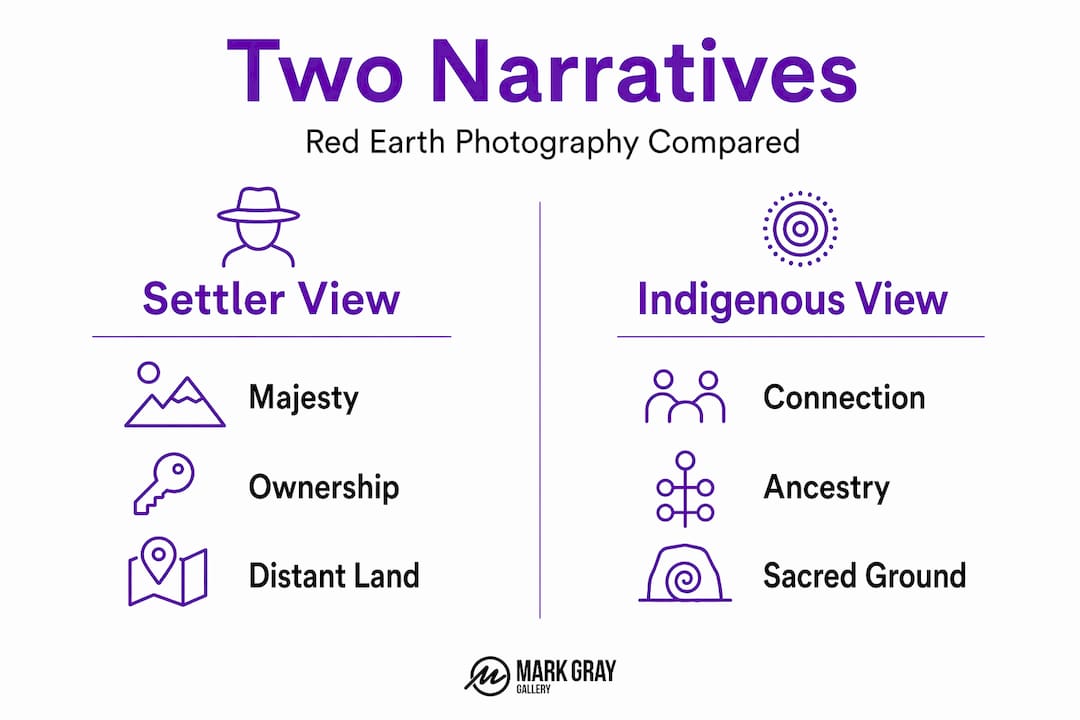
| Narrative Approach | Settler Photography | Indigenous Photography |
|---|---|---|
| Relationship to land | Land as possession and spectacle | Land as living relationship and law |
| Framing of presence | Human absence reinforces emptiness | Community and Country are inseparable |
| Purpose | Documentation, commerce, promotion | Cultural instruction, memory, sovereignty |
| Color symbolism | Aesthetic impact only | Spiritual and ceremonial meaning |
| Time perspective | Historical record of a moment | Living continuum across generations |
For collectors and art lovers, this table is not academic. It changes how you evaluate, purchase, and display photography of Australian terrain. A print of Uluru at sunset means something different depending on who made it, why, and under what conditions. That context belongs in the conversation alongside the composition and the print quality.
Museums and galleries are shifting cultural dialogues by actively promoting Indigenous-curated narratives that reveal alternative histories. Engaging with this shift enriches every viewer's understanding of the red earth and what it holds.
My perspective on photographing red earth landscapes
I have spent years traveling through red earth country across Australia, and the honest truth is that my best images came after I stopped treating the landscape as a subject and started treating it as a conversation.
Early in my career, I approached the outback the way many photographers do. I chased the light, found the composition, and pressed the shutter. The images were technically sound. But they were missing something I could not name at the time. I now understand what that was: context and earned presence. When I began seeking guidance from local communities and taking the time to understand the cultural histories of the places I was photographing, my work changed completely. Not just in meaning. In quality.
I have learned from Indigenous collaborators that seeking local guidance is not simply courtesy. It shapes which locations you choose, which directions you point the camera, and which moments you decide not to photograph at all. Those decisions make the images that do exist more honest and more powerful.
My encouragement to every photographer engaging with red earth imagery is to read the settler colonial history with clear eyes. Understand what that tradition got wrong so you do not repeat it. Then approach Country with patience, respect, and the willingness to listen more than you shoot. The red earth has extraordinary things to offer. Meeting it on its own terms is the only way to access them.
— Mark
Explore Mark Gray's red earth landscape photography
For art lovers and photography enthusiasts who want to experience the depth and beauty of Australian red earth terrain through world-class imagery, Mark Gray's work offers a rare combination of technical excellence and genuine cultural awareness.
Mark Gray is an internationally recognized Australian photographer whose award-winning landscape photography includes some of the most celebrated red earth images ever produced in Australia. Limited edition fine art prints are available for collectors seeking work that honors both the aesthetic power and the cultural weight of these landscapes. For those who want to develop their own skills, Mark also offers photography workshops in regional Australia covering locations where red earth terrain, dramatic light, and extraordinary skies come together. Exploring his work is a natural next step for anyone who wants to go deeper into Australian landscape photography.
FAQ
What is the role of red earth in Australian photography?
Red earth serves as both a powerful aesthetic subject and a culturally significant symbol in Australian photography. It carries layers of settler colonial history and Indigenous spiritual meaning that shape how images are made and interpreted.
Why is red earth so significant in Aboriginal culture?
Red ochre derived from iron-oxide earth holds deep meanings including blood, family connection, vitality, and ceremonial use in Aboriginal traditions. It is spiritually linked to sacred sites and has been used in art and ceremony for tens of thousands of years.
Can you photograph Uluru and other red earth sacred sites?
Photography at certain sacred red earth sites including Uluru is subject to cultural restrictions and specific permissions. Always research current guidelines from Parks Australia and relevant Land Councils before photographing culturally sensitive locations.
How does light affect red earth photography?
Sunrise and sunset produce the most dramatic and color-rich results in red earth terrain. Midday light flattens tone and increases contrast, while warm golden-hour light intensifies the iron-rich color and creates depth in the landscape.
How do settler and Indigenous photographic narratives differ in depicting red earth?
Settler photography historically framed red earth landscapes as empty, available, and aesthetically grand. Indigenous photography expresses living relationship, cultural law, and community belonging. The same landscape carries fundamentally different meanings depending on the perspective behind the lens.