
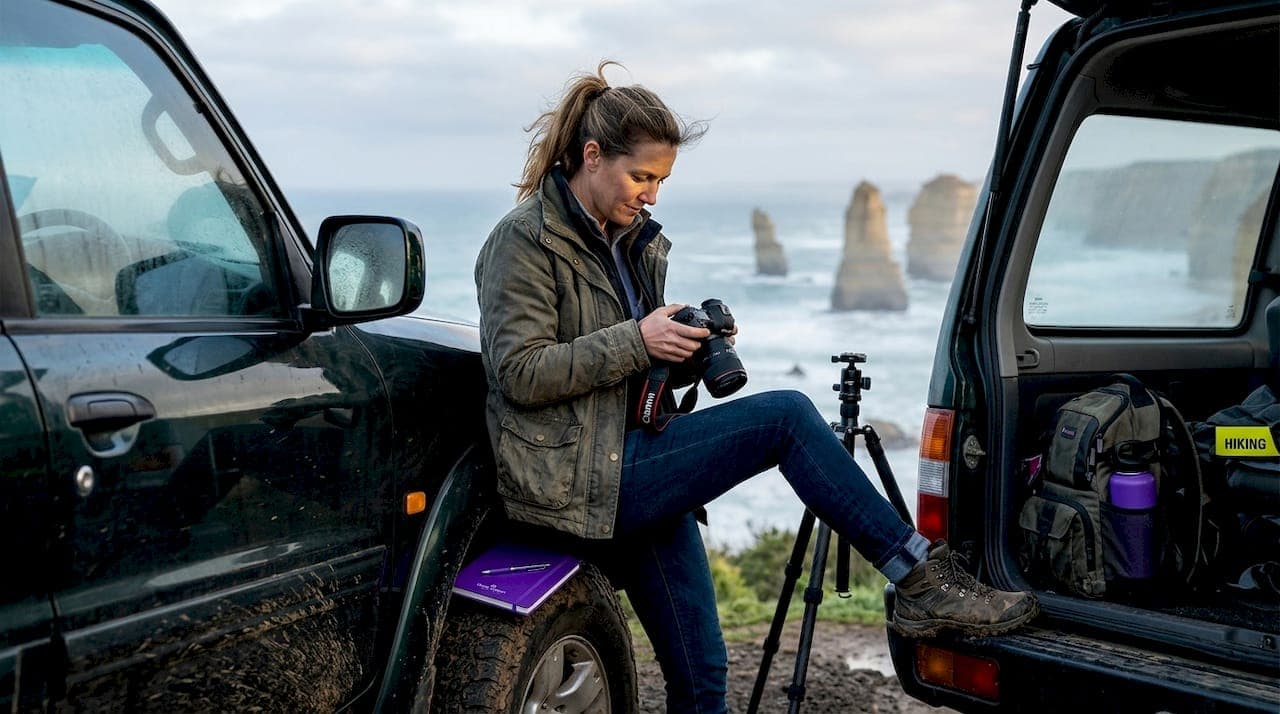
Australia hands you some of the most extraordinary photographic material on earth, but finding routes that actually deliver great images requires more than a map and a full tank of gas. The best scenic drives Australia photography seekers will prize are the ones where iconic Australian landscapes align with accessible viewpoints, predictable lighting windows, and enough variety to fill a memory card several times over. This guide covers four of the country's most rewarding photography road trips, with honest route detail, timing advice, and gear guidance drawn from real experience in the field.
Table of Contents
- Key takeaways
- Best scenic drives Australia photography: how to plan your trip
- Great Ocean Road: coastal icons and golden-hour photography
- Grand Pacific Drive: cliffs, rainforest, and coastal variety
- Red Centre Way: outback rock formations and cultural photography
- Waterfall Way, New South Wales: slow travel and rainforest photography
- My honest take on photography road trips in Australia
- Explore Mark Gray's Australian photography and workshops
- FAQ
Key takeaways
| Point | Details |
|---|---|
| Route selection matters | Choose drives based on your photography goals, vehicle capability, and seasonal conditions before you book anything. |
| Timing controls quality | Shooting at sunrise and sunset dramatically improves image quality compared to midday light on every route covered here. |
| Separate scouting from shooting | Scout compositions in flat light, then return to capture them during golden or blue hour for the strongest results. |
| 4WD unlocks remote sites | Some of Australia's most extraordinary photo locations, including N'Dhala Gorge, require a high-clearance 4WD vehicle. |
| Slow travel produces better images | Dedicating three or more days to routes like Waterfall Way yields far stronger photography than rushing the full distance in one day. |
Best scenic drives Australia photography: how to plan your trip
Before you load the car, the most consequential decision you will make is matching your route to your actual photography goals. Coastal light differs enormously from outback light. Rainforest shooting demands different equipment and timing than rock formation photography. Getting this alignment right from the start saves you from arriving at the wrong place at the wrong time with the wrong gear.
Essential gear for the road
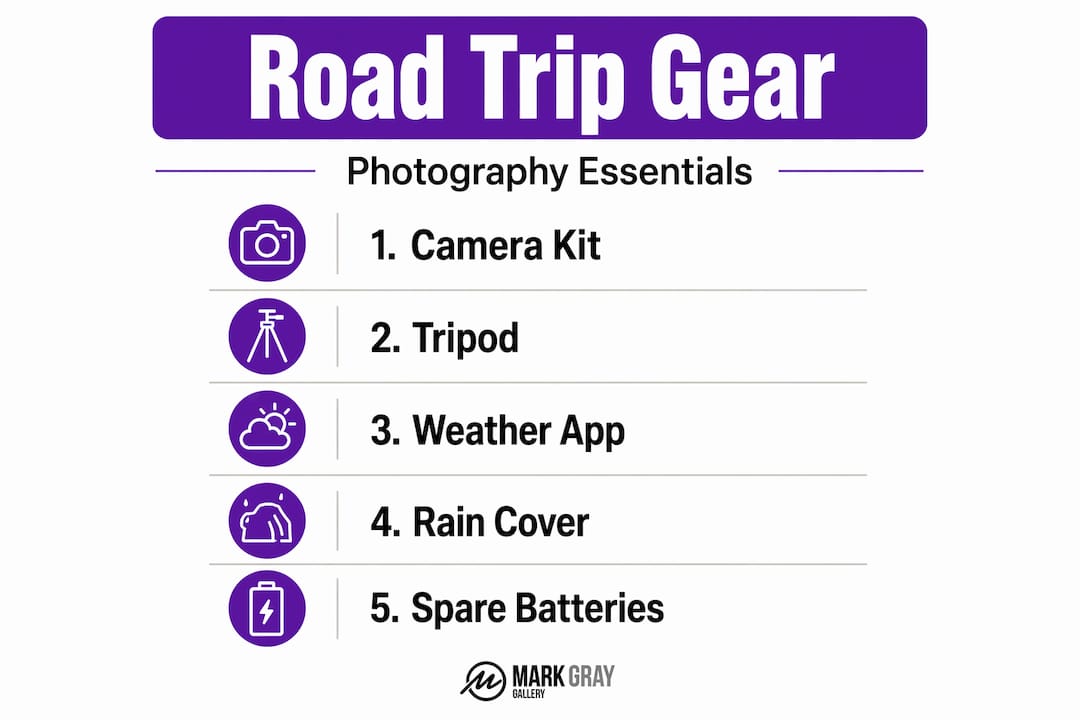
Packing deliberately matters more on a driving tour than on a fixed-location shoot. You cannot always return tomorrow. The following gear covers the core needs across coastal, rainforest, and outback environments:
- Camera body with weather sealing if shooting coastal or rainforest routes
- Wide-angle lens (16mm to 24mm range) for landscape and seascape work
- Telephoto lens (70mm to 200mm) for compressing distant rock formations and layered ranges
- Polarizing filter to cut water glare and intensify sky color in coastal shots
- Neutral density (ND) filter set for long-exposure waterfall and ocean photography
- Sturdy travel tripod rated for wind (coastal platforms get serious gusts)
- Extra batteries and power bank for remote outback drives with limited charging access
- Rain cover for your camera bag on rainforest routes
Understanding how weather shapes your photography changes how you pack and how you plan each day. Overcast skies are your ally in rainforests and waterfalls. Clear skies reward outback and coastal shooting. Plan for both.
Pro Tip: Check Bureau of Meteorology forecasts specifically for the road sections you are driving, not just the nearest town. Coastal and highland microclimates diverge significantly along routes like the Grand Pacific Drive.
Timing windows and access notes
Every route in this guide has specific seasonal access considerations. Great Ocean Road is accessible year-round but least crowded between May and August. Waterfall Way is best visited after rainfall when falls run strong. Red Centre Way is most comfortable between April and September when daytime temperatures stay manageable. Research permits and cultural access rules before shooting at Indigenous sites.
Great Ocean Road: coastal icons and golden-hour photography
The Great Ocean Road is the most frequently cited photography road trip in Australia, and the acclaim is warranted. Stretching roughly 240 kilometers along Victoria's southwest coast, the route delivers sea stacks, arched limestone formations, ancient temperate rainforest, and dramatic clifftop lookouts. The Twelve Apostles are best photographed at sunrise or sunset when soft light reduces contrast and crowds thin dramatically.
The scouting versus shooting workflow
One of the most practical techniques for this route is separating your scouting time from your shooting time. Separating scouting from shooting lets you handle changing weather and variable light without the pressure of executing a shot you have not yet composed. Arrive at Loch Ard Gorge or Bay of Islands in the middle of the day. Study the angles, identify your foreground, note where shadows fall. Then return at golden hour ready to shoot with intention.
Here is a structured approach to working the Great Ocean Road as a multi-day photography drive:
- Day one: Drive from Torquay to Apollo Bay. Scout Kennett River, Aireys Inlet lighthouse, and the Lorne foreshore. Shoot the lighthouse and coast at sunset.
- Day two: Dedicate the full day to the Port Campbell National Park section. Arrive at Twelve Apostles before sunrise. Scout Loch Ard Gorge and Gibson Steps during midday. Shoot Bay of Islands at sunset.
- Day three: Detour inland to Hopetoun Falls and Erskine Falls. Overcast conditions are preferable here. Rejoin the coast for the Peterborough area at sunset.
The forest and waterfall stops inland are often overlooked on photography road trips along this route. Erskine Falls near Lorne drops 30 meters into a fern-lined gorge and rewards a 6-stop ND filter and a 2-second exposure. Hopetoun Falls in the Otway National Park is similarly spectacular and far less visited.
Pro Tip: On multi-day Great Ocean Road trips, book accommodation between the major shooting locations so you are never more than 20 minutes from a key site at golden hour. Driving 90 minutes at 5 a.m. to reach Twelve Apostles is a guaranteed way to miss the best light.
Grand Pacific Drive: cliffs, rainforest, and coastal variety
The Grand Pacific Drive forms a 500-kilometer loop starting south of Sydney, combining 140 kilometers of dramatic coastal highway with inland detours through Illawarra, the Southern Highlands, and Shoalhaven. The variety of ecosystems packed into one loop makes this one of the most rewarding driving tours for photographers who want both coastal and rainforest shots from a single trip.
Key photo locations on the route
| Location | Photo subject | Best conditions |
|---|---|---|
| Sea Cliff Bridge | Bridge curves over Pacific cliffs | Sunrise, golden hour, mist |
| Fitzroy Falls | 81-meter plunge waterfall | Overcast, after rainfall |
| Kangaroo Valley | Rolling pastoral hills and historic bridge | Morning mist, autumn color |
| Bombo Headland | Hexagonal basalt columns | Low tide, overcast |
| Kiama Blowhole | Dramatic water spout | Swell of 2m or more |
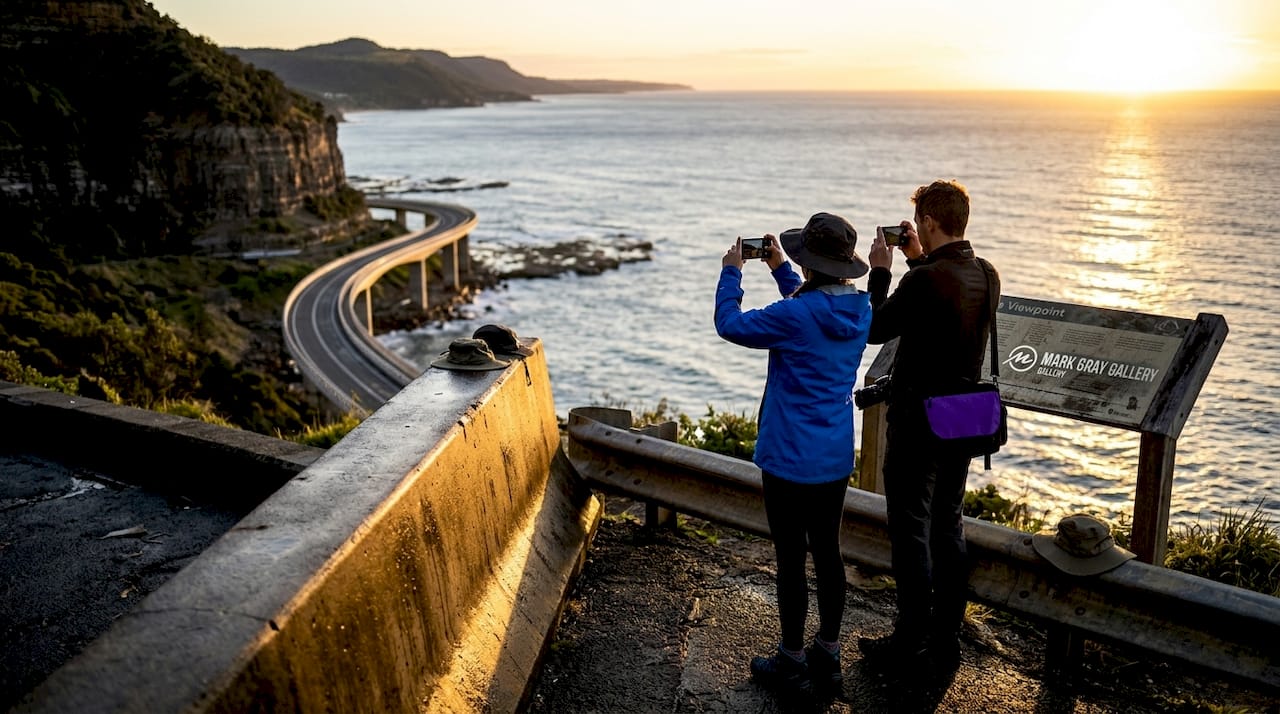
Sea Cliff Bridge near Clifton is one of the most photographed structures in New South Wales, and rightfully so. The bridge curves above the Pacific ocean with cliff faces rising on one side and open water on the other. Shoot from the northern lookout at sunrise for the best light direction. The landscape photography techniques that work best here involve a polarizing filter to reduce glare off the water and a wide aperture to separate the bridge detail from the horizon.
Fitzroy Falls deserves at minimum a half-day stop. The falls drop into a canyon of sandstone and eucalyptus, and boardwalks on both the east and west rim give you fundamentally different compositions. Combine slow shutter speeds for silky water with careful exposure to hold detail in the surrounding rock face.
Pro Tip: Dedicate at least two full days to the inland section around Kangaroo Valley and the Southern Highlands. Photographers who treat this as a single-day drive consistently report wishing they had stayed longer.
Red Centre Way: outback rock formations and cultural photography
Few photography road trips Australia offers compare to the Red Centre Way for sheer drama and scale. The route connects Alice Springs to Uluru through Kings Canyon, ancient gorges, and ochre-colored ranges that shift color through the day as the sun moves across the sky. World Atlas ranks this among the seven most scenic drives in Australia, and the photographs taken here explain why.
East MacDonnell Ranges loop
The East MacDonnell Ranges loop is a 4 to 5 day journey incorporating both sealed roads and demanding 4WD tracks. The sealed sections connect Emily Gap, Jessie Gap, and Corroboree Rock. The 4WD tracks reach N'Dhala Gorge, where ancient petroglyphs cover canyon walls in one of Australia's most significant rock art sites. Photographing here requires a high-clearance 4WD and a short walk into the gorge. The reward is extraordinary.
| Route section | Road type | Key photo subjects |
|---|---|---|
| Alice Springs to Corroboree Rock | Sealed | Rock formations, wildflowers |
| Corroboree Rock to N'Dhala Gorge | 4WD track | Petroglyphs, gorge walls |
| Kings Canyon Rim Walk | Walking track | Canyon views, curved domes |
| Uluru sunrise viewing area | Sealed | Uluru at first light |
| Kata Tjuta Valley of the Winds | Walking track | Rock domes, desert plains |
Uluru photography is also defined by designated sunrise and sunset viewing areas with cultural access restrictions that require planned shooting times. The Talinguṟu Nyakunytjaku sunrise viewing area positions you to the northeast for the classic Uluru color shift from deep purple to burning orange in the first 20 minutes after dawn. Arrive 45 minutes early. That is not optional.
Pro Tip: Sequence your East MacDonnell itinerary to place sealed road stops at golden hour and save 4WD sections for midday when light is flat. This maximizes shooting quality without sacrificing access to remote sites.
Waterfall Way, New South Wales: slow travel and rainforest photography
Waterfall Way runs 185 kilometers from Urunga to Armidale through the New South Wales tablelands, threading past some of the continent's most dramatic plunging waterfalls and ancient Antarctic beech rainforest. This is a route that genuinely punishes photographers who rush it.
Key stops and optimal shooting windows
- Dangar Falls near Dorrigo: best shot in morning light from the lower lookout, requires a short walk
- Ebor Falls (upper and lower): two separate compositions accessible from roadside stops
- Wollomombi Falls near Armidale: one of Australia's highest falls, best in full flow after sustained rain
- Dorrigo National Park rainforest canopy walk: overcast conditions produce even, shadow-free light through the tree ferns
- Cathedral Rock National Park: granite tors and alpine heath, best at sunrise for long shadow and warm color
Waterfall photography rewards slow travel with lingering time at vantage points and a multi-day itinerary. Dedicate at minimum three days to this route. A 6-stop or 10-stop ND filter extends your waterfall exposures to the 1 to 4 second range needed for silky water without blowing out the surrounding rock and vegetation. Overcast or lightly overcast days are ideal. Bright sunshine creates harsh contrast that no amount of post-processing fully corrects.
Pro Tip: Research recent rainfall at Wollomombi before your visit using the Water NSW river gauge data. Falls that have not received rain in two weeks look thin and underwhelming on camera, regardless of light quality.
Joining a landscape photography workshop tour along routes like this one accelerates your technical development significantly. Having experienced guidance when the light turns or conditions shift unexpectedly changes your results in ways that self-directed practice rarely matches.
My honest take on photography road trips in Australia
I have driven and photographed most of the routes in this guide multiple times, and the mistake I see most often from photographers on the road is trying to capture everything on a single pass. The impulse to shoot every landmark is understandable. You have driven a long way. The scenery is genuinely extraordinary. But the images that come out of that approach tend to be technically competent and emotionally flat.
What I have found actually works is committing to fewer locations per day with real time at each one. Watching how light moves across a gorge or a sea stack for 90 minutes teaches you things that an hour of post-processing cannot fix later. I once spent an entire morning at a single lookout on Waterfall Way, and it produced three of my strongest landscape prints from that region.
The other thing I have learned is that adapting to weather rather than fighting it separates memorable images from record shots. Fog at Kangaroo Valley is not a problem. It is the photograph. A storm building over Uluru at sunset is not bad luck. It is the reason you stayed another day.
Gear matters less than timing and patience on every single route in this guide. You can take extraordinary images with a mid-range camera and a good tripod if you are in the right place at the right moment.
— Mark
Explore Mark Gray's Australian photography and workshops
Mark Gray is one of Australia's most recognized landscape photographers, with a portfolio spanning the Red Centre, the southern coastline, and the ancient rainforests of New South Wales. His award-winning prints capture the exact locations and lighting conditions covered in this guide, available as premium limited edition prints through Mark Gray's photography gallery. If you are serious about improving your results on these routes, Mark's one-day photography courses and multi-day photography workshops across regional Australia offer direct, hands-on instruction in the field. Whether you are planning your first photography road trip or refining a technique that has plateaued, working alongside an internationally exhibited photographer in the actual locations you want to shoot is an experience that produces lasting results.
FAQ
What are the best scenic drives in Australia for photography?
The Great Ocean Road, Grand Pacific Drive, Red Centre Way, and Waterfall Way are consistently ranked among the most scenic drives in Australia for photographers seeking diverse landscape subjects and strong lighting conditions.
When is the best time to photograph the Twelve Apostles?
Sunrise delivers the best light and fewest crowds at the Twelve Apostles. Arrive before dawn and plan your exit after the first 90 minutes of daylight when tour buses begin to arrive.
Do I need a 4WD vehicle for Australian photography road trips?
Most featured routes are accessible with a standard vehicle. However, N'Dhala Gorge petroglyphs and some East MacDonnell Ranges sections require a high-clearance 4WD for safe access.
How many days should I allow for Waterfall Way?
Allow at least three days to photograph Waterfall Way properly. Rushing the 185-kilometer route in a single day means missing the multi-stop compositions and variable light conditions that make this one of the best routes for photography in New South Wales.
Are there cultural photography restrictions at Uluru?
Yes. Uluru has designated photography zones and cultural access restrictions. Photographers must use approved sunrise and sunset viewing areas and respect areas where photography is prohibited as directed by traditional custodians.