
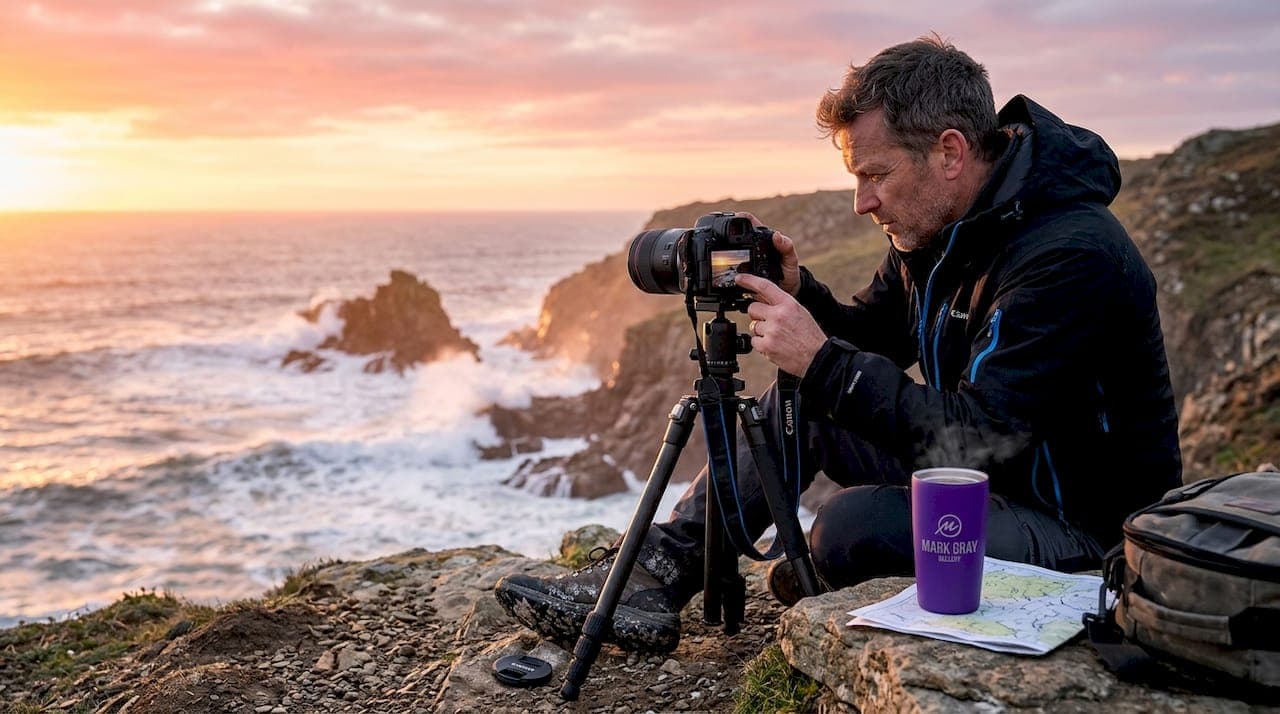
If you've ever wondered what a landscape photography workshop tour actually involves, you're not alone. Many photographers assume these are glorified sightseeing trips with a camera in hand. The reality is far more rewarding. A landscape photography workshop tour is a structured, education-first experience that places you in stunning natural environments alongside a professional instructor who guides you through every technical and creative decision. You shoot at prime times, receive real-time feedback, and return home with dramatically stronger images and skills.
Table of Contents
- Key takeaways
- What is a landscape photography workshop tour?
- Skills and techniques you'll build on location
- Benefits of combining travel with photography education
- How to choose the right workshop tour for you
- My honest take on what these tours actually deliver
- Explore Mark Gray's photography workshop tours
- FAQ
Key takeaways
| Point | Details |
|---|---|
| More than just a tour | Workshop tours combine hands-on photography education with curated travel to iconic and remote locations. |
| Instructor-led learning | Professional photographers guide participants through shooting techniques, composition, and post-processing in the field. |
| Skill growth is accelerated | Immersive, real-world practice with immediate feedback speeds up photography skills enhancement far beyond self-study. |
| Location access matters | Expert-led tours open doors to locations timed for optimal light, weather, and photographic potential. |
| Right fit is everything | Choosing a tour that matches your skill level, goals, and preferred environment determines how much you gain. |
What is a landscape photography workshop tour?
A landscape photography workshop tour is a guided, multi-day program that blends purposeful travel with structured photography instruction in the field. Unlike a standard photography tour, which may prioritize sightseeing over skill building, a workshop tour is built around a deliberate learning curriculum. Think of it as a photography field trip with professional mentorship woven into every sunrise session and golden-hour shoot.
These tours are designed to serve photographers at multiple skill levels. Whether you shoot with an entry-level mirrorless camera or a full-frame professional body, the instruction adapts. The itinerary is planned around photographic opportunity, not convenience. That means early starts to catch the first light and staying out late when conditions turn dramatic.
What separates a landscape photo workshop from a standard tour experience is the quality of guidance and structure. Small-group instruction allows immersive learning focused on both technical and artistic development. You aren't watching someone else photograph a waterfall. You're positioned at it, dialing in your own settings, with an instructor at your shoulder.
- Group sizes are deliberately small, typically between 4 and 12 participants, to maximize individual attention
- Itineraries are timed around golden hour, blue hour, and weather windows that produce the most compelling images
- Instruction covers both in-field shooting and post-processing review at the end of each day
- Feedback sessions allow participants to see their own images critiqued alongside peers, which accelerates growth significantly
Pro Tip: Before booking any workshop tour, ask the organizer what the typical student-to-instructor ratio is. Anything above 8:1 starts to dilute the individual attention that makes these experiences worth the investment.
Photography workshops in regional Australia confirm that the most effective programs include planned lessons, shooting assignments, and structured feedback sessions. That combination is what distinguishes a true workshop tour from a casual photography holiday.
Skills and techniques you'll build on location
One of the strongest reasons to join a nature photography workshop tour is the sheer range of skills you develop in real conditions. Reading about composition in a book and actually framing a granite mountain at dawn are two entirely different experiences. Here is the progression most workshop tours follow:
- Composition and framing. You learn to apply the rule of thirds, leading lines, and foreground interest in live environments. Instructors show you how to read a scene before you ever lift your camera.
- Camera settings under variable light. Aperture, shutter speed, and ISO all behave differently when light shifts from pre-dawn gray to full sunrise gold. Effective landscape workflow involves scouting, reading light, choosing filters, managing exposures, and processing images to reflect the scene.
- Filters and long exposure techniques. Neutral density filters and polarizers become practical tools rather than confusing accessories. You practice long exposures on moving water, coastal scenes, and storm-lit skies.
- Adapting to weather and natural light. Workshops deliberately use challenging conditions as teaching moments. Coping with natural conditions is one of the most transferable skills you take home from any serious workshop.
- Post-processing fundamentals. End-of-day editing sessions cover tonal adjustments, color grading, and how to process images to match what your eye saw in the field. Workshop instruction guides participants through capturing nature's beauty with both shooting and editing techniques.
- Preparation and workflow habits. A repeatable workflow covering preparation, shooting, and post-processing steps reduces lost opportunities in the field. You stop second-guessing and start executing.
The numbered sequence above is not arbitrary. Each skill layer builds on the previous one. By day three of a well-run workshop tour, you are applying compositional instincts you didn't consciously have on day one.
Benefits of combining travel with photography education
There is something genuinely transformative about learning photography in a location that moves you. Classroom-based landscape photography classes teach the principles, but they cannot replicate the feeling of standing at the edge of a mountain tarn at 5:30 AM with an instructor pointing out a reflection you almost missed.
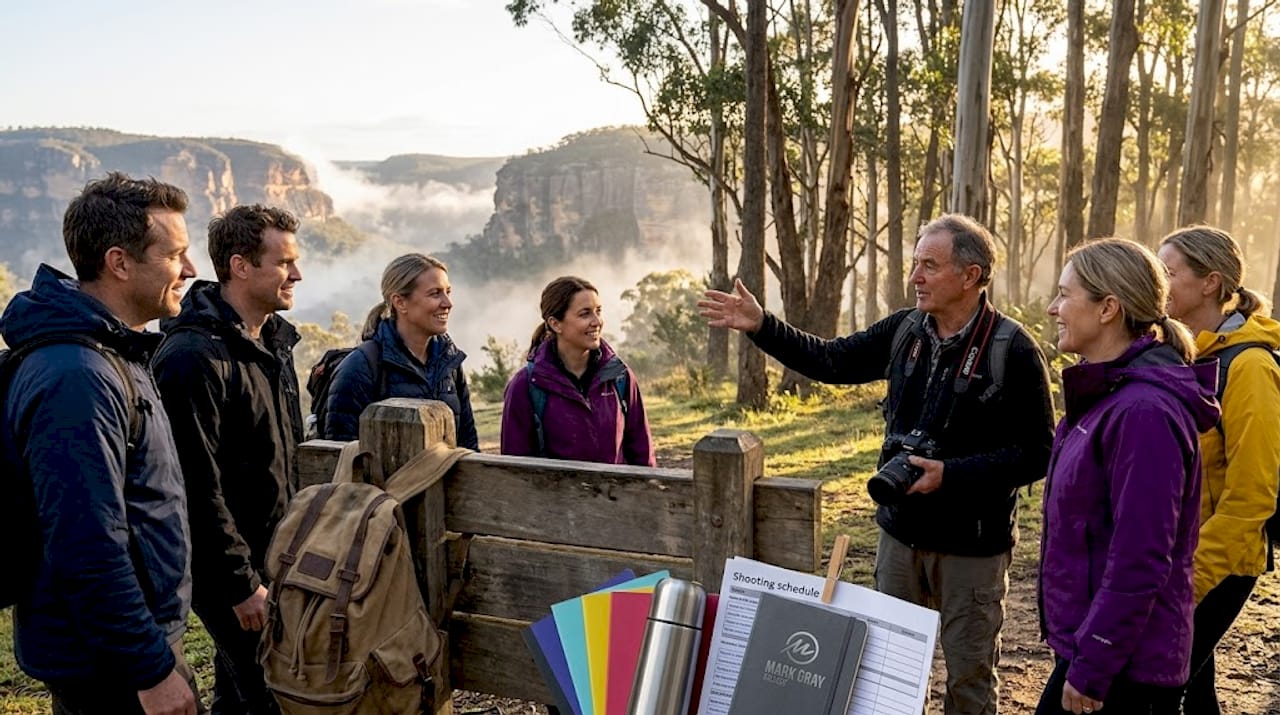
Access to iconic parks, hidden gems, and diverse landscapes is one of the defining advantages of a workshop tour. Instructors who lead these programs regularly have built relationships with locations over years. They know which ridge catches the last light in winter and which stretch of coastline reveals rock patterns only visible at low tide.
The creative benefits are equally significant:
- Inspiration through immersion. Being surrounded by photographers who share your passion pushes your creative thinking further than solo travel ever could.
- Peer learning. Watching how a fellow participant solves a framing problem gives you a solution you might never have tried on your own.
- Confidence building. Coming home with a portfolio of technically strong, emotionally resonant images from a location you've never shot before builds genuine photographic confidence.
- Personal growth through challenge. Early mornings, unpredictable weather, and demanding terrain build a photographer's resilience alongside their skill set.
"Participants frequently gain increased creative inspiration and motivation when combining travel with skill development. The combination strengthens both photographic results and personal growth."
The photography tour experience also removes logistical friction. Transport, location timing, permits for restricted areas, and safety considerations are all managed by the tour operator. You focus entirely on photography.
How to choose the right workshop tour for you
Not every landscape photo workshop is the right fit for every photographer. Making a thoughtful choice before you book protects both your investment and your experience.
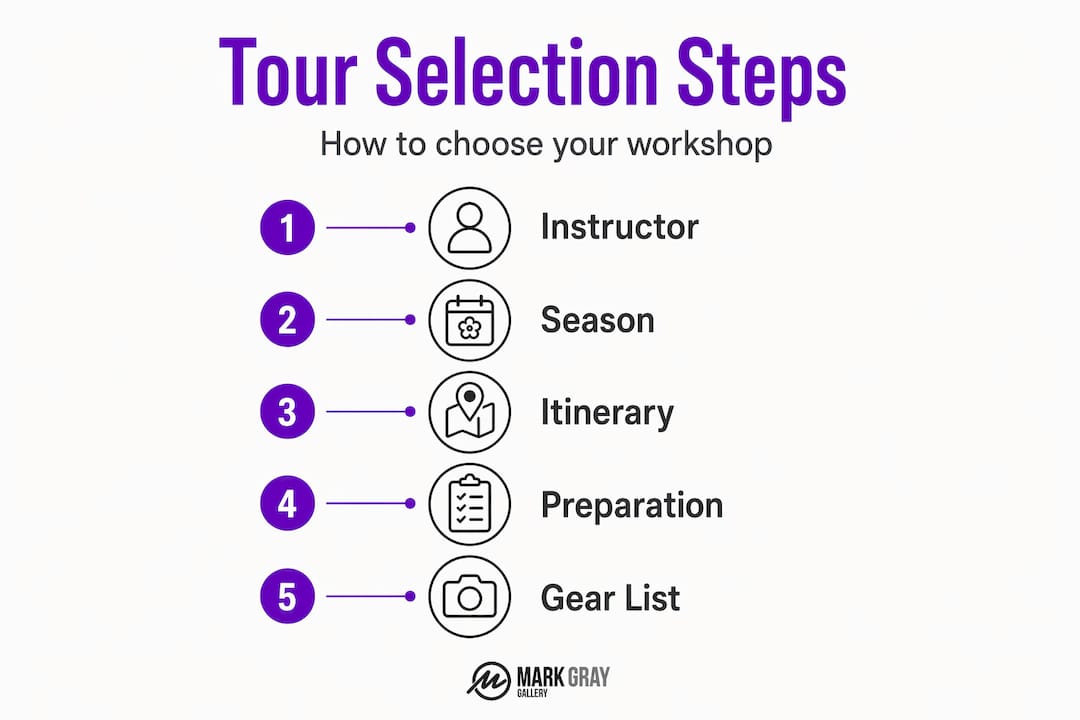
| Consideration | What to look for |
|---|---|
| Instructor credentials | Published work, competition recognition, and evidence of genuine teaching experience |
| Group size | Smaller groups (under 10) provide more personalized feedback and shooting space |
| Skill level match | Confirm the tour is designed for your current ability, not a level above or below |
| Location and season | Light quality, weather patterns, and landscape type should match your photographic interests |
| Duration and budget | Multi-day tours offer greater depth; single-day programs suit those testing the format first |
When evaluating instructor credentials, look beyond follower counts. Professional instructors in quality workshops facilitate immediate feedback and meaningful peer interaction. The best instructors share their own decision-making process openly rather than simply demonstrating results.
Consider the season carefully. A tour to the Australian outback in summer delivers a radically different experience than the same region in winter. Light quality, subject matter, and physical comfort all shift dramatically with the season. Similarly, a tour focused on coastal photography rewards patience and timing in ways that a mountain tour does not.
Pro Tip: Ask for a sample itinerary before booking. The daily schedule reveals whether the tour truly prioritizes prime shooting windows or whether photography is squeezed around general tourism activities.
Preparation matters too. Review the gear list the operator provides, practice your camera settings in manual mode before you go, and study the locations online. Immersive photo tours provide guided instruction and critiques designed to help photographers grow intentionally. You get far more from that guidance when you arrive with baseline competency already established.
My honest take on what these tours actually deliver
I've led landscape photography tours across some of the world's most spectacular locations, and I've watched participants arrive skeptical and leave genuinely changed. Not in a dramatic sense. In the quiet, practical sense of returning home and seeing their own neighborhood with different eyes.
What I've learned is that most photographers underestimate one thing: the value of being corrected in the field, in the moment, with the image still on your screen. You don't forget that kind of feedback. It rewires how you approach the next shot, and the one after that. No online course or YouTube tutorial replicates that.
I've also seen a common misconception. Many participants arrive thinking the location will do the work. The truth is that spectacular scenery produces average images if the technique isn't there. The landscape gives you the raw material. The workshop gives you the judgment to use it well.
The community dimension surprises people most. The photographers you meet on a well-run tour often become long-term connections, people you share locations with, critique work for, and draw inspiration from for years afterward. That is a return on investment no brochure ever quantifies.
— Mark
Explore Mark Gray's photography workshop tours
Mark Gray is one of Australia's most recognized landscape photographers, with work exhibited internationally and a long history of leading photographers through some of the world's most photogenic locations. Whether you are looking for a one-day landscape photography class to test the waters or a multi-day landscape photography workshop tour that takes you across Australia or to destinations as far as Iceland or French Polynesia, Mark's programs are built around the same principle: genuine skill growth in extraordinary places. Every tour is structured to maximize your time behind the lens, with real mentorship and real results. Visit the Mark Gray Gallery to view current tour offerings and secure your place.
FAQ
What is a landscape photography workshop tour?
A landscape photography workshop tour is a structured, multi-day program combining photography education with guided travel to natural locations, led by a professional instructor who provides hands-on shooting guidance and feedback.
How is a workshop tour different from regular landscape photography classes?
Landscape photography classes are typically held in studios or classroom settings, while workshop tours take instruction directly into the field at prime locations, timed around optimal light and real shooting conditions.
What should I expect in a photography tour?
You can expect early morning and late evening shoots timed around golden hour, small-group instruction, daily image reviews, and structured guidance on composition, camera settings, filters, and post-processing.
Do I need advanced skills to join a nature photography workshop?
Most nature photography workshops are designed for a range of skill levels. Beginners benefit from structured fundamentals, while experienced photographers advance their creative and technical decision-making through instructor feedback.
How do I know if a landscape photo workshop is right for me?
Review the instructor's credentials and published work, confirm the group size is small enough for individual attention, and request a sample itinerary to verify that shooting sessions are prioritized over general sightseeing.