
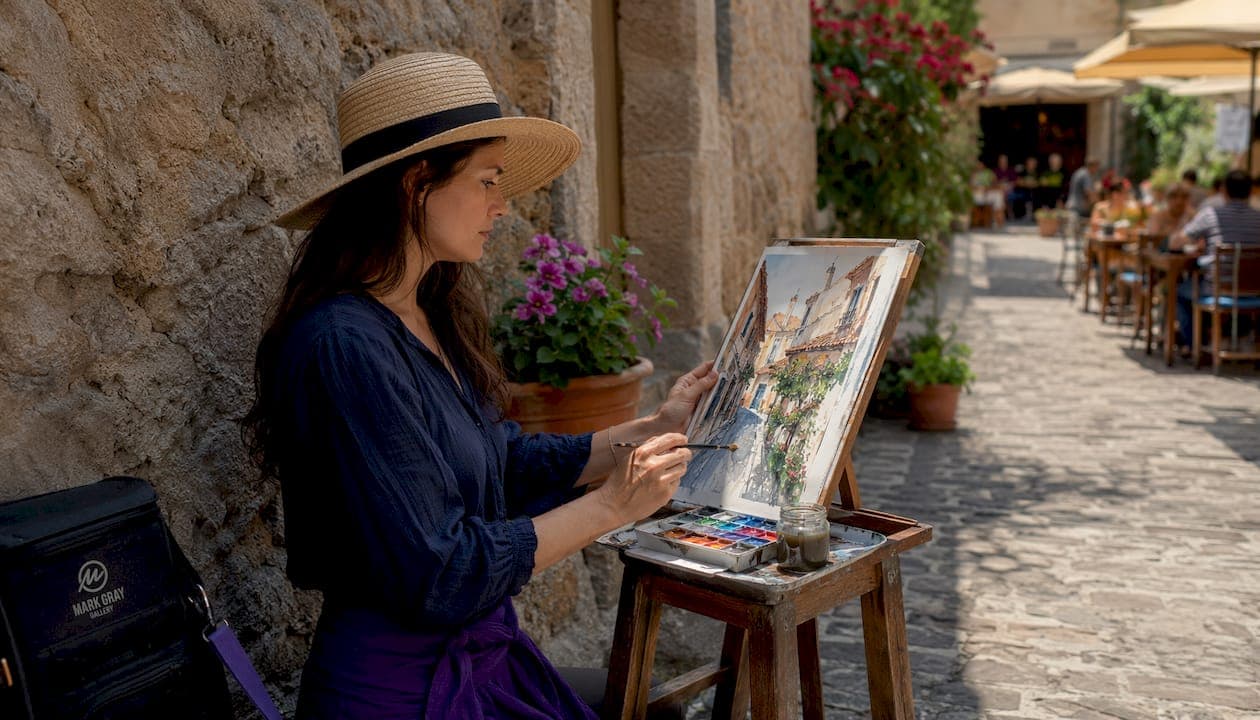
Fine art captures travel memories by transforming fleeting sightseeing moments into immersive, detailed reflections through active creation and thoughtful curation. Unlike a quick photograph, making or selecting art forces you to study a place with real attention, locking in sensory details that passive recording simply cannot reach. The result is a memory with texture, color, and emotion attached. Whether you sketch a Lisbon rooftop, assemble a travel journal packed with boarding passes and watercolors, or hang a limited edition landscape print in your living room, fine art gives your travel experiences a permanent, meaningful form. This article covers the cognitive science, practical techniques, and curatorial choices that make art and travel memories so much richer than a camera roll alone.
How fine art captures travel memories through active observation
Creating art on location is the single most effective way to deepen travel memory. The reason is neurological. Painting on location promotes "forced observation" that engages multiple senses and cognitive processes, creating deeper neurological memory anchors than photography. When you stop to mix a color that matches the afternoon light on a cathedral wall, your brain encodes that moment with far more detail than a shutter click ever could.
Photography, by contrast, works against memory in a measurable way. Studies show people remember fewer details when photographing versus closely observing or drawing a subject. This is the photo-taking impairment effect, a well-documented cognitive phenomenon where outsourcing memory to a device reduces the brain's own encoding effort. The camera does the remembering so you do not have to, and that is exactly the problem.
Art reverses this. A 10–15 minute painting session per location significantly increases memory retention by forcing detailed analysis beyond passive photography. Artists report that focused painting turns a transient visit into a deeply seated experience, with hours feeling like minutes. That quality of absorption is what makes the memory stick.
Watercolor and sketching are the most practical starting points for travelers. They require minimal gear and reward observation over technical skill. The benefit is in focused observation rather than talent, which means anyone can improve how they capture travel memories by attempting art. You do not need to produce a gallery-worthy piece. You need to look long enough to mix the right blue.
- Pack a small watercolor travel set with a water brush and a pocket-sized sketchbook.
- Choose one scene per day to draw rather than trying to capture everything.
- Spend at least ten minutes on a single subject before moving on.
- Focus on light and shadow rather than perfect proportions.
- Write a one-sentence note beside each sketch to anchor the emotional context.
Pro Tip: Watercolor and sketching as travel art techniques are less about accuracy and more about engaging your perception of light and color. Treat each sketch as a memory exercise, not a performance.
What makes travel journals and mixed media art such powerful keepsakes?
A travel journal that combines sketches, watercolors, and physical ephemera is a richer memory object than either a photo album or a written diary alone. The reason is multisensory layering. Integrating physical items like tickets, labels, and small souvenirs into art journals creates tactile and visual layers that mirror the complex sensory environment of travel itself. When you open a page and feel the texture of a glued metro ticket beside a watercolor of a night market, your brain reconstructs the full scene.
This practice has a name in the hobbyist community: travel junk journaling. It blends art and physical souvenirs into volumes that document trips with genuine emotional depth. One enthusiast documented 26 journal entries from 15 trips over nine years using exactly this multisensory approach. That kind of archive is irreplaceable in a way that a cloud photo folder simply is not.
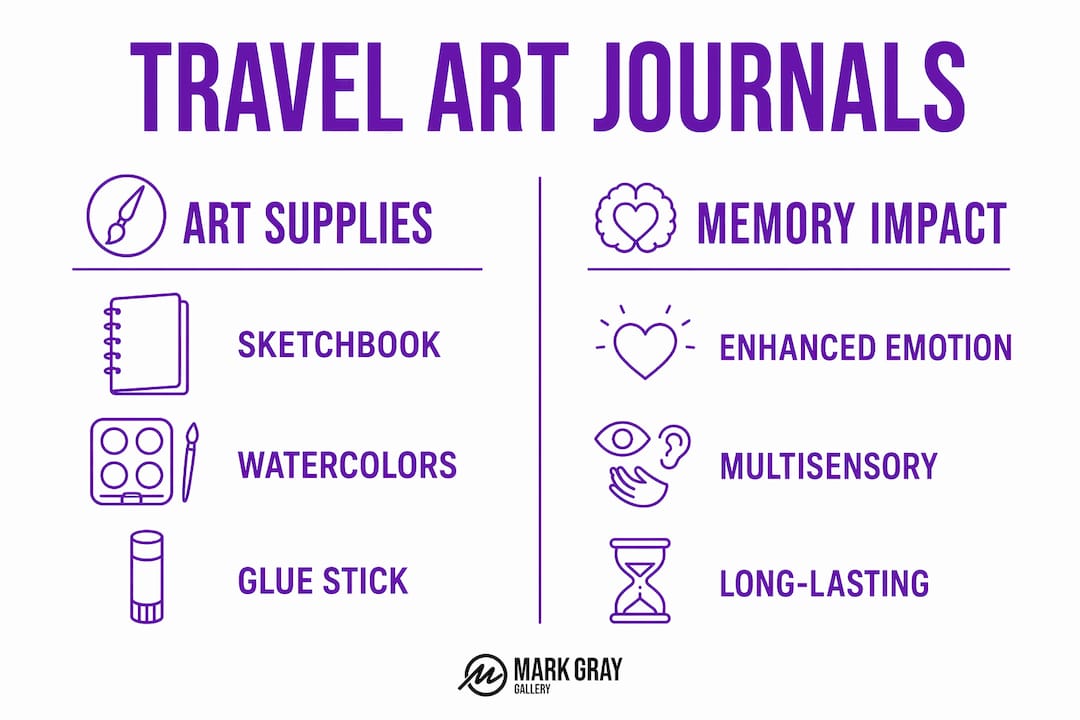
Practitioners find enhanced emotional resonance when physical ephemera is included in travel art objects, compared to clean photos or paintings alone. The chaos of travel, the smells, sounds, and textures, gets encoded into the object itself. Pulling out a journal page with a coffee stain and a hand-drawn map triggers memory in a way that a digital image cannot.
| Keepsake type | Sensory layers | Memory impact | Durability |
|---|---|---|---|
| Digital photo album | Visual only | Low to moderate | High (cloud) |
| Printed photo book | Visual, tactile | Moderate | High |
| Sketchbook or watercolor journal | Visual, tactile, cognitive | High | Moderate to high |
| Mixed media travel journal | Visual, tactile, olfactory, cognitive | Very high | Moderate |
| Limited edition fine art print | Visual, aesthetic, narrative | High, long-term | Very high |
Traveling with art supplies does not require a large bag. A compact watercolor set, two brushes, a water brush, a small sketchbook, and a glue stick cover most mixed media needs. Collect flat ephemera as you go: receipts, sugar packets, postage stamps, and torn map corners all work beautifully as journal elements.
How do travel-themed fine art prints transform a home into a personal narrative?
Displaying travel-inspired art at home is one of the most underrated forms of creative travel memory preservation. A limited edition fine art print does something a mass-produced souvenir cannot: it holds a specific emotional truth about a place and reflects it back to you every day. Professional designers emphasize that curated travel art in home decoration maintains emotional connections in a way that trinkets and fridge magnets never achieve.
The psychological mechanism here is the narrative anchor. When you walk past a large-format print of Iceland's Vatnajökull glacier or the Milky Way over the Australian outback, your brain re-engages the memory of being there. The image is not decoration. It is a retrieval cue, a daily prompt that keeps the experience alive in your identity. Travel-inspired art in homes turns collections into personal narratives far beyond typical souvenirs, deeply connecting to identity.
The souvenir trap is real. Most travelers return home with objects that look appealing in a market but feel generic within weeks. Original or limited edition art avoids this entirely because it carries artistic intent and a specific point of view. When you select a print by a photographer who stood in the same landscape you visited, you are buying a shared perspective, not a mass-produced replica.
Pro Tip: When selecting travel art for your home, choose one large statement piece per room rather than clustering many small prints. A single powerful image creates a stronger narrative anchor than a wall of smaller, competing visuals.
Design considerations matter too. Placement at eye level, framing that complements the image's color palette, and adequate wall space around the piece all affect how strongly the memory resonates. For practical display guidance, landscape photography display options can help you choose the right format and finish for your space.
How do modern tools make travel art accessible to everyone?
Not every traveler arrives home with a sketchbook full of watercolors. Modern tools close that gap without requiring artistic training. Custom paint-by-numbers kits allow anyone to turn travel photos into accessible fine art, with users spending several evenings painting and deeply observing a travel scene to recreate it on canvas without prior experience. The act of painting, even within a guided structure, still forces the close observation that builds stronger memory.
Fine art photography offers a parallel path for those who prefer to acquire rather than create. A professionally composed landscape photograph captures light, atmosphere, and scale in ways that a tourist snapshot cannot. Professional travel photography captures memories with higher artistic and emotional impact than casual phone photography, precisely because the photographer has made deliberate choices about timing, angle, and exposure.
Art-making post-travel also helps process emotions and extends the positive effects of a trip by encouraging slower, more intentional reflection. Studies indicate hobbies like art increase recovery from low mood and reduce the risk of negative feelings after returning home. That is a practical mental health benefit, not just an aesthetic one.
For travelers interested in sharing their own work or finding a wider art community, resources like art photography submission guides list contemporary platforms that accept travel-inspired photography and art, opening doors beyond personal journals and home walls.
- Use a paint-by-numbers kit based on your own travel photo for a structured re-engagement with the memory.
- Commission a local artist during your trip to create a small original work of a scene you love.
- Explore fine art photography prints from locations you have visited or plan to visit.
- Combine digital and analog methods: print a travel photo, then sketch over it with colored pencils or watercolor.
- For gifting, limited edition travel photography makes a far more personal and lasting gift than standard souvenirs.
Why art changed the way I experience travel
I spent years traveling with a camera as my primary tool, and I returned from every trip with thousands of images and a surprisingly thin set of actual memories. The photos existed. The experiences, in any felt sense, had already faded.
The shift happened when I started sketching on location, even badly. Sitting with a scene long enough to draw it forced me to notice things I had walked past a hundred times: the way afternoon light hits sandstone differently than granite, the specific angle of a shadow that tells you the time of day without a watch. Those details are now part of how I remember those places. The sketches themselves are secondary.
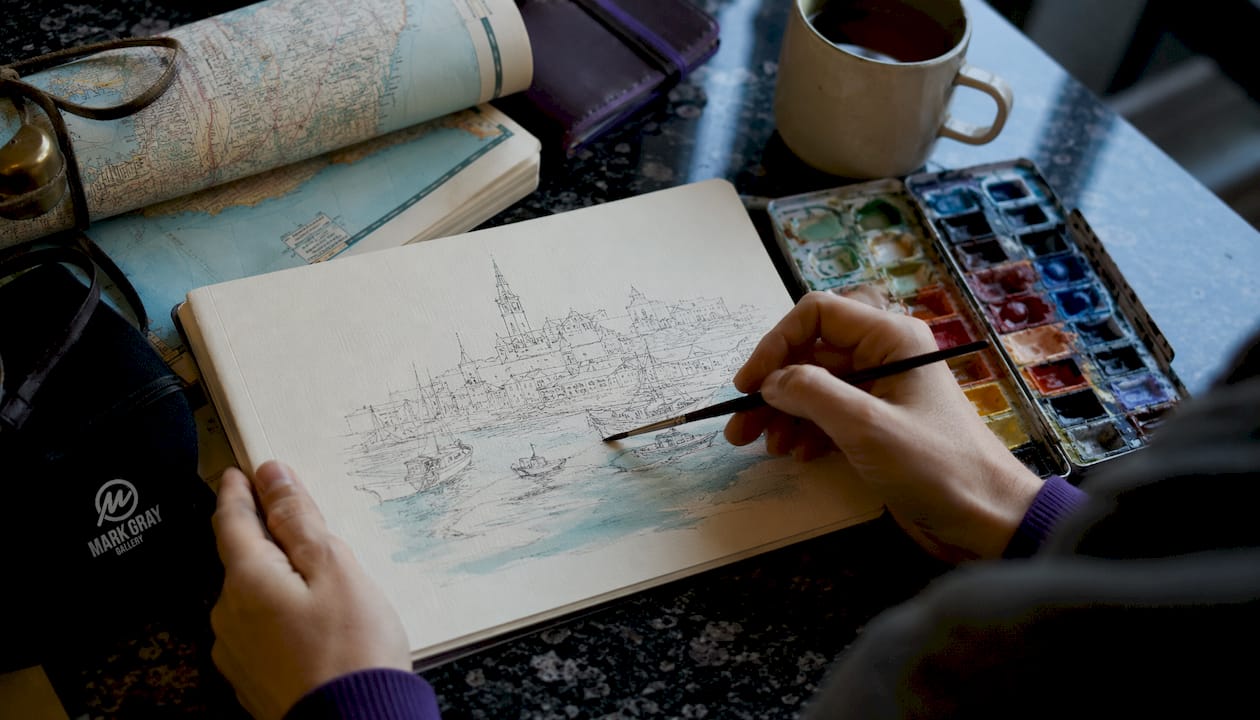
What I find most compelling is that this practice is not about skill. I have met travelers who produce extraordinary watercolors and others who draw stick figures, and both groups report the same thing: the act of trying to render a place makes it yours in a way that photographing it does not. The focused observation required by art is the memory itself.
My strong advice is to start small. One sketch per trip. One mixed media journal page. One fine art print on your wall that represents a place that genuinely moved you. The cumulative effect over years is a personal archive of experience that no camera roll can replicate.
— Mark
Fine art travel photography worth living with
Mark Gray Gallery offers a collection of award-winning, limited edition landscape photography prints from destinations including Australia, New Zealand, Norway, Iceland, French Polynesia, Spain, and the United Kingdom.
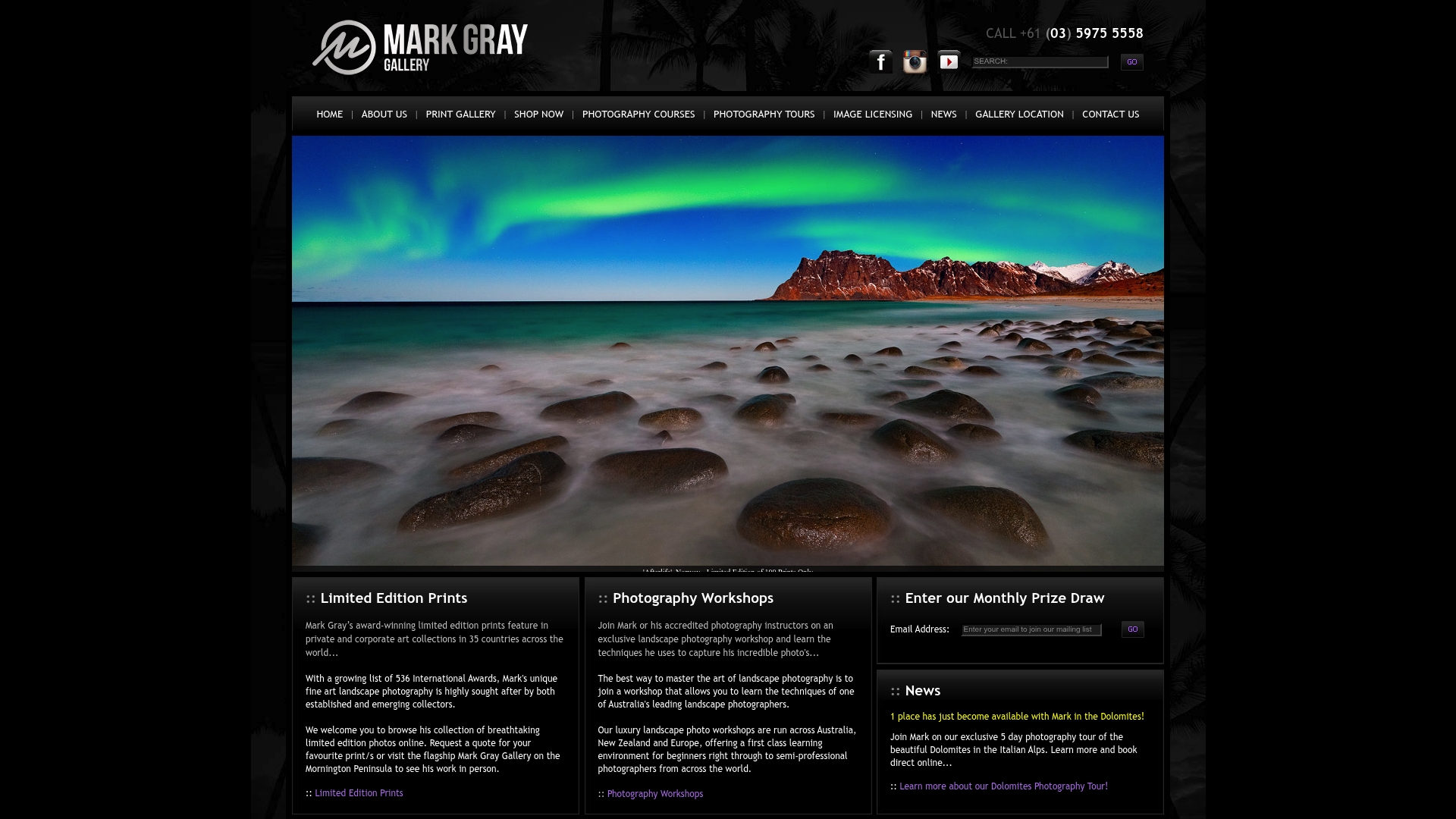
Each print is produced to premium quality standards and available in limited editions, making them genuine fine art travel pieces rather than decorative afterthoughts. Whether you are looking for a statement piece that recalls a place you have visited, a meaningful gift for a fellow traveler, or a way to bring the atmosphere of a destination you dream of visiting into your home, the Mark Gray Gallery collection offers something worth choosing with care. Gift certificates and photography courses are also available for those who want to deepen their own practice.
Key takeaways
Fine art captures travel memories more deeply than photography because it requires active observation, multisensory engagement, and deliberate creative choices that encode experience at a neurological level.
| Point | Details |
|---|---|
| Active art beats passive photography | Drawing or painting a scene forces observation that builds stronger, longer-lasting memories than taking a photo. |
| Mixed media journals maximize recall | Combining sketches, watercolors, and physical ephemera creates multisensory memory objects with very high emotional impact. |
| Home display sustains memory | Limited edition fine art prints act as daily narrative anchors that keep travel experiences alive in your identity. |
| Skill level is irrelevant | The memory benefit of travel art comes from focused observation, not artistic talent or technical ability. |
| Modern tools remove barriers | Paint-by-numbers kits and fine art photography make travel memory preservation accessible to every traveler. |
My perspective on art and travel memory
FAQ
How does fine art capture travel memories better than photos?
Fine art requires active observation of light, color, and detail, which encodes memory more deeply than the passive act of photographing a scene. The photo-taking impairment effect shows that relying on a camera reduces the brain's own memory encoding effort.
What art supplies should I bring when traveling?
A compact watercolor set, a water brush, a small sketchbook, and a glue stick cover most travel art and mixed media journaling needs without adding significant weight to your bag.
What is a travel junk journal?
A travel junk journal combines watercolors, sketches, and physical ephemera such as tickets, maps, and food labels into a multisensory keepsake that documents trips with greater emotional depth than a photo album or written diary alone.
How do limited edition prints differ from regular souvenirs?
Limited edition fine art prints carry artistic intent and a specific point of view, serving as narrative anchors in your home. Mass-produced souvenirs lack that specificity and typically lose emotional resonance within weeks of purchase.
Can I create travel art if I have no artistic experience?
Travel art benefits come from the act of focused observation, not from producing a polished result. Anyone can start with a simple sketch or a paint-by-numbers kit based on a personal travel photo and gain the same memory-deepening effect.