
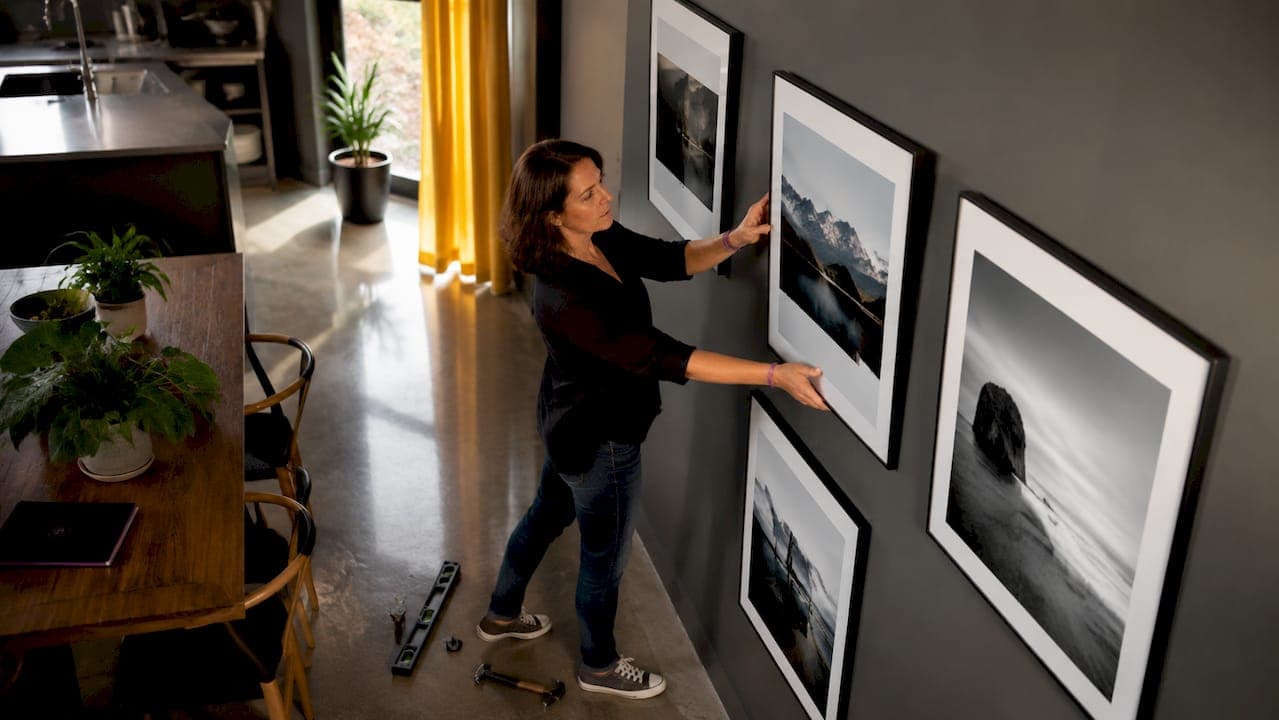
Landscape photography display options at home are defined by three decisions: print material, framing style, and placement. Each choice shapes how a photograph reads in a room, whether it commands attention or quietly anchors a space. The most popular formats include framed prints, acrylic and metal prints, canvas wraps, and gallery walls. Standard print sizes such as 16x20, 20x30, and panoramic formats like 12x36 drive most display decisions. Getting these three variables right means your landscape art works with your interior, not against it.
1. What are the main landscape photography display options at home?
The five core display formats for landscape photography are framed prints, acrylic prints, metal prints, canvas wraps, and gallery walls. Each delivers a distinct visual experience and suits different rooms and design styles.
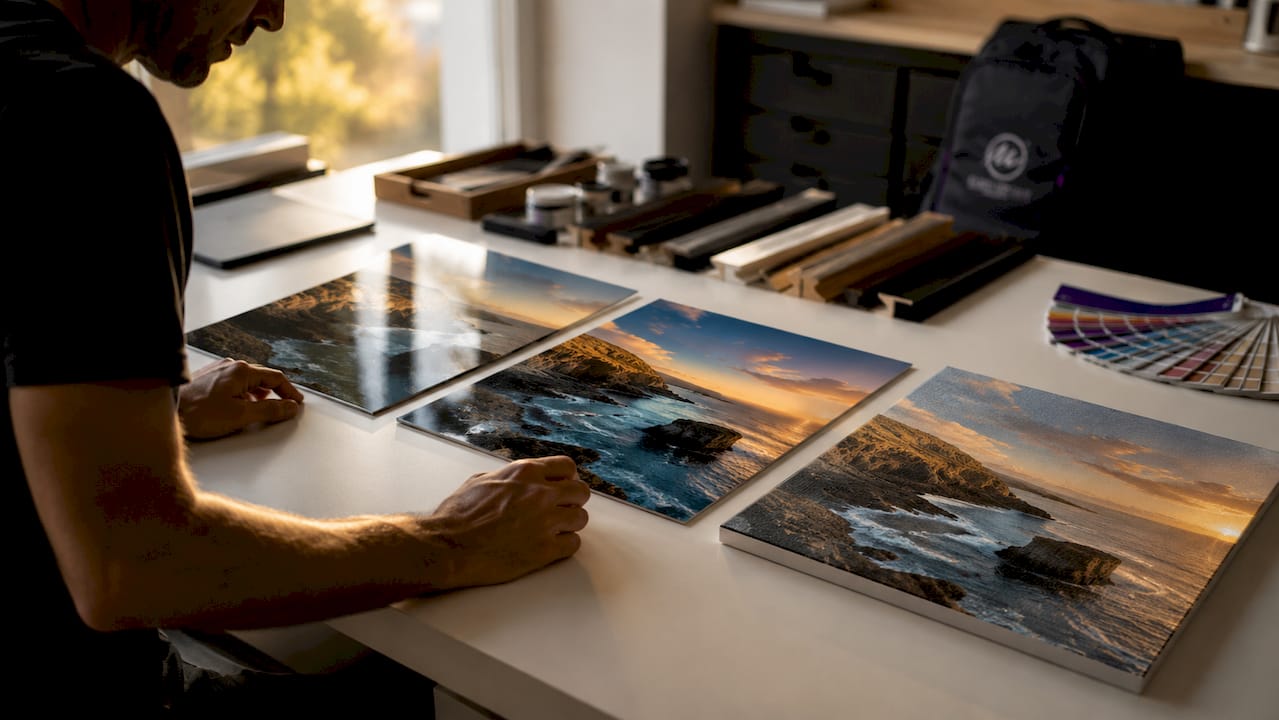
- Framed prints use photo paper behind glass or acrylic glazing. Matte paper reduces glare in bright rooms, while glossy paper intensifies color and contrast in lower-light spaces.
- Acrylic prints mount the image directly behind a sheet of clear acrylic. The result is a frameless, contemporary look with vivid, luminous color that suits modern interiors.
- Metal prints infuse the image into aluminum. They produce vibrant color and are highly durable, making them ideal for high-traffic areas or spaces with variable humidity.
- Canvas wraps stretch the printed image over a wooden frame. The texture adds a painterly quality that softens the photograph and works well in warm, traditional rooms.
- Gallery walls combine multiple prints of varying sizes into a single curated display. Mixing print sizes and frame styles maximizes visual impact and lets you tell a story across a wall.
Room lighting is the most underrated factor in this decision. Glossy acrylic and metal prints reflect light, which creates drama in dim rooms but causes glare near windows. Matte canvas and framed prints with non-reflective glass perform better in sun-filled spaces.
Pro Tip: Before ordering, tape paper cutouts of your intended print size to the wall and live with them for a day. Lighting shifts from morning to evening, and what looks right at noon may feel wrong at dusk.
2. How do framing styles and sizes shape the display?
Frame choice is not decorative afterthought. It is a structural decision that determines whether a print feels at home in a room or looks like it arrived from somewhere else.
Classic versus floating frames
Classic wood and metal frames enclose the print with a visible border. They suit traditional, rustic, and transitional interiors. Floating frames suspend the print inside the frame with a visible gap, creating depth and a contemporary feel. Shadow-box frames add even more depth and work well for prints mounted on thick substrates.
Matching size to placement
Popular large print sizes range from 11x14 inches for intimate spaces up to panoramic 12x36 formats for dramatic wide scenes. A 16x20 print balances well on a bedroom or hallway wall. A 20x30 becomes a statement piece above a sofa or fireplace. Panoramic prints at 12x36 or wider are purpose-built for long horizontal walls and above-bed placements.
Proportion matters as much as size. A print should occupy roughly two-thirds of the wall width above a piece of furniture. A small print floating on a large wall loses authority. A print that is too wide overwhelms the furniture beneath it.
Pro Tip: For panoramic landscape prints, measure your sofa or bed width first. The print should be 60–70% of that width for a balanced, grounded look.
Frame color and room decor
Black frames read as modern and graphic. White frames feel clean and Scandinavian. Natural wood tones add warmth and suit earthy, organic palettes. Gold and brass frames work in maximalist or art-deco inspired rooms. The frame color should connect to at least one other element in the room, whether a furniture leg, a cushion, or a light fixture.
3. What are creative ways to arrange landscape photography on your walls?
Gallery walls are the most flexible format for interior landscape photography decor. They let you build a display that grows with your collection and adapts to your space.
- Theme-based groupings create emotional coherence. A wall of ocean prints in a coastal living room, or a collection of mountain images in a home office, reinforces the mood of the room without requiring a single large statement piece.
- Mixed media arrangements combine framed and frameless prints for texture contrast. Combining multiple print types enriches visual interest and prevents a gallery wall from feeling flat or repetitive.
- Hallway panoramics use the narrow vertical space of a corridor to dramatic effect. A single 12x36 panoramic of a Norwegian fjord or an Icelandic glacier placed at eye level transforms a transitional space into a gallery moment.
- Above-sofa placement is the most common and most forgiving location for a large landscape print. Wide-format prints above sofas create a strong focal point that mirrors the furniture width and anchors the seating area.
- Natural material accents strengthen the organic feel of landscape art. Wood frames paired with live plants alongside landscape photography create a serene, nature-inspired environment that feels intentional rather than decorated.
When making a photo gallery at home, lay your prints on the floor first. Arrange them until the grouping feels balanced, then trace the arrangement on kraft paper, mark the hanging points, and tape the paper to the wall before driving a single nail.
Pro Tip: Keep the center of your gallery wall at eye level, roughly 57–60 inches from the floor. This is the standard used by professional galleries and it works in residential spaces too.
4. Which display options work best with different interior styles?
Interior design style is the clearest guide to choosing between display formats. Matching the print material and framing to your existing decor produces a result that feels curated rather than accidental.
- Modern and minimalist interiors suit frameless acrylic or metal prints. Clean edges, high-gloss surfaces, and bold color saturation complement the spare geometry of contemporary spaces. One large statement print works better than a crowded gallery wall in a minimalist room.
- Rustic and traditional interiors call for canvas wraps and wood-framed prints. Wood frames add warmth to spaces built around natural textures, exposed beams, and earthy color palettes.
- Coastal and Hamptons-style interiors respond well to light wood or white frames with ocean, beach, or sky photography. Linen mats and soft tones keep the display relaxed and airy.
- Eclectic and maximalist interiors can carry mixed gallery walls with varied frame styles, sizes, and materials. The key is a unifying theme in the photography itself, whether color palette, subject matter, or geographic region.
- Bedrooms and reading nooks benefit from smaller prints or intimate groupings. A single 16x20 print of a quiet forest or a misty lake creates calm without dominating a personal space.
- Open-plan living rooms and offices can carry large-format prints at 20x30 or wider. The scale of the space demands a print that holds its own from across the room.
5. How to care for and maintain your landscape photography displays
Proper care extends the life of a print by decades. The two biggest threats to any photographic print are ultraviolet light and moisture.
- Avoid direct sunlight. UV radiation fades pigment-based inks over time, even in prints marketed as archival. Position prints away from windows that receive direct afternoon sun.
- Use UV-protective glazing. When framing, choose UV-filtering glass or acrylic. UV-protective glazing and moderate humidity are the two most effective preservation measures for framed prints.
- Dust regularly with a soft, dry cloth. For acrylic and metal prints, use a microfiber cloth and avoid abrasive cleaners that scratch the surface.
- Control humidity. Bathrooms and laundry rooms are poor locations for paper-based prints. Canvas wraps tolerate moderate humidity better than paper prints behind glass.
- Handle prints by the edges. Fingerprints on acrylic or metal surfaces are difficult to remove without leaving streaks. Always lift prints from the frame or substrate edges.
Pro Tip: For assessing print quality before purchase, ask the printer for their ink and substrate specifications. Archival pigment inks on acid-free paper or aluminum substrates offer the longest display life.
Key takeaways
The best landscape photography display choices combine print material, frame style, and placement to match your interior and protect the print over time.
| Point | Details |
|---|---|
| Material drives visual impact | Acrylic and metal prints suit modern rooms; canvas and wood frames suit rustic or traditional spaces. |
| Size should follow proportion | A print should span roughly 60–70% of the furniture width it hangs above for visual balance. |
| Gallery walls need a plan | Lay prints on the floor and trace the arrangement on paper before hanging to avoid mistakes. |
| Lighting determines finish | Matte finishes reduce glare in bright rooms; glossy finishes add drama in lower-light spaces. |
| UV protection preserves prints | Use UV-filtering glazing and keep prints away from direct sunlight to prevent fading. |
What I have learned from years of displaying landscape photography
The question I hear most often is: "Which print is right for my wall?" My honest answer is always the same. Start with the room, not the photograph.
I have seen stunning images lose all their power because they were printed on the wrong material for the space. A luminous acrylic print of an Icelandic waterfall placed opposite a south-facing window becomes a mirror by midday. The same image on matte canvas would have been extraordinary. Material choice is not a preference. It is a technical decision with real consequences.
The other thing I have learned is that one bold, well-chosen print almost always outperforms a crowded gallery wall. A single large-format landscape, properly sized and placed, creates a focal point that anchors the entire room. Gallery walls are wonderful, but they require discipline. Every print you add should earn its place. If you are unsure, leave the wall empty a little longer. The right image will make itself obvious.
Seasonal rotation is something very few homeowners consider, but it changes a room more than any furniture rearrangement. Swapping a warm-toned autumn forest print for a cool, blue-toned coastal image in summer shifts the entire atmosphere of a space. You can explore limited edition print types to build a small rotating collection without a large investment.
— Mark
Award-winning landscape prints for your home, from Mark Gray
Mark Gray's collection of premium landscape photography prints spans Australia, New Zealand, Norway, Iceland, French Polynesia, Spain, and the United Kingdom. Every print is produced to gallery standards, with finish options that suit modern, traditional, and coastal interiors alike.
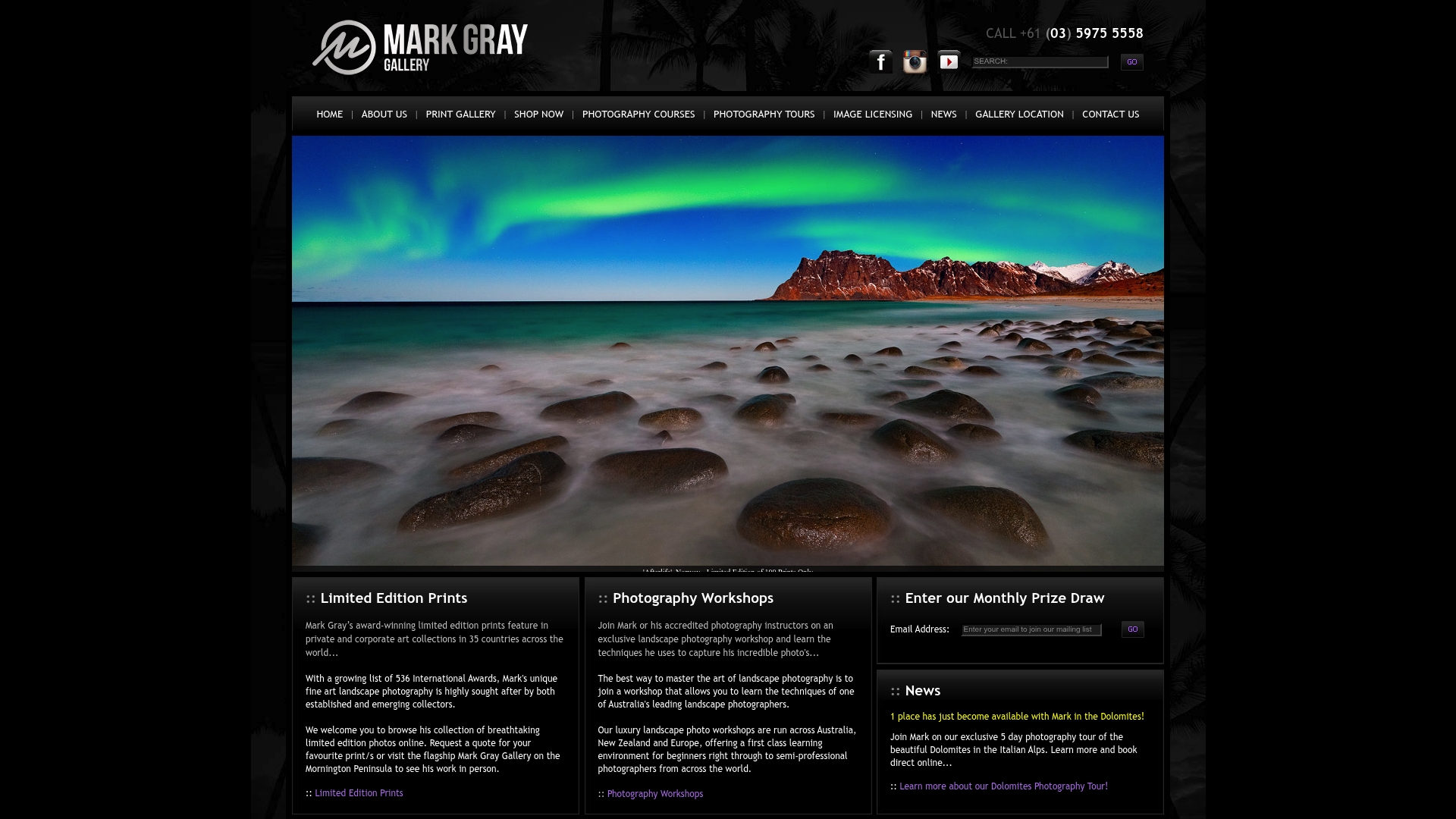
Whether you are looking for a single statement piece or building a curated gallery wall, the collection offers sizes and formats to match your space. For guidance on print pricing and framing options, the Mark Gray blog covers everything from substrate selection to mounting. Limited edition prints are available in acrylic, metal, and fine art paper formats, each produced with archival materials for lasting display quality.
FAQ
What is the best material for landscape photography prints at home?
Acrylic and metal prints suit modern interiors with their vivid, frameless finish. Canvas wraps and framed paper prints work better in traditional or rustic spaces where texture and warmth matter.
What size landscape print works above a sofa?
A print spanning 60–70% of the sofa width creates the best visual balance. For a standard three-seat sofa, a 40x60 or panoramic 20x60 print typically works well.
How do I create a gallery wall with landscape photos?
Lay all prints on the floor first to test the arrangement, then trace the layout on kraft paper and tape it to the wall before hanging. Mixing print sizes and frame styles produces the most dynamic result.
How do I prevent landscape prints from fading?
Keep prints away from direct sunlight and use UV-filtering glass or acrylic glazing when framing. Archival pigment inks on acid-free substrates also extend display life significantly.
Are panoramic prints suitable for hallways?
Panoramic formats like 12x36 are ideal for hallways. Their wide, narrow proportions fit the vertical space of a corridor and create a strong visual moment in a transitional area.