
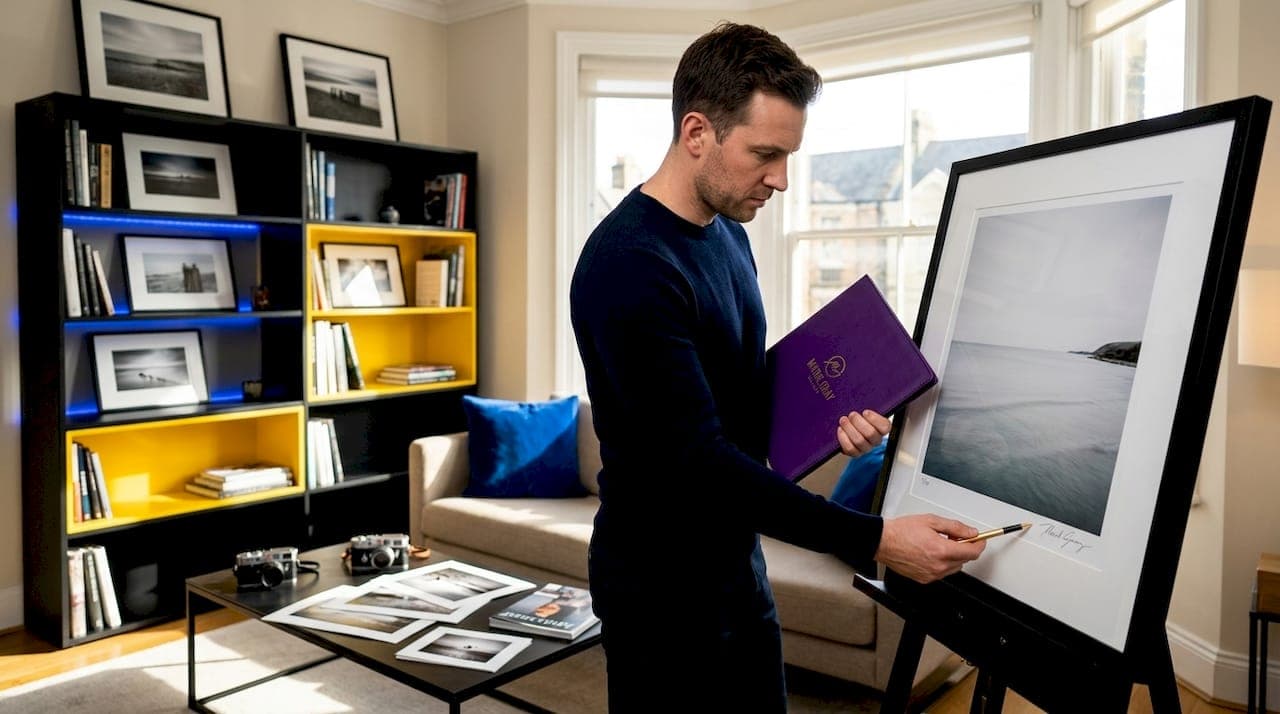
Limited edition photography prints are artworks where the photographer fixes the total number of prints produced, permanently closing the edition once that number is reached. That fixed ceiling is what separates a collectible photo edition from a standard reproduction. Understanding the types of limited edition photography prints available, from giclée and gelatin silver to platinum/palladium and artist proofs, gives you the knowledge to buy with confidence, whether your goal is personal enjoyment or long-term investment. The print process, edition size, and documentation each play a distinct role in determining what a print is worth and how long it will last.
1. Types of limited edition photography prints: an overview
A limited edition print is defined by a fixed, maximum number of prints produced, after which no more are made at that size or format. The numbering system, such as "5/25," tells you the print's position within the total run. That number communicates scarcity at a glance. Collectors, galleries, and photographers all rely on this system to establish and protect value.
The main categories break down into print process types (giclée, gelatin silver, platinum/palladium), edition structure types (open, limited, ultra-limited), and artist designation types (artist proofs, deluxe editions, variants). Each category influences price, visual character, and long-term collectibility. Knowing which type you are looking at before you buy is the single most important step in building a meaningful collection.
2. Giclée prints: the archival standard for color photography
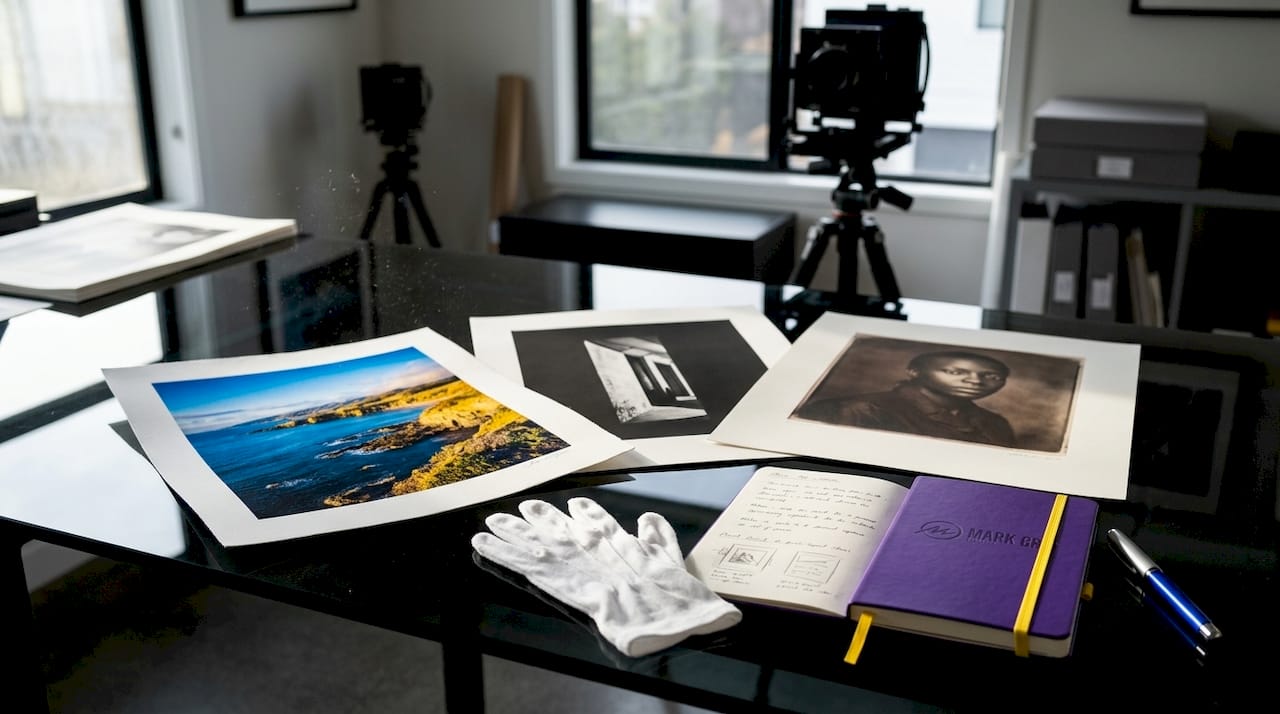
Giclée printing is the dominant process for contemporary limited edition photography prints, particularly for color landscape and fine art work. The process uses pigment-based archival inks on cotton rag paper, producing prints that can last between 75 and 200 years under proper display conditions. That longevity is why giclée has become the museum and gallery standard for photographic editions.
The paper substrate matters as much as the ink. Archival cotton rag papers such as Hahnemühle Photo Rag and Canson Infinity Rag Photographique are acid-free and lignin-free, which prevents yellowing and degradation over time. These materials are what separate a genuine archival print from a decorative reproduction. When buying limited edition photography prints, always confirm both the ink type and the paper specification.
Pro Tip: Ask the gallery or photographer for the specific paper and ink specifications before purchasing. "Archival quality" without named materials is a marketing claim, not a guarantee.
3. Gelatin silver prints: the classic black-and-white tradition
Gelatin silver printing is the historic process behind most black-and-white photography from the 20th century, and it remains highly prized among collectors today. The process produces sharp, high-contrast tones with a distinctive luminosity that digital processes replicate but rarely match. Photographers like Ansel Adams built their reputations on gelatin silver prints, and the process carries significant cultural weight in the fine art photography market.
These prints are made in a darkroom using light-sensitive silver halide crystals suspended in gelatin on paper. The chemical process creates a physical silver image layer, which gives the print a depth and tonal richness that collectors recognize immediately. Gelatin silver limited editions are typically produced in smaller runs, which reinforces their scarcity and premium pricing. For black-and-white landscape and documentary photography, this process remains the benchmark.
4. Platinum and palladium prints: rare tonal beauty
Platinum and palladium printing produces some of the most visually distinctive limited edition art prints available. The process uses platinum or palladium salts instead of silver, resulting in a soft, low-contrast tonal range with extraordinary shadow detail. The image sits within the paper fiber rather than on top of it, giving platinum prints a matte, tactile quality unlike any other photographic process.
The archival stability of platinum and palladium is exceptional. These metals are among the most chemically stable substances on earth, meaning a well-made platinum print can theoretically last centuries without fading. That permanence, combined with the labor-intensive hand-coating process, makes these prints rare and expensive. Collectors who prioritize longevity and tonal subtlety over vibrant color often consider platinum/palladium editions the pinnacle of photographic printmaking.
5. Dye-transfer and photogravure prints: specialty processes worth knowing
Dye-transfer printing was the gold standard for color photography reproduction through much of the 20th century, used extensively by photographers like Ernst Haas. The process layers cyan, magenta, and yellow dye matrices to build a rich, saturated color image. Dye-transfer prints are no longer in common production, which makes surviving limited editions genuinely rare and historically significant.
Photogravure is an etching-based process that transfers a photographic image onto a copper plate, which is then printed with ink on paper. The result has a fine-grained, velvety texture that is immediately recognizable to experienced collectors. Both dye-transfer and photogravure carry different aesthetic and archival characteristics from modern giclée or gelatin silver work. Encountering either process in a contemporary limited edition is unusual, which adds to their appeal for serious collectors.
6. Open editions vs. limited editions: understanding the difference
An open edition print has no fixed production ceiling. The photographer can print as many copies as demand requires, indefinitely. Open editions are typically less expensive and widely available, but they carry no scarcity value and rarely appreciate over time. They are decorative objects, not collectible photo editions in the investment sense.
A limited edition print, by contrast, has a defined maximum run that is permanently closed once reached. Edition size directly affects scarcity and price. Ultra-limited editions of 1 to 10 prints command the highest premiums, while editions of 50 to 100 are more accessible but still carry collectible status. The table below summarizes the key distinctions.
| Edition type | Typical size | Scarcity level | Investment potential |
|---|---|---|---|
| Open edition | Unlimited | None | Low |
| Large limited edition | 50 to 100+ | Moderate | Moderate |
| Small limited edition | 10 to 50 | High | High |
| Ultra-limited edition | 1 to 10 | Very high | Very high |
Pro Tip: The specific number a print holds within an edition matters far less than the total edition size. Being number 1/25 carries no meaningful premium over 24/25 in most markets.
7. Artist proofs: the most misunderstood edition type
Artist proofs, marked as "AP," are prints separate from the main edition, typically limited to around 10% of the total edition size. They were originally reserved for the artist's personal use and quality control. A print from an edition of 25 might include 2 or 3 artist proofs, noted as "AP 1/3" and "AP 2/3."
Because artist proofs exist outside the numbered edition, they are often perceived as rarer and more personal. Many collectors actively seek APs for this reason, and they frequently command a premium on the secondary market. However, artist proof handling directly influences secondary market value, so verifying that the AP is properly documented and signed is critical. An undocumented AP is worth no more than any other print.
8. Deluxe and variant editions: premium tiers within a collection
Some photographers release deluxe or variant editions alongside their standard limited run. These may feature hand-finishing, alternative paper stocks, larger print sizes, or unique framing. A photographer might offer an "Edition of 7 + 2 AP" at one size and a separate deluxe edition at a larger format with a different paper specification. Each variant is its own distinct edition with its own certificate of authenticity.
Variant editions create a tiered collecting structure that appeals to different budgets and levels of commitment. The risk for collectors is confusion about exactly what they are purchasing. Always confirm the exact edition and AP quantities before buying, and verify that the certificate of authenticity specifies the variant type, paper, ink, and print dimensions. Ambiguity in documentation is a red flag.
9. Certificates of authenticity and documentation
A certificate of authenticity is the legal and provenance record of a limited edition print. It must include the artist's signature, edition number, creation date, print dimensions, paper type, and ink specification. Collectors should never purchase a limited edition print without a COA, as it is the primary tool for verifying authenticity and establishing resale value.
The COA also protects against edition inflation, where a photographer or gallery produces more prints than the stated edition size. A properly documented edition with a signed COA creates accountability. For investment-grade purchases, some collectors also seek third-party authentication from recognized galleries or appraisers. Documentation is not a formality. It is the foundation of the print's value.
10. How to choose among the different print types
Choosing the right type of limited edition photography print depends on four factors: aesthetic preference, archival priority, budget, and investment intent. Here is a structured approach to making that decision.
- Define your aesthetic goal. Giclée suits vibrant color landscape photography. Gelatin silver suits black-and-white work with high tonal contrast. Platinum/palladium suits collectors who prize subtlety and permanence.
- Assess archival requirements. If longevity matters, prioritize pigment-based giclée on named cotton rag papers or platinum/palladium prints. Dye-based photographic prints last only 20 to 50 years by comparison.
- Evaluate edition size against your budget. Smaller editions cost more but offer greater scarcity. For print investment basics, edition closure and documentation matter more than the specific number within the run.
- Consider artist proofs if available. APs from a respected photographer can represent the best value within an edition, combining rarity with direct artist association.
- Verify all documentation before committing. Confirm the COA includes material specifications, edition size, and the artist's signature. Cross-reference the edition details with the gallery or photographer directly.
- Research the photographer's market reputation. Award-winning photographers with international exhibition records and consistent sales history offer more predictable value retention than emerging artists with limited track records.
- Factor in display and storage conditions. Even the best archival print degrades under UV light or in high humidity. Understand the care requirements of your chosen print type before purchasing.
Understanding print pricing factors alongside edition type gives you a complete picture of what drives value in the limited edition photography market.
Key takeaways
The value of a limited edition photography print is determined by its print process, edition size, documentation quality, and the photographer's reputation, not by which number it holds within the run.
| Point | Details |
|---|---|
| Print process defines longevity | Giclée with pigment inks lasts 75 to 200 years; always confirm paper and ink specifications. |
| Edition size drives scarcity | Ultra-limited editions of 1 to 10 prints carry the highest collectible value. |
| Artist proofs command premiums | APs represent roughly 10% of an edition and often trade at a premium on the secondary market. |
| Documentation is non-negotiable | A signed COA with full material specifications is the foundation of any print's resale value. |
| Process matches purpose | Match the print process to your aesthetic and investment goals before committing to a purchase. |
What I've learned about choosing print types after years behind the lens
After years of producing limited edition landscape photography prints from locations across Australia, Iceland, Norway, and French Polynesia, I have watched collectors make the same mistakes repeatedly. The most common is fixating on edition number rather than edition size and process quality. A print numbered 1/50 on cheap paper with dye-based inks is worth less in ten years than a print numbered 47/50 on Hahnemühle Photo Rag with genuine pigment inks. The number is a story collectors tell themselves. The materials are what actually last.
The second mistake is undervaluing artist proofs. When I release an edition, the APs are the prints I would keep for myself. They represent the quality benchmark for the entire run. Collectors who understand this treat APs as the premium tier they genuinely are, not as a curiosity or a technicality.
My honest advice for anyone comparing photography and painting investments is to treat documentation as seriously as the image itself. I have seen beautiful prints lose half their resale value because the paperwork was incomplete or the edition was poorly managed. A stunning photograph on archival paper with a signed, detailed COA is a complete artwork. Without that documentation, it is just a picture on a wall.
— Mark
Explore Mark Gray's exclusive limited edition prints
Mark Gray is an award-winning Australian landscape photographer whose limited edition prints span some of the world's most spectacular locations, from the dramatic coastlines of Iceland to the ancient red landscapes of outback Australia.
Every print in the collection is produced using archival pigment inks on premium cotton rag paper and comes with a signed certificate of authenticity confirming the edition number, print dimensions, and material specifications. The collection is organized by edition size and location, making it straightforward to find prints that match your collecting goals and aesthetic preferences. Browse the full collection of exclusive landscape prints and discover the edition that speaks to you.
FAQ
What defines a limited edition photography print?
A limited edition photography print has a fixed maximum production number, after which no additional prints are made at that size or format. The edition is documented with a certificate of authenticity and numbered sequentially, such as "5/25."
Which print process lasts the longest?
Giclée prints using pigment-based inks on acid-free cotton rag paper last between 75 and 200 years, making them the archival standard for contemporary photography editions. Platinum and palladium prints offer comparable or greater permanence due to the chemical stability of those metals.
Are artist proofs more valuable than numbered prints?
Artist proofs are typically limited to around 10% of the edition size and are often considered more desirable due to their rarity and direct association with the artist. They frequently trade at a premium on the secondary market when properly documented.
Does the specific number within an edition affect value?
Edition size affects scarcity and price far more than the specific number a print holds within the run. Being number 1/25 carries no standard premium over 24/25 in most gallery markets.
What should a certificate of authenticity include?
A valid COA must include the artist's signature, edition number, creation date, print dimensions, paper type, and ink specification. Prints without a complete COA carry significantly reduced provenance and resale value.