
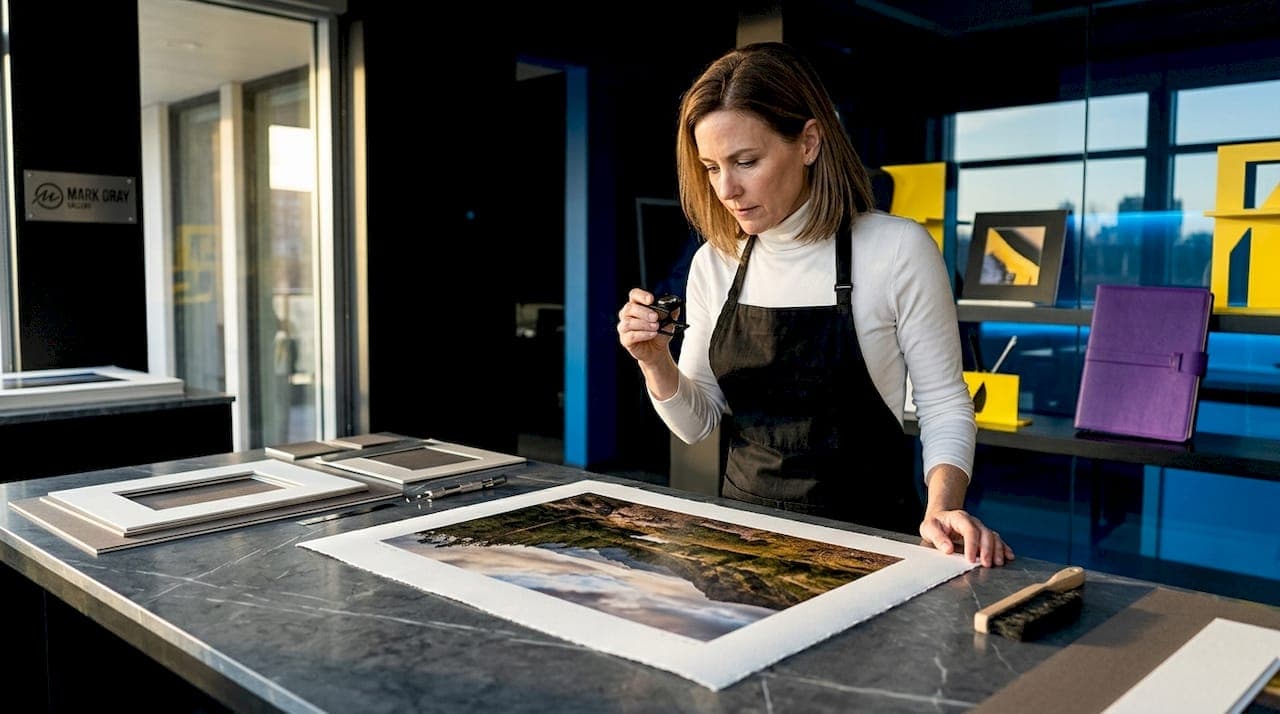
When you're searching for examples of gallery quality landscape prints, the sheer volume of options makes it hard to know what truly separates a wall-ready collector's piece from an ordinary photo print. The term "gallery quality" refers to a recognized standard in fine art printing: archival materials, precise presentation, and production methods that preserve color integrity for decades. This guide walks you through the most compelling landscape print formats, real-world examples of each, and a practical framework for choosing the right piece for your space or collection.
Table of Contents
- Key takeaways
- 1. What makes a landscape print truly gallery quality
- 2. Examples of cotton rag and baryta fine art paper landscape prints
- 3. Examples of canvas gallery wraps and framed canvas landscape prints
- 4. Examples of acrylic face-mounted landscape prints
- 5. Comparison of gallery-quality landscape print formats
- 6. How to choose the best landscape print for your space
- 7. Panoramic formats as gallery-worthy landscape photography
- My perspective on what genuinely separates great landscape prints from good ones
- Bring award-winning landscape prints into your home
- FAQ
Key takeaways
| Point | Details |
|---|---|
| Print medium defines quality | Cotton rag, baryta, canvas, and acrylic each produce distinct visual results suited to different landscape subjects. |
| Archival materials matter | UV protection, pigment inks, and acid-free mats determine how long a print retains its original quality. |
| Sizing shapes impact | Formats like 20x30 and 24x36 inches preserve the immersive scale that makes landscape art compelling. |
| Framing completes the art | Mat separation and acrylic glazing protect fine paper prints and elevate the overall presentation. |
| Matching format to space | Room lighting, wall size, and decor style should guide your choice of print medium and framing style. |
1. What makes a landscape print truly gallery quality
Before exploring specific landscape print examples, it pays to understand what the term actually means in professional fine art printing circles. A gallery-quality print is not simply a large photo. It is produced with archival pigment inks on substrates designed to last 100 years or more, finished with protective presentation that preserves both the image and the physical material.
Several attributes define this standard:
- Print medium: Fine art papers (cotton rag, baryta, luster), canvas, and acrylic face-mounted prints are the three primary categories used in prestigious gallery collections.
- Archival inks: Pigment-based inks resist fading far longer than dye-based alternatives, particularly under ambient UV light.
- Acid-free mats: UV-filtering glazing with acid-free mats significantly extends print longevity, with museum glass filtering up to 99% of UV radiation.
- Framing and glazing: Fine paper prints require acrylic or glass protection with a mat to prevent the artwork from touching the glazing surface directly.
- Size and scale: Gallery prints typically start at 16x24 inches, with 20x30 and 24x36 being the most recognized gallery statement sizes for landscape work.
- Durability: Scratch resistance, shatter resistance, and UV protection all contribute to how a print holds up in a home or gallery setting over years of display.
Pro Tip: When evaluating any print described as "gallery quality," ask the printer or photographer for the specific paper or substrate name, ink type, and expected archival lifespan. A confident answer signals genuine quality.
2. Examples of cotton rag and baryta fine art paper landscape prints
Cotton rag and baryta papers are the gold standard in fine art printing. Hahnemühle Photo Rag 308gsm and similar cotton rag papers produce a soft, light-absorbing matte surface that renders texture and subtle tonal gradations with exceptional depth. Baryta paper delivers a semi-gloss finish with rich shadow detail and vivid color saturation, historically associated with darkroom fiber-base prints.
For landscape photography, here is how each performs:
- Cotton rag matte: Best suited to moody, atmospheric scenes. Think misty mountain ranges, overcast coastal cliffs, or pre-dawn desert plains where shadow detail and tonal softness carry the emotional weight.
- Baryta semi-gloss: Excels with vibrant, high-contrast landscapes. Iceland's volcanic shorelines, the fluorescent greens of New Zealand ferns after rain, and golden-hour dune photography all benefit from baryta's color punch.
- Common gallery sizes: 16x20, 20x24, and 24x30 inches are frequently used for matted and framed fine paper prints in gallery settings.
- Framing style: Deep shadow box frames in black or natural timber pair beautifully with white or off-white archival mats, creating the kind of clean, focused presentation you find in prestigious photography galleries.
The emotional impact of landscape artwork is also shaped by mat size: a larger outer mat creates a gallery-style window effect that draws the eye inward to the image itself.
3. Examples of canvas gallery wraps and framed canvas landscape prints
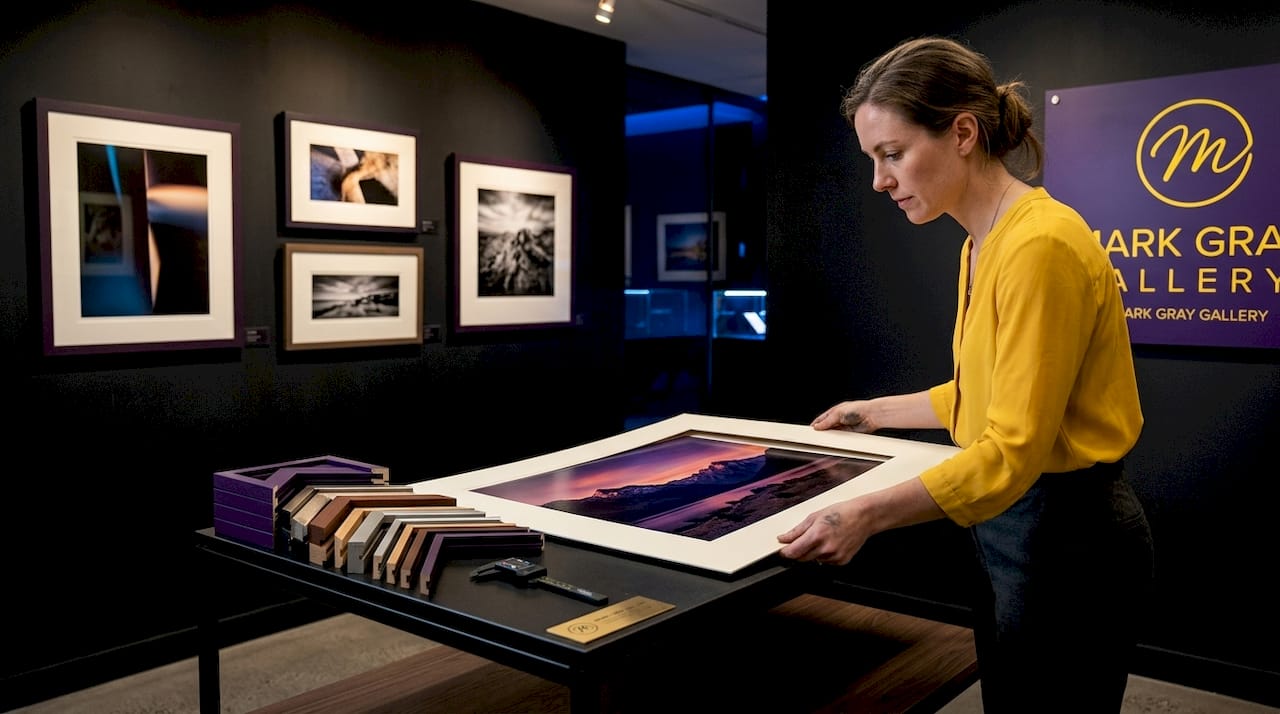
Canvas brings a painterly warmth to landscape photography that no paper print can replicate. The texture of the substrate and the way light plays across a canvas surface gives the image a physical presence that feels closer to a hand-crafted artwork than a reproduction.
There are two distinct display styles for canvas landscape prints:
- Gallery-wrapped canvas: The image continues around the edges of a thick wooden stretcher bar, allowing a frameless display that suits contemporary, minimalist interiors. The wrap depth is typically 1.5 to 2 inches for a commanding profile.
- Framed canvas: A painted or stained timber frame adds structure and formality. This style works well in traditional, heritage, or richly decorated rooms where a clean modern edge might feel out of place.
- Best sizes for statement impact: 30x40 inches and above make canvas landscape prints genuinely immersive. Panoramic formats, like 20x60 or 30x90 inches, are particularly striking for sweeping coastal or mountain scenes.
- Coating considerations: A UV-protective lacquer coat applied over the print protects against fading and moisture while giving the surface a consistent satin or matte sheen.
Canvas does have trade-offs. It does not render fine detail at the micro level as precisely as a high-resolution acrylic or baryta print. For sweeping wide-angle landscapes, that is rarely a problem. For images where intricate detail is the selling point, paper or acrylic will outperform canvas.
4. Examples of acrylic face-mounted landscape prints
Acrylic face-mounted prints represent the premium tier of gallery-quality landscape artwork. The process involves printing the image on photographic paper, then permanently bonding it to cast acrylic with an optically clear adhesive to create a result where color and depth appear to come from within the surface itself.
The visual effect on a dramatic landscape is extraordinary. Blues in an ocean scene become almost luminous. The layered greens of a rainforest canopy develop a three-dimensional quality. Shadow detail in rock formations reads with a precision that standard framed prints cannot match.
Key qualities and considerations:
- Color vibrancy: Acrylic face-mounted prints offer superior color saturation and clarity compared to glass-framed alternatives due to the direct optical bond between image and acrylic.
- UV protection: Premium cast plexiglass filters UV radiation, protecting the image beneath without the need for additional glazing.
- Shatter resistance: Acrylic is significantly lighter and safer than glass at large sizes, making it practical for residential installation at 40x60 or even 48x72 inches.
- Best locations: Acrylic prints perform brilliantly in spaces with controlled or ambient lighting: modern living rooms, hotel lobbies, executive offices, and architectural interiors where the print becomes a focal feature.
- File resolution is non-negotiable: Large format acrylic prints require uncompressed files at a minimum of 150 to 300 DPI at the final print size. Starting from a high-resolution capture is critical.
Pro Tip: If you're purchasing an acrylic print for a sunlit room, confirm the UV protection rating of the acrylic before ordering. Lower-grade acrylic can still allow enough UV transmission to fade an image over time.
5. Comparison of gallery-quality landscape print formats
Choosing between print formats is easier when you can see the key attributes side by side. Here is a straightforward comparison across the three primary formats used in high-quality landscape artwork:
| Format | Visual effect | Durability | Archival quality | Best size range | Ideal setting |
|---|---|---|---|---|---|
| Cotton rag or baryta (framed) | Soft matte or rich semi-gloss | High with UV glazing and mat | Excellent (100+ years) | 16x20 to 24x30 in | Traditional, gallery, or collector display |
| Canvas (gallery wrap or framed) | Textured, painterly | High with UV lacquer | Good (75+ years) | 24x36 to 30x60 in | Contemporary, casual, or rustic interiors |
| Acrylic face-mounted | Luminous, high-contrast depth | Very high (shatter-resistant) | Excellent (100+ years) | 24x36 to 48x72 in | Modern, architectural, or statement spaces |
The choice of mounting method dramatically changes how a landscape print is perceived in terms of color vibrancy and depth, which is why understanding these differences before purchasing matters far more than price alone.
6. How to choose the best landscape print for your space
Knowing the formats is half the work. Translating that knowledge into a confident decision for your specific room or collection requires a few more considerations. Here is how to approach it practically:
- Assess your wall and room scale first. Larger prints preserve the immersive sense of scale that defines great landscape art. A 16x24 print on a 12-foot wall will disappear. When in doubt, size up.
- Match lighting to medium. Acrylic prints thrive under warm spotlighting and ambient natural light. Canvas softens harsh direct light. Framed baryta paper prints benefit from controlled lighting where glare can be minimized.
- Consider your room's style. Contemporary minimalist rooms call for acrylic or gallery-wrapped canvas. Traditional or heritage interiors suit shadow box framed fine paper prints with wide mats.
- Budget for longevity. A genuinely archival print on cotton rag or acrylic at a reasonable investment will outlast many affordable alternatives that fade within a decade. The investment value of fine art photography is worth understanding before you buy.
- Consider multi-piece arrangements. Two or three complementary landscape prints at 20x24 inches can create more visual conversation than a single large print, especially in dining rooms or hallways.
- Limited editions matter. When purchasing gallery-quality prints for a collection, numbered limited editions hold greater cultural and monetary value than open-edition reproductions.
7. Panoramic formats as gallery-worthy landscape photography
Panoramic prints deserve their own mention because they represent one of the most powerful expressions of gallery-worthy landscape photography. A 2:1 or 3:1 aspect ratio captures the sweep of a horizon in a way that a standard rectangle simply cannot.
Panoramic landscape prints work especially well in hallways, above fireplaces, and along extended walls in open-plan living spaces. Common sizes like 20x60 or 24x72 inches create an almost cinematic presence when printed on acrylic or canvas. The format also rewards subject matter that has natural horizontal storytelling: a breaking wave sequence, a mountain ridgeline at sunset, or the vast red plains of the Australian outback.
For collectors investing in best landscape prints for galleries, panoramic formats represent a distinct and often underutilized category that commands attention in any setting.
My perspective on what genuinely separates great landscape prints from good ones
I've spent years producing, presenting, and studying landscape prints across Australia, Iceland, Norway, French Polynesia, and beyond. The one observation I keep returning to is this: most people focus entirely on the photograph itself and almost nothing on the presentation. That is a mistake.
I've seen extraordinary images diminished by thin frames, no mat separation, and reflective glass that turns the print into a mirror under overhead lighting. And I've seen technically average photographs transformed into compelling, award-worthy wall pieces through precise matting, acrylic glazing, and considered sizing.
The mat separation issue is particularly critical and almost universally overlooked. Proper matting prevents delicate paper prints from adhering to glazing, which is one of the most common causes of long-term print damage. This is not a detail. It is the difference between a print that survives beautifully for a century and one that becomes stuck, distorted, or discolored within ten years.
My honest advice: before you spend on a large print, invest in understanding what will protect it. The photograph captures the moment. The presentation determines how that moment lives in your space for decades.
— Mark
Bring award-winning landscape prints into your home
If you're ready to move from inspiration to acquisition, the Mark Gray Gallery offers a curated collection of premium limited edition landscape prints produced to the highest archival standards.
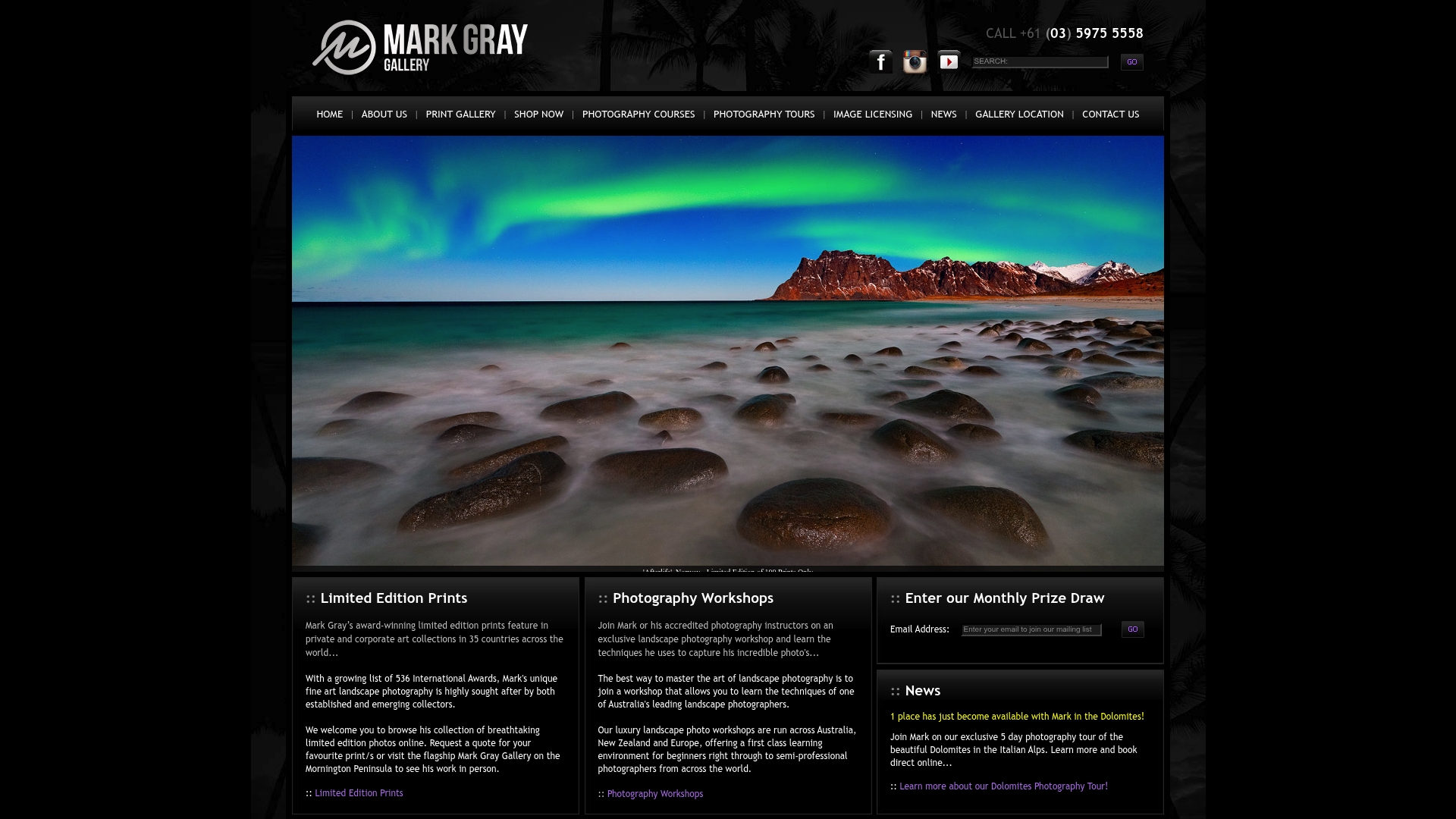
Mark Gray's work spans some of the world's most dramatic and celebrated natural environments: the rugged coastlines of Australia, the volcanic terrain of Iceland, the fjords of Norway, the turquoise waters of French Polynesia, and the ancient moors of the United Kingdom. Every print is available in fine art paper, canvas, and acrylic face-mounted formats, with sizing options that suit intimate collector pieces and grand statement installations alike. Explore the full collection of award-winning landscape prints and discover gallery-quality landscape artwork created by one of Australia's most recognized photographers.
FAQ
What does gallery quality mean for landscape prints?
Gallery quality refers to archival pigment ink printing on professional substrates like cotton rag, baryta, canvas, or acrylic, combined with UV-protective glazing and acid-free presentation materials designed to preserve the print for 75 to 100 years or more.
What are the best sizes for gallery landscape prints?
Common gallery sizes include 16x24, 20x30, and 24x36 inches for standard formats, with panoramic options like 20x60 or 24x72 inches offering a dramatic, immersive effect for wide landscape compositions.
Is acrylic or framed paper better for a landscape print?
Acrylic face-mounted prints deliver superior color vibrancy and depth and are ideal for modern spaces, while framed fine art paper prints on cotton rag or baryta offer a classic gallery aesthetic with equally strong archival longevity.
How do I know if a landscape print will last long term?
Look for pigment-based inks, archival paper or substrate, UV-protective acrylic glazing, and acid-free mat materials. A reputable printer or photographer should clearly state the expected lifespan and materials used for every print they sell.
Where can I find gallery-quality landscape prints to buy?
Prestigious photography galleries, fine art print studios, and dedicated photographer websites like the Mark Gray Gallery offer limited edition prints with full archival specifications. Purchasing directly from the photographer guarantees authenticity and accurate print details.