
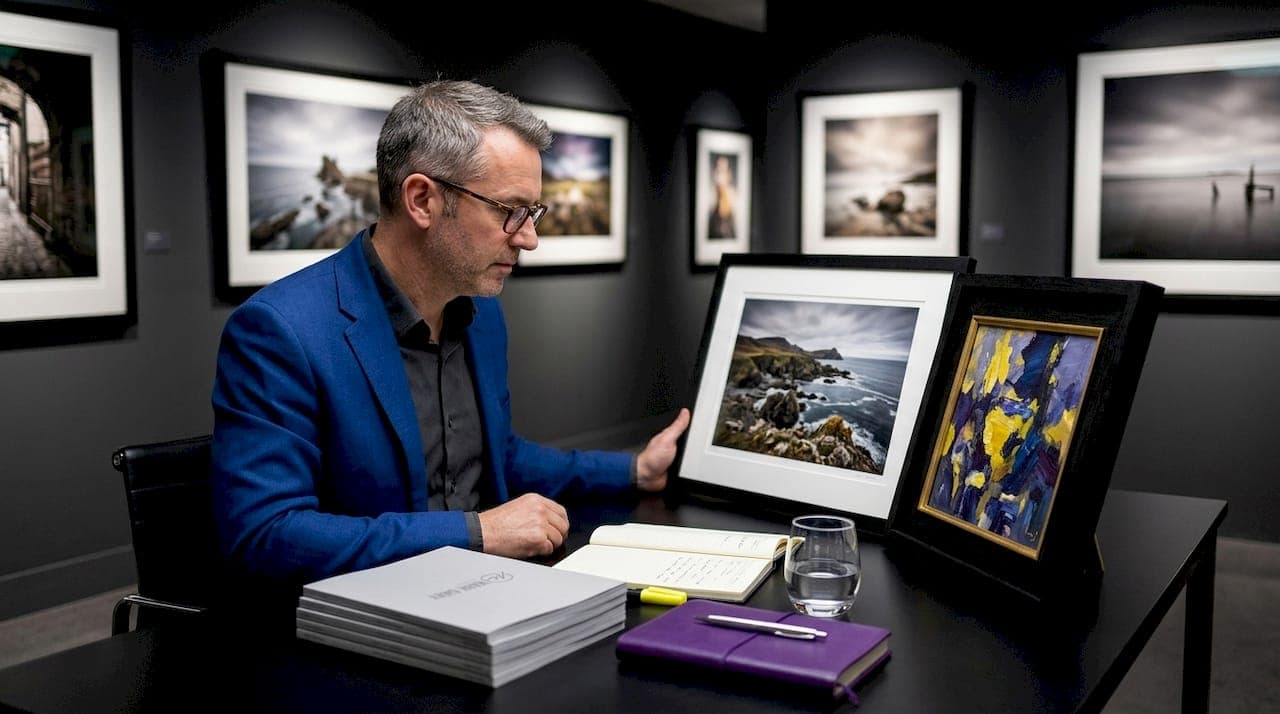
Most investors still default to painting when they think about collecting fine art. That assumption is increasingly expensive. The fine art photography vs painting investment question has genuine financial weight now, and the data tells a more nuanced story than conventional wisdom suggests. Photography is no longer the junior asset class of the art world. Limited edition prints by respected photographers are appearing in prestigious auction rooms, attracting serious collector attention, and delivering returns that demand a closer look. Here is what you actually need to know before committing capital to either medium.
Table of Contents
- Key takeaways
- Fine art photography vs painting investment: the market reality
- Valuation factors and risk in both mediums
- Aesthetic and cultural factors that drive real value
- Practical strategies for building an art investment portfolio
- My perspective on where this market is heading
- Explore award-winning landscape photography for your collection
- FAQ
Key takeaways
| Point | Details |
|---|---|
| Photography market is surging | Fine art photography revenue grew 19.2% in 2025, signaling real momentum for investors. |
| Paintings hold higher average values | Old Masters averaged $9.8M per sale in 2025, reflecting painting's sustained prestige at the top tier. |
| Edition size determines photography scarcity | Editions of 10 prints or fewer drive the strongest long-term price appreciation in photography. |
| Both require patient capital | Art investments typically require holding periods of 11 to 23 years before meaningful returns materialize. |
| Diversification across mediums pays off | Combining photography and painting in a portfolio captures growth potential while managing volatility. |
Fine art photography vs painting investment: the market reality
The numbers should stop any investor from dismissing photography outright. The global photography market reached $40.4 million in auction revenue in 2025, up from $33.9 million in 2024. That is a 19.2% year-over-year jump, which is not the behavior of a niche market.
The quality of works driving that growth is equally telling. Four photographic works surpassed $1 million at auction, with two exceeding $2 million. That puts serious photography squarely in the territory that collectors once reserved exclusively for paintings on canvas.
Painting, to be clear, has not weakened. Old Masters reported a 9% increase in average sales value to $9.8 million per work in 2025. That figure underscores the enduring strength of painting at the top of the market. The gap between the two mediums exists, but it is narrowing at the high end, and photography's percentage growth rate is significantly outpacing painting's.
"Photography's integration into major contemporary art auctions is no longer a novelty. It signals institutional confidence in the medium as a mature asset class." This shift changes the photography vs painting investment comparison in ways that pure price data alone cannot capture.
What this means practically is that the two markets are no longer playing by completely different rules. Photography is gaining institutional legitimacy, which matters because institutional support drives liquidity, collector confidence, and eventually, sustained price appreciation.
Valuation factors and risk in both mediums
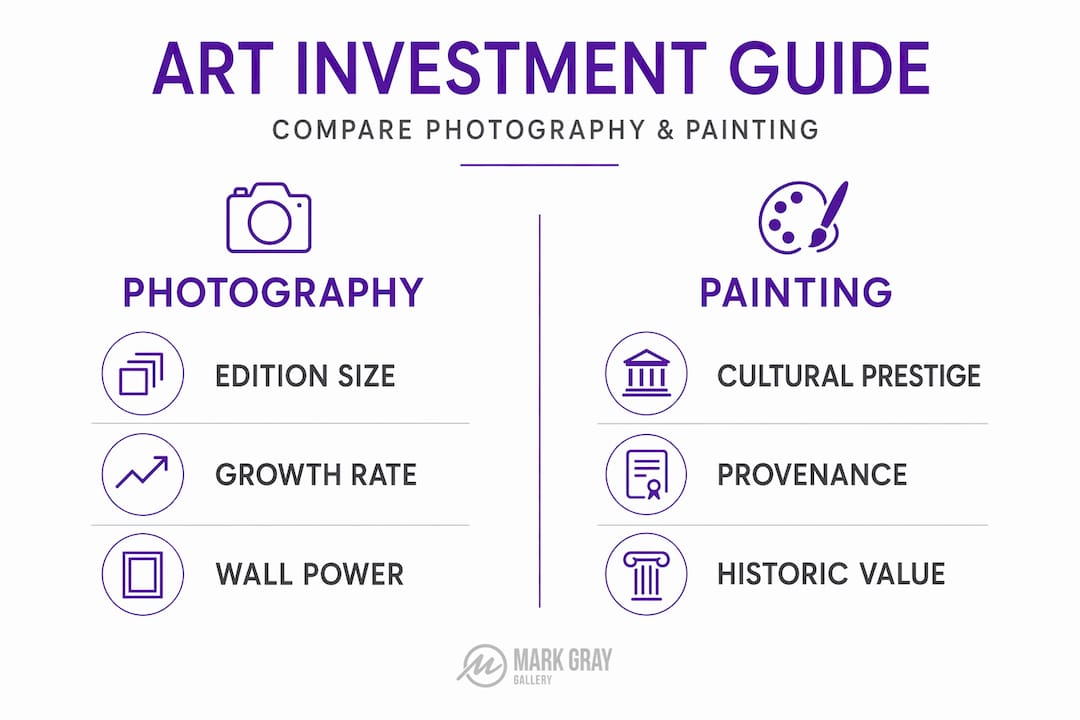
Understanding what drives value in each medium is where most new investors get into trouble. Photography and painting share some fundamentals, but the mechanics of scarcity, authenticity, and cost work differently across both.
In photography, edition size is the primary scarcity driver. Editions of more than 10 prints reduce exclusivity meaningfully and limit long-term price appreciation potential. When you see a landscape print offered in an edition of 50, compare that to one limited to five and priced accordingly. The mathematics of scarcity are explicit in photography in a way they simply are not in painting, where every original work is, by definition, unique.
For paintings, uniqueness is inherent, but provenance carries enormous weight. A documented ownership history, exhibition records, and scholarly authentication directly affect price. Photography is catching up here. Well-documented provenance for significant photographs now commands meaningful premiums, particularly for vintage prints and works by artists with established international reputations.
Key risk factors to assess before buying either medium include:
- Liquidity risk. Art is not a liquid asset. Holding periods of 11 to 23 years are typical before meaningful returns materialize. This is not a place to park money you may need soon.
- Condition risk. Photographs are sensitive to light, humidity, and handling. Paintings face cracking, fading, and structural degradation. Both require specialized storage and conservation.
- Market cycle risk. Blue-chip works by established artists in either medium hold value through downturns better than emerging artists. Speculative purchases on unknown names carry significantly higher volatility.
- Transaction cost drag. Gallery commissions, auction house buyer's premiums, shipping, insurance, and authentication fees can total 20% to 30% of the purchase price. Net returns shrink considerably when these costs are factored in properly.
- Authentication risk. Forgeries and misattributed works affect both markets. This risk is higher in painting for historical works, but it exists in photography too, particularly for vintage prints without complete documentation.
Pro Tip: Before purchasing any fine art work, request a full condition report and provenance documentation. The cost of this due diligence is trivial compared to the protection it provides against costly mistakes.
Aesthetic and cultural factors that drive real value
The financial case for art investment does not stand alone. Art functions as both a financial and emotional asset, and the non-financial dividends, cultural impact, personal resonance, and legacy, are not incidental. They are part of what sustains long-term collector demand and, by extension, market value.
Painting carries centuries of cultural prestige. Old Masters and Post-Impressionist works connect buyers to art historical narratives that are deeply embedded in institutional collections, textbooks, and museum walls worldwide. That cultural context is not easily replicated. For certain collectors, owning a painting is as much about participating in that history as it is about financial performance.
Photography is building its own distinct cultural authority. Large-scale works with genuine "wall power" are now competing directly with painting for the same wall space in private homes and corporate collections. The shift toward unique, large-scale photographic prints has changed how collectors perceive and value the medium. A monumental landscape print, printed at gallery scale with exceptional technical quality, commands the same room presence as a significant canvas.
Collector demographics are shifting meaningfully too. New generations of collectors are increasing photography's market accessibility while simultaneously pushing demand for museum-quality works. These buyers grew up with photography as art. They do not carry the historical bias that treated it as a lesser medium.
Consider these cultural factors when evaluating either medium for a collection:
- Personal resonance matters for holding capacity. You are more likely to hold a work for the 15 to 20 years necessary for meaningful returns if you genuinely love it.
- Artist narrative drives long-term demand. Works by photographers and painters with coherent bodies of work and critical recognition sustain collector interest across market cycles.
- Medium-specific techniques add distinctiveness. Understanding long exposure techniques or specific photographic printing methods helps you identify works with genuine artistic and technical distinction.
- Cultural trends create opportunities. Photography's rising prominence in museum exhibitions and biennials is accelerating its cultural legitimacy, which has direct implications for secondary market values.
"The most sophisticated collectors I know do not separate the financial from the emotional. They pursue works that move them and trust that genuine artistic quality will find its market over time."
Practical strategies for building an art investment portfolio
Good art investment strategy starts with self-knowledge. Understanding your own risk tolerance, time horizon, and financial goals before entering either market saves you from the most common and costly mistakes.
The most resilient art investment portfolios combine blue-chip works with carefully selected emerging artist pieces. Balancing stable blue-chip assets with emerging works allows you to manage volatility while capturing growth potential. A portfolio weighted entirely toward established names will deliver steadier but more modest returns. A portfolio heavy with unknown artists will expose you to sharp swings in value.
Here are the practical principles that experienced collectors consistently apply:
- Build direct gallery relationships. Galleries provide access to works before they reach auction, where prices are typically lower. They also offer context on edition availability, artist trajectory, and condition history that auction catalogs rarely include.
- Diversify across mediums. Photography's low correlation with equities makes it a genuinely useful diversification tool. Combining photography and painting in a collection reduces dependence on any single market segment.
- Prioritize limited editions in photography. When collecting fine art photography, focus on editions of ten or fewer. The price differential between a large and small edition often does not reflect the long-term value differential accurately at the point of purchase.
- Account for total cost of ownership. Storage, insurance, conservation, and eventual resale costs must be modeled into any return projection. The hidden costs of art ownership consistently surprise first-time buyers.
- Document everything. Certificate of authenticity, purchase receipts, exhibition history, condition reports, and any appraisals should be stored securely. For a comprehensive view on pricing fine art prints, understanding documentation's role in value retention is critical.
- Resist market timing. Attempting to buy at market lows and sell at peaks is nearly impossible in a market with as little transparency and liquidity as fine art. A long-term, patient approach consistently outperforms tactical trading.
Pro Tip: Work with a specialist art advisor for purchases above $10,000. The advisor's fee is a fraction of what a poorly researched acquisition can cost you in the long run, and independent advisors are not incentivized to sell specific works.
My perspective on where this market is heading
I have watched the photography market transform over the past decade, and I will be direct: the traditional view that undervalues photography as an investment medium is not just outdated. It is costing collectors real money.
The most common mistake I see new investors make is buying photography based on price accessibility alone. A large edition print at an approachable price point is not an investment. It is a decoration. The distinction matters enormously when it comes time to sell.
What I have found genuinely encouraging is the caliber of collector entering the photography market right now. They are knowledgeable, discerning, and committed to museum-quality acquisition standards. That is exactly the kind of demand that sustains and grows market values over time. The photography market's maturation is not a temporary trend. It is structural.
My honest take on the painting vs photography comparison is this: for most investors with a 10 to 20 year horizon, a thoughtfully built photography collection by established artists, focused on small editions and documented provenance, can deliver returns that rival mid-tier painting acquisitions at a fraction of the entry cost. That is not a consolation prize. That is a legitimate strategic advantage.
The investors I respect most in this space are not chasing one medium over the other. They are building collections with genuine artistic vision, understanding what they own, and holding with patience. That approach works in both markets.
— Mark
Explore award-winning landscape photography for your collection
If you are serious about fine art photography as an investment, the quality and credentials of the photographer matter as much as the subject matter. Mark Gray's collection of internationally recognized landscape photography represents exactly the kind of work that belongs in a serious collection.
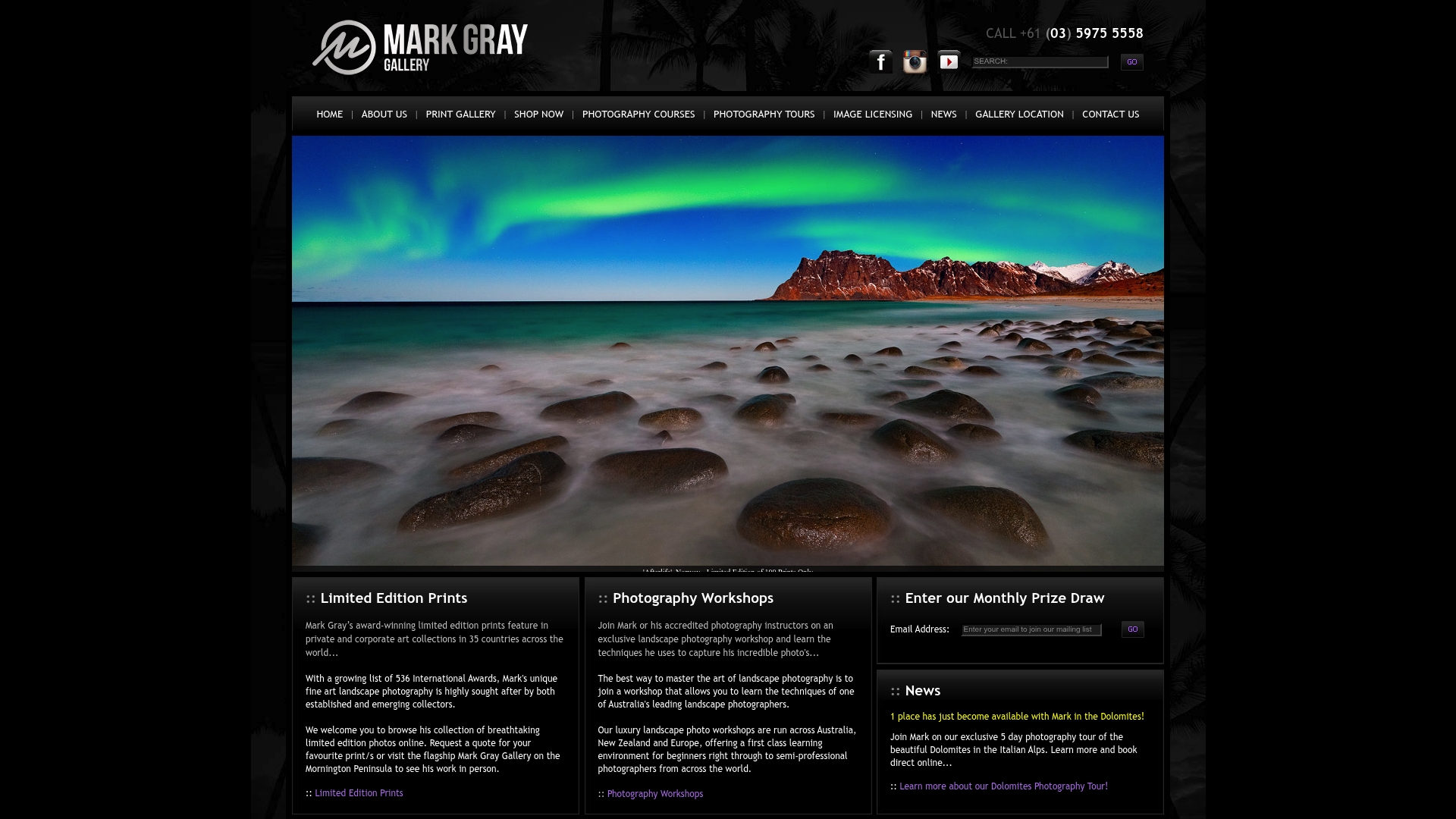
The collection features premium limited edition prints from Australia, New Zealand, Norway, Iceland, French Polynesia, Spain, and the United Kingdom. Each work is produced to the highest archival standards, with documented editions and professional provenance records. For collectors and investors alike, these are works built to last both on the wall and in a portfolio. Explore the full collection of award-winning landscape prints and discover works that offer genuine aesthetic and long-term investment value.
FAQ
Is photography a good investment compared to painting?
Fine art photography can be an excellent investment when you focus on small-edition prints by established artists with strong provenance. While painting leads at the highest price tiers, photography's 19.2% market growth in 2025 demonstrates its expanding investment potential.
What drives value in fine art photography vs painting?
In photography, edition size and provenance are the primary value drivers, with editions of ten or fewer commanding the strongest premiums. In painting, uniqueness is inherent, making artist reputation, condition, and documented ownership history the central valuation factors.
How long should you hold fine art as an investment?
Art investments typically require holding periods of 11 to 23 years to generate meaningful returns, due to the illiquidity of the market and high transaction costs at both purchase and sale.
Should I buy photography or painting for portfolio diversification?
Photography offers low correlation with traditional equities and bonds, making it a particularly useful diversification tool. Combining both mediums in a collection balances the stability of established painting values with photography's higher growth trajectory.
What is the biggest mistake new art investors make?
Buying large-edition photography prints or works without proper documentation is the most common and costly error. Investment-grade art requires small editions, verified provenance, and a realistic understanding of total ownership costs including storage and insurance.