
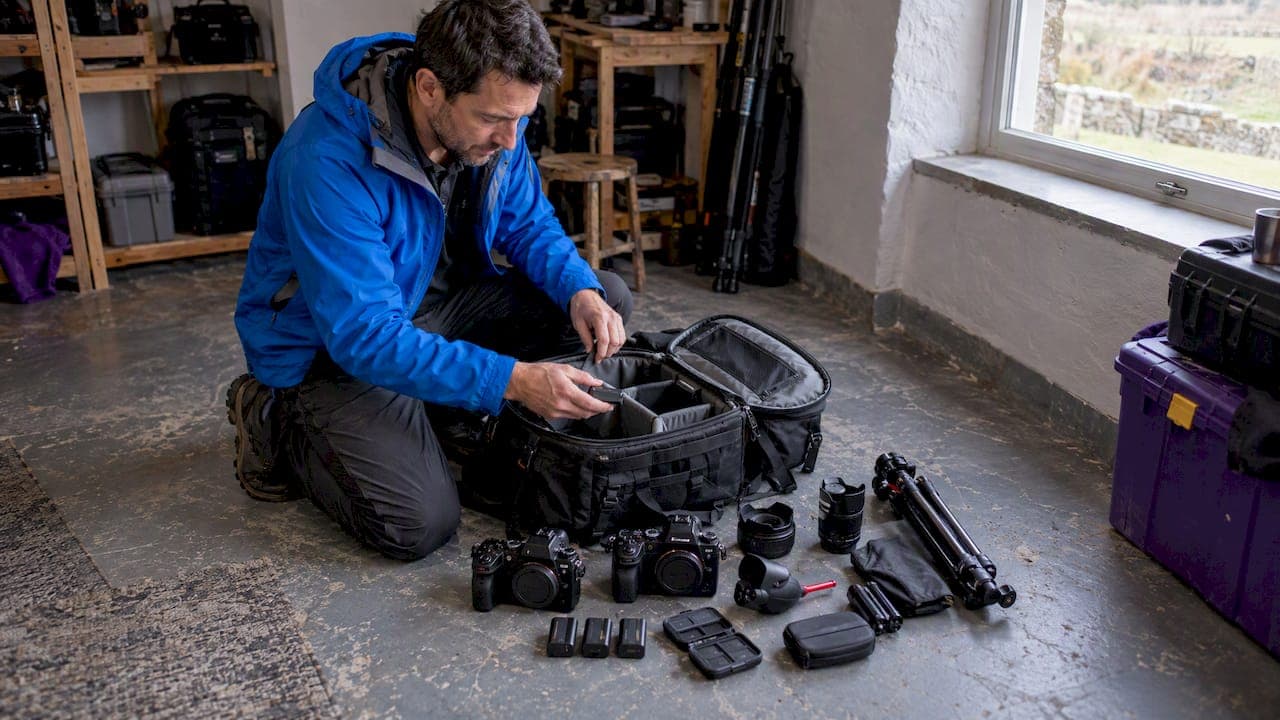
Pack your camera body, one versatile lens, a stable tripod, spare batteries and memory cards, weather protection, and layered clothing suited to the field conditions. That combination covers the core of any photography workshop packing list, whether you're heading into the desert, a rainforest, or a coastal headland at dawn. The sections below break down each category and add the situational extras that separate a smooth shoot from a scramble.
TL;DR:
- Bringing a versatile zoom lens and polarizer can cover most shooting scenarios and improve image quality in variable weather conditions.
- A lightweight carbon fiber tripod with a ball head is ideal for fast movement, while carrying sufficient spare batteries and multiple memory cards prevents data loss during long shoots.
- Proper clothing layers, hydration, and weather protection are crucial for long outdoor sessions, especially in extreme or unpredictable environments.
- Permits are essential for protected or culturally sensitive sites, requiring plans for application 14 to 28 days in advance, especially for commercial projects.
- Packing should prioritize core gear in carry-on luggage, systematic backup routines, and pre-shoot preparations like charging batteries and verifying backups to ensure smooth fieldwork.
Table of Contents
- Essential camera gear to pack
- Support and stabilization: tripods, heads, and straps
- Power, storage, and backups: batteries, cards, and drives
- Clothing, footwear, and personal items for field workshops
- Weather protection, cultural site rules, and safety
- Packing, transport, and on-tour organization tips
- Workshop-specific extras and shoot-type items
- Expert packing tips from Mark Gray on prioritizing field kit
- Why workshop packing differs from a regular trip
- Guided workshops that take the guesswork out of packing
- FAQ
- Sources
Essential camera gear to pack
Your camera body is the obvious starting point, but the real decision is what backs it up. A second body is ideal for multi-day workshops, though a clear contingency plan, spare parts, a known repair contact, or a trusted travel companion's gear, works if a second body isn't practical.
Lens choice matters more than lens count. A versatile zoom covering wide to standard focal lengths handles most landscape and street work, while a telephoto or fast prime earns its weight on wildlife or portrait-focused sessions. Professional travel photographers often favor lighter, more versatile lenses over a bulky specialty set, trading a stop of speed or a bit of reach for the mobility to keep moving with a group and react to changing light.
Filters round out the optical kit. A circular polarizer cuts glare on water and foliage, and a neutral density filter lets you stretch exposures for moving water or clouds without blowing out highlights.
- Bring a sensor cleaning pen, a rubber blower, and a microfiber cloth for dust that collects fast in the field.
- Pack spare lens caps and a backup camera strap, since both tend to go missing at the worst moment.
- Add a hotshoe level if your camera lacks a built-in one, useful for long exposures on uneven ground.
Support and stabilization: tripods, heads, and straps
A shaky tripod undoes the benefit of a great lens and a careful exposure. A stable, well-built tripod materially improves image sharpness and prevents the soft, slightly blurred frames that only show up once you're reviewing files at full size. If your workshop involves hiking, a carbon fiber model saves real weight over aluminum without sacrificing rigidity.
Head choice depends on your shooting style. Ball heads suit fast-moving landscape and travel work where you're recomposing often, while pan-tilt heads give finer control for precise horizon lines or panoramic sequences.
- Choose a carbon fiber tripod for hikes longer than a kilometer or two.
- Pick a ball head for speed, a pan-tilt head for precision framing.
- Add a padded strap or hip belt to distribute camera weight on long walking days.
Pro Tip: Set your tripod head's tension the night before a sunrise shoot so you're not fumbling with adjustments in the dark.
Power, storage, and backups: batteries, cards, and drives
Running out of battery or storage mid-shoot is one of the most preventable workshop disappointments. Bring at least three to four fully charged spare batteries for a full shooting day, more for cold conditions, which drain batteries faster, and carry a multi-bay charger plus a power bank for vehicles or evenings without wall outlets.
Memory cards deserve the same discipline. Carry enough cards to shoot for two full days without reformatting, and rotate them using a simple labeling system so you always know which cards are full and which are cleared.
- Carry a minimum of four to six memory cards and label full ones immediately.
- Use a multi-bay charger and a power bank as backup when outlets aren't available.
- Copy each day's files to a portable SSD and verify the transfer before clearing a card, a habit experienced travel photographers rely on to avoid losing a day's work.
A 1TB or 2TB portable SSD comfortably covers a week of RAW files for most workshops, and checking that backup copies actually opened correctly takes two minutes and saves a lot of regret.
Clothing, footwear, and personal items for field workshops

Layering beats guessing. A moisture-wicking base layer, an insulating mid-layer, and a waterproof outer shell cover most conditions you'll encounter between dawn starts and exposed ridgelines, and a wide-brimmed hat plus sun-protective fabric matters more than people expect on long outdoor days.
Footwear should be broken in well before the workshop, not on day one. Blisters end more shoot days than bad weather does.
- Pack a refillable water bottle and energy-dense snacks for early starts and long midday waits.
- Bring insect repellent, sunscreen, and any prescription medication in its original packaging.
- Carry a small first-aid kit with blister pads, antiseptic wipes, and basic pain relief.
- Choose a daypack or sling bag with a hip belt so camera gear stays accessible without wrecking your shoulders.
Weather protection, cultural site rules, and safety
Dry bags and rain covers protect gear from sudden downpours, and silica gel packs in your camera bag help manage humidity swings that cause condensation inside lenses. In arid, dusty environments, seal gear between lens changes and keep a dedicated cleaning routine to stop grit from reaching the sensor.
Permits and site rules matter just as much as weather gear. At Uluru-Kata Tjuṯa National Park, photographers are required to stay on marked tracks, avoid photographing culturally sensitive sites, and drones are prohibited entirely. Media and commercial photography projects need a permit, developed in partnership with Traditional Owners, and applications typically need 14 to 28 days' notice, so build that lead time into your pre-trip planning if your workshop visits a protected or culturally significant location.
- Stay on marked tracks and respect signage at every protected or cultural site.
- Share an emergency contact plan with a workshop leader or travel companion before heading out.
- Plan for both heat and cold: hydration and shade in warm climates, extra insulation in alpine or early-morning conditions.
- Never approach or photograph sites flagged as culturally sensitive, even when they look accessible.
Packing, transport, and on-tour organization tips
Carry-on luggage should hold your camera body, lenses, and anything irreplaceable; checked bags are for tripods, bulky clothing, and anything you can afford to replace if delayed. Padded dividers inside your bag keep lenses from knocking together, and small waterproof pouches are useful for keeping cards and batteries sorted and dry.
- Pack camera bodies and lenses in carry-on luggage, never checked, to avoid handling damage or loss.
- Use padded dividers and labeled pouches so batteries, cards, and filters each have a fixed spot.
- Run a daily pre-shoot routine: charge batteries overnight, verify the previous day's backup, and clean lenses before heading out.
- Stage your bag the night before an early start so you're not searching for gear in the dark.
Workshop-specific extras and shoot-type items
Beyond core gear, a few administrative and situational items round out a workshop packing list. Keep your booking confirmation, travel insurance details, and emergency contacts in one accessible folder, and bring model release forms if the workshop includes portrait or street sessions.
Shoot type drives the rest. Astrophotography or dawn sessions call for a headlamp with a red-light mode and a remote shutter release; wildlife-focused workshops benefit from a monopod or extra long-lens support; studio or coaching days may call for a laptop and tethering cable if the leader offers live review sessions.
- Pack a headlamp with red-light mode for pre-dawn setup without ruining night vision.
- Bring a remote shutter release for long exposures and self-portraits.
- Add a lightweight laptop and tethering cable only if the workshop explicitly offers tethered review.
- Check your workshop's pre-trip notes and confirm optional items directly with the leader beforehand.
Expert packing tips from Mark Gray on prioritizing field kit
An experienced photographer's approach favors fewer, more versatile lenses over a heavy specialty kit, a trade-off that keeps photographers mobile and present rather than weighed down on long field days. It mirrors what professional travel photographers widely practice: portability wins when access to the right light matters more than having every possible focal length.
Pack for the shoot you're actually going to get, not every shoot you might imagine.
- Run a morning kit check before leaving the vehicle or accommodation.
- Swap batteries and cards at midday rather than waiting for a failure.
- Back up files to a portable SSD every evening and confirm the transfer before sleeping.
Our 1 Day Photography Courses and multi-day Photography Tours build this kind of field discipline into every session.
Why workshop packing differs from a regular trip
Regular travel packing leans on comfort and variety. Workshop packing leans on access, stability, and power, the three things that actually determine whether you get the shot. Following your instructor's pre-trip list, rather than improvising your own, is the fastest way to arrive properly prepared.
— Mark
Guided workshops that take the guesswork out of packing
Our 1 Day Photography Courses and Photography Tours include pre-trip packing guidance and instructor support, so you arrive with the right gear already sorted rather than guessing from a generic list.
If you're buying for a photographer who already has the gear, a Gift Certificate lets them pick the course or tour that fits their own plans. Check current course dates and reserve your place through either landing page above.
FAQ
What is the 20-60-20 rule in photography?
Definitions vary across photography educators, so treat it as a rough planning guide rather than a fixed formula.
What are the 7 C's of photography?
The "C's" is an informal teaching framework that typically includes composition, contrast, color, clarity, candid moments, creativity, and connection to the subject. Different instructors list slightly different terms, so it's best understood as a checklist of qualities to consider rather than a strict rulebook.
What is the 80/20 rule in photography?
Both versions point to the same practical lesson: focus your energy on fieldwork and be selective in post-production.
What should I include on my photoshoot checklist?
A solid checklist covers your camera body and lenses, a tripod, spare batteries and memory cards, weather protection, appropriate clothing and footwear, and a backup plan for storing files each day. For workshops specifically, add permit documents where relevant and any shoot-specific extras your instructor recommends in pre-trip notes.
Do I need a permit to photograph at protected or cultural sites?
Commercial or media photography projects at protected sites like Uluru-Kata Tjuṯa typically require a permit, with applications best submitted 14 to 28 days in advance. Personal, non-commercial photography generally doesn't need a permit, but you still must follow posted rules on marked tracks and sensitive sites.
Sources
- Things to do — photography | Uluru-Kata Tjuta
- Information about film and photography at Uluru‑Kata Tjuṯa National Park | Parks Australia
- 8 benefits of using a tripod for photography | Canon tips
- Packing travel gear | Adobe Lightroom Academy