
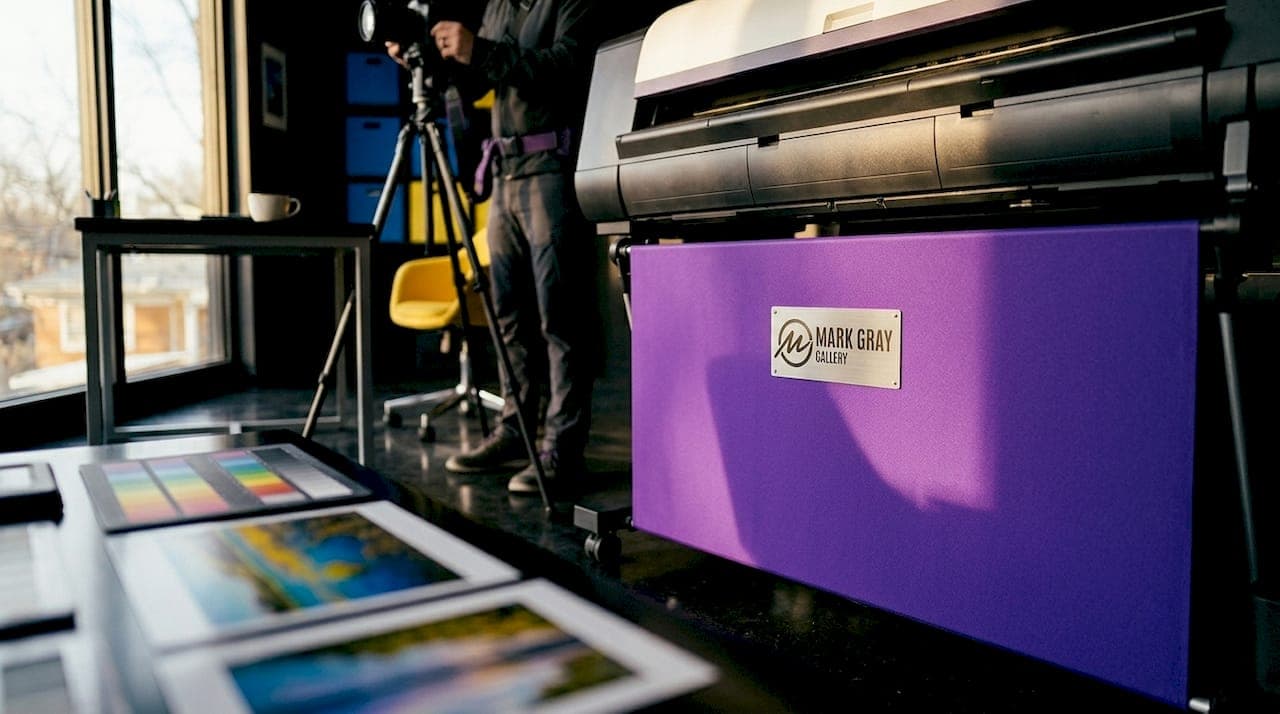
A limited edition print series is defined as a capped, numbered collection of photographic or artistic prints produced in a fixed quantity that will never be reprinted once the edition sells out. This structure creates genuine scarcity, which drives collector demand and long-term value. Shooting a limited edition print series requires more than great photography. It demands precise file preparation, archival printing standards, signed documentation, and disciplined edition management. This guide walks you through every stage, from planning your edition size to maintaining inventory integrity, so your photographic art series commands the respect and price it deserves.
What tools and materials do you need for a limited edition print series?
The foundation of any professional limited edition photography prints release is the right combination of technology, materials, and documentation. Cutting corners at this stage undermines every other effort you make.
Camera and file quality come first. Your source file must be captured at the highest resolution your camera allows, then processed without destructive compression. For large-format prints, a minimum of 300 DPI at the intended print size is the accepted standard across professional print studios.
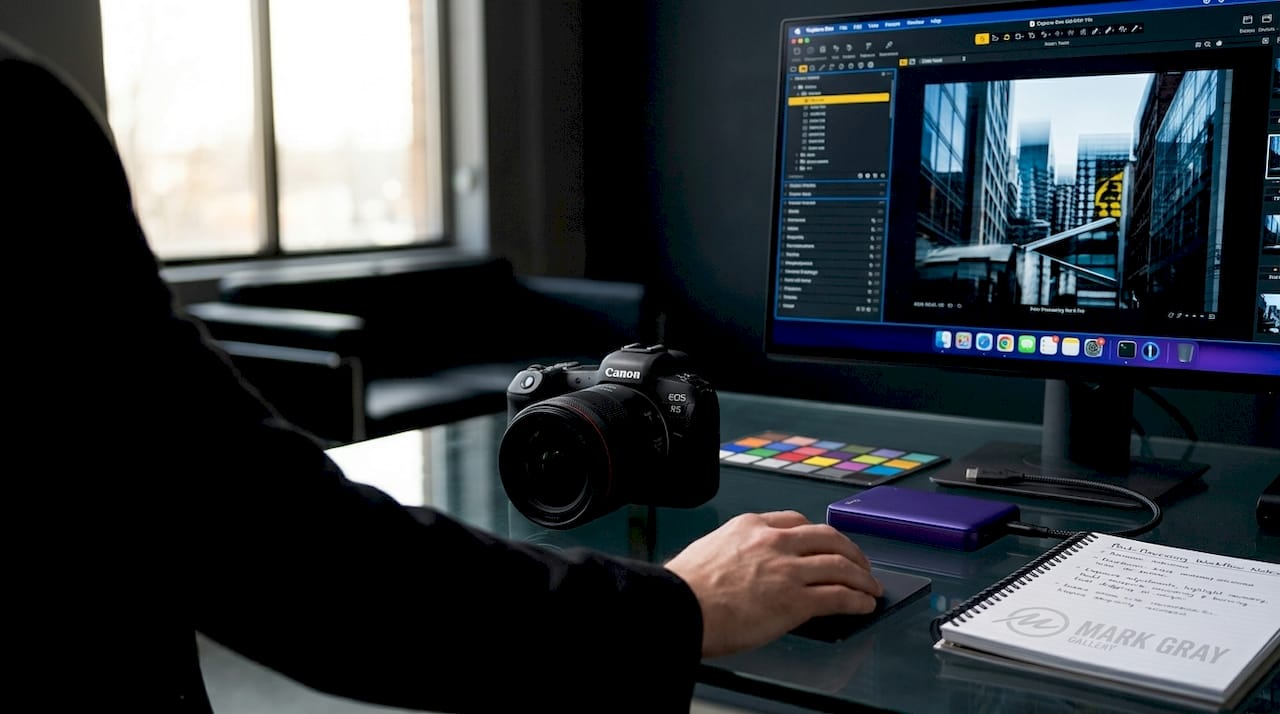
Printing technology defines the archival quality of your edition. Giclée printing, the industry term for high-resolution inkjet printing using pigment-based inks on fine art substrates, is the recognized standard for museum-grade limited edition prints. Giclée London notes that COAs are expected by serious collectors and galleries and pair with archival pigment inks and fine art substrates in museum-grade giclée printing. This combination produces prints that resist fading for over 100 years under normal display conditions.
Paper and substrate selection directly affects the aesthetic and longevity of your exclusive photo print collection. Common choices include:
- Hahnemühle Photo Rag (cotton rag, matte finish, preferred for fine art landscapes)
- Canson Baryta Photographique (baryta-coated, semi-gloss, excellent tonal depth for black-and-white work)
- Ilford Galerie Gold Fibre Silk (fiber-based, warm tone, strong shadow detail)
- Dibond aluminum composite (rigid substrate for frameless display, popular in gallery settings)
Documentation essentials complete the package. A Certificate of Authenticity (COA) is not legally required, but COAs materially increase buyer confidence and are a hallmark of museum-grade giclée prints. A complete COA includes the title, edition number, medium, dimensions, artist signature, production studio, archival quality statement, and a unique serial number.
Pro Tip: Use a dedicated spreadsheet or edition management platform like Artwork Archive or Printful's order tracking to log every print number, buyer name, and COA serial number from day one. Retroactively rebuilding these records is painful and damages credibility.
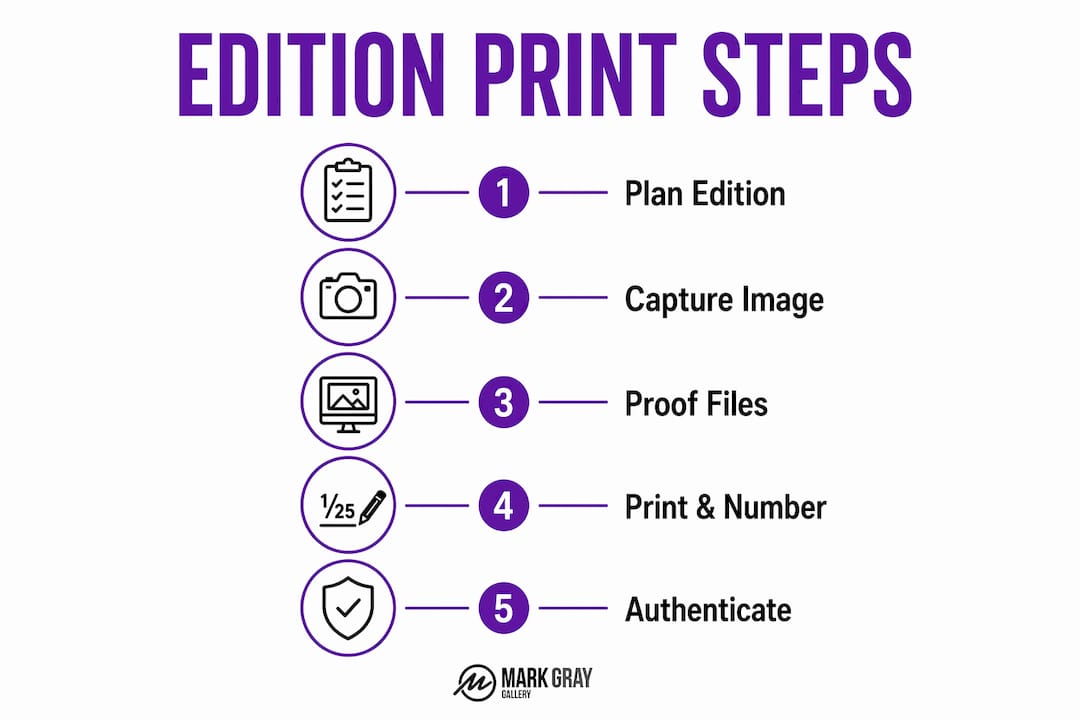
How do you plan edition size, numbering, and signing?
Edition size is the single most consequential decision in your entire release. It determines pricing, collector urgency, and the long-term reputation of your photographic art series.
- Define your audience and price point first. A smaller edition of 10 to 25 prints commands premium pricing and suits gallery representation. An edition of 50 to 100 prints suits an online collector audience and allows broader reach. Giclée London recommends starting with print cost plus packaging, then applying markups and adjusting for scarcity and artist reputation. Pricing landscape photography prints requires the same logic applied to your specific market.
- Choose a numbering convention and apply it consistently. The standard format is X/Y, where X is the individual print number and Y is the total edition size. Print 3 of 25 is written as 3/25. This notation appears on the front or back of the print in pencil, never in ink, because pencil is considered more authentic and harder to forge in the fine art world.
- Define your proof categories before production begins. Artist Proofs (AP) are traditionally limited to 10% of the main edition and are considered outside the numbered run. Printer Proofs (PP) are used for quality control and are not sold. Hors Commerce (HC) proofs are reserved for the artist's personal archive. Each category must be tracked separately to prevent confusion.
- Commit to edition closure publicly. Kirk Hammett's limited edition photo print of 75 pieces will not be reprinted, with explicit edition closure and communicated shipping schedules. This public commitment is what transforms a print into a collectible. Collectors pay a premium for certainty.
- Sign every print by hand. Signatures in pencil on the front lower margin are the convention for fine art photography. Printed or stamped signatures are not accepted by serious galleries or auction houses.
Pro Tip: Announce your edition size before you begin selling, not after. Retroactively reducing or expanding an edition destroys collector trust and can expose you to legal disputes in some jurisdictions.
The blind-pack model offers an interesting variation on standard numbering. Matt McCormick and Mike Tyson's "Past The Line – Judgment Day" collection uses blind-pack releases with Gold and Silver editions, each hand-signed and blind-packed to reveal scarcity only when opened. This approach adds a collectible experience layer that drives secondary market activity.
What are the best practices for file proofing and print preparation?
Proofing is more than color checking. Proof approval acts as a production contract that locks the definitive print file, ensuring consistency and protecting artist rights for the edition lifecycle. Every print in your run must match the approved proof exactly.
The proofing process follows a clear sequence:
- Calibrate your monitor using a hardware colorimeter such as the X-Rite i1Display Pro or Datacolor Spyder X. An uncalibrated monitor makes accurate color judgment impossible.
- Prepare your file in Adobe RGB or ProPhoto RGB color space at 16-bit depth. Convert to the printer's ICC profile only at the final output stage, never earlier.
- Request a physical printer proof from your print studio before approving the full run. Screen proofing is insufficient for fine art work because paper white, ink density, and texture all affect the final appearance.
- Compare the proof to your original reference under D50 or D65 standardized lighting, not under domestic LED or fluorescent bulbs, which shift color perception significantly.
- Lock the production file once the proof is approved. Art Services Network advises that proof approval is a binding contract and helps preserve consistency across the edition. Store the locked file in two separate locations, one local and one cloud-based.
"The proof is the edition's DNA. Every print that deviates from it is a breach of the collector's trust, not just a quality control issue."
Packaging and shipping decisions also feed back into printing choices. Prints destined for tube shipping require a minimum 1.5-inch white border to prevent image damage during rolling. Flat-packed prints in rigid mailers allow tighter borders and are preferred for large-format work above 24 inches. Framing specifications, if offered, must be confirmed before final print sizing to avoid costly remounting.
How do you maintain edition integrity and manage inventory?
Edition legitimacy hinges on rigorous operational discipline to prevent accidental reprints and maintain consistent variant management across different sizes or finishes. Without a formal system, even well-intentioned artists accidentally oversell or reopen editions.
The table below clarifies the three most common edition types and their operational implications:
| Edition type | Quantity | Numbering | COA required | Resale value |
|---|---|---|---|---|
| Open edition | Unlimited | None | Optional | Lower |
| Limited edition | Fixed cap (e.g., 25, 50, 75) | X/Y format | Expected by collectors | Higher |
| Gallery edition | Small cap (e.g., 5 to 10) | X/Y format | Mandatory | Highest |
Proper SKU management differentiates signed open editions, numbered limited editions, and gallery editions to prevent mixing scarcity messaging. Each size and finish variant of a print must carry its own SKU. A 24x36 inch Hahnemühle version and a 16x24 inch Baryta version of the same image are separate editions, not the same product in two sizes.
- Assign edition lifecycle states to every SKU: Active, Low Stock (below 20% remaining), Reorder Pending (for open editions only), and Archived (edition closed). Publishers use formal lifecycle reports and reorder thresholds to manage stock and prevent accidental oversupply.
- Publish edition status publicly on your sales page. Showing "12 of 25 remaining" creates urgency without manufactured pressure. Collectors who follow your work appreciate transparency about availability.
- Never reopen a closed edition. Blurring editions or reopening sold-out runs undermines scarcity messaging and clear communication about edition status is critical. Artists who have reopened editions have faced public backlash and permanent damage to their collector relationships.
Pro Tip: When you reach the final five prints in an edition, notify your existing collector list directly before making a public announcement. This rewards loyalty and often sells the remaining prints before they reach the general market.
Understanding the difference between an open edition and a limited edition also matters when you buy limited prints online as a collector. Always request documentation of the edition size, the print number, and the COA before purchasing. Photography print investment basics for art collectors covers this in detail for buyers navigating the secondary market.
Key takeaways
A successful limited edition print series depends on three non-negotiable pillars: locked production files, transparent edition management, and authenticated documentation that collectors can verify.
| Point | Details |
|---|---|
| Define edition size early | Announce the fixed quantity before sales open to build collector confidence and prevent disputes. |
| Use giclée printing standards | Archival pigment inks on fine art substrates are the accepted standard for museum-grade limited edition prints. |
| Lock your production file | Proof approval is a binding contract; every print in the run must match the approved proof exactly. |
| Document every print | A complete COA with serial number, edition notation, and artist signature is expected by serious collectors and galleries. |
| Manage inventory by SKU | Each size and finish variant requires its own SKU and lifecycle state to prevent accidental overselling. |
Why edition discipline is the real art form
I have released limited edition landscape photography prints from locations across Australia, New Zealand, Norway, Iceland, and French Polynesia, and the single lesson that took the longest to fully internalize is this: the edition management is as much a part of the artwork as the image itself.
Early in my career, I underestimated how much collectors study the documentation. They compare COA serial numbers. They check whether the edition size was announced before or after the release. They notice when an artist's numbering is inconsistent across different print sizes of the same image. These details are not pedantic. They are the signals collectors use to decide whether your work belongs in a serious collection or not.
The photographers I respect most treat their edition records with the same care they give their files. They use consistent signing conventions, they publish edition status updates, and they never reopen a closed run regardless of demand. That discipline is what separates a photographic art series from a print shop. It is also what allows prices to hold and grow on the secondary market over time.
My advice to any photographer starting their first limited edition release is to plan the entire edition on paper before you print a single sheet. Know your edition size, your proof allocations, your COA format, and your inventory system before the first order arrives. The collectors who find your work deserve that level of respect, and the work itself deserves to be presented with that level of intention.
— Mark
Explore Mark Gray's limited edition print collection
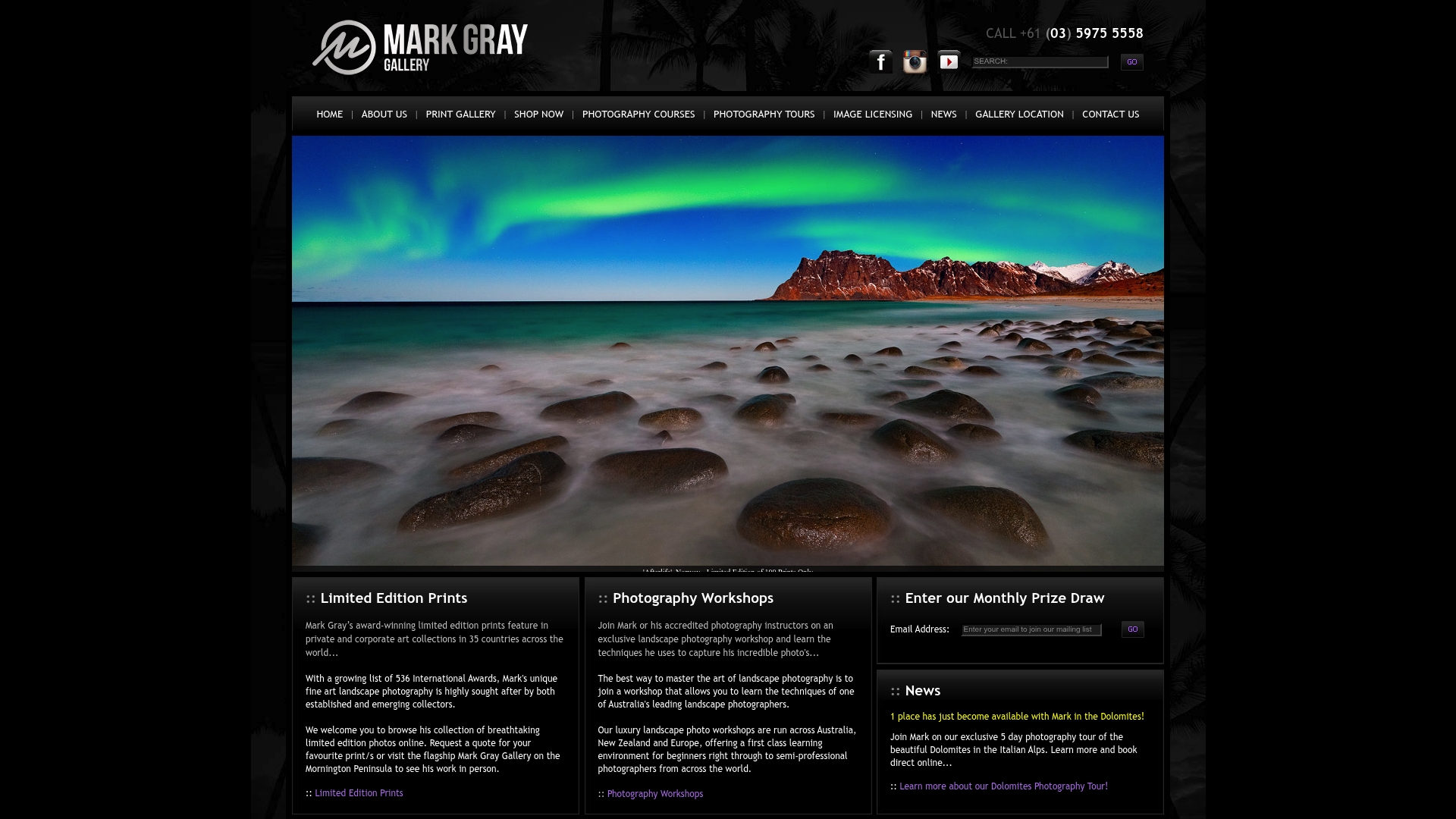
Mark Gray's award-winning landscape photography is available as a premium limited edition collection spanning Australia, New Zealand, Norway, Iceland, French Polynesia, Spain, and the United Kingdom. Every print in the collection is produced to archival giclée standards using pigment inks and fine art substrates, and each comes with a Certificate of Authenticity. Whether you are a collector seeking a museum-quality addition to your home or a photographer studying how a professional edition is structured and presented, the gallery offers a clear example of what disciplined edition management looks like in practice. Browse the full collection, explore available edition sizes, and contact the gallery directly for personalized guidance on acquiring or commissioning a print.
FAQ
What are limited edition prints in photography?
Limited edition photography prints are a fixed-quantity series of prints from a single image, each numbered and authenticated, that will not be reprinted once the edition sells out. The scarcity created by a declared edition size is what gives these prints their collector value.
How do you number a limited edition print series?
Prints are numbered using the X/Y format, where X is the individual print number and Y is the total edition size. The notation is written in pencil on the front or back of the print and corresponds to the serial number on the Certificate of Authenticity.
What should a Certificate of Authenticity include?
A COA for limited edition prints should include the title, edition number, medium, dimensions, artist signature, production studio name, archival quality statement, and a unique serial number. Giclée London's COA standard is widely referenced as the benchmark for what serious collectors and galleries expect.
How do you decide on the right edition size?
Edition size depends on your audience, pricing goals, and the level of exclusivity you want to maintain. Smaller editions of 10 to 25 prints suit gallery representation and premium pricing, while editions of 50 to 100 prints work well for an online collector market with broader reach.
Can you reopen a limited edition once it sells out?
Reopening a sold-out limited edition destroys its scarcity value and collector trust. Once an edition is declared closed, reprinting under the same edition number is considered a breach of the collector relationship and can permanently damage an artist's market reputation.