
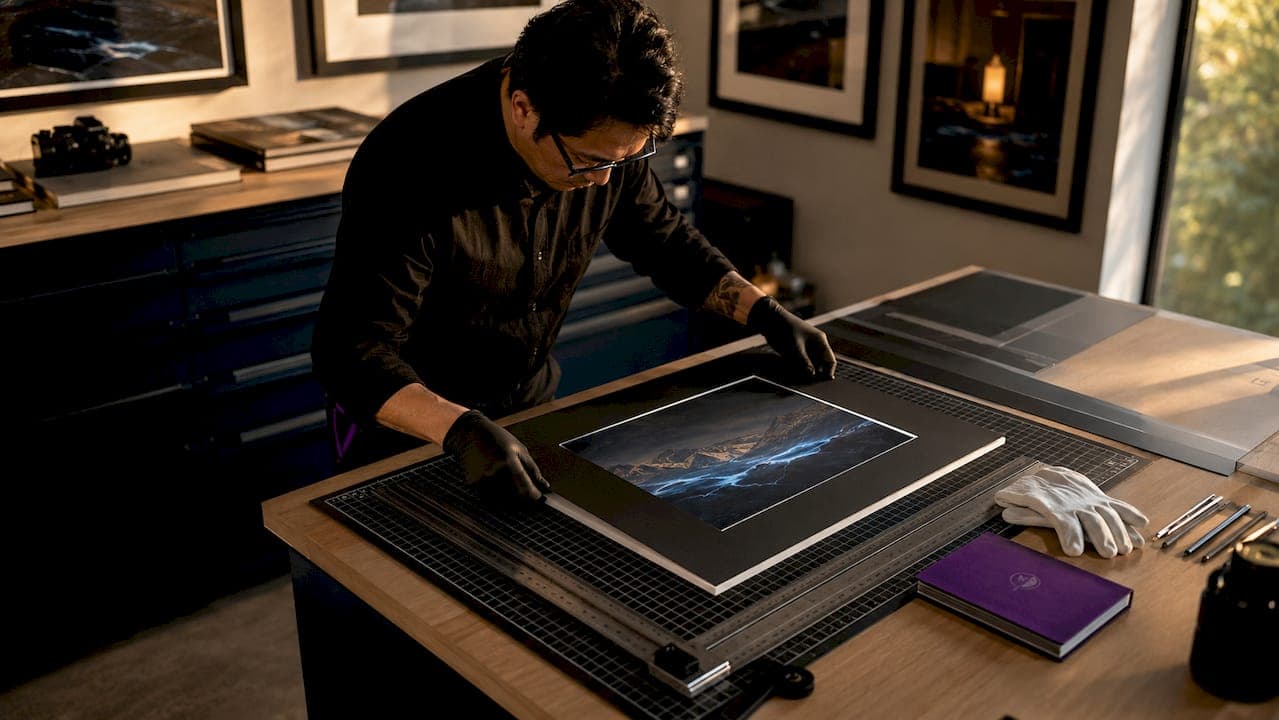
Black border matting is defined as a framing technique that places an acid-free mat board with a black border between a photographic print and its frame, serving both a protective and aesthetic function. The role of black border matting in photography prints is dual: it physically shields the print from moisture and glass contact while creating a focused visual tunnel that intensifies tonal contrast and draws the viewer's eye directly into the image. Professional curators and framing specialists recognize black matting as the preferred choice for monochrome, high-contrast, and fine art landscape photography. For photographers and art collectors who take presentation seriously, understanding how and why black matting works is not optional. It is the difference between a print that commands attention and one that simply hangs on a wall.
How does black border matting protect photography prints?
Black border matting provides a critical air gap between the print surface and the glass. This separation is the single most important physical protection a mat board offers. Without it, the print makes direct contact with the glass, creating conditions for moisture buildup, surface sticking, and irreversible damage.
Direct print-to-glass contact risks serious damage in humid environments through condensation. In climates with fluctuating humidity, this contact causes rippling, ink softening, and surface sticking that cannot be reversed. Glossy and digital prints are especially vulnerable because their surfaces bond to glass under heat and moisture pressure.
The risks of skipping a mat board go beyond surface sticking:
- Ghosting: The image transfers faint impressions onto the glass surface over time.
- Mold growth: Trapped moisture between print and glass creates a breeding ground for mold, particularly in coastal or tropical climates.
- Fading: Without the air gap, heat builds up and accelerates ink degradation.
- Rippling: Paper-based prints expand and contract with humidity, causing permanent waves when pressed against glass.
The mat board material matters as much as its presence. Cotton-rag museum boards maintain archival integrity far better than standard acid-neutral mats, preventing yellowing and acidic off-gassing. Low-cost mats may degrade within 3–5 years, releasing acids that migrate into the print and cause irreversible yellowing. For limited edition or fine art prints, archival-grade cotton-rag matting is the only responsible choice.
Pro Tip: When framing a valuable landscape or fine art print, always request a mat board labeled "archival" or "museum-quality." Ask specifically whether it is cotton-rag or alpha-cellulose. Cotton-rag is the superior option for long-term preservation.
Pairing archival matting with UV-protective glass completes the preservation system. The mat creates the air gap; the glass filters the light. Together, they protect the print from the two most common causes of photographic deterioration: moisture and ultraviolet exposure. For more on archival print longevity, the principles of archival printing reinforce why every layer of protection counts.
In what ways does black border matting enhance the aesthetic presentation of photography prints?
Black matting creates a dramatic, tunnel-like focus that draws the viewer's eye inward toward the image. This effect is not accidental. The dark border absorbs surrounding light and eliminates visual noise between the print and the frame, forcing attention onto the photograph itself. For high-contrast and monochrome images, this intensification of tonal values is transformative.
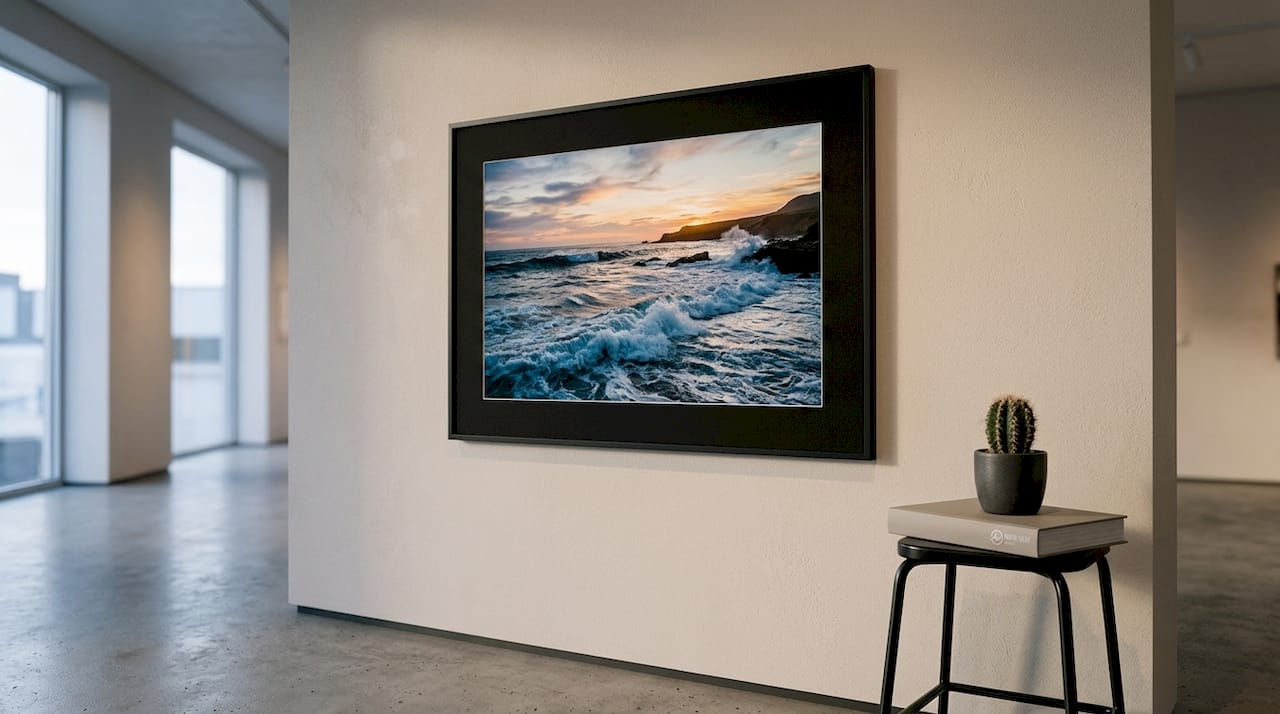
Black border matting gives a moody, modern aesthetic that is preferred for low-key imagery. A black mat makes shadows appear deeper and highlights appear brighter by contrast. This is why black matting is the standard choice in gallery presentations of black-and-white photography, night landscapes, and dramatic seascape prints.
Photography styles that benefit most from black matting include:
- Black-and-white portraiture: The mat reinforces tonal depth without competing with the image's grayscale palette.
- Night and low-light landscapes: Dark skies and artificial light sources gain intensity against a black border.
- High-contrast seascapes and waterfall prints: The contrast between white water and dark rock is amplified.
- Infrared photography: The surreal tonal inversion reads more powerfully against a black field.
- Fine art abstracts: Black matting removes color distraction and keeps the viewer focused on form.
Matting creates breathing room that visually isolates a photograph from its surroundings, improving viewer focus and elevating perceived value. This negative space is a key factor behind museum-quality presentation aesthetics. A print without a mat looks like a product. A print with a well-proportioned black mat looks like art.
Black matting also eliminates visual distractions between the photo and frame, making colors appear more vivid by contrast. Even color photographs benefit from this effect when the image contains strong dark tones or a predominantly cool palette. A color landscape print featuring deep green forests or dark ocean water gains visual punch against a black mat.
Pro Tip: If you are unsure whether black or white matting suits your print, hold a sheet of black paper against the image edge. If the colors and tones immediately appear more defined and the image looks stronger, black matting is the right call.
What are professional recommendations for black border matting sizes and styles?
Mat width directly affects the visual balance of a framed print. Professional curators recommend 3–4 inch mat widths for large prints and 1–2 inches for smaller works. These proportions give the image breathing room without allowing the mat to overpower the photograph.
The relationship between mat width, print size, and frame size follows a consistent principle: the mat should never compete with the image. A mat that is too narrow makes the print feel cramped. A mat that is too wide shifts attention away from the photograph and onto the border itself.
Recommended mat widths by print size
| Print size | Recommended mat width |
|---|---|
| Up to 8 x 10 inches | 1.5–2 inches |
| 11 x 14 inches | 2–2.5 inches |
| 16 x 20 inches | 2.5–3 inches |
| 20 x 24 inches and larger | 3–4 inches |
One of the most overlooked details in professional matting is the weighted bottom technique. The weighted bottom method involves making the bottom mat edge slightly wider (0.25–0.5 inches) than the top and sides. This counteracts an optical illusion where equal-sided mats appear to sink the image downward when viewed on a wall. The adjustment is subtle but immediately noticeable once you know to look for it.
Single matting suits most photography prints and delivers a clean, gallery-standard result. Double or triple matting adds dimensionality and a luxury effect. Layered matting creates a deeper border and a more sculpted focus, which works particularly well for limited edition prints displayed in premium frames. A common approach is a narrow inner mat in a contrasting color (such as a thin white or cream reveal) beneath the primary black mat, adding visual depth without distracting from the image.
Bevel cuts on the mat window also contribute to the finished quality. A standard bevel cut exposes a thin angled edge of the mat board interior, creating a subtle shadow line that frames the image with precision. For black mats, this bevel is often left as a white or cream interior, which provides a fine accent line between the image and the black border.
How do you select and use black matting effectively in different photography print presentations?
Selecting the right black mat requires matching the mat to the image, the frame, and the room where the print will hang. These three factors work together. Getting one wrong undermines the others.
When matching black matting to image style, consider the following:
- High-contrast images: Black mats are the natural choice. They reinforce the tonal range and make the print feel authoritative.
- Color landscape prints: Black matting works well when the image contains significant dark areas or cool tones. Warm-toned images (golden sunsets, desert landscapes) may read better against a warm neutral mat, though black still works for a modern, gallery look.
- Limited edition fine art prints: Black matting signals seriousness and collector-grade presentation. It communicates that the print is meant to be taken seriously.
- Gift prints and smaller works: A clean black mat with a simple black or dark wood frame creates a complete, polished presentation that suits most interior styles.
Room lighting and decor play a significant role in how black matting reads on the wall. In rooms with warm, incandescent lighting, black mats absorb light and can make a print feel heavier. In rooms with cool, natural, or LED lighting, black mats perform at their best, creating sharp contrast and a gallery-like atmosphere. For photographers displaying work in studio or gallery settings, cool white lighting paired with black matting produces the most accurate and dramatic result.
Frame color selection completes the presentation. Black mats pair naturally with black frames for a unified, contemporary look. They also work well with dark walnut or ebony wood frames for warmth, and with thin silver or brushed metal frames for a modern, architectural feel. Avoid pairing black mats with ornate gold frames unless the image is deliberately classical in style. The combination can feel visually conflicted.
For thicker prints, such as fine art papers mounted on board or limited edition prints on heavyweight media, the mat depth needs to accommodate the print's thickness. A standard mat board sits flush with thinner papers, but thicker substrates may require a deeper rabbet or a spacer behind the mat to keep the print from pressing against the glass. This is a detail that professional framing specialists handle as standard practice but that DIY framers often overlook.
Pro Tip: Always test your mat and frame combination under the actual lighting conditions of the room where the print will hang. A combination that looks perfect in a bright workshop can look flat or heavy in a dimly lit living room.
Key takeaways
Black border matting serves both a protective and aesthetic function, making it the most complete presentation solution for fine art and limited edition photography prints.
| Point | Details |
|---|---|
| Air gap protection | Black matting prevents print-to-glass contact, stopping moisture damage, ghosting, and mold. |
| Archival mat quality | Cotton-rag museum boards preserve prints far longer than standard acid-neutral alternatives. |
| Tunnel-like visual focus | Black borders intensify tonal contrast and draw the viewer's eye directly into the image. |
| Weighted bottom technique | Making the bottom edge 0.25–0.5 inches wider prevents the optical sinking illusion. |
| Mat width by print size | Use 1.5–2 inches for small prints and 3–4 inches for large prints to maintain visual balance. |
Why I always come back to black matting
After years of presenting landscape photography across Australia and internationally, I have come to one clear conclusion: black border matting is not a stylistic preference. It is a presentation standard.
I have seen prints displayed without matting, pressed directly against glass, and the damage that follows is heartbreaking. Moisture from coastal environments, temperature swings in gallery spaces, and even the humidity from a single warm room can cause a print to stick, ripple, or develop mold within months. The mat board is not decorative padding. It is the first line of defense.
On the aesthetic side, I have watched visitors respond differently to the same image depending on how it is matted. A black mat creates a moment of focus. The viewer stops, looks inward, and engages with the photograph rather than scanning past it. That engagement is what every photographer wants. For photography print collectors, black matting also signals value. It tells the viewer that the work inside the frame deserves serious attention.
The most common mistake I see in DIY framing is choosing a mat that is too narrow. A thin mat makes a print look like a snapshot. A properly proportioned black mat makes it look like a collected work. If you are investing in a fine art print, invest equally in its presentation. The mat is part of the art.
— Mark
Mark Gray's prints, presented the way they deserve to be
Mark Gray is an internationally recognized Australian landscape photographer whose limited edition prints span locations from Iceland and Norway to French Polynesia and the Australian outback. Every print in the collection is produced to archival standards and deserves presentation that matches that quality.
At Mark Gray Gallery, each limited edition print is available with professional framing guidance, including black border matting options selected to complement the specific tonal character of each image. Whether you are adding a dramatic seascape to your home or building a serious photography collection, the right matting makes every print perform at its full potential. Reach out through the website to discuss framing options and find the presentation that does justice to the work.
FAQ
What is the main role of black border matting in photography prints?
Black border matting protects the print by creating an air gap that prevents moisture damage and glass contact, while also intensifying tonal contrast and drawing the viewer's eye into the image.
Does black matting work for color photography prints?
Black matting works well for color prints that contain strong dark tones or cool color palettes, such as seascapes, forest landscapes, and night scenes, as it amplifies contrast and removes visual distraction.
What mat width should I use for a large photography print?
Professional framing standards recommend 3–4 inch mat widths for large prints (20 x 24 inches and above) to provide adequate breathing room without overpowering the image.
What is the weighted bottom technique in photo matting?
The weighted bottom technique makes the bottom mat edge 0.25–0.5 inches wider than the other sides, correcting an optical illusion that makes equal-sided mats appear to sink the image downward on the wall.
Why is archival mat board important for fine art prints?
Archival cotton-rag mat boards prevent acidic off-gassing and yellowing that standard mats cause within 3–5 years, preserving the print's color and surface integrity for decades.