
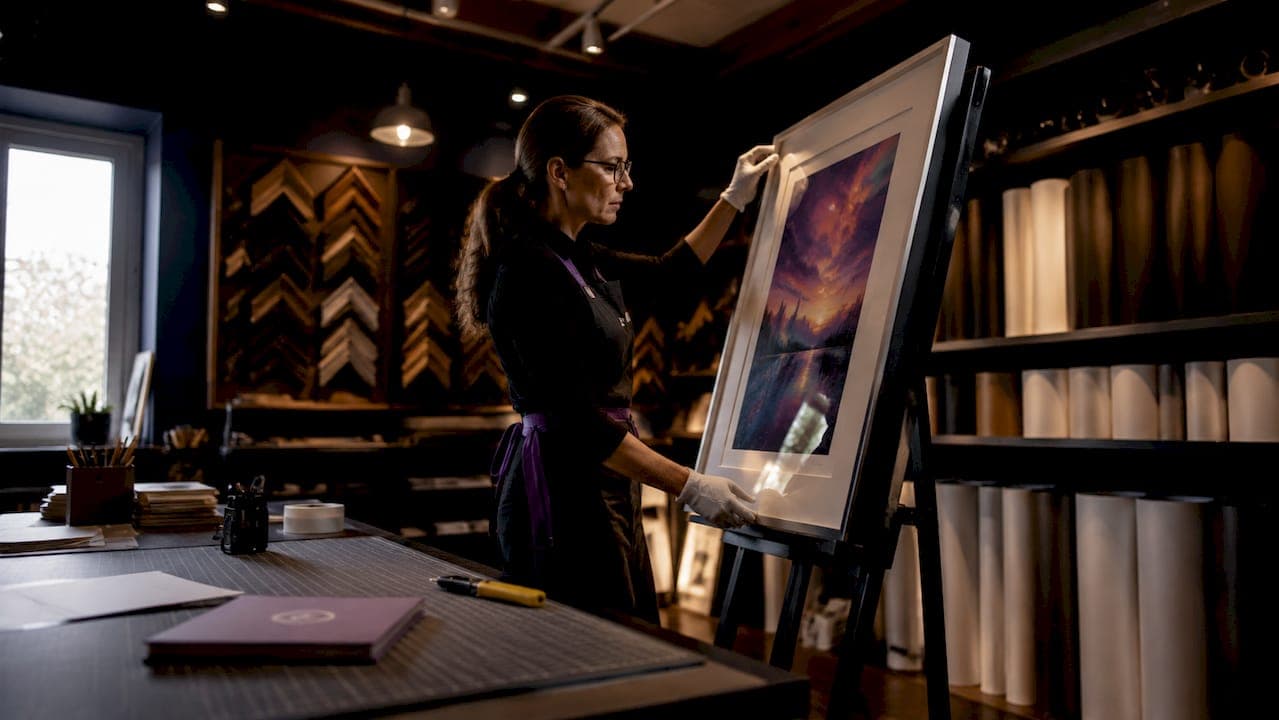
Framing limited edition prints professionally is defined as the practice of using archival materials, conservation-grade mounting, and UV-protective glazing to preserve and display prints without compromising their integrity or value. For collectors, this is not a decorative afterthought. The frame is the first line of defense against fading, acid damage, and humidity. Done correctly, professional print framing protects your investment for decades while making the artwork look exactly as the artist intended. This guide covers every decision you will face, from glazing type to mounting method to display environment.
What materials and tools are essential for framing limited edition prints professionally?
Conservation framing uses archival materials and reversible mounting techniques to protect print integrity. That distinction matters because non-archival materials, such as standard cardboard backing or regular glass, introduce acids and UV radiation that degrade prints over years, not centuries. Collectors who invest in limited edition art framing from the start avoid costly restoration later.
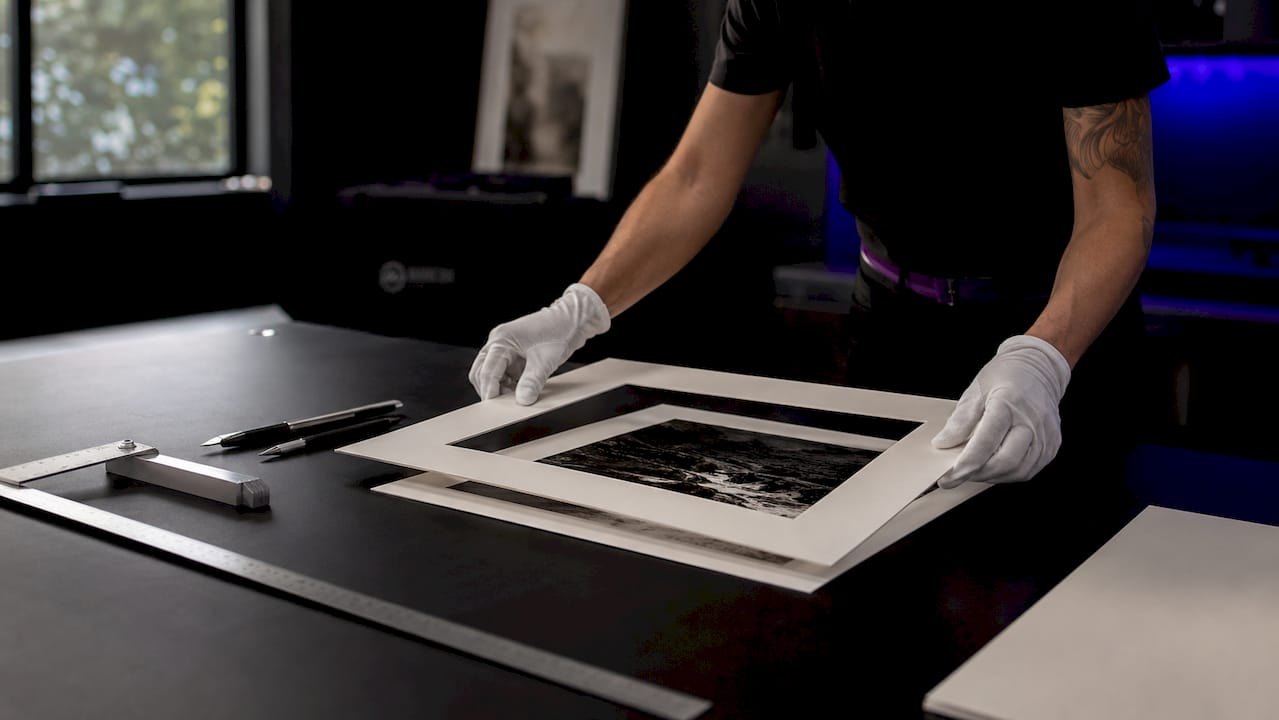
Archival mats and acid-free backing
Acid-free, lignin-free mats act as both a visual buffer and a conservation tool to prolong print life. The mat keeps the print surface from touching the glazing, which prevents condensation damage and surface abrasion. Always specify 4-ply or 8-ply conservation mat board from a certified supplier. The color and texture of the mat should complement the print without competing with it.
Glazing options: glass, acrylic, and museum glass
Glazing is the single most protective decision in the framing process. UV filtering glass offers about 97% UV protection; acrylic offers around 99% UV protection and is lightweight and shatterproof. Acrylic is the preferred choice for large-format prints because it reduces the risk of breakage during transport and installation. Museum-grade anti-reflective glass blocks 99% UV and nearly disappears visually, making it ideal for highly valuable prints where viewing clarity is non-negotiable.
Frame materials and profiles
Frames can be wood, metal, or composite, chosen for style and protection without competing with the artwork. Wood frames suit warm-toned landscape photography and traditional subjects. Metal frames work well with contemporary or high-contrast images. Composite frames offer durability at a lower price point. The frame profile depth must accommodate the mat, glazing, print, and backing without compressing any layer.
Pro Tip: Simple archival frames for prints start under $100, while museum-grade framing for oversized pieces can reach several hundred dollars. Set your budget before visiting a framer so you can prioritize glazing quality over decorative profile.
| Material | Primary benefit | Best use case |
|---|---|---|
| Acid-free mat board | Prevents acid migration to print | All limited edition prints |
| UV-filtering acrylic | 99% UV protection, shatterproof | Large-format or traveling prints |
| Museum glass | 99% UV, near-invisible clarity | High-value or gallery-displayed prints |
| Wood frame | Warm aesthetic, versatile finish | Landscape and fine art photography |
| Metal frame | Durable, contemporary look | Modern or high-contrast prints |
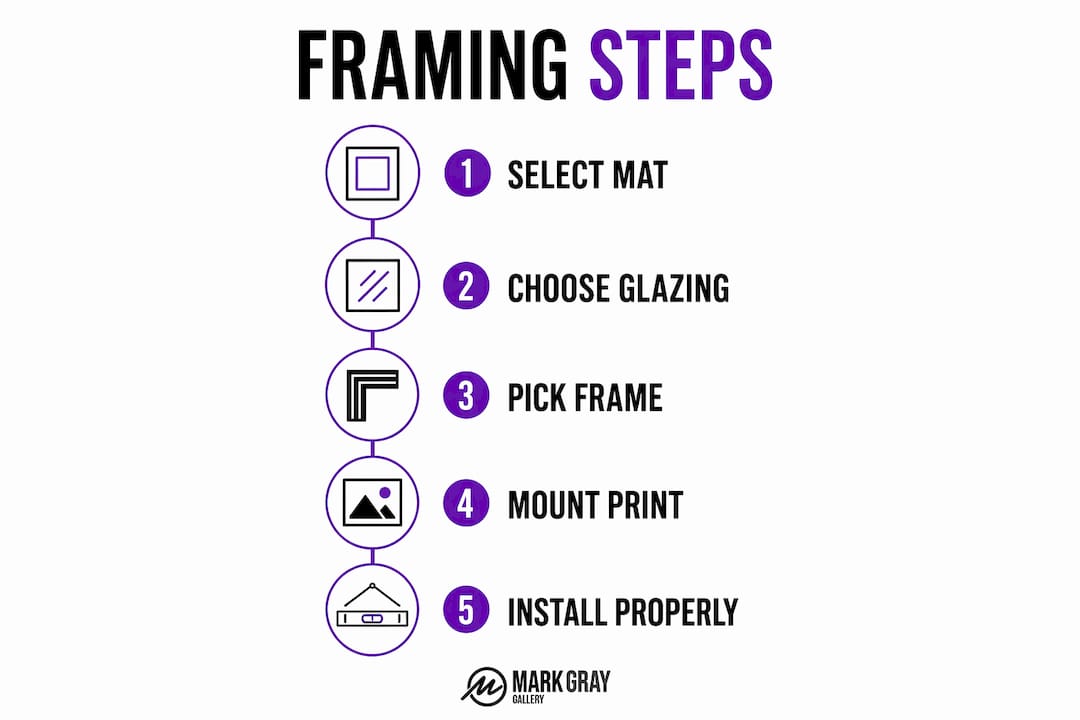
How to choose the right frame style and size for your print
The frame style should serve the artwork first and the room second. A frame that competes with the image for attention is a framing failure, regardless of how beautiful the molding is. Collectors who approach custom frames for limited prints with this principle consistently achieve better results than those who match frames to furniture.
Matching frame to artwork medium and color
Warm-toned prints, such as golden-hour landscape photography, pair naturally with timber frames in honey, walnut, or dark espresso finishes. Cool-toned prints featuring blues, grays, and silvers read better in brushed aluminum or matte black metal frames. Avoid frames with heavy ornamentation on photographic prints. The image itself carries the visual weight, and the frame should hold it, not decorate it.
Sizing mats and borders correctly
Mat width directly affects how the print reads on the wall. A mat that is too narrow makes the image feel cramped. A mat that is too wide can dwarf a small print. The standard practice is to cut the bottom mat border slightly wider than the top and sides, typically by 10–15%, to correct for an optical illusion that makes equal borders appear bottom-heavy. This technique is called "weighted mat" sizing and is a hallmark of professional print framing.
Key sizing considerations for collectors:
- Allow a minimum 2-inch mat border on all sides for prints up to 16x20 inches.
- Use a double mat for added depth and a more finished, gallery-quality appearance.
- Confirm the rabbet depth of the frame accommodates all layers before ordering custom sizes.
- Leave a small gap between the print and the mat window to allow for paper expansion with humidity changes.
Balancing frame style with display environment
Lighting in the display room changes how a frame reads. A gold-leaf frame that looks elegant under warm incandescent light can appear garish under cool LED lighting. Visit the display space before finalizing your frame choice. Consider the wall color, ceiling height, and neighboring artwork. A landscape photography display in a bright, north-facing room has different framing needs than the same print hung in a dimly lit hallway.
Best mounting and installation techniques to preserve limited edition prints
Mounting is where most framing mistakes happen. The wrong adhesive or technique can permanently damage a print, and damage to a limited edition piece cannot be undone. Professional framers use reversible methods as a standard, not an option.
Reversible hinging vs. dry mounting
Reversible hinging uses Japanese tissue paper and wheat starch paste to attach the print to the backing at the top edge only. This allows the print to hang freely and expand or contract with humidity without buckling. Dry mounting uses heat and pressure to bond the entire print surface to a rigid board. Dry mounting is permanent and destroys the print's archival status. For any limited edition or collectible print, reversible hinging is the only acceptable method.
The four steps professional framers follow for safe mounting:
- Inspect the print under raking light to identify any existing damage, creases, or foxing before handling begins.
- Handle prints only with cotton gloves and lay them on a clean, acid-free surface throughout the process.
- Attach Japanese tissue hinges to the top edge of the print using wheat starch paste, allowing full drying before assembly.
- Secure the hinge to the acid-free backing board and confirm the print hangs freely within the mat window before sealing the frame.
Pro Tip: Bring your certificate of authenticity and any provenance documentation to your framer. Providing display location details helps framers recommend the right archival mounting method for your specific environment.
Common mounting mistakes to avoid
Pressure-sensitive tapes, including masking tape and standard double-sided tape, release acids over time and stain prints permanently. Rubber cement causes yellowing within months. Foam-core backing that is not acid-free off-gasses chemicals that migrate into the print. These are not theoretical risks. Collectors who inherit improperly framed prints regularly discover brown staining, brittleness, and surface discoloration caused by these materials.
How does the display environment affect print longevity?
Collectors often underestimate how important the display environment is compared to just the frame or materials. A perfectly framed print hung in the wrong location will degrade faster than a modestly framed print in an ideal spot. Environmental assessment is part of professional framing, not an afterthought.
UV exposure and light management
Direct sunlight is the fastest way to destroy a photographic print. Even indirect natural light carries UV radiation that causes fading and color shift over time. UV-filtering glazing is non-negotiable for any print displayed near a window. Experts advise selecting glazing type based on sunlight exposure and humidity common in the display room, not just on the print's value.
Key environmental factors to assess before hanging a print:
- Avoid walls that receive direct sunlight at any time of day, including morning east-facing walls.
- Keep prints away from air conditioning vents, fireplaces, and exterior walls prone to temperature swings.
- Maintain indoor relative humidity between 45–55% to prevent paper expansion, contraction, and mold growth.
- Use LED lighting with a low UV output for picture lighting rather than halogen or incandescent spotlights.
For collectors interested in UV-reactive art display, the same UV management principles apply: the glazing must match the light environment, not just the artwork type.
"The display environment is as much a part of conservation as the materials inside the frame. A collector who controls light, humidity, and temperature protects their investment more effectively than one who simply buys expensive glass."
How professionals assess room conditions
A skilled framer will ask about the room's orientation, typical light levels, and HVAC conditions before recommending glazing and backing. Consulting a framer who understands the print's provenance and display context ensures the mounting and glazing solutions are tailored for preservation, not just appearance. Collectors who bring photos of the display wall and note the room's humidity levels give their framer the information needed to make the right call.
Key takeaways
Framing limited edition prints professionally requires archival materials, reversible mounting, UV-protective glazing, and careful environmental assessment to preserve both aesthetic quality and long-term investment value.
| Point | Details |
|---|---|
| Use archival materials | Acid-free mats and lignin-free backing prevent chemical damage to prints over time. |
| Prioritize UV glazing | Acrylic or museum glass blocking 99% UV is the standard for valuable prints. |
| Choose reversible mounting | Japanese tissue hinging protects print integrity and maintains archival status. |
| Assess the display environment | Control light, humidity, and temperature before choosing glazing and backing type. |
| Match frame to artwork | Frame style, color, and profile should serve the image, not the room's décor. |
What I've learned from watching collectors get framing wrong
Most collectors spend weeks choosing the right print and minutes choosing the frame. That imbalance is the single most common mistake I see. A limited edition print's value is directly tied to its condition, and condition is directly tied to how it was framed and stored from day one.
The second mistake is trusting a general framing shop with archival work. Not every framer understands conservation standards. Ask specifically whether they use acid-free materials throughout, whether they practice reversible mounting, and whether they can recommend glazing based on your room's light conditions. If they cannot answer those questions confidently, find someone who can.
The third mistake is treating framing as a one-time decision. Prints should be inspected every few years. Check for mat burn, which appears as a dark line where the mat contacts the print. Check for condensation marks on the glazing interior. Check that hinges have not released. Framing is a living system, not a sealed vault.
My honest advice: invest in the glazing first, the mat second, and the frame profile last. The glazing does the most work. The mat protects the surface. The frame is the finishing touch. Reverse that priority order and you will spend more money fixing problems than you would have spent getting it right the first time.
— Mark
Mark Gray's limited edition prints, ready for your wall
Mark Gray's award-winning landscape photography is produced as premium limited edition prints using archival-grade materials that meet the conservation standards discussed throughout this guide. Every print is numbered, signed, and accompanied by a certificate of authenticity, giving your framer all the documentation needed to make the right archival choices.
Whether you are framing a dramatic Icelandic vista or a sun-drenched Australian coastline, the prints from Mark Gray Gallery are produced to the specifications that professional framers work with every day. Visit markgray.com.au to view the full collection, inquire about framing recommendations, or request a print for your next display project.
FAQ
What is conservation framing for limited edition prints?
Conservation framing uses archival, acid-free materials and reversible mounting techniques to protect a print's integrity without causing permanent damage. It is the industry standard for any limited edition or collectible artwork.
Is acrylic or glass better for framing prints professionally?
Acrylic offers around 99% UV protection and is shatterproof, making it the preferred choice for large-format prints. Museum glass offers comparable UV protection with superior optical clarity for high-value display pieces.
Can I use dry mounting on a limited edition print?
Dry mounting is permanent and destroys the print's archival status. Professional framers use reversible hinging with Japanese tissue and wheat starch paste for all limited edition and collectible prints.
Where should I hang a framed limited edition print?
Avoid walls with direct sunlight, proximity to air vents, and exterior walls with temperature fluctuations. Ideal conditions maintain relative humidity between 45–55% and use low-UV LED lighting.
How do I find a framer qualified for archival work?
Ask whether the framer uses acid-free materials throughout, practices reversible mounting, and can recommend glazing based on your room's light and humidity. A qualified framer will answer all three questions without hesitation.