

A limited edition print is defined as a fixed, capped number of copies of an artwork, and that fixed supply is the single greatest driver of its collectible worth. Understanding limited edition print value explained properly means recognizing that scarcity, authentication, and condition work together to determine what a print is worth on the open market. A limited edition of 10 prints can sell for 5–10x the price of an open edition equivalent. That multiplier is not arbitrary. It reflects real collector demand, market memory, and the confidence that no additional copies will ever dilute the supply.
How edition size and numbering influence limited edition print value
Edition size is the most direct lever in limited edition art pricing. The fewer prints that exist, the stronger the market tension, and the higher the price ceiling for each individual piece.
Small editions of 10–25 prints sell at premium prices. Mid-range editions of 50–100 balance scarcity with sales volume. Large editions of 250 or more carry little genuine scarcity value, regardless of the "limited" label attached to them.

The numbering format itself carries meaning. When you see "7/50" on a print, the first number is the individual copy number and the second is the total edition size. That fraction is a public contract between the artist and every buyer. It tells you exactly how many competing copies exist in the world.
Here is how typical pricing multipliers shift with edition size:
| Edition size | Scarcity level | Typical price multiplier vs. open edition |
|---|---|---|
| 10 prints | Very high | 5x–10x |
| 25 prints | High | 3x–5x |
| 50 prints | Moderate | 2x–3x |
| 100 prints | Low-moderate | 1.5x–2x |
| 250+ prints | Minimal | 1x–1.5x |
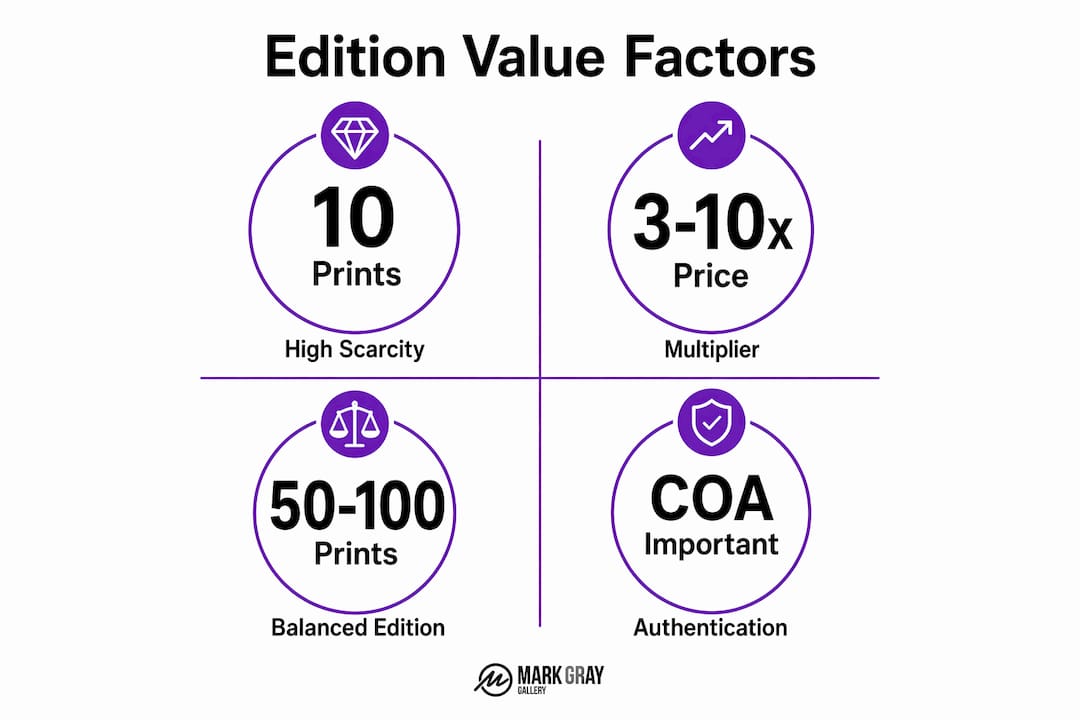
The fixed nature of the edition is non-negotiable for serious collectors. Limited editions must be treated as binding contracts with buyers, with no secret reprints ever permitted. Any artist or publisher who reopens a closed edition destroys market trust permanently.
Pro Tip: When evaluating a "limited edition," ask for written confirmation that the edition is permanently closed. If the seller cannot provide that assurance, treat the print as an open edition regardless of its label.
What authentication elements make a print genuinely collectible?
Authentication is what separates a collectible limited edition from a decorative reproduction. Valid limited editions require a certificate of authenticity that includes the title, edition number, printing process, and the artist's hand signature. A digitally printed or stamped signature does not meet this standard.
The key authentication elements to look for include:
- Hand signature: The artist's original ink signature, applied directly to the print, not reproduced during printing
- Certificate of authenticity (COA): A separate document stating the title, edition size, individual copy number, printing method, and date
- Edition number: Handwritten on the print itself, typically in pencil, in the format copy/total (e.g., 12/50)
- Artist's proof (AP): A small number of prints, typically 10–15% of the edition, set aside for the artist's personal use; these often carry a premium due to their rarity and association with the artist
- Printing process disclosure: Giclée, lithograph, screen print, and darkroom print each carry different collector expectations and values
Prints without a hand signature and COA are classified as open editions by the market, regardless of what the seller claims. Missing or vague authentication directly weakens resale confidence and market trust.
Pro Tip: Store your COA separately from the print itself, in an acid-free sleeve. If the print is ever sold or insured, the COA is the document that proves its status.
How condition, provenance, and market factors shape resale value
Condition is decisive in the resale market for limited edition prints. Color retention, surface quality, and restoration history all affect what a buyer will pay. A print with faded colors or surface damage loses value regardless of how low its edition number is.
The practical condition factors that matter most are:
- Color retention: Fading caused by UV exposure is one of the most common and damaging issues in print collecting
- Surface integrity: Scratches, foxing, and moisture damage are permanent deductions from market value
- Framing history: Acid-free matting and UV-protective glass preserve condition; standard glass and cardboard backing accelerate deterioration
- Restoration: Any professional restoration must be disclosed; undisclosed restoration is considered misrepresentation
Provenance adds a different layer of value. A print with documented ownership history, especially one that has passed through recognized collections or galleries, carries stronger buyer confidence. That documentation trail tells the market the print has been handled properly and authenticated at multiple points.
"A well-preserved mid-numbered print can be more valuable than a low-numbered print in poor condition." — Rebecca Alder Art
This insight challenges the common collector obsession with low edition numbers. Number 1 of 50 is only the most valuable copy if it is also in the best condition. Number 23 of 50, stored correctly and accompanied by full provenance documentation, will consistently outsell a damaged number 1 at auction.
Strong limited edition markets show repeat sales, defined buyer pools, and market memory. These are the conditions that make prints function as genuine assets rather than decorative purchases.
Limited edition prints vs. open editions and other print types
Understanding print value requires clarity on what separates a limited edition from other print categories. The differences are significant, and confusing them is one of the most common mistakes first-time buyers make.
| Print type | Edition size | Scarcity | Collectible appeal | Typical pricing |
|---|---|---|---|---|
| Limited edition | Fixed, capped | High | Strong | Premium |
| Artist's proof (AP) | 10–15% of edition | Very high | Very strong | Above edition price |
| Open edition | Unlimited | None | Low | Entry-level |
| Mass-market reproduction | Unlimited | None | Minimal | Lowest |
| Trial proof / variant | 1–5 copies | Extreme | Specialist | Highest |
Open editions are prints produced without a fixed cap. They are sold until demand drops, which means supply can always increase to meet demand. That dynamic eliminates scarcity and, with it, the primary driver of collectible value.
Artist's proofs occupy a special position. They are technically outside the numbered edition and were historically used by artists to check print quality before the main run. Today, APs are sought by serious collectors precisely because they exist in smaller numbers than the main edition. For types of limited edition photography prints, understanding the distinction between APs and standard numbered copies is fundamental to making informed purchases.
Mass-market reproductions are the category most often misrepresented as limited editions. They may carry a number, but if the edition size is not permanently fixed and the print is not hand-signed, it does not qualify as a collectible limited edition by market standards.
Practical steps for evaluating limited edition prints before you buy
Buying a limited edition print with confidence requires a structured approach. Emotional response to an image is valid, but it should be supported by factual verification before any purchase.
- Confirm the edition size in writing. Ask the seller or gallery for documentation that the edition is permanently closed. A reputable seller will provide this without hesitation.
- Examine the signature. The artist's hand signature should be in ink or pencil, directly on the print. Compare it to known examples if possible.
- Request the full COA. The certificate must include the title, edition number, printing process, and artist's name. Vague or incomplete COAs are a warning sign.
- Assess physical condition. View the print under good lighting. Check for fading, surface marks, and any signs of moisture damage. Ask about framing history.
- Research the artist's market. Look for evidence of repeat sales, auction records, and gallery representation. An artist with a documented sales history carries lower investment risk.
- Verify the seller's reputation. Buy from established galleries, recognized auction houses, or directly from the artist. For guidance on photography print investment basics, working with a trusted source is the single most reliable way to avoid overpriced or misrepresented prints.
Pro Tip: Balance your emotional connection to an image with market fundamentals. A print you love that also has strong authentication, a small edition size, and a reputable artist behind it is the ideal combination of personal and investment value.
The term "limited edition" is often misused, and discerning buyers must verify that the edition is truly capped and authenticated. Skepticism is not cynicism here. It is due diligence.
Key takeaways
The value of a limited edition print is determined by the combination of fixed scarcity, verified authentication, and documented condition, not by any single factor alone.
| Point | Details |
|---|---|
| Edition size drives price | Editions of 10–25 prints command 3x–10x the price of open editions. |
| Authentication is non-negotiable | A hand signature and full COA are required for collectible status. |
| Condition often outweighs number | A well-preserved mid-numbered print regularly outsells a damaged low-numbered copy. |
| Provenance adds confidence | Documented ownership history strengthens buyer trust and resale value. |
| Open editions hold minimal value | Unlimited supply eliminates scarcity, which is the primary driver of collectible worth. |
My perspective on what the market gets wrong about print value
I have spent years photographing landscapes across Australia, New Zealand, Iceland, Norway, and beyond, and I have watched collectors make the same mistake repeatedly. They fixate on edition numbers. They want number 1 of 50, and they will pay a premium for it even when the print has been stored carelessly or lacks complete documentation.
The market reality is more nuanced. Scarcity alone does not create value. A small edition from an artist with no sales history, no gallery representation, and no market memory is still a speculative purchase regardless of how few copies exist. The edition number is one variable in a larger equation.
What I find most rewarding about collecting limited edition photography prints is the intersection of genuine aesthetic quality and market discipline. When an artist commits to a fixed edition, signs every copy, and produces work with recognizable imagery and technical excellence, the print earns its value. That combination is rarer than the "limited edition" label suggests.
My honest advice: research the artist's track record before the edition size. A well-documented artist with repeat auction sales and a disciplined approach to shooting a limited edition print series will serve your collection far better than a low-numbered print from an unknown source. And never underestimate the value of simply loving what hangs on your wall. The best collections combine investment discipline with genuine passion.
— Mark
Explore Mark Gray's exclusive limited edition landscape prints
Mark Gray is an award-winning Australian landscape photographer whose work spans some of the world's most spectacular locations, from the dramatic coastlines of Iceland to the ancient red deserts of Australia. Every print in the collection is hand-signed, individually numbered, and accompanied by a full certificate of authenticity.
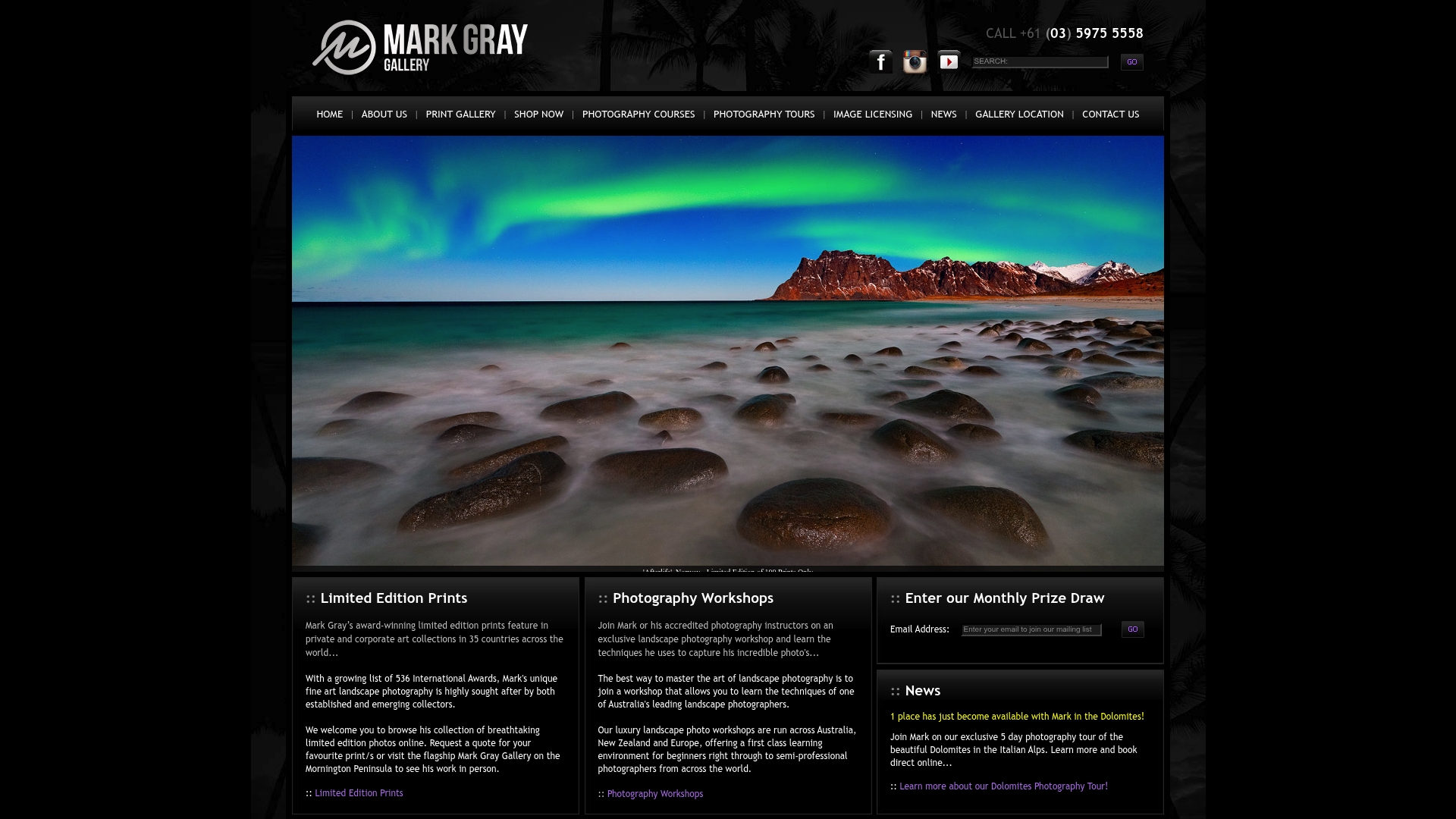
The edition sizes are fixed and permanently closed, giving collectors the scarcity and market confidence that serious buyers require. Whether you are acquiring your first limited edition or adding to an established collection, Mark Gray's landscape photography offers the rare combination of artistic excellence and investment-grade authentication. Browse the full collection and find a print that speaks to you, backed by the documentation and discipline that protect its value for years to come.
FAQ
What makes a limited edition print more valuable than an open edition?
A limited edition print has a fixed, capped supply, which creates scarcity. Editions of 10 prints can sell for 5–10x the price of open edition equivalents because scarcity drives collector demand.
What does the numbering on a limited edition print mean?
The number "7/50" means the print is copy number 7 from a total edition of 50. That fraction confirms the exact supply and is handwritten by the artist as part of the authentication process.
Does a lower edition number make a print more valuable?
Not automatically. Condition and provenance often outweigh edition number in determining resale price. A well-preserved mid-numbered print regularly sells for more than a damaged copy numbered 1.
What is a certificate of authenticity and why does it matter?
A certificate of authenticity documents the title, edition number, printing process, and artist's hand signature. Without it, a print cannot be verified as a genuine limited edition and holds significantly lower market value.
How do I know if a "limited edition" print is legitimate?
Verify that the edition is permanently closed, the signature is handwritten directly on the print, and a full COA accompanies the work. Truly capped and authenticated editions are the only prints that qualify for collectible status by market standards.