

An exclusive license grants one party sole rights within a defined scope and usually gives that party standing to sue infringers directly. A non-exclusive license simply grants permission to use the intellectual property while the owner stays free to license anyone else. Choose exclusive when you need market protection worth paying for; choose non-exclusive when broad distribution and multiple income streams matter more than control.
TL;DR:
- Exclusive licenses can prevent the licensor from licensing the same rights elsewhere or even using the work themselves, depending on the contract scope.
- Enforcement rights differ significantly, with exclusive licensees often able to sue infringers independently, whereas non-exclusive licensees usually cannot.
- Higher upfront fees or guaranteed minimum royalties are typical for exclusive licenses, reflecting the licensee's protection against competition within the scope.
- Narrowing exclusivity by territory, field of use, or time can balance market control with flexibility, avoiding the drawbacks of full, indefinite exclusivity.
- Licensing agreements should include clear clauses on scope, rights retention, sublicense conditions, reporting, and termination to ensure proper legal protection.
Table of Contents
- Exclusive vs Non-Exclusive License: The Core Definitions
- Enforcement Rights, Writing Requirements, and Recordation
- What Exclusivity Costs and What It Buys
- Narrowing Exclusivity Without Losing the Deal
- How to Draft and Negotiate a License That Actually Protects You
- A Photographer's View: Licensing the Same Image Two Different Ways
- A Publisher's Note on Getting This Right
- Licensing Photography the Right Way, Exclusive or Not
- Sources
- FAQ
Exclusive vs Non-Exclusive License: The Core Definitions
An exclusive license hands one licensee sole rights within an agreed scope. Once granted, the licensor typically cannot license that same right to anyone else, and in many cases cannot even use it themselves unless the contract says otherwise. A non-exclusive license grants permission without shutting the door on other deals. The owner keeps licensing the same photograph, song, or patent to as many buyers as the market will bear.
There's also a middle ground worth knowing: a sole license, where the licensor promises not to license anyone else but reserves the right to use the work itself, and a semi-exclusive license, where a small, capped group of licensees share rights that outsiders don't get.
- A photographer selling one buyer the sole right to print and sell a landscape image as wall art is granting an exclusive license.
- The same photographer licensing that image to dozens of stock clients for websites and brochures is running a non-exclusive model.
Exclusivity isn't some fixed legal category stamped onto certain works. It's a matter of contract scope, according to Cambridge's Intellectual Property Licensing and Transactions. Draft the clause narrower or wider, and the license type shifts with it.
Enforcement Rights, Writing Requirements, and Recordation
The most consequential difference between these license types isn't pricing. It's who gets to walk into a courtroom.
Exclusive licensees are often treated much like owners for enforcement purposes and can bring infringement actions in their own name, depending on how the statute or governing agreement is written. IP Australia's policy work on the Patents Act specifically addresses clarifying who can sue for infringement, because the boundary matters enough to warrant regulatory attention. Non-exclusive licensees generally can't sue infringers directly. They hold permission, not a protectable interest, so enforcement stays with the original owner.
Formality requirements vary by jurisdiction and by the type of IP involved:
- Some exclusive licenses must be in writing to be enforceable, particularly for patents and certain copyright transfers.
- Non-exclusive licenses can sometimes arise informally, even through conduct or implied terms, though a written agreement is always the safer route.
- Recordation or registration with the relevant IP office doesn't create the license, but it can protect the licensee's position against later third-party claims and put the world on notice of the arrangement.
Statistic Callout: Cambridge's licensing scholarship frames the defining legal fact this way: an exclusive grant relinquishes the licensor's right to issue further licenses in that scope, while a non-exclusive grant preserves it. That single sentence is the hinge the rest of the negotiation swings on.
What Exclusivity Costs and What It Buys
Exclusivity carries a price tag, and it should. A licensee who locks out every competitor in a territory or field of use is buying protection, not just permission, and licensors know it.
Exclusive licenses typically command higher upfront fees or guaranteed minimum royalties because the licensee is paying to eliminate competition within the agreed scope. Dentons' analysis of IP licensing structures points to this premium as the standard trade-off across trademark, patent, and content licensing alike. Non-exclusive licenses trade that premium for scale. The licensor sells the same rights repeatedly, building multiple revenue streams instead of one concentrated payment.
- Exclusive deals suit situations where the licensee must invest heavily before seeing returns, such as building a manufacturing line, launching a marketing campaign, or committing shelf space to a single product line.
- Non-exclusive deals suit situations where the value comes from volume, such as stock photography, software libraries, or trademark use across many small retailers.
- Royalty structures differ too: exclusive agreements often lean on minimum guarantees, while non-exclusive agreements often use per-unit or per-use royalties tied to actual sales.
Pro Tip: If a prospective licensee wants exclusivity but won't commit to a minimum royalty or sales target, treat that as a warning sign. Real commercial investment usually comes with real numbers attached.
Narrowing Exclusivity Without Losing the Deal
Full, unlimited exclusivity is rarely the right answer for either side. Smart licensors slice exclusivity into manageable pieces instead of handing over the whole IP indefinitely.
- Limit by territory. Grant exclusive rights in Australia without touching New Zealand, Europe, or anywhere else you might want to license separately.
- Limit by field of use. A photograph might be exclusively licensed for splashback manufacturing while remaining open for signage or brochure use elsewhere.
- Limit by time. A two- or three-year exclusivity window forces renegotiation instead of locking in terms permanently.
- Build in performance milestones. Tie continued exclusivity to minimum sales, marketing spend, or regulatory progress, with automatic conversion to non-exclusive if the licensee misses the mark. Sprintlaw's guide to IP licensing recommends exactly this kind of milestone-triggered conversion to prevent valuable IP from sitting unused.
Draft carefully around retained rights, too. Without a "sole license" carve-out, an exclusive grant can accidentally bar you from using your own work.
How to Draft and Negotiate a License That Actually Protects You
Before either side signs, walk through this checklist:
- Scope clause: exactly what rights, in what territory, field of use, and format?
- Retained rights: does the licensor keep any internal use rights?
- Sublicensing: can the licensee sublicense to others, and does the licensor get a cut?
- Reporting and audit rights: how often does the licensee report sales, and can the licensor verify those numbers?
- Termination and remedies: what triggers termination, and what happens to existing inventory or sublicenses afterward?
- Dispute resolution: mediation, arbitration, or courts, and in which jurisdiction?
Watch for red flags: blanket exclusivity with no carve-outs, no performance milestones, or vague retained-rights language. Sprintlaw's licensor-versus-licensee guide flags missing retained-rights clauses as one of the most common ways licensors accidentally give away more than intended.
Pro Tip: Negotiate the exclusivity fee separately from the royalty rate. Bundling them together makes it harder to see whether you're actually being compensated for the exclusivity itself.
A Photographer's View: Licensing the Same Image Two Different Ways
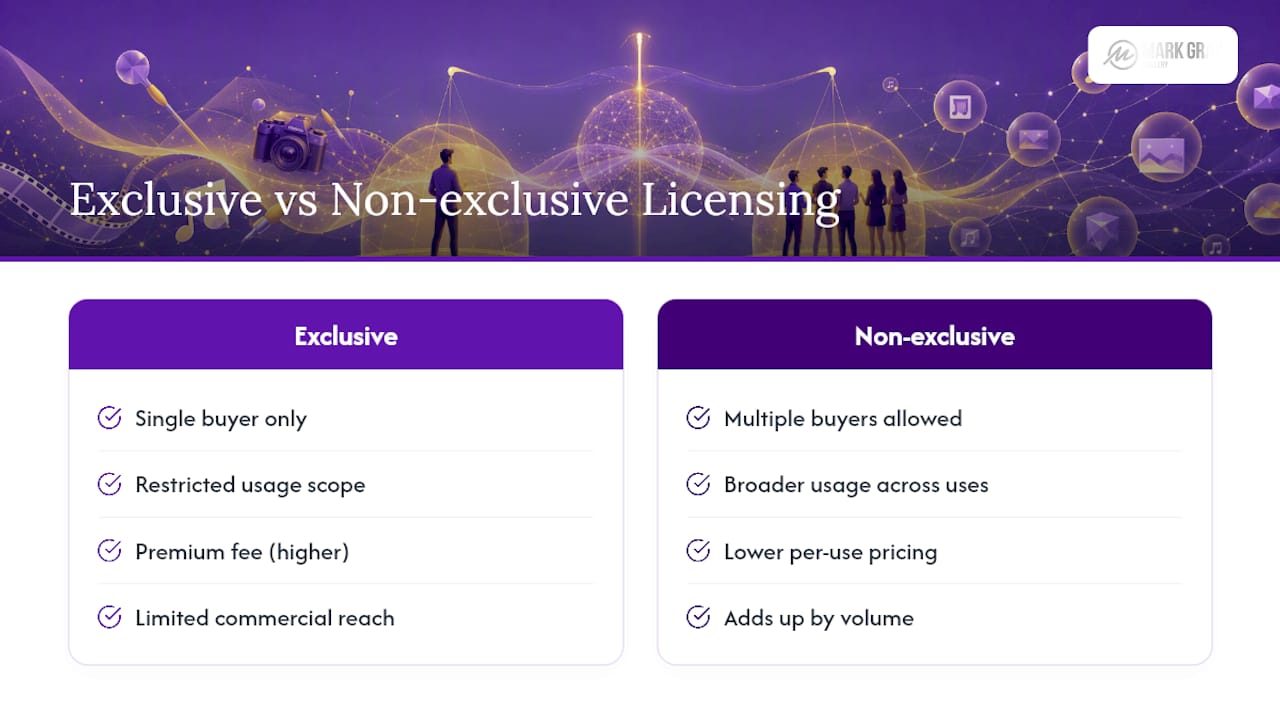
Photography licensing makes these abstract rules concrete fast. A single landscape image might get licensed exclusively to one architectural firm for a signature building lobby, guaranteeing that image won't appear on a competitor's wall down the street. The same image, licensed non-exclusively, might appear on dozens of splashbacks, brochures, and websites across the country in the same year.
Exclusivity changes the math on print runs, usage scope, and pricing. An exclusive commercial campaign license carries a premium because it forecloses every other buyer. A non-exclusive stock arrangement prices lower per use but adds up across volume. Businesses exploring image licensing for splashbacks, signage, websites, or brochures should decide upfront which model fits before requesting quotes, since that choice shapes everything else in the negotiation.
A Publisher's Note on Getting This Right
Licensing decisions look simple on paper and get complicated fast in practice. The trade-off between exclusive and non-exclusive rights isn't really about which sounds more prestigious. It's about matching the deal structure to what each side is actually risking.
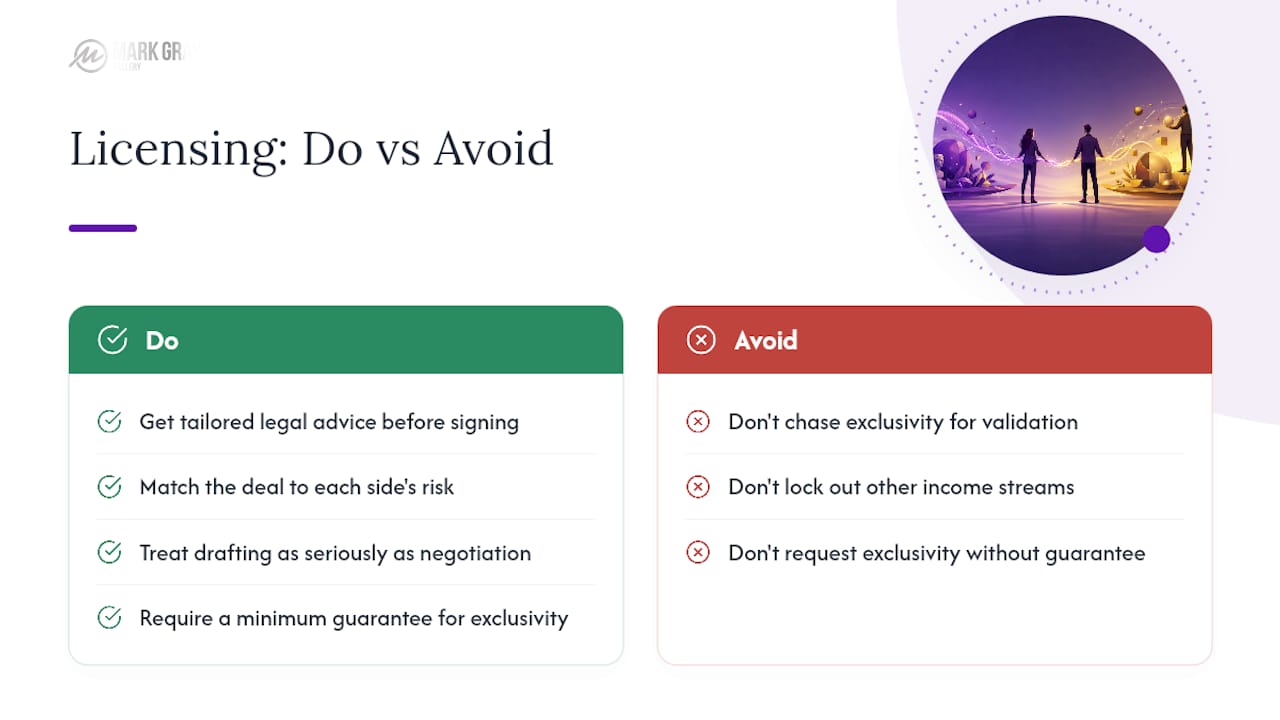
I've watched creators chase exclusivity because it feels like validation, then discover they've locked themselves out of income streams a non-exclusive deal would have kept open. I've also seen businesses request exclusivity without offering the minimum guarantee that makes exclusivity worth granting in the first place. Neither side wins in those scenarios.
The honest answer is that most licensing questions benefit from tailored legal advice before signing, especially once real money or long-term market position is on the line. If you're weighing a bespoke licensing arrangement for photography or another creative asset, treat the drafting stage as seriously as the negotiation itself.
— Mark
Licensing Photography the Right Way, Exclusive or Not
Businesses that need imagery for splashbacks, signage, websites, or brochures face exactly the exclusive-versus-non-exclusive decision this article walks through, and getting the scope wrong is expensive to fix later. Mark Gray's landscape photography, available through direct image licensing arrangements, is built around your actual commercial need rather than a one-size-fits-all license template.
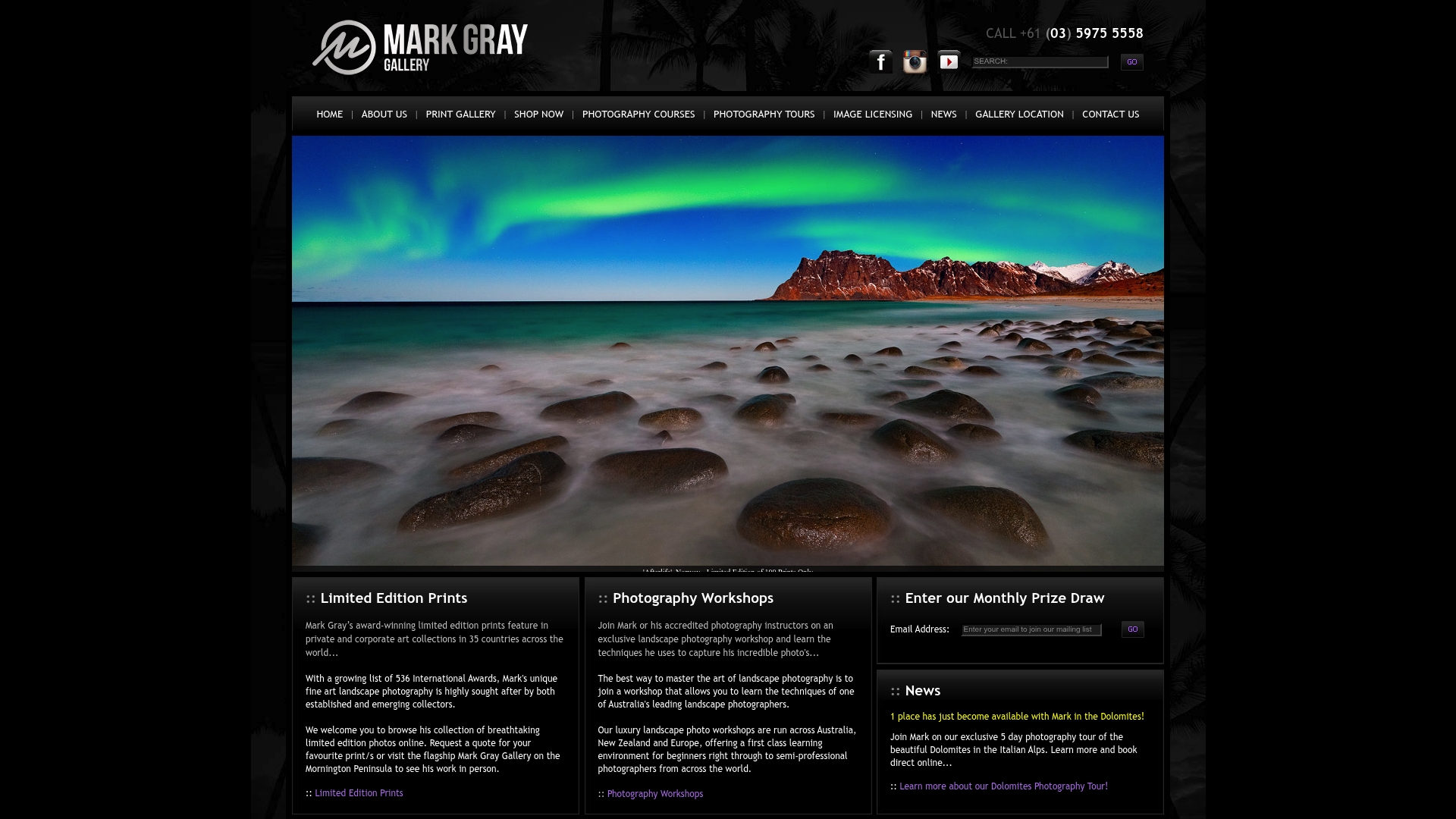
Whether a project calls for a sole right to a signature image for a flagship location or a non-exclusive license across multiple retail sites, the licensing terms get structured around your field of use, territory, and duration from the start. Visit the image licensing page to review usage categories and request terms suited to your specific campaign.
Sources
For readers who want to confirm details directly, IP Australia's policy register covers enforcement standing under the Patents Act. Sprintlaw's guides on IP licensing and licensor obligations offer practical drafting language, while Cambridge's licensing scholarship supplies the doctrinal grounding behind exclusive license law.
This article is general information, not a substitute for advice from a qualified lawyer. Consult a qualified legal professional about your own circumstances before acting on anything here.
- IP Australia — policy register: scope of exclusive licensees (patents enforcement)
- Sprintlaw — IP licences in Australia: essential guide for licensees
- Intellectual Property Licensing and Transactions — Exclusive Licenses (Cambridge)
FAQ
What Is the Difference Between Exclusive and Non-Exclusive Licenses?
An exclusive license grants one licensee sole rights within a defined scope, shutting out other licensees and often the licensor too. A non-exclusive license grants permission to use the IP while the owner remains free to license the same rights to other parties.
What Is a Non-Exclusive License?
A non-exclusive license is permission to use intellectual property without any promise of exclusivity, meaning the same rights can be sold to multiple buyers at once. Stock photography is a classic example, where one image gets licensed to many different commercial clients for websites, brochures, or signage.
Can You Sublicense an Exclusive License?
Sublicensing under an exclusive license depends entirely on what the contract says, not on the license type itself. Some exclusive agreements grant sublicensing rights explicitly, often with a revenue share back to the original licensor, while others prohibit it outright to keep control tightly held.
What Are Examples of Non-Exclusive Licenses?
Common examples include stock image licensing for websites and brochures, software licenses sold to many customers, and standard trademark merchandise deals. The same landscape image can serve multiple splashback, signage, or brochure clients simultaneously through commercial image licensing.