

Commercial photography licensing is defined as a contractual grant of specific usage rights to an image, without transferring copyright ownership to the buyer. Understanding how commercial photography licensing differs from simple image ownership is the most important distinction any brand manager or photographer can make before signing a contract. Get it wrong, and you face unexpected fees, legal disputes, or images pulled from a campaign mid-run. Get it right, and both sides walk away with clarity, fair compensation, and zero surprises.
How commercial photography licensing differs from ownership
The photographer retains copyright by default in virtually every commercial arrangement. Licensing controls image usage while the copyright stays with the photographer unless explicitly transferred in writing. This distinction matters enormously. A brand that pays for a shoot owns nothing except the right to use the images within the terms spelled out in the license agreement.
Think of it this way: buying a music album does not give you the right to play it in your store or use it in a commercial. Photography works the same way. The license defines the rules. The copyright defines who makes those rules.
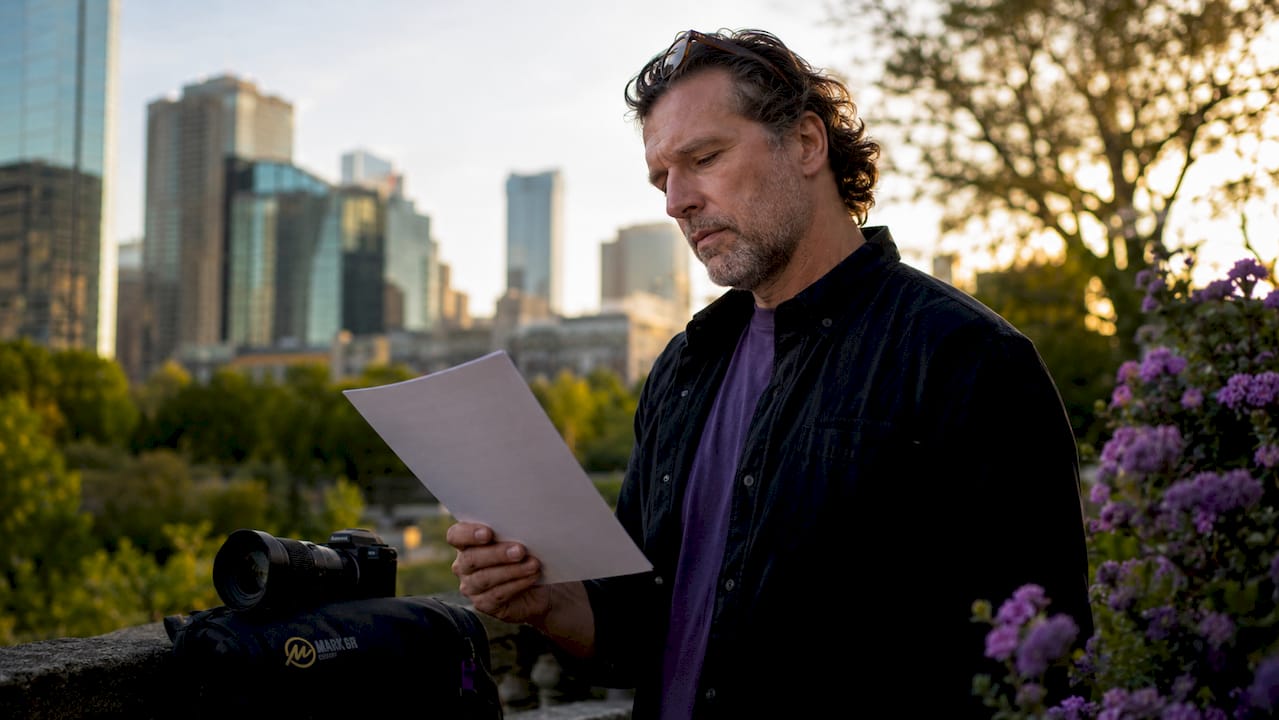
Full copyright transfers, sometimes called buyouts, do exist. They are rare and expensive. Buyouts are uncommon because licensing offers flexible, cost-efficient usage permissions that match what a brand actually needs. Most clients do not need to own the copyright. They need the right to run an ad campaign for 12 months across specific channels. A well-drafted license delivers exactly that.
What does a commercial photography license agreement include?
A commercial photography license is not a one-size-fits-all document. License contracts define specific rights including the image set covered, permitted uses, restrictions, term, territory, and exclusivity. Think of it as a rights spreadsheet where every cell must be filled in before either party signs.
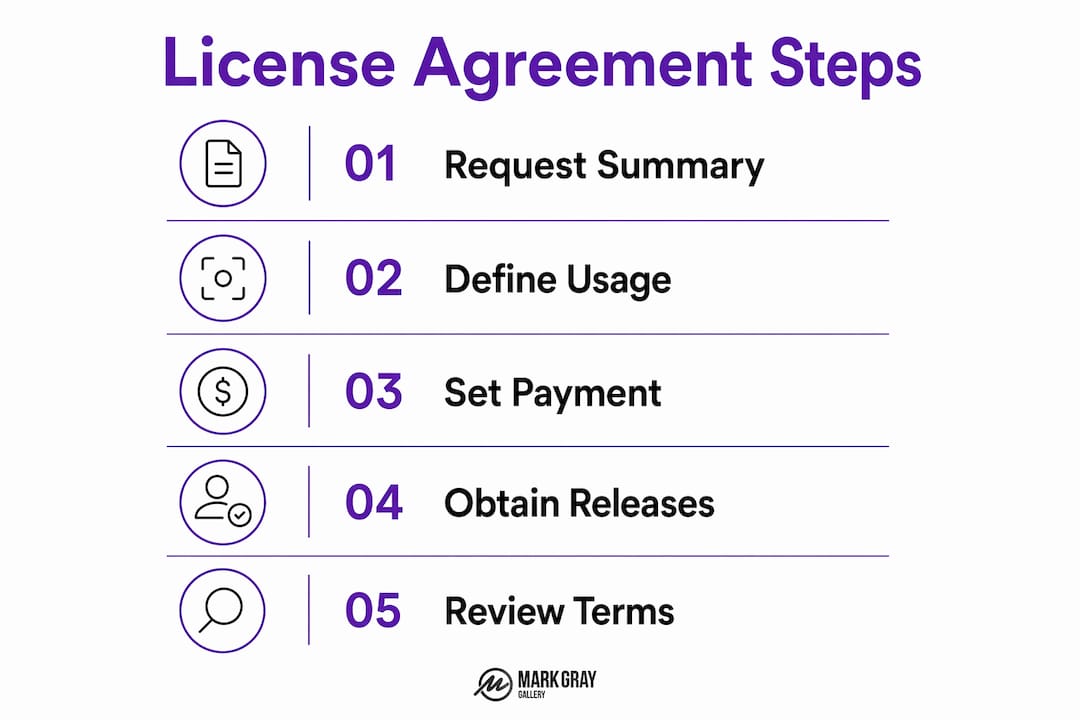
The core components of a solid license agreement include:
- Image set: Which specific files or selects are covered. Not every image from a shoot is automatically included.
- Permitted uses: Digital advertising, print collateral, packaging, social media, billboards, or broadcast. Each channel should be listed explicitly.
- Geographic territory: North America only, worldwide, or a specific country. Territory directly affects the fee.
- Duration: A defined start date and end date. Open-ended terms create disputes.
- Exclusivity: Whether the photographer can license the same images to other clients during the term.
- Modification rights: Whether the client can crop, retouch, or composite the images.
- Sublicensing: Whether the client can pass usage rights to a third party, such as a retailer or distributor.
- Clearance responsibilities: Who is responsible for obtaining model releases, property releases, and third-party clearances.
Pro Tip: Request a written license summary as a one-page attachment to your main contract. It forces both parties to confirm every term before delivery and eliminates the most common source of post-shoot disputes.
Payment terms should also appear in the agreement. License fees are separate from production fees, and conflating the two is one of the most expensive mistakes a client can make.
Commercial vs. editorial licensing: what is the real difference?
Commercial and editorial licenses serve completely different purposes, and using one in place of the other carries real legal risk. Commercial photography promotes products or services for profit and requires model and property releases. Editorial photography documents events, news, or stories and carries fewer restrictions because it does not endorse a product.
The table below shows where these two license types diverge most sharply:
| Factor | Commercial License | Editorial License |
|---|---|---|
| Primary purpose | Advertising, promotion, sales | News, storytelling, education |
| Model release required | Yes, always | Not required in most cases |
| Property release required | Yes, for identifiable locations | Rarely required |
| Usage in paid ads | Permitted under license | Not permitted |
| Typical cost | Higher, reflects commercial value | Lower, reflects limited scope |
| Modification rights | Often granted | Typically restricted |
The practical risk of crossing these lines is significant. Using an editorial image in a paid advertisement without a commercial license exposes a brand to copyright infringement claims and potential lawsuits from the photographer and any identifiable subjects. A well-known example is using a news photograph of a celebrity in a product promotion without their consent. The editorial license does not cover that use, and the commercial license was never obtained.
Pro Tip: Before approving any image for a paid campaign, confirm in writing that the license type is commercial, not editorial. One email confirmation can prevent a five-figure legal dispute.
For a deeper look at how advertising photography rights work in practice, the distinctions between these two license types become even more pronounced when broadcast and out-of-home media enter the picture.
Why do commercial licenses separate production fees from usage fees?
Many clients are genuinely surprised to learn that paying for a photo shoot does not grant unlimited usage rights. Production fees cover creation, including the photographer's time, equipment, travel, and editing. Licensing fees cover the permissions to use the finished images under defined terms. These are two separate transactions, and conflating them is the single most common misunderstanding in commercial photography.
Here is why the separation exists and why it benefits both parties:
- It protects the photographer's copyright. The photographer retains the right to license the same images to other clients, negotiate renewals, or restrict usage to specific channels. Without separation, that control disappears.
- It aligns cost with actual usage. A brand running a single regional social media campaign pays far less than one running a global billboard campaign. Licensing fees reflect scope, including channels, territory, and duration. Clients pay for what they actually use.
- It creates a clear renewal path. When a license expires, both parties know exactly what needs to be renegotiated. There is no ambiguity about whether the images can still be used.
- It prevents undervaluing creative work. A photographer who bundles licensing into a flat production fee often undercharges for high-value commercial usage. Separating the fees makes the true value of the rights visible.
Pro Tip: Ask your photographer for a license fee breakdown by channel and territory before the shoot. This gives you a clear picture of what expansion will cost if your campaign performs well and you want to extend usage.
For context on how production and usage pricing interact in professional photography, understanding the fee structure upfront saves both parties from renegotiating under pressure.
What are the biggest pitfalls in commercial photography licensing?
Most licensing disputes do not start with bad intentions. They start with assumptions. Specifying all licensing terms in writing before delivery is the single most effective way to prevent conflicts. The following pitfalls appear repeatedly in commercial photography arrangements:
- Assuming unlimited usage. A client who pays a large production fee often assumes they own the images outright. Without an explicit license scope, that assumption creates conflict the moment the photographer sees their work used outside the agreed terms.
- Leaving territory and term undefined. "Worldwide" and "in perpetuity" are not default terms. They must be written into the contract. Vague language like "for marketing purposes" is not sufficient.
- Overlooking third-party clearances. A license grants usage rights in the photograph itself. Third-party clearances for logos, artwork, or people depicted in the image must be obtained separately. A product shot featuring a visible brand logo on a competitor's packaging requires explicit clearance.
- Skipping model and property releases. Commercial use of any image featuring an identifiable person or private property requires signed releases. Skipping this step is not a minor oversight. It is a legal liability.
- Failing to plan for renewals. Licenses expire. Brands that do not track expiration dates continue using images past the agreed term, often without realizing it. Build renewal checkpoints into your project calendar.
For brands managing multiple campaigns, a pre-flight licensing review before any image goes live is worth the time. Confirm the license type, check the expiration date, verify that all releases are on file, and confirm that the usage channel matches what was agreed.
Pro Tip: Create a simple licensing log for every campaign. Record the image set, license term, permitted channels, and release status. Review it quarterly. This one habit prevents the majority of commercial photography disputes.
Understanding photo rights for websites is a strong starting point for brands that want to build this kind of systematic approach to managing their image assets.
Key takeaways
Commercial photography licensing is a structured rights management system, not a simple purchase, and every term from territory to exclusivity must be defined in writing before images are delivered.
| Point | Details |
|---|---|
| Copyright stays with the photographer | Paying for a shoot grants usage rights only; ownership requires an explicit written transfer. |
| License terms define everything | Territory, duration, channels, exclusivity, and modification rights must all be specified in the contract. |
| Commercial and editorial licenses are not interchangeable | Using an editorial image in paid advertising without a commercial license creates legal exposure. |
| Production fees and licensing fees are separate | Production covers creation; licensing covers the right to use images under defined terms. |
| Written agreements prevent disputes | Specifying all terms before delivery is the most effective way to avoid conflicts and unexpected costs. |
What i have learned about licensing after years behind the lens
After years of licensing landscape photography for commercial use across splashbacks, signage, websites, and brochures, I have seen the same misunderstanding surface time and again. Clients assume that because they commissioned the work or paid a significant fee, they own it outright. The reality is that the license agreement is where the real conversation happens.
The shift to digital marketing has made this more complex, not less. A single image now travels across Instagram, a brand website, printed packaging, and a trade show display, sometimes within the same campaign cycle. Each of those channels can carry different licensing implications. What was agreed for a website banner does not automatically extend to a billboard.
My honest advice is to treat the licensing conversation as part of the creative brief, not an afterthought. When a client and photographer align on usage scope before the shoot, the entire project runs more smoothly. Fees are fair, expectations are clear, and there is no awkward renegotiation when the campaign expands.
The photographers and brand managers who handle this best are the ones who ask direct questions early. What channels will this run on? For how long? In which markets? Those three questions, answered upfront, shape the entire licensing structure and protect everyone involved.
— Mark
Explore mark gray's commercial licensing options
Mark Gray's award-winning landscape photography is available for commercial licensing across a range of applications, from website imagery and printed brochures to large-format signage and architectural splashbacks. Every licensing arrangement is tailored to the client's specific usage needs, with clear terms covering territory, duration, and permitted channels.
Whether you are a brand manager sourcing premium imagery for a campaign or a business looking for exclusive landscape photography for a physical space, the process starts with a straightforward conversation about how and where the images will be used. Explore the full collection and licensing options at Mark Gray Gallery and find the right fit for your project.
FAQ
What does a commercial photography license actually grant?
A commercial photography license grants the right to use specific images within defined terms, including permitted channels, geographic territory, duration, and exclusivity. It does not transfer copyright ownership to the buyer.
Do i need a model release for commercial photography?
Yes. Commercial photography used to advertise or promote products or services requires signed model releases from any identifiable person in the image, as well as property releases for private locations.
What is the difference between commercial and editorial photo licensing?
Commercial licenses cover promotional and advertising use and require model and property releases. Editorial licenses cover news and storytelling use, carry fewer restrictions, and cannot be used in paid advertising.
Why are production fees and licensing fees listed separately?
Production fees cover the photographer's time, equipment, and editing. Licensing fees cover usage rights under specific terms. Separating them ensures clients pay for the actual scope of use and protects the photographer's ability to manage their copyright.
What happens if a commercial image license expires?
Once a license expires, the right to use the images ends. Continued use after expiration constitutes copyright infringement. Brands should track license expiration dates and negotiate renewals before the term ends.