

Photo licensing royalties are payments made to image creators when their photographs are legally used under a specific agreement. Understanding how photo licensing royalties work is the foundation of any serious photography business, whether you shoot landscapes for editorial clients or license images for commercial campaigns. Two primary frameworks govern these payments: Royalty-Free (RF) and Rights-Managed (RM) licenses. Each carries distinct financial and legal implications. Copyright law in 2026 protects image creators with statutory damages up to $150,000 for unauthorized use, making proper licensing not just profitable but legally critical for both sides of the transaction.
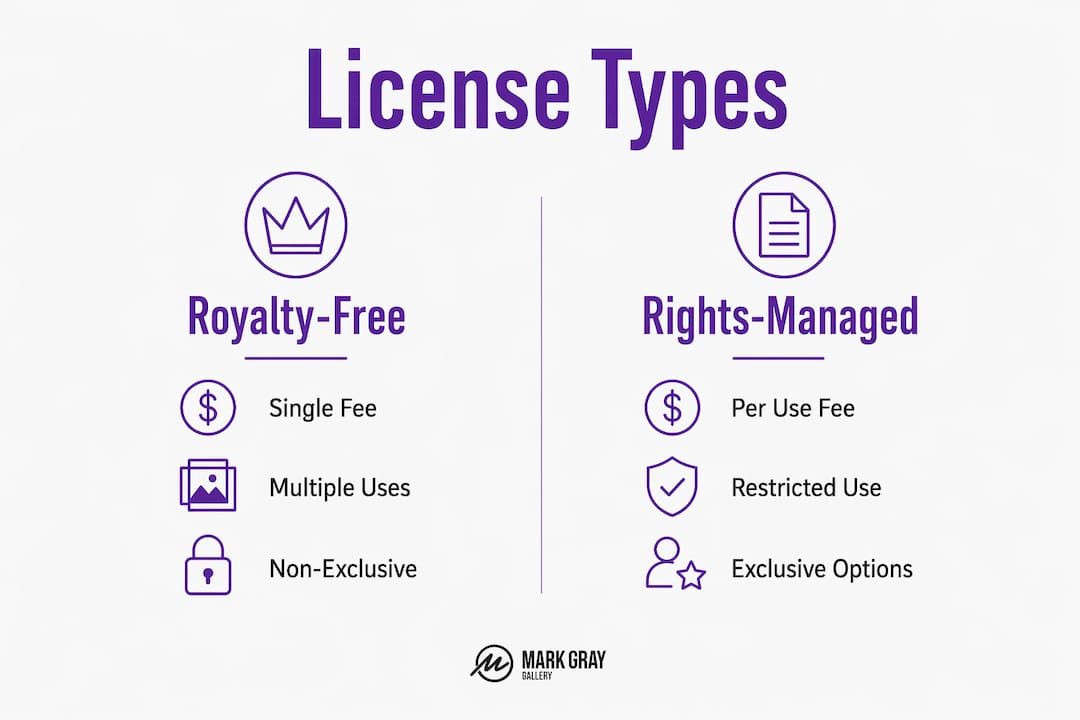
How photo licensing royalties work: the two core license types
The license type you choose determines how royalties are calculated, collected, and paid. Getting this choice wrong costs photographers real money and gives buyers more rights than they paid for.
Royalty-Free licenses
A Royalty-Free license is not free. It means the buyer pays a single upfront fee and can use the image multiple times without paying additional royalties. The photographer receives one payment, and the buyer receives broad, non-exclusive usage rights. This model suits buyers who need flexible, repeatable access to images for websites, brochures, or social media. The trade-off for photographers is that the one-time fee is typically lower than what a tailored deal would generate.
Rights-Managed licenses
A Rights-Managed license prices each use individually. The fee reflects the specific campaign, territory, duration, and exclusivity level. A magazine cover in the United States for three months costs less than a global billboard campaign running for two years. This model rewards photographers with higher fees for high-value placements. It also gives buyers a clear, documented scope of use, which reduces legal risk on both sides.
The table below shows how these two models compare across key dimensions:
| Factor | Royalty-Free | Rights-Managed |
|---|---|---|
| Payment structure | Single upfront fee | Fee per specific use |
| Ongoing royalties | None | Yes, per use or campaign |
| Exclusivity | Non-exclusive by default | Negotiable |
| Best for buyers | Flexible, repeat use | High-profile, defined campaigns |
| Earning potential | Lower per image | Higher per placement |
A photo license grants specific usage permissions but does not transfer copyright. The creator retains ownership by default under law, regardless of which model applies.
How do photographers earn royalties from platforms and direct deals?
Platform royalties and direct licensing deals operate very differently. Knowing both gives you the full picture of earning potential.
Stock platforms pay contributors a percentage of each sale. Shutterstock offers 15–40% tiered royalties based on lifetime earnings, Adobe Stock pays a flat 33%, and Alamy pays up to 50% of the net sale price. These rates matter because the platform controls pricing, volume, and buyer access. A photographer with a large portfolio on multiple platforms can build genuine passive income from these channels.

The type of download also shapes the payout. Standard subscription downloads pay $0.10 to $0.99 per image. Extended licenses range from $28 to $99 per download. Rights-Managed licenses negotiated directly can fetch $250 to over $10,000 depending on campaign scope. Subscription downloads occur frequently but pay little per use. On-demand credit purchases pay more per download but happen less often.
Photographers who earn monthly passive royalties typically see $50 to $5,000 per month, depending on portfolio size and platform mix. That range is wide because a photographer with 500 images spread across three platforms earns far more than one with 50 images on a single platform.
Direct licensing deals offer the highest earning ceiling. One photographer documented selling the same image for $38 through a stock platform and $4,200 through a direct negotiation. The image was identical. The difference was the buyer's context and the photographer's willingness to price for value rather than volume.
Pro Tip: Diversify across at least three licensing channels. Subscription platforms provide steady low payouts, while direct and extended licenses can significantly boost your total earnings in any given month.
For a deeper look at how licensing models apply to professional work, the commercial photography licensing guide covers payment structures and legal agreements in detail.
What legal considerations protect photographers and buyers?
Copyright is the legal foundation of every photo license. The creator owns the image the moment it is captured, and that ownership does not transfer unless explicitly stated in a signed agreement. Licensing separates moral rights (attribution and integrity) from economic rights (usage permissions), which means a photographer can grant a buyer the right to use an image commercially while still retaining the right to be credited and to prevent distortion of the work.
Key elements every licensing contract must include:
- Usage rights: Define exactly where, how, and in what medium the image can be used.
- Duration: Specify the start and end date of the license.
- Territory: State which countries or regions the license covers.
- Exclusivity: Clarify whether the buyer is the only one who can use the image during the license period.
- Modifications: Confirm whether the buyer can crop, recolor, or alter the image.
- Audit rights: Grant the photographer the right to verify royalty calculations and payment accuracy.
Royalty payments follow quarterly accounting cycles, with payments issued 30 to 60 days after quarter end. Royalties for product sales typically range 5%–20% of net receipts, with print fees from $0.50 to $3.00 per item sold. Clear net receipt definitions prevent disputes over what counts as revenue.
Licensing risk management also includes obtaining model and property releases, defining kill fees for project cancellations, and securing audit rights. These protections prevent legal liability and revenue loss that extends well beyond the original licensing fee.
Pro Tip: Always use a written agreement, even for small deals. A verbal license is nearly impossible to enforce, and the absence of a contract often defaults to the most restrictive interpretation of rights.
How should photographers price their photo licenses?
Pricing a photo license based on how long it took to capture the image is the most common and costly mistake photographers make. The correct approach is to price based on the buyer's outcome-based value, not your production effort. A landscape image used on a national tourism campaign generates far more value for the buyer than the same image used on a local restaurant menu. The fee should reflect that difference.
A practical pricing framework considers four factors:
- Campaign scale: A global advertising campaign justifies a fee many times higher than a regional brochure.
- Exclusivity: Exclusive licenses command a premium because the photographer cannot sell the same rights to anyone else during the license period.
- Print run size: A single print edition of 500 copies costs less to license than a run of 50,000.
- Duration: A one-month license costs less than a three-year license for the same placement.
Minimum Guarantee (MG) clauses in direct licensing contracts secure immediate cash flow. An MG means the buyer pays a guaranteed minimum upfront, and the photographer earns additional royalties if usage exceeds the agreed threshold. This structure balances the photographer's need for predictable income with the buyer's desire to pay proportionally to actual use.
Avoid the "all-you-can-eat" pricing trap. Offering unlimited use for a flat fee removes your ability to price future uses fairly and signals to buyers that your work has no scarcity value. Adjust your rates annually to reflect market conditions, your portfolio's growth, and the increasing recognition of your work. For guidance on valuation frameworks, the print pricing guide offers practical benchmarks.
How do businesses and individuals benefit from understanding photo royalties?
Businesses that understand photo usage rights make smarter purchasing decisions and avoid costly legal exposure. Buying the wrong license type is one of the most common and expensive mistakes in commercial media production.
Key benefits of understanding photo licensing for buyers:
- Avoid infringement penalties: Copyright law allows statutory damages up to $150,000 per unauthorized use. Proper licensing eliminates this risk entirely.
- Budget accurately: Knowing the difference between a subscription download and a Rights-Managed license lets you forecast media costs with precision.
- Negotiate confidently: Understanding royalty structures gives you the language to negotiate fair terms without overpaying for rights you do not need.
- Ensure compliance: Verifying that your licenses cover your actual usage, including territory, duration, and medium, protects your organization from retroactive claims.
- Plan campaigns effectively: Knowing that exclusivity costs more helps media planners allocate budget where exclusivity genuinely matters.
For businesses licensing photography for websites, the website photography licensing guide explains which license types apply to digital use and what terms to look for in agreements.
Key Takeaways
Photo licensing royalties are determined by license type, usage scope, and platform choice, and photographers who price for buyer value consistently earn more than those who price for production cost.
| Point | Details |
|---|---|
| License type drives royalty structure | Royalty-Free pays once; Rights-Managed pays per use and can reach $10,000+ per placement. |
| Platform rates vary significantly | Alamy pays up to 50% net; Adobe Stock pays 33% flat; Shutterstock pays 15–40% tiered. |
| Copyright stays with the creator | A license grants usage permissions only. Ownership never transfers unless explicitly signed away. |
| Contracts must define all terms | Usage rights, duration, territory, exclusivity, and audit rights must appear in every written agreement. |
| Price for buyer value, not effort | Outcome-based pricing sustains income growth and prevents long-term undervaluation of your work. |
What I've learned about pricing and protecting your photo rights
Most photographers I know undercharge, not because they lack talent, but because they price defensively. They worry about losing the deal, so they quote low. The result is a career built on volume at thin margins, which is exhausting and unsustainable.
The most important shift I made was treating every licensing inquiry as a conversation about the buyer's use, not my time. When a client wants an image for a national campaign, the fee reflects the campaign's reach, not the hours I spent in the field. That reframe changed everything about how I negotiate.
I also learned the hard way that vague agreements cost more than no agreement at all. A client once used one of my landscape images across three additional territories beyond what we discussed verbally. Without a written contract specifying territory, I had no recourse. Clear written terms are not bureaucracy. They are the GPS that keeps your income on course.
The industry is also shifting toward more direct licensing relationships, particularly for photographers with a recognized body of work. Platforms remain useful for volume and passive income, but the real earning potential sits in direct deals where you control the terms. Invest time in building those relationships and in understanding photography SEO so the right clients find you before they find a stock library.
— Mark
Licensing Mark Gray's landscape photography
Mark Gray's award-winning landscape photography is available for licensing across a range of commercial applications, including splashbacks, signage, websites, brochures, and flyers.
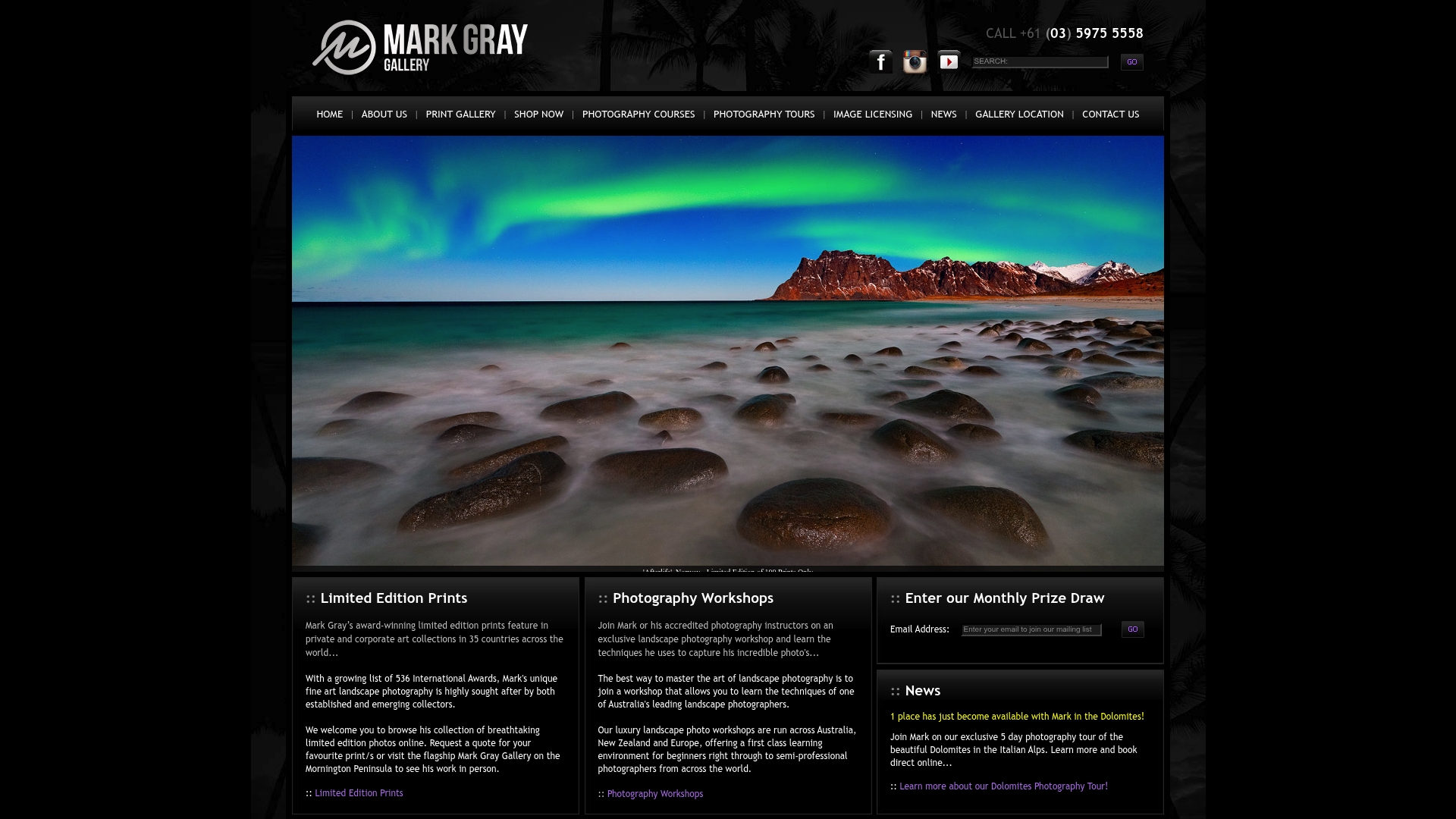
Each licensing inquiry is handled directly, ensuring the usage rights, territory, and duration are clearly defined from the start. Whether you are a business seeking a striking image for a campaign or an individual looking for a premium print, Com offers both licensed image use and limited edition fine art prints from locations across Australia, New Zealand, Norway, Iceland, French Polynesia, Spain, and the United Kingdom. Visit the Mark Gray Gallery to explore the full collection and discuss licensing options tailored to your project.
FAQ
What is the difference between Royalty-Free and Rights-Managed licenses?
A Royalty-Free license charges a single upfront fee for broad, non-exclusive use with no ongoing royalties. A Rights-Managed license charges a custom fee based on specific usage, territory, duration, and exclusivity.
How much do photographers earn per download on stock platforms?
Standard subscription downloads pay $0.10 to $0.99 per image, while extended licenses pay $28 to $99 per download. Rights-Managed direct deals can reach $250 to over $10,000 depending on campaign scope.
Does a photo license transfer copyright to the buyer?
No. A photo license grants specific usage permissions only. Copyright remains with the photographer by default under law unless explicitly transferred in a signed agreement.
What happens if a business uses a photo without the correct license?
Copyright law allows statutory damages up to $150,000 per unauthorized use. Purchasing the correct license before use is the only reliable way to eliminate this legal and financial risk.
How often are photo royalties paid?
Royalty payments typically follow quarterly accounting cycles, with payments issued 30 to 60 days after the quarter ends. Direct licensing agreements may specify different schedules based on negotiated contract terms.