
Editorial use means publishing an image to inform, report, or educate. Commercial use means deploying it to promote, advertise, or generate revenue. That distinction determines which license you need, whether releases are required, and what legal exposure you carry if you get it wrong. The quick decision rule: ask yourself whether your primary goal is to inform or to sell. If the answer is sell, promote, or build brand awareness, you need a commercial license.
Typical editorial placements:
- News articles, online journalism, and documentary films
- Classroom materials, textbooks, and educational presentations
- Commentary, criticism, and opinion pieces that discuss the image's subject
Typical commercial placements:
- Paid social ads, display advertising, and product packaging
- Homepage hero images for a business, brochures, and flyers
- Affiliate landing pages and any monetized content designed to drive purchases
Pro Tip: When you're unsure, ask one question: "Does this page exist to inform a reader, or to convert one?" The answer almost always resolves the classification.
Key Takeaways
The single most important rule in image licensing: if the use promotes, advertises, or generates revenue, it is commercial and requires a commercial license with appropriate releases.
| Point | Details |
|---|---|
| The core decision rule | Ask whether the image informs or sells; if it sells or promotes, it needs a commercial license. |
| Editorial-only labels are hard limits | An "Editorial Use Only" flag means the asset cannot be used in advertising or brand promotion, regardless of content. |
| Releases are required for commercial use | Model and property releases must be confirmed in writing before any commercial deployment involving recognizable people or private property. |
| Fair use is not a license | Fair use is a narrow legal defense raised in court, not a pre-publication clearance strategy for commercial projects. |
| Com for commercial licensing | Mark Gray Gallery provides written commercial licenses for landscape photography covering medium, territory, duration, and exclusivity. |
Table of Contents
- What is the difference between editorial and commercial use?
- Real-world examples: what counts as editorial or commercial?
- When do you need model releases, property releases, or trademark clearance?
- How to obtain the right license for your intended use
- Legal risks and the fair-use myth you need to stop believing
- Pre-publish checklist: confirm an image is safe to use
- How Mark Gray handles commercial licensing for landscape images
- The case for caution: a perspective on image licensing
- License your next commercial project with Mark Gray
- Sources
What is the difference between editorial and commercial use?
The terms "editorial use" and "commercial use" are the two primary licensing categories in U.S. image licensing, and every major stock platform, publisher, and rights-management service builds its license tiers around them.
Editorial use covers journalism, reporting, commentary, documentary production, and educational publishing. An image licensed for editorial use may appear in a news story, a Wikipedia article, or a classroom presentation. Crucially, Shutterstock's contributor guidelines make clear that editorial-licensed content cannot be used to promote or sell a product or brand. When you see an "Editorial Use Only" label on a stock platform, that label is a hard boundary, not a suggestion.
Commercial use covers advertising, product promotion, packaging, monetized content, and any placement where the image supports revenue generation or brand building. Commercial licenses generally require model and property releases when recognizable people or private property appear in the frame.
The table below compares the two license types across the dimensions stock agencies and publishers use most often.
| Dimension | Editorial use | Commercial use |
|---|---|---|
| Allowed uses | News, reporting, commentary, education | Advertising, promotion, product packaging, monetized content |
| Prohibited uses | Advertising, brand promotion, product endorsement | Unauthorized use of recognizable people without release |
| Example placements | News site, documentary, textbook, blog commentary | Homepage hero, paid social ad, brochure, product listing |
| Model/property releases required? | Generally not required | Required when people or private property are recognizable |
| Who grants permission | Stock agency or rights holder (editorial tier) | Stock agency, photographer, or publisher (commercial tier) |
| Typical licensing model | Royalty-free editorial tier or rights-managed editorial | Royalty-free commercial, rights-managed, or direct license |
| Legal risk if misused | Copyright infringement, breach of license terms | Copyright, right of publicity, trademark, and privacy claims |
NYT Licensing notes that editorial photos can show recognizable people and logos without model or property releases when the use is genuinely journalistic, while commercial placements require those releases explicitly. Jukin Media, the rights-management company that licenses user-generated video content, applies the same editorial-versus-commercial framework to enforce which uses its licensees may make of each asset.
Real-world examples: what counts as editorial or commercial?
Definitions only take you so far. The classification becomes clear when you map it to actual placements.
Clear editorial uses:
- A newspaper article illustrating a story about a public figure at a press event
- A documentary film using archival footage to report on a historical event
- A teacher's slide deck showing a photograph of a landmark to illustrate a geography lesson
- An obituary that includes a publicly available portrait to identify the subject
Clear commercial uses:
- A retail brand's homepage using a lifestyle photograph to sell products
- A paid Instagram ad featuring a model holding a product
- A restaurant brochure using a food photograph to attract customers
- An affiliate landing page using a product image to drive purchase clicks
The gray area is where most licensing mistakes happen. Sponsored editorial posts, company blogs with lead-capture forms, monetized YouTube vlogs, and social posts that both inform and promote all sit on the boundary. Copyrights that a blog post may qualify as editorial unless it is sponsored, affiliate-driven, or structured to drive sales, in which case the image use should be treated as commercial and cleared accordingly.
A company blog that publishes genuinely informative articles with no sales intent sits closer to editorial. The same blog with a "Buy Now" button in the sidebar, affiliate links throughout, or a lead-capture form at the bottom shifts toward commercial, and the images on those pages should be licensed accordingly.
Pro Tip: For borderline cases, look at the page's monetization structure, not just its content. If the page earns money when a reader clicks or converts, treat every image on it as commercial and obtain the appropriate license.
When do you need model releases, property releases, or trademark clearance?
Releases are the legal instruments that grant permission to use a person's likeness, a private property's appearance, or a trademarked element in a commercial context. Getting this wrong is one of the most common and costly licensing errors in U.S. commercial photography.
A model release is a signed agreement from a recognizable person in a photograph, granting permission to use their likeness for commercial purposes. Without one, using that image in advertising or promotion exposes you to right-of-publicity claims under U.S. state law. Most states, including California and New York, have strong right-of-publicity statutes that apply even to deceased individuals.
A property release covers privately owned locations, artwork, and distinctive architectural features. If a photograph shows a recognizable private building, a piece of art on a wall, or even a distinctive tattoo, a property release from the owner is typically required for commercial use. Public streets and government buildings generally do not require property releases, but private venues always do.
Trademark and logo clearance is a separate layer. A photograph that clearly shows a brand's logo or trademarked product can create trademark liability if used commercially without authorization. Editorial use often permits visible brands in reporting because the use is informational rather than promotional, but that exception disappears the moment the image appears in an advertisement.
| Release type | Editorial use | Commercial use | Who signs |
|---|---|---|---|
| Model release | Generally not required | Required for recognizable individuals | The person photographed (or guardian) |
| Property release | Generally not required | Required for recognizable private property | Property owner |
| Trademark/logo clearance | Often permitted for reporting | Required or must be removed/obscured | Brand owner or legal counsel |
One additional consideration: press credentials and event restrictions can limit even editorial use. A photographer working under a media pass at a sporting event may be contractually restricted from licensing those images beyond editorial news coverage, regardless of the general editorial-use rules.
How to obtain the right license for your intended use
Getting properly licensed is a straightforward process when you follow a clear sequence. Skipping steps is where legal exposure enters.
- Identify the image owner and current license status. Reverse-image search the photograph and check the metadata or watermark for the originating agency or photographer. Confirm whether the asset carries an "Editorial Use Only" flag before proceeding.
- Check for editorial-only labels on the asset page. LicenseOrg confirms that an "Editorial Use Only" label means the asset cannot be used for advertising or promotional purposes. If your use is commercial, stop here and source a different asset or request a commercial upgrade.
- Request a commercial license or a license upgrade. Contact the stock agency, photographer, or publisher directly. Specify your intended use, the medium (website, print, social), the territory (U.S. only, worldwide), and the duration (one-time, one year, perpetual).
- Confirm model and property releases are on file. Ask the agency or photographer to confirm in writing that releases exist for all recognizable people and private property in the image. Do not assume releases exist because the image is available for commercial licensing.
- Obtain written license scope. The license document should state the permitted medium, territory, duration, exclusivity status, and any restrictions. Verbal agreements are unenforceable in most U.S. licensing disputes.
- Store all documentation. Keep the signed license, release confirmations, and any correspondence in a dedicated file. You will need this if a rights holder ever challenges your use.
On cost and timeline: stock agency fees for single-use commercial licenses vary widely by image tier and usage type. Direct licensing from a photographer or publisher typically takes longer, sometimes days to weeks when releases must be collected or negotiated. For high-profile campaigns, budget additional time for legal review. Photo licensing royalties vary by exclusivity, territory, and duration, so request a detailed fee structure before committing.
MotionArray's help documentation notes that platforms label "Editorial Use Only" assets clearly to prevent misuse, so the flag is always visible on the asset page before purchase.
Legal risks and the fair-use myth you need to stop believing
The most dangerous misconception in image licensing is that "editorial use" is free, or that fair use provides a safety net for commercial projects. Neither is true.
Legal risks of misusing editorial images commercially:
- Copyright infringement: Using an editorial-only image in advertising constitutes infringement, exposing you to statutory damages of up to $150,000 per work under the U.S. Copyright Act for willful infringement.
- Right of publicity claims: Using a recognizable person's likeness without a model release in a commercial context violates state right-of-publicity laws, which can result in injunctions and damages.
- Trademark claims: Displaying a brand's logo in a commercial advertisement without authorization can trigger trademark infringement claims.
- Breach of license: Exceeding the scope of an editorial license (wrong medium, wrong territory, wrong duration) is a breach of contract, separate from copyright infringement.
LegalClarity is direct on this point: editorial licensing is a contractual permission limited to specific non-commercial uses. Fair use is a narrow, case-specific defense to copyright infringement in U.S. law. It is not a license.
Pro Tip: Before repurposing any image from an editorial campaign into a commercial one, run a fresh clearance. The original editorial license does not transfer, and the releases that were unnecessary for editorial use may now be required.
For practical mitigation: keep all license paperwork, document the scope of every release, and consult legal counsel before launching any high-value commercial campaign that relies on third-party images. The cost of a legal review is a fraction of the cost of a rights dispute. For a deeper look at the risks of unlicensed imagery, the licensed photography vs. free images guide covers the commercial exposure in detail.
Pre-publish checklist: confirm an image is safe to use
Run through these items before any image goes live, whether editorial or commercial.
- Verify the license type and editorial flag. Check the asset page on the stock platform or your license document. If "Editorial Use Only" appears, confirm your use qualifies as genuinely editorial.
- Confirm model and property releases for commercial use. Ask the agency or photographer in writing. Do not proceed without written confirmation.
- Check for visible trademarks and logos. If the image shows a recognizable brand mark and your use is commercial, obtain clearance or choose an image without the mark.
- Confirm territory, duration, and medium in the license. A license for U.S. web use does not cover a global print campaign. Verify every dimension matches your actual deployment.
- Store written proof of permission. License receipts, release confirmations, and email correspondence all count. Keep them in a dedicated folder, organized by project.
If any item on this list cannot be confirmed, contact the photographer, agency, or publisher before publishing. For website-specific licensing steps, the guide to licensing photography for websites walks through the process in detail.
How Mark Gray handles commercial licensing for landscape images
A working photographer's licensing workflow is the clearest illustration of how editorial and commercial distinctions operate in practice. Mark Gray's approach to commercial image licensing reflects the standards that professional photographers and their clients should expect.
Every image in the catalog is assessed at the point of capture and post-processing for its commercial licensing potential. Images that include recognizable private property or people are flagged, and the relevant releases are collected before those images are offered for commercial licensing. Images without those elements are cleared for commercial use across standard business applications: splashbacks, signage, websites, brochures, and flyers.
When a commercial license is issued, the written scope covers five dimensions: permitted medium, territory (typically U.S. or worldwide), duration, exclusivity status, and fee structure. A single-use website license for a non-exclusive image carries a different fee than a multi-year exclusive print campaign. Clients receive a signed license document that specifies every dimension, which they can present as proof of clearance if a rights question ever arises.
Pro Tip: Photographers: maintain a release template library and a chain-of-title record for every image you offer commercially. A buyer who receives a clean license document with release confirmations attached is far more likely to return for future projects than one who has to chase documentation after the fact.
For photographers preparing their own portfolios for commercial licensing, the stock image licensing guide covers catalog preparation, release management, and fee structuring in practical detail. Professional photographers who manage releases and licensing documentation from the outset, as outlined in resources on hiring professional photographers, provide buyers with a significantly cleaner clearance path than unlicensed or amateur sources.
The case for caution: a perspective on image licensing
The licensing conversation too often focuses on what you can get away with rather than what actually protects your work and your clients. That framing is backwards.
Every time an image is used commercially without the correct license and releases, someone is exposed: the photographer loses control of their work, the business using the image carries legal liability, and the person depicted may have their likeness used without consent. The editorial-versus-commercial distinction exists precisely to prevent that chain of harm.
The practical recommendation is simple: when the use supports revenue or brand promotion, buy a commercial license and confirm releases exist. Do not rely on editorial licenses for commercial campaigns, and do not treat fair use as a planning tool. Fair use is a litigation outcome, not a pre-publication clearance strategy.
Centralizing license records is the single most underrated operational habit in commercial photography. Businesses that maintain a clean licensing file by project spend far less time and money resolving disputes than those that treat licensing as an afterthought. Revisit permissions before repurposing any image into a new medium or campaign. And when the stakes are high, hire a photographer who provides releases as part of the engagement rather than sourcing images and chasing clearance separately.
License your next commercial project with Mark Gray
Mark Gray's landscape photography catalog is available for commercial image licensing across a full range of business applications: splashbacks, signage, websites, brochures, flyers, and more. Every commercially available image comes with written license documentation covering medium, territory, duration, and exclusivity, so your clearance file is complete from day one.
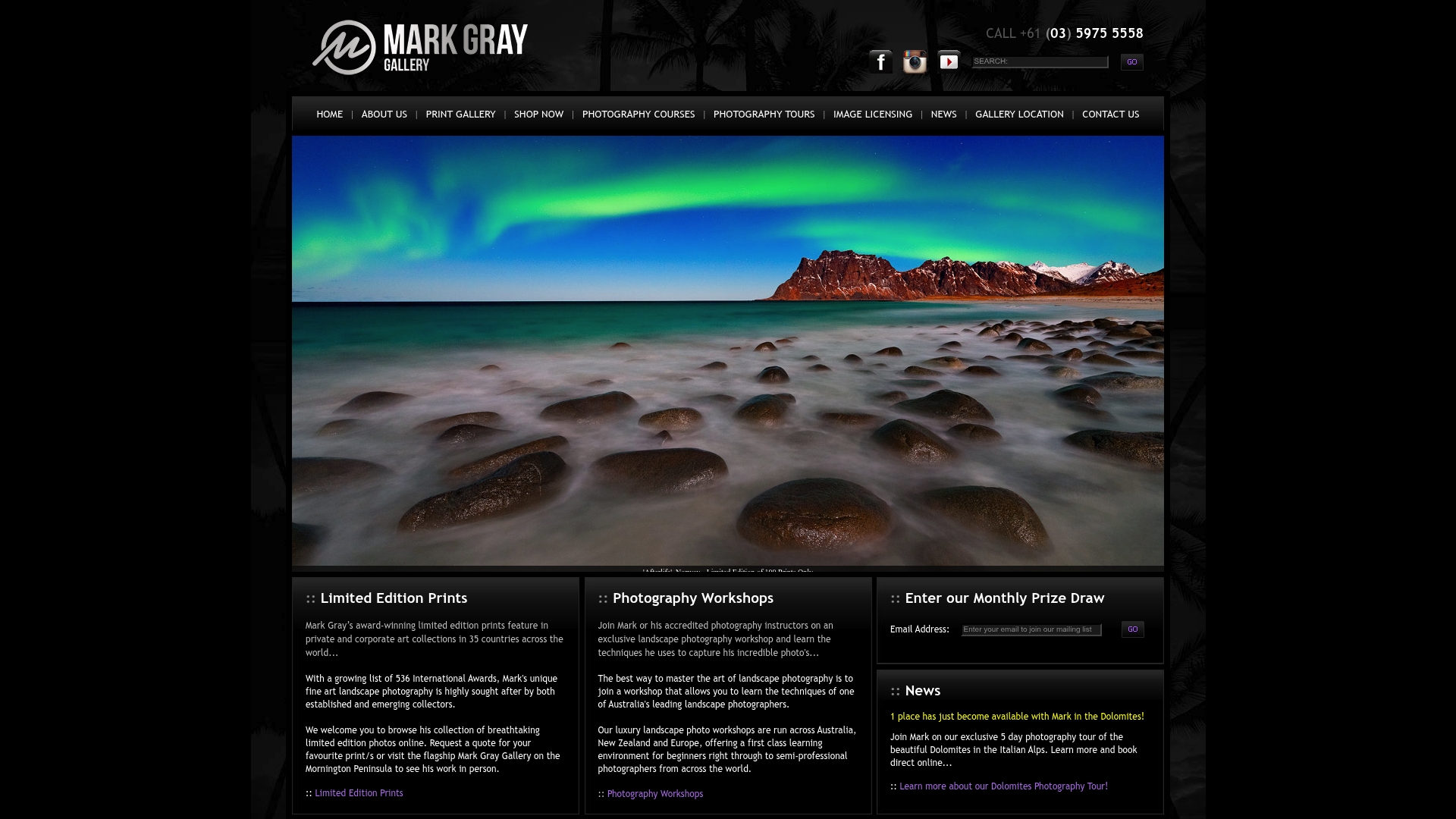
To request a commercial license, contact the gallery with the following details: your intended use (website, print, signage, etc.), the territory and duration you need, the format and dimensions required, and whether you are requesting exclusivity. The more specific your brief, the faster a license can be prepared. Visit Markgray to browse the full landscape photography collection and submit a licensing inquiry.
Sources
The following resources provide authoritative license text, release guidance, and practical explainers for U.S. image licensing.
- What is the difference between Commercial and Editorial content? | Shutterstock Contributor
- Editorial vs. Commercial Use of Photos | NYTLicensing
- What 'Commercial Use' Actually Means in Stock Licensing (And What It Doesn't) | LicenseOrg
- What does "Editorial Use Only" mean? | MotionArray Help
- Copyrights
- What Is Editorial Use? Key rules and definitions | LegalClarity
On release templates: model and property release templates are available from the American Society of Media Photographers (ASMP) and from stock agency contributor portals. Keep signed originals in your licensing file alongside the corresponding license receipt for every commercial project.
This article is general information, not a substitute for advice from a qualified lawyer. Consult a qualified legal professional about your own circumstances before acting on anything here.