
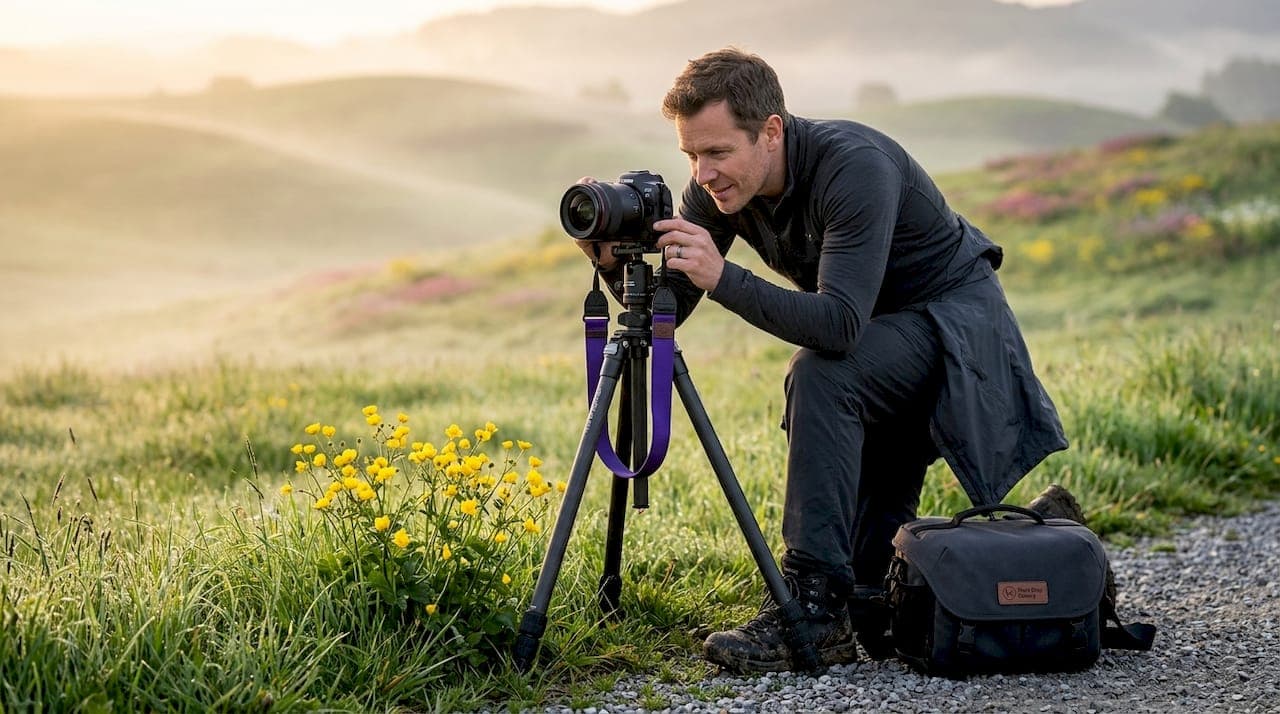
Every serious landscape photographer eventually confronts this truth: understanding how seasons change landscape photography matters far more than any lens upgrade ever will. The seasonal cycle, known in photography as environmental transformation, reshapes light quality, atmospheric conditions, color palettes, and compositional opportunities from one month to the next. Many photographers assume summer is the "best" season because of long daylight hours, or that winter offers too little color to bother. Both assumptions will cost you extraordinary images. This guide breaks down exactly what each season demands from you technically, creatively, and practically.
Table of Contents
- Key Takeaways
- How seasons change landscape photography through spring's light and atmosphere
- Summer landscape photography: challenges worth embracing
- Autumn's color and mood in landscape photography
- Winter landscape photography: minimalism, texture, and light
- Practical techniques for year-round shooting
- My perspective: what seasons taught me about patience and craft
- Explore Mark Gray's seasonal landscape work and workshops
- FAQ
Key Takeaways
| Point | Details |
|---|---|
| Light transforms every season | Each season produces distinct light angles and quality that require different metering and exposure strategies. |
| Timing beats gear every time | Planning around weather transitions and golden hour windows produces stronger images than upgrading equipment. |
| Spring rewards the early riser | Mist and dew burn off within hours of sunrise, making pre-dawn arrivals non-negotiable for atmospheric shots. |
| Winter needs exposure compensation | Snow scenes require +1 to +2 stops of positive compensation to prevent cameras from rendering white snow as gray. |
| Autumn's color window is short | Peak foliage conditions can last less than two weeks, making precise timing and weather monitoring critical. |
How seasons change landscape photography through spring's light and atmosphere
Spring is the season that rewards the bold and punishes the timid. Weather can flip within about an hour, swinging from cold rain to brilliant sun, and every one of those transitions creates a photographic opportunity that simply does not exist on a clear, stable day. Cool, damp mornings support the mist and low fog that define some of the most atmospheric landscape images you will ever capture.
The key to spring photography is understanding its improving phase. Research confirms that the best images emerge in the hour following a passing storm, when mixed clouds and directional sunlight create dramatic contrast across the scene. You are not waiting for perfect weather. You are chasing transitions.
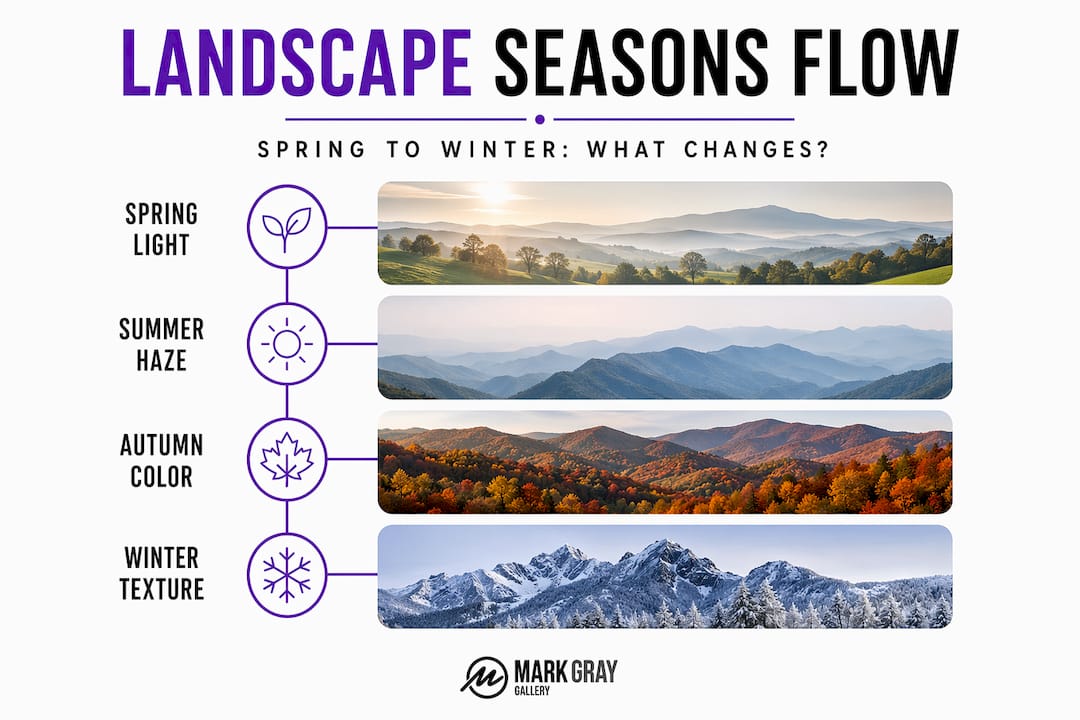
Spring also introduces fresh green growth and soft pastel color palettes that read completely differently from any other season. Early morning light at low angles rakes across new foliage, creating depth and dimension that midday sun flattens entirely. The color temperature shifts are remarkable too, moving from cool blue-toned early light toward warm gold as the sun rises.
Here are the techniques that serve spring photography best:
- Arrive before sunrise. Mist vanishes quickly after dawn, often within one to two hours. If you are not already set up and shooting before the light appears, you will miss it.
- Watch weather apps for clearing storm windows. The improving phase after rain is often brief and location-specific.
- Use a polarizing filter to reduce reflections on wet foliage and intensify color saturation without affecting atmospheric softness.
- Shoot toward the light during mist to create depth layers, with foreground, mid-ground, and background separating into distinct tonal bands.
- Embrace imperfect skies. Broken cloud layers provide constantly changing light that keeps each frame looking different from the last.
Pro Tip: Set your location apps to alert you when a rain system is passing your shooting location. Position yourself during the clearing phase and you will capture the defining spring shots that photographers who "wait for good weather" never see.
Summer landscape photography: challenges worth embracing
Summer is where many landscape photographers feel most confident, yet it is also the season that produces the most technically compromised images. The high sun angle creates harsh, flat, shadowless midday light that drains texture from the scene. Heat haze builds through the morning, peaks around early afternoon, and compromises sharpness on any distant subject, especially in long telephoto compositions. This is not a gear problem. It is a timing problem.
The most practical response to summer heat haze is to schedule shoots at dawn. Early morning air is cooler and denser, with atmospheric distortion at its minimum. By 9 or 10 a.m. on a hot day, any scene with significant depth will already show signs of haze degradation. For landscape compositions that depend on distant mountain ridges or horizon detail, a dawn shoot in summer is not optional. It is the whole strategy.
Summer does offer genuine advantages that no other season replicates. At higher latitudes, golden hour extends generously, giving you more flexible compositions in warm directional light without the time pressure of a compressed spring or autumn golden window. Summer storms produce some of the most dramatic skies in landscape photography, with anvil clouds and post-storm clearing light that turns ordinary scenes extraordinary.
Consider these summer-specific opportunities:
- A broken cloud layer of 40 to 70 percent coverage acts as a natural softbox, diffusing harsh direct sunlight into workable, textured illumination without completely flat skies.
- Post-storm light hits the landscape with intense clarity because rain scrubs dust and haze from the air. Position yourself for these windows.
- Clear summer nights present Milky Way and astrophotography opportunities absent in other seasons. Extended darkness from late summer evenings rewards photographers willing to stay out past midnight.
Pro Tip: On hot summer days, scout your location during midday heat rather than trying to shoot through it. Use that time to identify your angles, foreground elements, and compositions. Then return at first light the next morning fully prepared and ready to shoot without hesitation.
Autumn's color and mood in landscape photography
Autumn is broadly considered the most photogenic season, and that reputation is deserved. But capturing its full potential requires more precision than most photographers apply. The color window at true peak foliage can be surprisingly short, sometimes less than two weeks in a given location, and peak conditions depend heavily on temperature patterns in the preceding weeks rather than calendar dates alone.
Here is a practical sequence for making the most of autumn light and color:
- Research regional peak foliage dates for your specific location. Mountain regions peak weeks earlier than valley floors, so a single trip planned around one altitude level misses half the story.
- Monitor temperature forecasts in the weeks before your planned shoot. Warm nights delay color change; sharp cold nights accelerate it. Adjust your timing if the forecast shifts.
- Shoot during the extended golden hour that autumn's lower sun angle provides. The raking light from a low sun position saturates warm reds, oranges, and golds in ways that midday light simply cannot produce.
- Balance your exposure carefully when rich warm tones fill the frame. Slight underexposure of about a third to a half stop preserves color saturation, preventing reds from washing out into orange and golds from bleaching toward white.
- Use overcast conditions deliberately. An overcast autumn day provides even, soft light that actually renders leaf textures and close-up forest floor compositions better than direct sunlight, which creates harsh contrast between lit and shadowed leaves.
Autumn also rewards landscape photography techniques that use compression and layering. A telephoto lens compressing layers of ridgeline color against a soft sky is one of autumn's most distinctive compositional signatures, quite different from the wide-angle, expansive approaches that define summer and spring shooting.
Winter landscape photography: minimalism, texture, and light
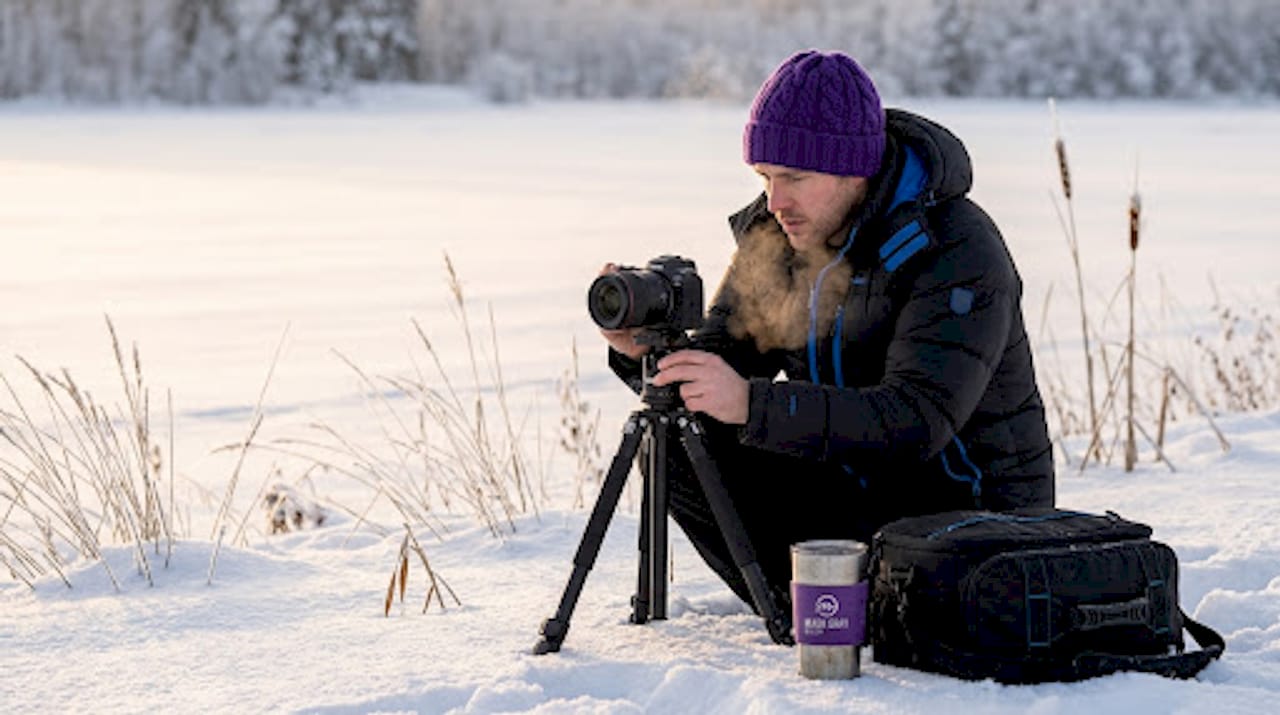
Winter is the season that intimidates photographers most and rewards them most generously when they commit to it. The aesthetic is fundamentally different from every other season. Color largely disappears, and in its place you have form, texture, contrast, and the kind of low-angle light that photographers at other times of year can only get for ten minutes around golden hour.
| Aspect | Winter Consideration | Technique |
|---|---|---|
| Exposure | Camera meters underexpose snow | Apply +1 to +2 stops positive compensation |
| Light angle | Sun stays low all day | Side and backlight create texture across entire day |
| Color palette | Minimal color | Embrace black and white conversions for graphic impact |
| Composition | Open, sparse scenes | Use minimalism deliberately with strong geometric forms |
| Gear protection | Cold drains batteries | Carry spare batteries warmed in an inside pocket |
Snow exposure is the most common technical failure in winter landscape photography. Camera meters target middle gray, and snow is far brighter than that reference point. Without positive exposure compensation, your snow scenes render gray and lifeless. A starting point of +1 to +2 stops is appropriate, with fine-tuning based on your histogram. Check the right side of the histogram specifically, and hold back just enough to avoid blown highlights.
The creative payoff of winter side-lighting is extraordinary. Low-angle sun skimming across a snow field picks up every ripple and wind-formed ridge in the surface texture. Backlit ice crystals and frost sparkle in ways that no other surface in photography produces. Winter's austere scenes often convert brilliantly to black and white, where the emphasis on tonal contrast and form reads with graphic clarity.
Pro Tip: Carry a second battery warmed inside your jacket throughout the shoot. Cold temperatures drain camera batteries dramatically faster than the rated figure, and the warmth extends usable shooting time significantly during extended winter sessions.
Practical techniques for year-round shooting
The most consistent photography happens when you plan around weather rather than fighting it. Across all seasons, a few principles produce reliably better results:
- Light quality over light quantity. A two-minute window of clearing storm light beats six hours of flat overcast far more often than it seems like it should. Prioritize transition moments.
- Metering strategy by season. Winter needs positive compensation for snow, autumn may benefit from slight underexposure to protect warm tones, spring often rewards balanced exposures at sunrise, and summer generally works best with exposure to the right of the histogram at dawn.
- Atmospheric effects are features, not failures. Heat haze, mist, fog, and rain streaks all create images that clear-day photography cannot produce. Understanding when these effects appear, and positioning yourself to use them, separates good landscape photographers from great ones.
- Arrive early and stay late. Regardless of season, the light at the margins of the day outperforms everything between 9 a.m. and 3 p.m. This is not a landscape photography tips cliché. It is the most consistently verified truth in outdoor photography.
- Weather matters more than gear at every level of camera equipment. Free elements like timing, positioning, and atmospheric conditions produce results that no amount of equipment investment can replicate.
My perspective: what seasons taught me about patience and craft
I have photographed landscapes across Australia, Iceland, Norway, New Zealand, and beyond. What those years taught me more than any technical skill is that the season is never the problem. The photographer's response to the season is.
I spent too much of my early career waiting for conditions to cooperate. Overcast days felt like wasted trips. Cold winters felt like endurance rather than opportunity. That thinking produced mediocre work. The shift came when I started treating each season's constraints as its defining aesthetic. Winter's minimal palette is not a limitation. It is the whole point.
The photographers I see struggling most consistently are the ones waiting on gear upgrades before committing to difficult conditions. New lenses do not produce better winter images. Getting up at 4 a.m. and developing your craft through courses does. Chasing the improving phase after a spring storm instead of staying home because "the weather is bad" does.
Flexibility is the skill no one talks about enough. Your shot list is a starting point, not a contract. The season will show you something you did not plan for, and the willingness to abandon your plan and respond to what is actually happening in front of you is what produces the images you remember for the rest of your career.
— Mark
Explore Mark Gray's seasonal landscape work and workshops
If the seasonal techniques described in this article have shifted how you think about your photography, seeing them applied across real locations is the natural next step.

Mark Gray's award-winning portfolio at markgray.com.au features landscape photography from Australia, Iceland, Norway, New Zealand, French Polynesia, Spain, and the United Kingdom, captured across every season and atmospheric condition. The collection demonstrates precisely how seasonal light and weather transform the same types of landscapes into entirely different images. Mark also runs one-day photography courses across Australia and multi-day workshop tours worldwide, giving photographers the hands-on experience of shooting in real seasonal conditions with expert guidance.
FAQ
How do seasons affect light quality in landscape photography?
Each season produces a distinct sun angle and atmospheric character. Winter offers low-angle light all day, autumn extends golden hour dramatically, spring delivers mist and contrast after storms, and summer requires dawn shoots to avoid heat haze and harsh flat light.
What is the best time for landscape photography in winter?
The entire daylight window in winter can deliver quality side-light due to the sun's low arc. Mid-morning through early afternoon often provides the most texture-revealing conditions, unlike other seasons where midday light is typically avoided.
How much exposure compensation do I need for snow scenes?
Snow photography requires +1 to +2 stops of positive exposure compensation as a starting point, since camera meters are calibrated to middle gray and will underexpose snow without adjustment.
When is the best time to photograph autumn foliage?
Peak foliage timing varies by elevation and local temperature patterns, not just calendar dates. Golden hour during autumn's extended low-sun period saturates warm tones most effectively. Monitor forecasts in the weeks before your planned shoot to track when cold nights accelerate color change.
Why does spring produce such distinctive landscape photographs?
Spring's rapid weather transitions create brief atmospheric windows of mist, fog, and dramatic post-storm light. Early morning mist typically disappears within one to two hours after sunrise, making pre-dawn positioning critical for capturing those conditions.