
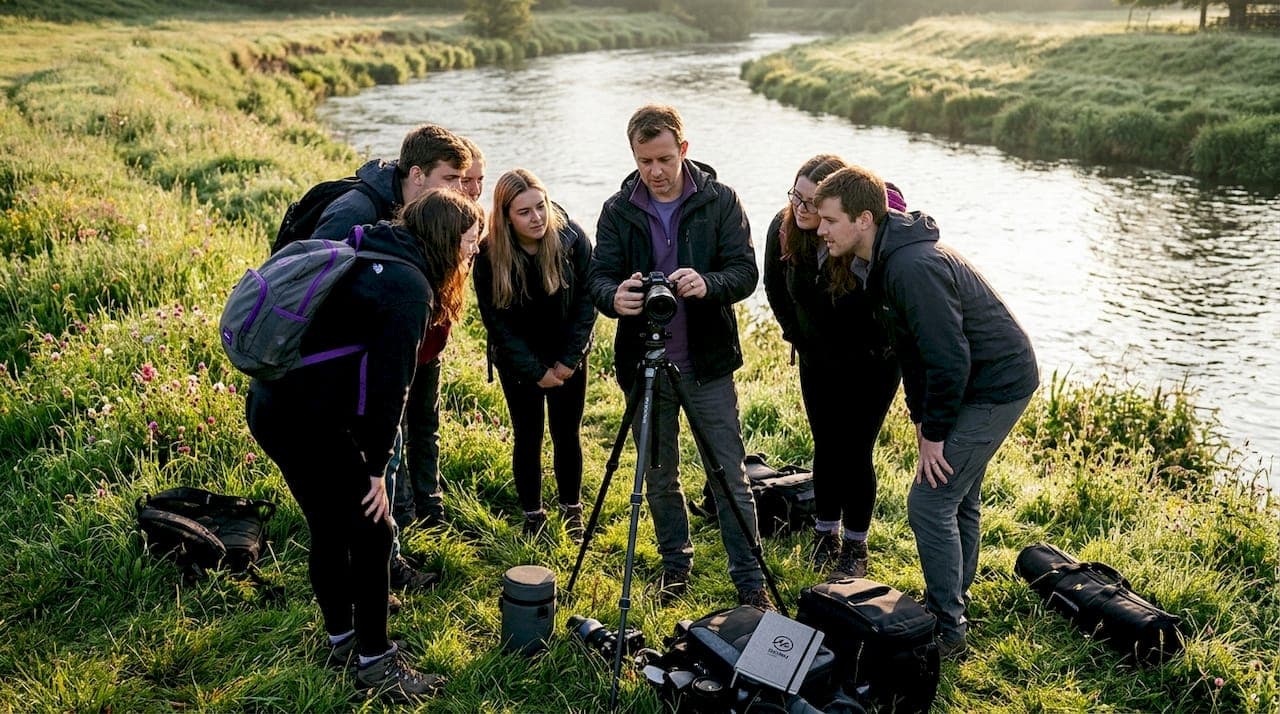
Photography workshops are a structured income stream where photographers monetize their expertise through paid, hands-on instruction, generating revenue that rivals or exceeds traditional client work. Understanding why photographers offer workshops as an income source reveals a calculated business strategy, not a side hobby. In 2026, with stock photography payouts dropping 22% due to AI competition, workshops have become one of the most reliable ways photographers protect and grow their earnings. Platforms like Teachable and in-person studio programs have made photography training programs accessible to run at scale, while premium landscape tours command serious revenue per event.
Why photographers offer workshops as an income source
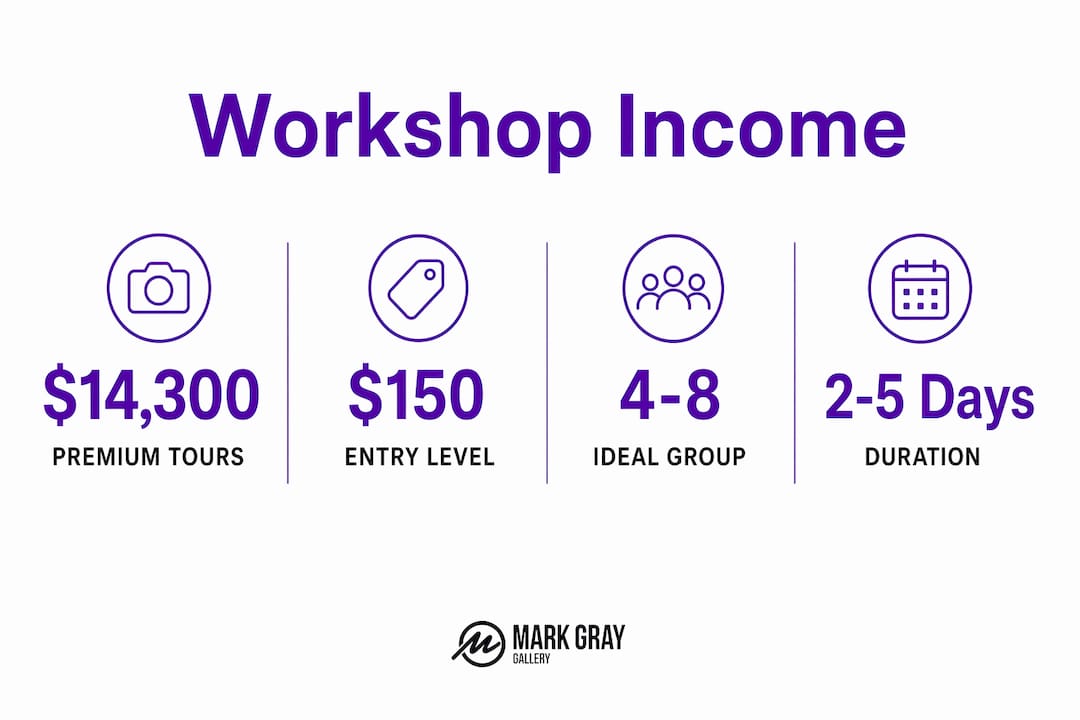
Photography workshops generate income because they convert a photographer's existing knowledge into a repeatable, scalable product. Unlike a single client shoot, a workshop sells the same expertise to multiple paying students simultaneously. Premium workshop tours can net between $14,300 and $28,000 per event with profit margins of 25 to 30 percent. That figure puts a well-run multi-day landscape tour in the same earnings bracket as several weeks of portrait bookings, with far less post-production labor.
The income model works because demand is consistent. Aspiring photographers actively seek structured learning, and the photography education market continues to grow as camera ownership rises globally. Workshops also create a recurring revenue cycle. Attendees who complete one program often return for advanced sessions or refer colleagues, compounding income without proportional increases in marketing spend.
How do photographers structure and price their workshops?
Pricing a workshop correctly is the difference between a profitable event and an expensive exercise in generosity. Workshop pricing must cover all hard costs including venue hire, transport, materials, insurance, and instructor preparation time before a single dollar of profit is counted.
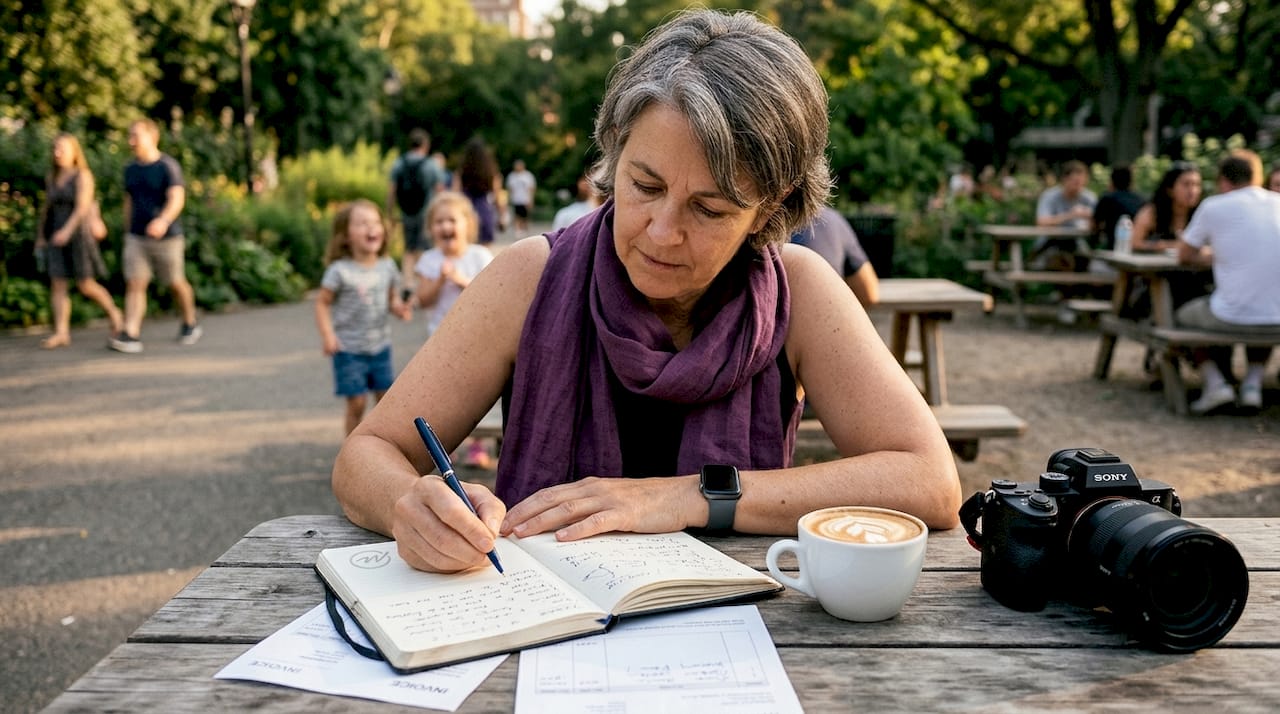
The standard pricing tiers break down by format and duration:
| Workshop Type | Typical Price Per Person | Duration |
|---|---|---|
| Lighting class or intro session | $75 to $150 | 2 to 3 hours |
| Full-day intensive | $200 to $400 | 6 to 8 hours |
| Masterclass or specialty session | $150 to $300 | Half-day |
| Premium multi-day tour | $1,500 to $6,200+ | 3 to 7 days |
The gap between a local half-day class and a premium landscape tour reflects more than duration. It reflects the depth of experience, the exclusivity of locations, and the level of personalized mentoring delivered. Photographers who price at the lower end of each tier often find their margins eroded by costs they underestimated during planning.
Tiered pricing also serves a strategic purpose. Offering an entry-level workshop at $150 introduces students to your teaching style and builds trust. Those students are far more likely to invest $3,000 in a multi-day tour once they know what to expect. This funnel approach mirrors how software companies use free trials to convert paying customers, and it works just as effectively in photography education.
Pro Tip: Build your pricing from the bottom up. List every cost including your own hourly rate for prep, travel, and post-event follow-up, then apply your target margin. Never set a price by looking at competitors first. Know your own costs before you benchmark against the market.
What benefits do workshops offer photographers beyond direct income?
The financial case for workshops is strong on its own, but the strategic advantages extend well beyond the revenue per event. Photographers who host workshops consistently report benefits that compound over time across their entire business.
- Client acquisition at reduced cost. Workshops convert attendees into clients for print sales, portrait sessions, and licensing deals. A student who spends a day learning landscape composition from you is already invested in your work and far more likely to purchase a limited edition print than a cold website visitor.
- Brand authority and reputation. Teaching positions you as an expert, not just a practitioner. Photographers who run respected programs are quoted in publications, invited to speak at events, and attract premium clients who associate teaching credentials with superior skill.
- Income stability during slow seasons. Client bookings fluctuate with seasons, economic conditions, and trends. Workshop income can be scheduled strategically to fill revenue gaps during months when commercial or portrait work is traditionally quiet.
- Community building. Regular workshop attendees form a loyal audience around your brand. This community shares your work, attends future events, and creates organic word-of-mouth marketing that no paid advertising budget can fully replicate.
- Diversification against market disruption. The 22% decline in stock photo payouts caused by AI-generated imagery is a direct threat to photographers who rely on passive licensing income. Workshops and photography training programs provide active income that AI cannot displace, because the value is in the human instruction and personal mentoring.
The hybrid model, combining in-person workshops with recorded online content, extends reach further. A photographer based in Sydney can sell a recorded masterclass to students in Toronto while simultaneously running a live landscape tour in Iceland. These income streams reinforce each other rather than competing.
Why do students prefer in-person and small-group workshops?
The demand for live, in-person photography instruction persists despite the abundance of free tutorials on YouTube and paid courses on platforms like Skillshare and Udemy. The reason is straightforward: online tutorials cannot replicate real-time feedback. A student watching a video cannot ask why their specific image looks flat or receive immediate correction on their technique.
Attendees consistently report that a week-long workshop accelerates their development more than three to six months of solo study. That acceleration has real monetary value to the student, which is precisely why they pay premium prices for live instruction. Understanding this dynamic helps photographers justify and defend their pricing with confidence.
The format that delivers the best results follows a clear pattern:
- Keep groups between 4 and 8 participants. Groups larger than 10 dilute the quality of individual feedback and reduce student satisfaction. Smaller groups allow the instructor to address each person's specific challenges, which is the core value proposition of a live workshop.
- Scout locations in advance. Arriving at a shooting location without prior knowledge wastes student time and undermines confidence in the instructor. Professional location scouting and logistics are visible signals of preparation that students notice and value.
- Structure sessions around progressive skill building. Begin with foundational concepts in a controlled environment, then move to complex real-world scenarios. This progression mirrors how professional photography courses improve skills and prevents students from feeling overwhelmed early in the program.
- Provide individual critique time. Allocate dedicated time for reviewing each student's images from the session. This one-on-one attention is the single most cited reason attendees recommend workshops to peers.
- Price to reflect the value delivered. Underpricing workshops attracts less committed students and signals lower quality to the market. A higher price point filters for serious learners and improves the group dynamic for everyone.
The small-group model also creates a more satisfying experience for the instructor. Teaching eight engaged, committed students is professionally rewarding in a way that managing a crowd of twenty rarely is.
What operational best practices maximize workshop profitability?
Running a profitable workshop requires the same discipline as running any professional service business. The photographers who generate consistent workshop income sources treat each event as a product with defined quality standards, not an improvised gathering.
- Plan for contingencies. Secure backup shooting locations before every event. Weather, access restrictions, and unexpected closures are realities of outdoor photography. Students who experience a well-managed contingency plan leave more impressed than those who never encountered a problem.
- Build brand partnerships. Sponsorship deals with gear brands provide giveaways and discounts that increase perceived student value without raising your costs. A filter brand providing samples or a camera manufacturer offering a demo unit adds tangible value to the workshop experience.
- Cultivate an email list before you need it. Free educational content, whether blog posts, short video tutorials, or social media tips, builds an audience of photographers who already trust your expertise. When you announce a workshop, you are selling to warm leads rather than strangers.
- Consider co-hosting with a complementary photographer. Sharing the workload and combining audiences reduces marketing costs and brings diverse teaching perspectives to the program. Students benefit from two expert viewpoints, and both instructors reach new potential clients.
- Never discount to fill seats. Reducing your price signals that the original price was arbitrary. If a workshop is not selling, the solution is better marketing or a refined value proposition, not a lower price.
Pro Tip: Send a detailed pre-workshop guide to every registered student at least two weeks before the event. Cover gear recommendations, what to wear, what to expect each day, and how to prepare their camera settings. Students who arrive prepared learn faster, ask better questions, and leave happier. Their reviews will reflect that preparation.
Key takeaways
Photography workshops generate serious, repeatable income because they combine expert instruction, small-group personalization, and hands-on learning that no online platform can fully replace.
| Point | Details |
|---|---|
| Income potential is substantial | Premium workshop tours net $14,300 to $28,000 per event at 25 to 30 percent margins. |
| Pricing must cover all costs first | Venue, transport, insurance, prep time, and instructor hours must be calculated before setting any price. |
| Workshops build long-term business value | Attendees convert into print buyers, referral sources, and repeat students, lowering acquisition costs over time. |
| Small groups outperform large ones | Groups of 4 to 8 participants deliver higher satisfaction, better learning outcomes, and stronger repeat business. |
| Diversification protects income | Workshops offset declining stock photo revenue and provide stable income during slow client booking periods. |
Why I believe workshops are the smartest move photographers can make right now
The conversation around photography income has shifted dramatically in the past few years, and I have watched it happen firsthand. When I started running landscape photography workshops across Australia, the decision was partly financial and partly driven by a genuine desire to share what I had learned over decades in the field. What surprised me was how profoundly the workshops changed my relationship with my own work.
Teaching forces you to articulate things you do instinctively. When a student asks why you chose a particular composition at dawn on the Kimberley coast, you cannot answer with a shrug. You have to find the words. That process sharpens your own vision in ways that solo shooting never does.
The market reality in 2026 makes the case even more compelling. Passive income from stock licensing is under genuine pressure. Client work is competitive and cyclical. Workshops offer something different: a direct exchange of expertise for income, with no algorithm deciding your payout rate. The photographers I see thriving are those who treat education as a core part of their business, not an afterthought.
My honest observation is that most photographers underestimate how much students value the personal connection in a live setting. The hands-on mentoring you provide in a single afternoon can change how someone sees light for the rest of their life. That is worth charging for, and charging well.
— Mark
Explore photography workshops with Mark Gray
Mark Gray is an award-winning Australian landscape photographer whose work spans Iceland, French Polynesia, Norway, and the Australian wilderness. His platform offers photographers at every level the opportunity to learn directly in the field, with both single-day courses and multi-day landscape workshop tours available across Australia and internationally.
Whether you are looking to sharpen your technical skills, find your creative voice, or understand how photography workshops build income and professional standing, Mark Gray's programs deliver the kind of personalized, location-driven instruction that transforms how you photograph. Explore the full range of workshops, limited edition prints, and educational resources at markgray.com.au.
FAQ
How much income can a photographer earn from workshops?
Premium multi-day workshop tours generate between $14,300 and $28,000 per event, while shorter local sessions typically earn $150 to $400 per participant. Profit margins average 25 to 30 percent after costs.
What is the ideal group size for a photography workshop?
Groups of 4 to 8 participants produce the best learning outcomes and highest student satisfaction. Groups larger than 10 reduce the quality of individual feedback and lower repeat attendance rates.
Why do students pay more for in-person workshops than online courses?
Students pay a premium because live workshops provide real-time feedback and hands-on mentoring that recorded tutorials cannot replicate. Attendees report that a single week-long workshop accelerates their skills more than three to six months of self-directed online study.
How should photographers price their workshops?
Pricing must cover all hard costs including venue, transport, materials, insurance, and instructor preparation time, then add a target profit margin. Underpricing reduces perceived value and attracts less committed students.
Can workshops replace declining stock photography income?
Workshops and online photography training programs provide active income that directly offsets the 22% drop in stock photo payouts driven by AI-generated imagery. Many photographers now earn more from education than from passive licensing.