
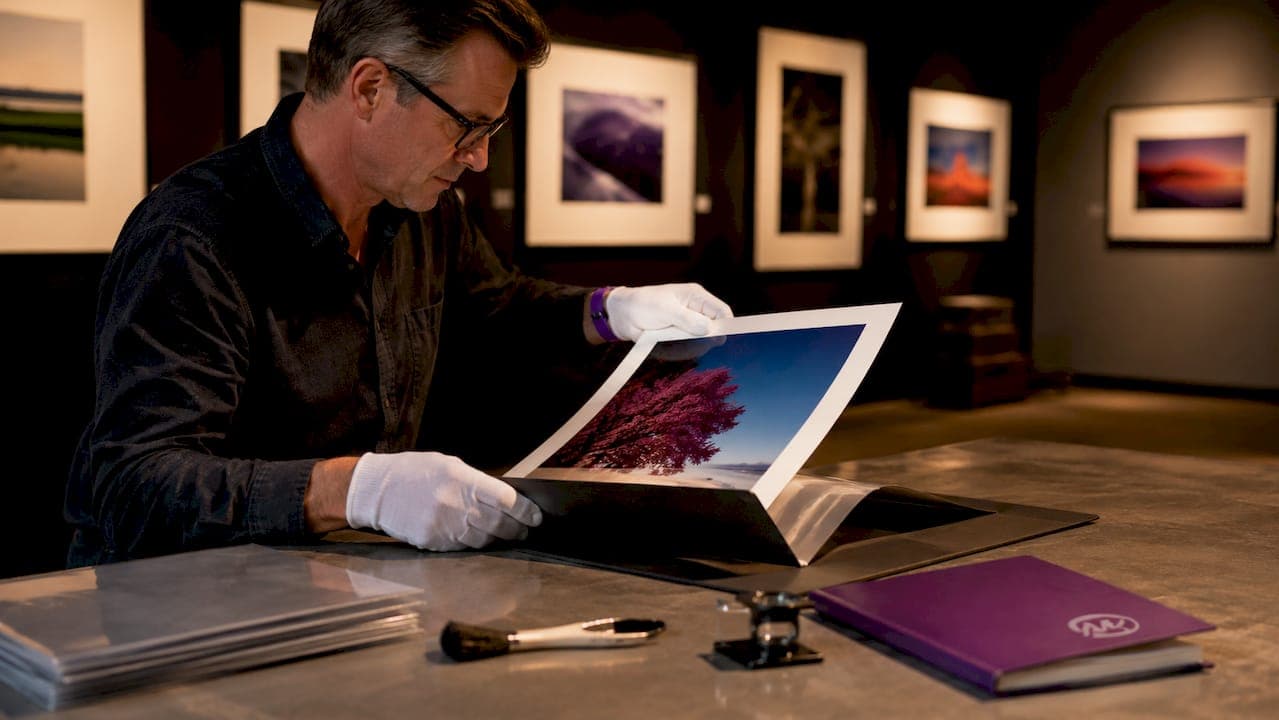
Caring for fine art photography prints is defined as the deliberate practice of handling, framing, storing, and maintaining photographic works to preserve their visual and material integrity over time. Skin oils, UV radiation, humidity fluctuations, and improper storage are the four leading causes of print deterioration. Archival conservation standards recommend acid-free, pH-neutral materials throughout every stage of a print's life, from the moment you first touch it to how it hangs on your wall decades later. Pigment-based inks used in premium giclée prints offer outstanding longevity, but only when the surrounding environment supports them. The care you invest today determines whether a print looks as vivid in thirty years as it does right now.
How should you handle fine art photography prints to avoid damage?
Improper handling is the leading cause of avoidable print damage. Skin oils contain moisture and contaminants that bond permanently to print surfaces, leaving stains that no cleaning method can fully reverse. The good news is that correct handling takes seconds and costs nothing.
Follow these practices every time you touch an unframed print:
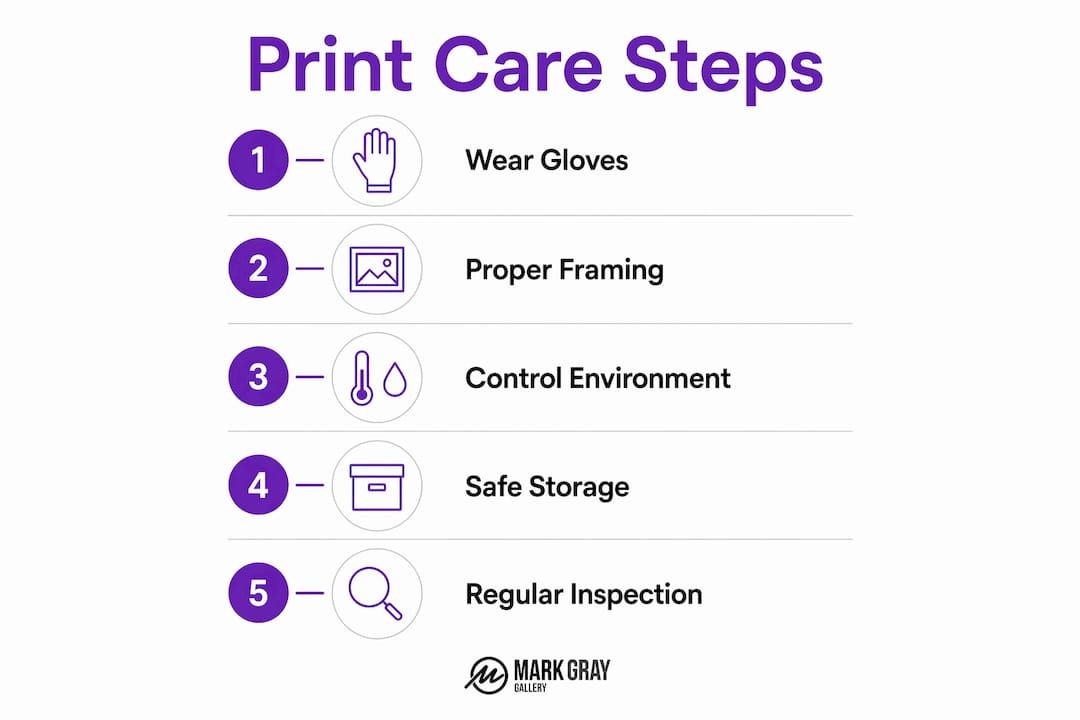
- Wear clean, dry cotton gloves. Skin oils cause permanent staining on print surfaces, making gloves non-negotiable for any direct contact.
- Hold prints by the outermost edges only. If gloves are unavailable, grip the very edge of the paper where no image exists.
- Work on a clean, flat, stable surface. Remove all food, liquids, and loose debris before placing a print down.
- Never slide a print across any surface. Lift it fully, then set it down. Friction causes micro-abrasions that dull the image over time.
- Keep prints away from humid environments. Bathrooms, kitchens, and laundry rooms introduce moisture that softens paper fibers and loosens ink layers.
The risks of skipping these steps go beyond visible smudges. A fingerprint pressed into a matte fine art paper can cause a permanent oil stain within hours. Creasing from improper lifting can crack ink layers on rigid coated papers. Physical handling in professional settings follows strict protocols for exactly this reason, as detailed in best practices for handling prints in professional photography contexts.
Pro Tip: Keep a dedicated pair of white cotton gloves near your print storage area. Treating them as standard equipment, not an optional extra, builds the habit quickly.
What are the best framing and display practices for fine art prints?
Framing is the single most impactful decision you make for a print's long-term condition. The right materials and environment can extend a print's display life by decades. The wrong choices accelerate fading, warping, and chemical degradation regardless of how well the print was made.
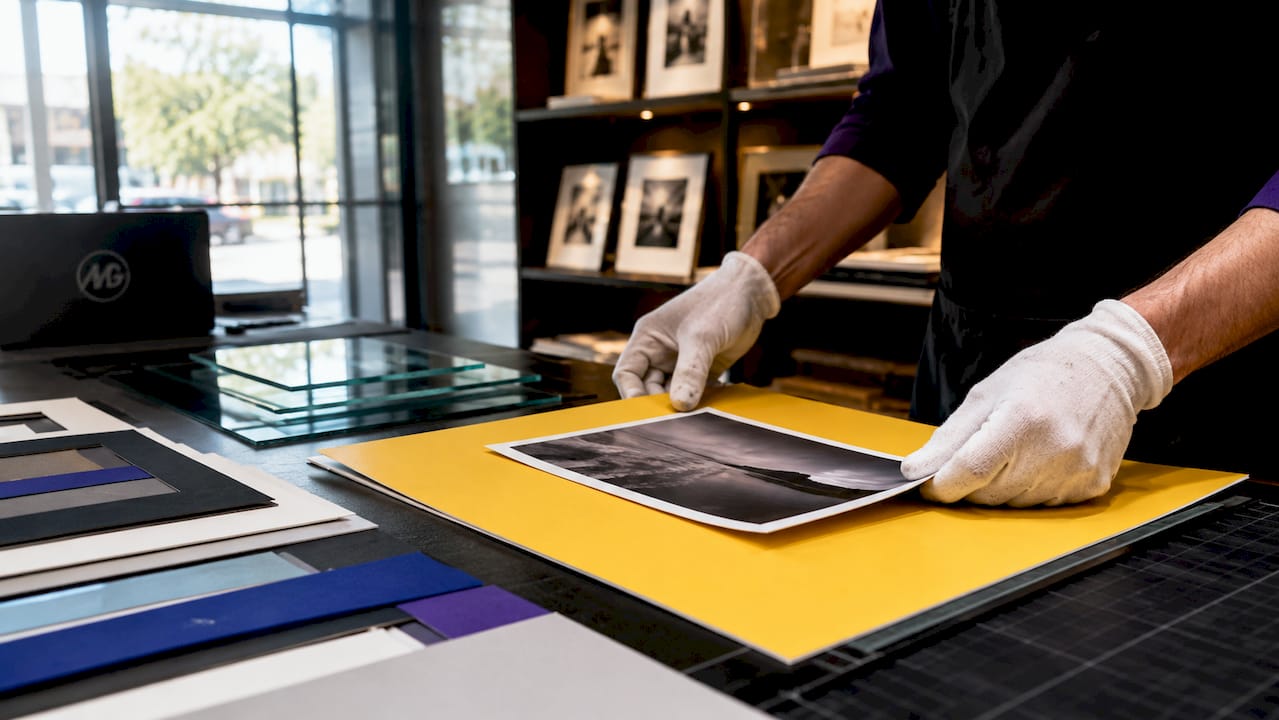
Choosing the right glazing
UV-filtering glazing blocks 70–99% of UV radiation, which is the primary cause of color fading in displayed prints. Standard glass offers almost no UV protection. Museum-grade UV-filtering acrylic is lighter than glass, shatter-resistant, and provides the highest level of protection available for home display. Always maintain an air gap between the glazing and the print surface. Direct contact causes condensation, sticking, and surface transfer over time.
Archival matting and backing
Acid-free, pH-neutral or alkaline-buffered mats and backing boards are the standard for conservation-grade framing. Standard cardboard mats are acidic. They off-gas compounds that yellow and degrade the paper they touch, a process called acid migration. A mat made from 100% cotton rag or buffered alpha-cellulose board eliminates this risk entirely. For a thorough breakdown of these material standards, the collector's guide to framing covers museum-level specifications in detail.
Sealing the frame back
Sealing the back of a frame with dust-resistant backing tape or a dust cover is one of the most overlooked steps in print protection. An unsealed frame back allows insects, airborne pollutants, and humidity to enter slowly over years. The damage accumulates invisibly until it becomes irreversible. Use archival framing tape or a purpose-made dust cover paper to seal all edges completely.
Controlling the display environment
Stable temperature and humidity are as critical as the framing materials themselves. Rapid fluctuations loosen ink layers and warp paper fibers. The recommended range for display is 35–55% relative humidity and approximately 65–75°F. Avoid hanging prints above fireplaces, near heating vents, in direct sunlight, or in rooms with high moisture. Indirect natural light or low-heat LED lighting with a correct beam angle are the safest choices for illuminating displayed prints.
Pro Tip: A small digital hygrometer costs very little and tells you exactly whether your display room stays within the safe humidity range. Place one near your most valued prints.
How to store fine art photography prints safely when not on display
Safe storage protects prints from both physical and chemical harm during the periods they spend off the wall. The core principle is simple: flat, cool, dry, and dark.
- Store prints flat, never rolled. Rolling causes ink cracking and curling that rarely relaxes back to flat, especially on rigid coated papers. Flat file cabinets or archival boxes are the correct solution.
- Interleave prints with archival tissue or glassine. Place a sheet of acid-free tissue or glassine between each print to prevent surface contact, friction, and ink transfer.
- Avoid fully sealed plastic sleeves. Completely sealed plastic sleeves trap humidity, creating micro-environments that promote mold growth and cause prints to stick together. Breathable archival tissue allows moisture to equalize safely.
- Use archival portfolios, flat files, or acid-free boxes. These materials are pH-neutral and will not off-gas acids onto stored prints over time.
- Keep storage areas cool, dry, and away from light. The target humidity range for storage is 35–50% relative humidity. Spaces below basements or above garages often experience the widest humidity swings and are poor choices.
- Never stack heavy objects on top of stored prints. Sustained pressure causes embossing and surface damage that is permanent.
If a print has already curled from improper storage, a step-by-step guide to flattening curled prints can help you restore it safely before reframing or re-storing.
Pro Tip: Label the outside of each archival box with the print title, edition number, and date stored. You will thank yourself when retrieving a specific print years later without needing to handle every piece in the collection.
What cleaning and maintenance practices keep prints in optimal condition?
Routine maintenance prevents small problems from becoming permanent ones. The key rule is restraint: less intervention is almost always better than more.
For framed prints, wipe the glass or acrylic with a microfiber cloth only. Never spray any cleaner directly onto the glazing. Liquid seeping under the frame edge reaches the mat and print surface, causing water staining and mold. Spray the cloth lightly if needed, then wipe the glass. For unframed prints, use a dry, soft brush to remove surface dust with gentle strokes. Never use water, solvents, or any liquid on an unframed print surface.
Annual inspection of framed prints is the most effective maintenance habit a collector can build. Early detection of moisture, yellowing, or insect damage allows professional conservation before deterioration becomes irreversible. Check for condensation behind glazing, discoloration at mat edges, and any signs of foxing or mold on the paper surface.
An annual inspection checklist should cover these points:
- Moisture or condensation visible behind the glazing
- Yellowing or browning at mat edges or paper borders
- Any lifting, flaking, or cracking of the ink surface
- Signs of insect activity such as frass or small holes
- Warping or buckling of the backing board
When you find any of these signs, stop and consult a professional conservator before attempting any DIY remedy. Conservators trained in photographic materials can stabilize damage that home treatments would make permanent. The investment in professional advice protects far more value than it costs.
Key Takeaways
Caring for fine art photography prints requires consistent use of archival materials, controlled environments, and deliberate handling at every stage of ownership.
| Point | Details |
|---|---|
| Handle with gloves or edges only | Skin oils cause permanent staining; always use clean cotton gloves or grip the outermost edge. |
| Frame with UV-filtering glazing | UV-filtering glass or acrylic blocks up to 99% of radiation, the primary cause of fading. |
| Store flat in archival materials | Flat storage with acid-free tissue prevents ink cracking, mold, and surface transfer. |
| Control humidity and temperature | Maintain 35–55% relative humidity and 65–75°F to prevent warping and ink layer separation. |
| Inspect annually and act early | Yearly checks catch moisture, yellowing, and insect damage before it becomes irreversible. |
What I've learned from years of watching prints age
I have seen collectors do everything right when they buy a print and then undo it all within a year. The most common mistake is not the obvious one. It is not leaving a print in direct sunlight. Most people know to avoid that. The real damage usually comes from the frame back. An unsealed frame back is an open door for humidity, dust, and insects, and most people never think to check it.
The second thing I have observed is that climate awareness matters far more than most collectors expect. A print hanging in a beautiful room with a fireplace is a print aging faster than it should. The temperature swings alone are enough to loosen ink layers over a few seasons. I always recommend a digital hygrometer before any other accessory purchase.
Documentation is another habit worth building from day one. Photograph each print before framing, record the edition number and certificate details, and store that information somewhere separate from the physical work. If you ever need insurance, conservation advice, or want to sell, that documentation is worth real money. For collectors thinking about the long-term value of their prints, the photography print investment basics resource covers this in depth.
The prints that last generations are not the ones made from the best materials alone. They are the ones owned by people who treated care as a habit, not an afterthought.
— Mark
Protecting your prints with museum-quality framing
Fine art photography prints deserve framing that matches the quality of the work itself. At Com, every limited edition landscape print from the Mark Gray Gallery is produced to archival standards, and the care does not stop at the print itself.
Com offers guidance on UV-protective glazing, acid-free matting, and dust-sealed backing to help collectors protect their investment from day one. Whether you are framing a new acquisition or re-framing an existing piece, the landscape photography display options resource covers the full range of museum-level display approaches for home settings. For personalized advice on preserving your specific prints, visit markgray.com.au to connect with the team directly.
FAQ
How do you handle fine art prints without damaging them?
Always wear clean, dry cotton gloves or hold the print by its outermost edges only. Skin oils cause permanent staining on print surfaces and are the leading cause of avoidable damage.
What humidity level is safe for storing photography prints?
The recommended storage humidity range is 35–50% relative humidity. Levels above this promote mold growth, while levels below this cause paper to become brittle and crack.
Does UV-filtering glass really make a difference for print longevity?
UV-filtering glazing blocks 70–99% of UV radiation, which is the primary cause of color fading in displayed prints. Standard glass provides almost no UV protection by comparison.
Can you store fine art prints in plastic sleeves?
Fully sealed plastic sleeves trap internal humidity and create conditions for mold growth and surface adhesion. Use breathable acid-free tissue or glassine interleaving sheets instead.
How often should framed prints be inspected?
Annual inspection is the recommended standard. Checking for moisture, yellowing, ink lifting, and insect activity each year allows early intervention before damage becomes permanent.