

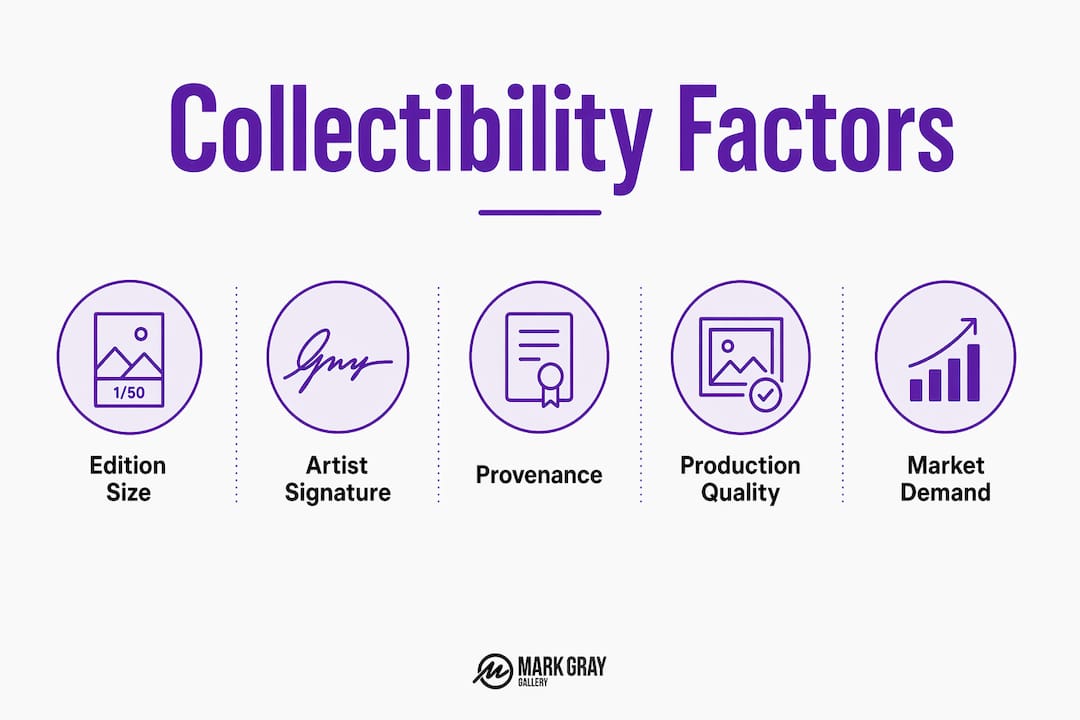
A collectible fine art print is defined by four measurable factors: edition size, artist signature, provenance documentation, and production quality. Understanding what makes a fine art print collectible separates a rewarding acquisition from a costly mistake. Collectors who know these criteria buy with confidence, protect their investment, and build collections that hold real market value. This guide breaks down each factor with precision, drawing on current industry standards and expert market insight to give you a clear framework for evaluating any print you consider adding to your collection.
What makes a fine art print collectible?
Collectibility in fine art prints is a multifactor concept, not a single attribute. The most collectible prints combine scarcity, direct artist involvement, verified authenticity, and archival production quality. When all four align, a print earns sustained collector demand and the potential for long-term value appreciation. When even one is missing, the print's market position weakens considerably.
The industry term for the category most collectors pursue is "limited edition original print." This distinguishes works produced in a defined, finite run from open editions or photomechanical reproductions. Understanding fine art print value starts with recognizing this distinction, because the market prices these categories very differently.
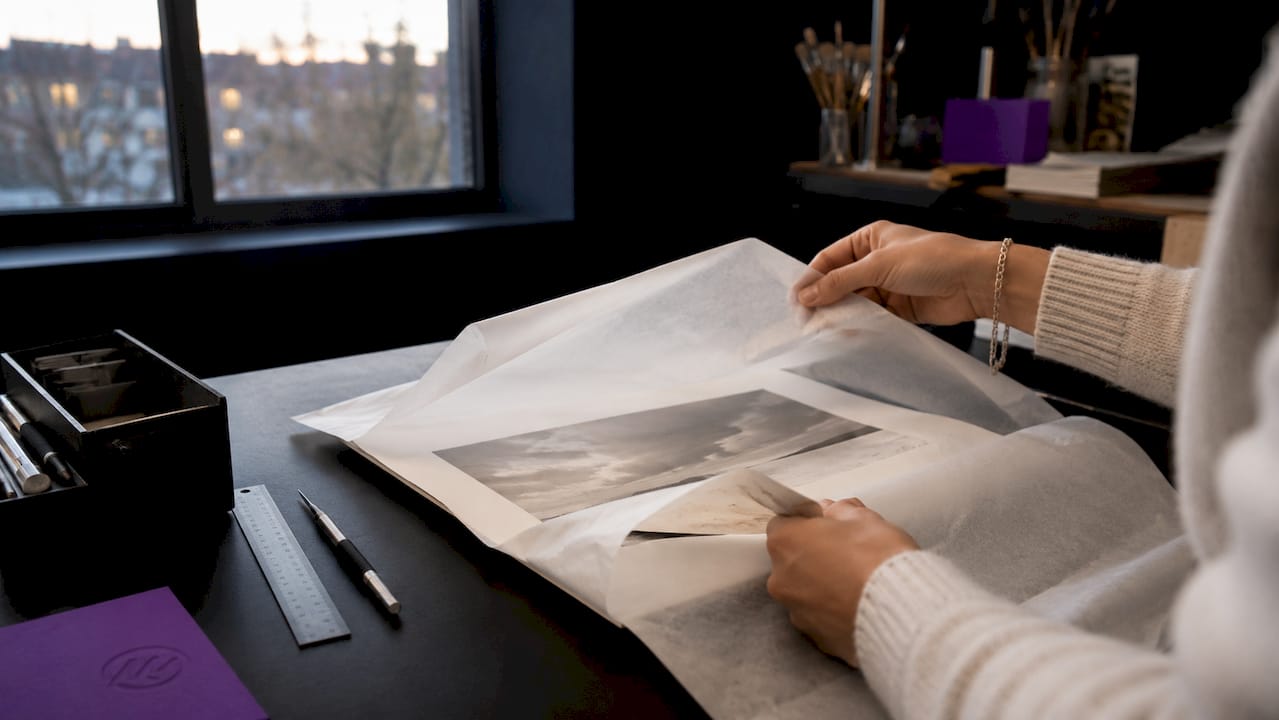
How does edition size drive scarcity and value?
Collector demand is highest for small edition sizes under 50 copies, which provide structural conditions for better value appreciation than larger or open editions. Scarcity is not accidental. It is engineered by the artist and publisher at the point of production, and it directly shapes how the market prices a work over time.
Three edition categories define the market:
- Limited edition: A fixed number of prints, typically numbered (e.g., 12/50), with production permanently stopped once the edition is complete.
- Open edition: No cap on print numbers, meaning supply can always meet demand. These rarely appreciate in value.
- Artist proofs (AP): Traditionally a small set outside the main edition, marked "AP." However, artist proofs do not automatically command higher prices than standard numbered prints. Their value depends on the artist's market and the timing of production.
One detail surprises many new collectors: the specific edition number within a limited run rarely impacts market value for prints priced under $10,000. Whether you own 3/50 or 47/50 matters far less than the overall rarity of the edition itself. What the market rewards is the total scarcity of the run, not your position within it.
| Edition type | Supply | Value potential | Collector desirability |
|---|---|---|---|
| Small limited (under 50) | Fixed, finite | High | Very high |
| Large limited (50–500) | Fixed, finite | Moderate | Moderate |
| Open edition | Unlimited | Low | Low |
| Artist proof | Very small | Variable | Context-dependent |
Pro Tip: When evaluating a limited edition, ask the gallery for the total edition size and the number of artist proofs produced. Both figures together tell you the true scarcity of the work.
Does an artist's signature increase a print's value?
An artist's signature acts as a substantial value multiplier, adding a 50–200% premium compared to unsigned impressions from the same edition. That range reflects how powerfully the market rewards direct artist involvement. A signed impression is not merely authenticated. It represents the artist's personal endorsement of that specific object.
The certificate of authenticity (COA) and clear provenance are equally foundational. Documentation verifies artist commitment and supports insurance valuation and future resale. Without it, even a visually stunning print becomes difficult to sell through reputable channels.
Key provenance elements every collector should seek:
- Artist's hand signature, preferably in pencil on the lower margin
- Edition numbering, clearly marked (e.g., 7/30)
- Certificate of authenticity issued by the artist, publisher, or gallery
- Exhibition or sale history, showing where the print has been and who owned it
- Printer's chop mark or blind stamp, confirming the print studio's involvement
Unsigned or poorly documented prints create real problems at resale. Auction houses and reputable galleries require provenance to accept a work. Without documentation, you may own a beautiful object that the secondary market simply cannot price with confidence.
Pro Tip: Store all provenance documents with the print, not separately. If you sell or insure the work, buyers and appraisers need the full paper trail in one place.
Why does production quality define a collectible print?
Original prints conceived for print media hold significantly more value than photomechanical reproductions. This distinction is the foundation of print collecting. An etching, lithograph, or screenprint produced through a traditional printmaking process is an original work. A poster-quality reproduction of a painting is not, regardless of how it is marketed.
Archival materials determine how long a print retains its visual and monetary value. Acid-free paper, pigment-based inks, and UV-protective coatings resist fading and physical degradation over decades. Prints produced on standard paper with dye-based inks begin to show color shift within years. For collectors, assessing print quality before purchase is not optional. It is a basic due diligence step.
Condition is equally critical, and it is where many collectors are caught off guard. Condition issues like foxing, trimmed margins, or light damage can reduce a print's value by 50% or more, even when the image looks appealing in photographs. Subtle damage is often invisible in digital images and only apparent under direct inspection.
| Production factor | Impact on collectibility |
|---|---|
| Original printmaking technique (etching, lithography, screenprint) | High: defines the work as an original |
| Archival paper and pigment inks | High: preserves condition and value over decades |
| Artist involvement in printing process | High: confirms authenticity and artistic intent |
| Photomechanical reproduction | Low: treated as a decorative copy, not a collectible |
| Poor condition (foxing, trimmed margins) | Severe negative: can halve or eliminate market value |
Pro Tip: Always request a condition report and, where possible, inspect the print in person under good lighting before purchasing. Photos rarely reveal foxing, paper waviness, or margin trimming.
How do market demand and artist reputation shape print value?
Market liquidity and regular trade activity are vital indicators that a limited edition print will hold or build value over 5–10 years. A print with no secondary market history is a print with no proven demand. Strong auction records and gallery resales confirm that collectors are actively competing for the work, which supports pricing stability.
Artist reputation, including institutional recognition and museum presence, is crucial to how a print's collectibility and value are perceived. An artist whose work appears in public collections, wins awards, or receives critical attention commands stronger collector demand across their entire body of editioned work. This is why two prints with identical edition sizes can have dramatically different market values.
Factors that define a print's market position:
- Active secondary market trading, showing consistent buyer competition
- Institutional recognition, including museum acquisitions and major exhibition history
- Critical and award recognition, which amplifies public and collector awareness
- Sustained gallery representation, confirming ongoing market support
- Collector community engagement, including documented sales to serious collectors
New collectors often focus too narrowly on the signature or edition number. The artist's overall reputation and market are the strongest drivers of value. A signature on a print by an artist with no market history adds little. The same signature on a print by an artist with active institutional recognition and auction records adds considerably.
Understanding collectible print characteristics in the context of the broader market helps collectors avoid overpaying for surface attributes while missing the deeper indicators of genuine value.
Key Takeaways
A fine art print's collectibility is determined by edition scarcity, artist signature, provenance documentation, production quality, and active market demand working together, not independently.
| Point | Details |
|---|---|
| Edition size drives scarcity | Prints in editions under 50 copies provide the strongest structural conditions for value appreciation. |
| Signature adds measurable premium | A signed impression commands a 50–200% premium over an unsigned print from the same edition. |
| Provenance is non-negotiable | A certificate of authenticity and clear ownership history are required for insurance, resale, and market credibility. |
| Production quality determines longevity | Archival paper, pigment inks, and original printmaking techniques preserve both visual and monetary value. |
| Market activity confirms real demand | Active secondary market trading over 5–10 years is the clearest signal that a print holds genuine collector interest. |
What I've learned about collecting prints that most guides won't tell you
The most common mistake I see collectors make is treating a single factor as the whole story. They find a signed print in a small edition and assume the work is a sound acquisition. They skip the condition check. They don't ask about the artist's secondary market. They overlook the paper specification. Then, years later, they discover the print has barely moved in value or has declined.
Collectibility is genuinely holistic. I've seen artist proofs sell for less than standard numbered impressions from the same edition because the artist's market had softened and the provenance was thin. I've also seen open edition prints from celebrated photographers treated as collectibles by uninformed buyers who paid premium prices for works that will never appreciate. The label "limited edition" on its own means nothing without the supporting criteria.
Condition vigilance is the area where I'd push collectors hardest. Subtle foxing, a trimmed margin, or a previous owner's poor framing choice can quietly destroy value. These issues rarely show in gallery photos. Always ask for a condition report, and if the seller cannot provide one, treat that as a significant red flag.
My advice for both new and experienced collectors: track the market consistently. Follow auction results for the artists you collect. Watch which works sell quickly and which sit. That data tells you more about a print's real collectibility than any single attribute on its certificate. Regular market tracking builds the kind of judgment that protects your collection over the long term.
— Mark
Fine art prints worth collecting, from a photographer who understands both sides
Mark Gray's award-winning landscape photography prints are produced as premium quality limited editions, with editions carefully sized to maintain genuine scarcity and long-term collector value. Each print comes with full documentation, including edition numbering and provenance details, so you collect with complete confidence.

Com's collection spans Australia, New Zealand, Norway, Iceland, French Polynesia, Spain, and the United Kingdom, offering collectors access to exclusive landscape imagery produced to the highest archival standards. Whether you are building a serious collection or acquiring your first limited edition print, the Mark Gray Gallery provides the authentication, quality, and expert guidance that serious collectors expect.
FAQ
What is the most important factor in a print's collectibility?
No single factor defines collectibility. Edition size, artist signature, provenance, production quality, and market demand all contribute, and the strongest prints score well across all five criteria.
Does a lower edition number make a print more valuable?
The specific edition number rarely impacts value for prints priced under $10,000. The total rarity of the edition matters far more than whether you own number 3 or number 47.
Are artist proofs more valuable than numbered prints?
Artist proofs do not automatically command higher prices. Their value depends on the artist's market position and whether the proofs were produced during the artist's lifetime, not on the "AP" designation alone.
How much does an artist's signature add to a print's value?
A hand-signed impression typically commands a 50–200% premium over an unsigned example from the same edition, making the signature one of the most measurable value factors in the market.
Can condition issues really reduce a print's value that significantly?
Yes. Foxing, trimmed margins, or light damage can reduce a print's value by 50% or more, even when the image looks appealing in photographs. Always request a physical condition report before purchasing.