
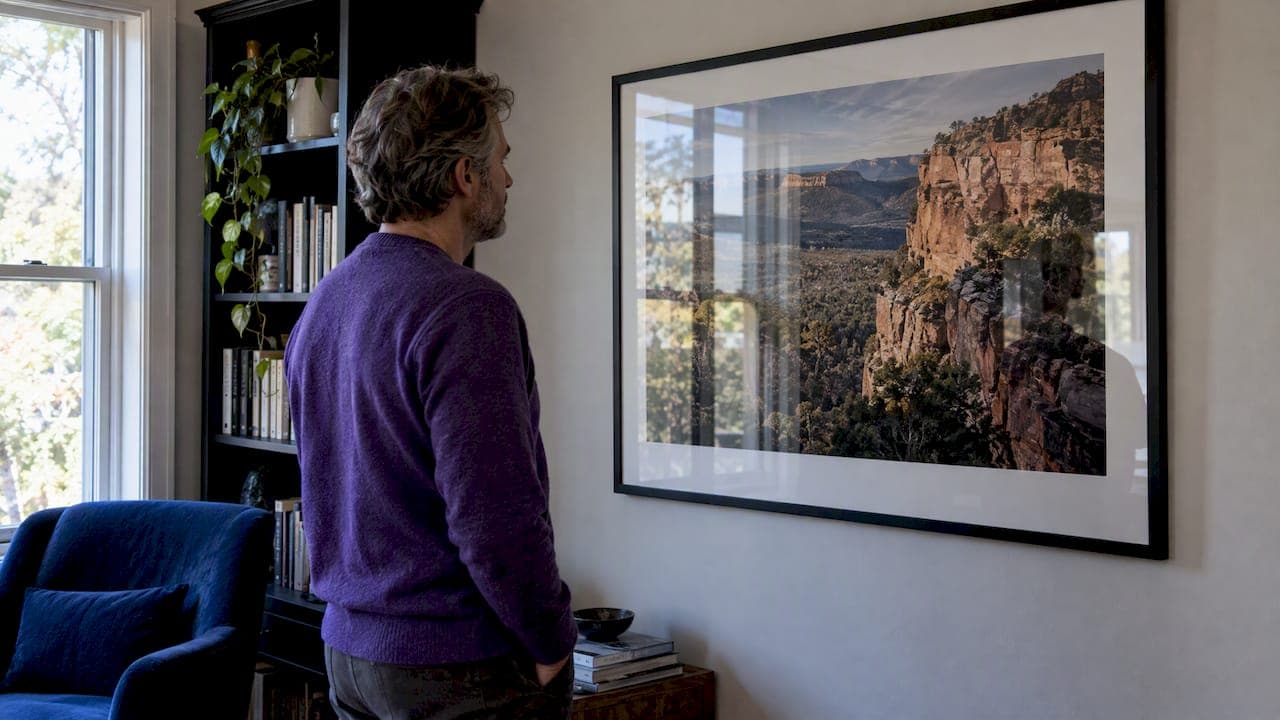
Double-sided anti-reflective glazing, either museum glass or anti-reflective acrylic, combined with smarter lighting and placement gives you the least glare on a framed photo. Non-glare (matte) glazing cuts reflections too, but it often softens fine photographic detail. If you choose acrylic, the print should sit directly behind the sheet so no gap creates haze.
TL;DR:
- For detailed or limited edition prints, choose conservation grade glass or AR acrylic; matte glazing scatters reflections but can soften fine detail.
- For large, transported, or safety sensitive works, AR acrylic weighs less and resists shattering; glass is harder to scratch but heavier and breakable.
- Double sided AR options reduce reflectance to around 1% or less; Museum Glass blocks up to 99% of UV rays, but verify product ratings.
- Aim fixtures about 30° to the wall, use diffused warm LEDs at 2700–3000K with CRI 90 or higher, and move frames away from windows.
- Keep AR acrylic directly against the print to prevent haze, confirm the coated side faces the artwork, and wipe it with a soft cloth.
Table of Contents
- What are the main glazing types, and how do they treat light?
- How do you choose glazing for your framed photographs?
- Which lighting and placement changes cut reflections fastest?
- What installation details prevent haze behind AR glazing?
- How do you clean and maintain anti-reflective glazing?
- How do AR coating technologies compare for framed photos?
- How can you customize lighting for homes and galleries?
- A collector's view on glazing
- How do our acrylic blocks and presentations solve glare and display needs?
- FAQ
- Sources
What are the main glazing types, and how do they treat light?
Glazing is the clear layer in front of your print, and each type handles light differently. Knowing the difference saves you from paying for the wrong fix.
Anti-reflective (AR) glazing carries a thin coating that lets light pass through rather than bounce back. Museum Glass, for example, reduces reflection to below about 1% while keeping transmission above 97% and blocking up to 99% of UV rays. Premium AR acrylic, such as the PLEXIGLAS® Gallery & Museum AR sheet, applies the coating to both sides and reaches around 1% total reflectance.
Non-glare (matte) glazing works differently. Its surface is textured to scatter light, so reflections spread out instead of vanishing. The trade-off is a slight haze, and fine detail in a photograph can look softer.
Standard glass is clear but mirror-like under bright light. Acrylic is lighter and far more impact resistant than glass, which matters for large frames.
Specification references worth knowing:
- Optium Museum Acrylic: double-sided AR, anti-static and abrasion resistant, with conservation-grade UV blocking.
- Museum Glass and Water White Museum Glass: conservation-grade glass, with Water White offering higher transmission.
- UltraVue UV70: a premium anti-reflective glass option for decorative pieces where killing glare is the main goal.
- PLEXIGLAS® Gallery & Museum AR: cast acrylic with light transmission around 99%.
How do you choose glazing for your framed photographs?
Start with what you are framing and where it will hang. A limited edition, high-detail landscape in a bright room deserves museum-grade glass or AR acrylic. Leading museum practice separates "anti-reflective" coatings from "non-glare" textures, and conservation-grade AR acrylic is preferred for detailed photography because textured surfaces can add haze or an "orange peel" look.
Use these criteria to decide:
- Limited editions and high-detail prints: choose museum glass or AR acrylic so every fine line in the print stays visible.
- Large formats, shipping or busy spaces: choose AR acrylic. Its shatter resistance and lighter weight make it safer, and Optium Acrylic is recommended for large, transported or safety-sensitive works.
- Strong light or sunny walls: pick double-sided AR for the lowest reflectance, and verify the UV-block rating. For preservation, look for conservation-grade protection that blocks up to 99% of UV rays. Our guide to UV protection for prints explains why that matters.
- Tight budgets: non-glare glazing may be a lower-cost option, but weigh the softness against the value of the print.
Cost drivers are the material (glass or acrylic), double-sided AR treatment, sheet size and framing labor. Ask a custom framer for quotes on two or three options, and our guide to framing limited edition prints shows what to ask for.
Which lighting and placement changes cut reflections fastest?
You can reduce glare before you spend anything on glazing. These steps work in order of effort:
- Light the frame indirectly. Avoid fixtures that shine straight at the glass. Diffused light produces softer highlights.
- Aim lights at roughly 30° to the wall. This angle sends reflections away from your eye line.
- Choose warm LEDs around 2700–3000K with a CRI of 90 or higher. You get accurate color and gentler glare.
- Move the frame away from windows. Hanging directly opposite a window or glossy surface invites reflections.
- Try a different wall or height. Small shifts change what the glass mirrors.
Pair these fixes with AR glazing and you get the cleanest view. For more on lighting art at home, the guide on lighting art like a museum at home covers the details.
What installation details prevent haze behind AR glazing?
Even the best coating can look cloudy if the frame is built wrong. Gaps between the print and the glazing create haze, so AR acrylic needs the print directly behind it.
- Keep the print against the sheet. With shadowboxes or deep mats, ask your framer about clear spacers or substrates that avoid the soft look.
- Check which side faces the art. On conservation-grade glass, the UV-coated side is often marked on the edge and faces the artwork, while a matte side faces outward. Acrylic usually carries the same protection on both sides, but confirm the manufacturer's guidance.
- Ask about the backing. A clean, flat backing board keeps the print from bowing toward the glazing.
Pro Tip: Ask your framer to confirm which side is AR-treated and to test the piece under your room's lighting before sealing the frame.
How do you clean and maintain anti-reflective glazing?
Coatings last when you treat them gently. Always check the product instructions first.
- Skip ammonia and strong solvents on acrylic. Many AR acrylics clean like glass, but harsh chemicals can cloud the surface.
- Use a soft, lint-free cloth. Abrasive pads leave scratches that show clearly on AR surfaces.
- Reduce dust cling. Acrylic builds static, so use an anti-static cleaner or cloth made for it.
- Call a framer if the coating is scratched. Do not attempt abrasive DIY repairs.
How do AR coating technologies compare for framed photos?
For photographs, the useful comparison is between coating type and the trade-offs each brings, not a brand ranking.
Glass-based AR, such as Museum Glass and Water White variants, offers clear viewing and is more scratch resistant than acrylic. It also weighs more and can break, so it suits wall art that stays put. Water White raises transmission further, which helps with rich color and deep shadows.
Acrylic-based AR, such as Optium Museum Acrylic and PLEXIGLAS® Gallery & Museum AR, trades a little hardness for safety and size. It is lighter and shatter resistant, and Optium adds anti-static and abrasion-resistant properties. Always compare numbers from each maker's own spec sheet, since test methods vary.

Non-glare finishes use texture rather than a coating. They are the budget option, yet the softening they cause makes them the weakest match for detailed landscape prints.
How can you customize lighting for homes and galleries?
Once the basics are in place, tune the setup to your space.
Use dimmable fixtures so you can lower intensity until highlights disappear without losing color. Choose adjustable track or picture lights that let you nudge the beam angle a few degrees at a time. Walk across the room after each tweak, because glare changes with your viewing position.
In a gallery run, stagger the fixtures so no two beams cross the same frame, and keep general ambient light low so the artwork stands out. At home, add sheer curtains or blinds to soften window light during bright hours. Wall-washing the whole wall evenly cuts the contrast that makes reflections visible. Finally, check the hang height: the center of the frame at eye level keeps your sight line away from the brightest reflection.

A collector's view on glazing
For limited editions, I choose conservation-grade glazing every time, because clarity and protection matter more than saving a little on the frame. The acrylic presentation options we offer provide a way to display photographs. Our gallery-grade framing essentials lay out the thinking, and you are welcome to contact the gallery for advice on your own pieces.
— Mark
How do our acrylic blocks and presentations solve glare and display needs?
Our acrylic blocks and limited edition prints are ways to display a photograph. They give collectors options for displaying their photographs. Read about the UV filtering in our photo blocks, then see our acrylic blocks at $295 each, or browse our limited edition prints. Contact us with any framing questions.
FAQ
Is it possible to get rid of glare in a photo?
You can cut glare dramatically but rarely erase it entirely. Double-sided anti-reflective glazing reduces reflection to around 1% or less, and moving lights and the frame away from windows handles most of the rest.
Is there non-reflective picture frame glass available?
Yes. Anti-reflective museum glass and AR acrylic are made for this, and non-glare matte glass is also sold. For detailed photos, AR glazing keeps images sharper than matte finishes, which can add haze.
How much does non-reflective glass cost?
Cost depends on material, double-sided AR treatment, sheet size and framing labor. Acrylic and glass differ in price, so ask a custom framer to quote several options for your frame size.
Should framed art have glass?
Yes, glazing protects a print from dust, handling and light damage. Conservation-grade glass or acrylic that blocks up to 99% of UV rays adds protection for prints you want to preserve.
Sources
- Optium Museum Acrylic® | Anti-Reflective Conservation Acrylic | Tru VueOptium
- Museum Glass® | Anti-Reflective Conservation Glass | Tru Vue
- Gallery & Museum Anti Reflective Acrylic
- Optium Acrylic® | Anti-reflective | Tru Vue®