
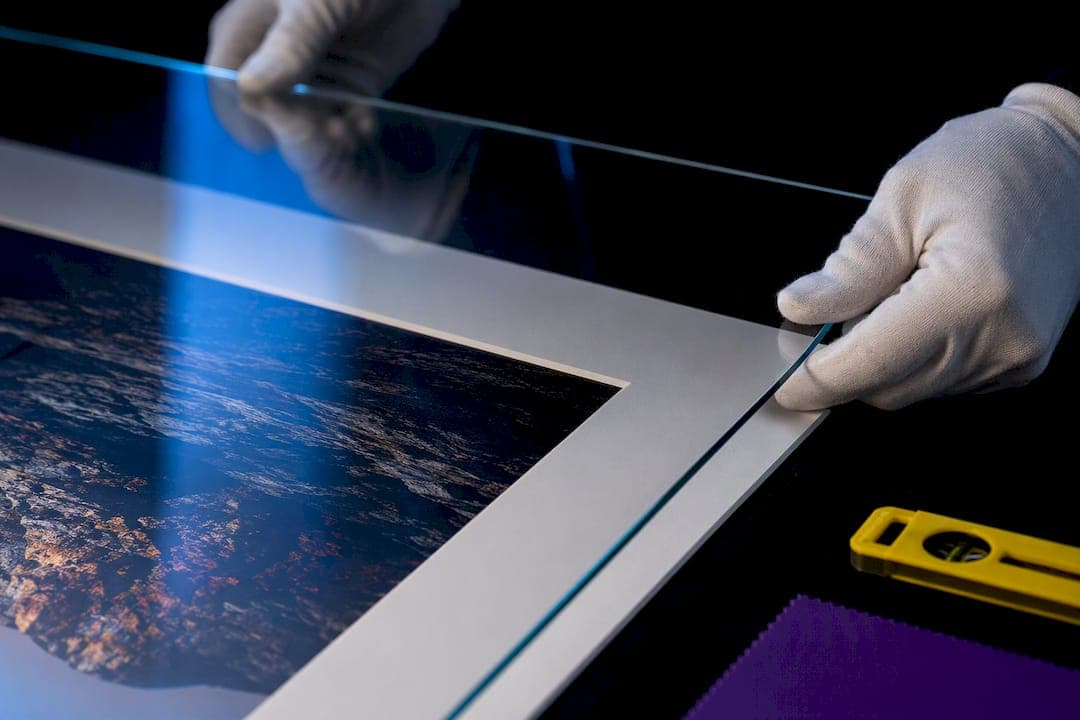
The most effective way to protect a print long term combines three elements working together: conservation-grade glazing (museum glass or acrylic), disciplined control of visible light exposure, and archival matting and mounting. Each layer covers a gap the others leave open. Glazing filters ultraviolet radiation, light management limits the cumulative exposure that drives fading even when UV is blocked, and archival mounting keeps the print itself chemically stable. The sections below walk through how to choose, verify, and maintain each layer.
TL;DR:
- UV filtering products should block at least 99% of UV radiation in the 300-380 nanometer range to meaningfully slow ink and paper deterioration.
- Managing total light exposure with controlled lighting, timers, and blinds is crucial because cumulative lux-hours often cause more damage than peak brightness.
- Acid-free, buffered mounting materials and proper spacing prevent chemical migration and condensation that can yellow or embrittle the print over decades.
- UV filters and glazing generally last 15 to 20 years before effectiveness diminishes, requiring periodic inspection and possible replacement.
- For long-term preservation, store unframed prints in acid-free boxes and avoid hanging valuable pieces directly in high-light areas or near heat sources.
Table of Contents
- Conservation glass, museum acrylic and UV-filtering films compared
- How lux and cumulative light exposure quietly fade your prints
- Archival matting, backing and mounting that limit long-term damage
- A buyer's checklist for verifying UV protection claims
- How long UV films and glazing last, and when to replace them
- Practical protection notes from the studio
- Which materials and prints actually need UV protection
- How different printing inks respond to UV exposure
- Storing and displaying prints so protection actually holds
- Humidity and temperature swings that shorten a print's life
- Display versus conservation: a realistic trade-off
- How Mark Gray helps you protect and display your prints
- Sources
- FAQ
Conservation glass, museum acrylic and UV-filtering films compared
Conservation-grade glazing is the first line of defense for any print you plan to display long term. Products in this category commonly cite blocking up to 99% of UV radiation in the 300 to 380 nanometer range, and reputable manufacturers reference ISO 18902 and ISO 18916/PAT testing to support those figures.
Up to 99% UV block is the benchmark you should look for on a conservation acrylic product page, where specifications typically also cover light transmission and reflection values. That level of filtering meaningfully slows ink and paper degradation, though it does not stop the visible light damage covered in the next section.
Glass and acrylic each suit different situations:
- Glass offers superior clarity and scratch resistance but is heavy, fragile, and less practical for oversized prints.
- Acrylic is lighter and shatter resistant, making it the standard choice for large-format or high-traffic gallery walls.
- UV-filtering window film is a reasonable retrofit for existing frames or windows where reglazing isn't practical, though it degrades faster than glazing and needs periodic replacement.
Coated glass usually has the UV layer on one side only, and your framer should tell you which face goes toward the artwork. Conservation acrylic, by contrast, generally performs the same regardless of orientation.
How lux and cumulative light exposure quietly fade your prints
UV filtering solves only part of the problem. Visible light is often the dominant driver of color fading in photographic prints, and conservation research on photographic preservation makes clear that UV protection has to be paired with total light exposure management, not treated as a standalone fix.
The relevant measure here is lux-hours: light intensity (lux) multiplied by the number of hours a print is exposed. A print lit at moderate intensity for years accumulates the same damage as a brighter light for a shorter run, which is why conservation guidance on light damage treats cumulative exposure, not peak brightness, as the number that matters.
Practical fixes are usually simple:
- Move light-sensitive prints away from direct sun or south-facing windows.
- Use LED fixtures with a high CRI (90 or above) rather than fluorescent or older halogen lamps, which run hotter and shift color rendering.
- Fit blinds or UV films on nearby windows and consider timers or motion sensors so gallery lighting isn't running at full lux around the clock.
Pro Tip: Track how many hours a day your most valuable print sits under direct light, then work on cutting that number before you worry about anything else.
For collectors setting up a display room from scratch, our guide on wall art lighting covers lux targets and fixture placement in more detail.
Archival matting, backing and mounting that limit long-term damage
Glazing and lighting protect a print from the outside, but the mounting materials touching the print itself matter just as much. Acid-free, buffered mats and stable, lignin-free backing boards prevent the slow chemical migration that yellows and embrittles paper over decades.
- Ask your framer for acid-free, buffered matting rather than standard retail board, which often contains lignin that degrades and discolors over time.
- Use a spacer or non-contact mounting whenever the print sits close to glazing, especially in humid climates, to stop condensation from touching the print surface directly.
- Skip spacers only for dry, climate-controlled rooms where condensation risk is genuinely low, since unnecessary spacing can also trap dust against the mat edge.
- Seal the frame package with edge tape and a rigid backing board to keep pollutants, insects, and moisture out.
- Use hanging hardware rated for the frame's weight, particularly for larger acrylic-glazed pieces, which are lighter than glass but still substantial.
Our step-by-step framing guide and the mounting options breakdown both go deeper into when non-contact mounts earn their cost and when a simpler approach is fine.
A buyer's checklist for verifying UV protection claims
Marketing language around UV protection varies widely, so it helps to know exactly what a credible product page should state before you buy.
- Look for a specific percentage and wavelength range, such as blocking up to 99% of UV in the 300 to 380 nanometer band, rather than a vague "UV protective" label.
- Check for a reference to ISO 18902 or a passed Photographic Activity Test (PAT/ISO 18916), which confirms the material won't chemically harm photographs in contact with it.
- Ask your framer directly which side of coated glass faces the artwork, since getting this backward reduces the glazing's effectiveness.
- Request documentation or a warranty statement if you're glazing a high-value limited edition print, and don't hesitate to ask for a UV transmission test result on unusual or unbranded materials.
How long UV films and glazing last, and when to replace them
Glazing and film don't protect forever. High-quality UV-filtering films typically remain effective for roughly 15 to 20 years depending on light exposure, while fluorescent lamp sleeves used for the same purpose tend to last only 5 to 10 years.
Sunlight intensity, humidity, and abrasion from cleaning all shorten those windows.
- Clean coated glass or acrylic with a soft, lint-free cloth and a mild, ammonia-free cleaner, applied to the cloth rather than sprayed directly onto the surface.
- Never use abrasive cloths or paper towels, which can scratch UV coatings and dull clarity over time.
- Inspect prints periodically for fading at the edges compared to areas that were covered by the mat, an early warning sign that light exposure is outpacing the glazing's protection.
- Call in a professional conservator if you see cockling, discoloration, or foxing, since these usually indicate deeper material or environmental problems rather than simple light fading.
Practical protection notes from the studio
When we glaze limited edition prints for collectors, the choice between conservation acrylic and anti-reflective glass usually comes down to the room. Large statement pieces in bright, high-traffic spaces get acrylic for its shatter resistance and lighter weight. Smaller works in controlled, gallery-style rooms often go under anti-reflective glass for the extra clarity.
- Match glazing choice to the room's foot traffic and light exposure, not just the print size.
- Favor acrylic for anything shipped internationally or hung above eye level, where weight and breakage risk matter more.
- Reserve anti-reflective glass for quieter, climate-controlled display spaces where clarity matters more than shatter resistance.
Readers who want the fuller process behind these calls can see our notes on archival print longevity and our broader collector's guide to caring for fine art photography prints.
Which materials and prints actually need UV protection
Not every printed image faces the same risk. Traditional silver-based black and white photographs are relatively stable, but color materials, including chromogenic prints, dye-based inkjet prints, and many pigment prints on uncoated papers, are far more vulnerable to both UV and visible light.
Watercolor papers and fine art cotton rag stocks used for giclée prints absorb light differently than resin-coated photographic paper, which changes how fading shows up over time, often as color shifts before any visible paper damage appears. Large-format prints displayed in direct sun, whether on canvas, metal, or acrylic-mounted photographic paper, face compounded risk simply because they spend more total hours under strong light in typical living or office spaces.
Prints on newsprint-style or non-archival stock, sometimes used for proofs or budget reproductions, are especially fragile and will yellow and fade far faster than archival cotton rag or resin-coated papers regardless of glazing quality. If you're framing anything printed on unknown or low-cost stock, treat UV protection as a partial fix rather than a complete solution, since the base material itself may not hold up.

How different printing inks respond to UV exposure
Ink chemistry matters as much as paper choice. Dye-based inks, common in consumer inkjet printers and older photographic processes, tend to be the most UV-sensitive, fading noticeably faster than other options when exposed to sunlight or bright display lighting.
Pigment-based inks, standard in most professional fine art and giclée printing today, hold color substantially better under light exposure because pigment particles sit on the paper surface rather than dissolving into it the way dyes do. That said, pigment inks are not immune. Certain colors, particularly some reds and magentas, still fade faster than others even within a pigment set, which is why conservators recommend UV-filtering glazing regardless of which ink type was used.

Traditional silver halide photographic prints respond differently again, generally showing strong resistance to fading under normal display conditions but remaining vulnerable to humidity and handling damage rather than light alone. Knowing which ink and paper combination you're framing helps set realistic expectations: a pigment print behind conservation acrylic will outlast a dye-based print behind the same glazing by a wide margin.
Storing and displaying prints so protection actually holds
Where you store prints matters as much as how you frame the ones on display. Unframed prints should be kept flat in archival, acid-free boxes or sleeves, away from direct light, and ideally in a room with stable temperature and humidity rather than an attic, garage, or basement that swings with the seasons.
For displayed prints, position matters more than most collectors expect. Avoid hanging valuable pieces directly across from windows or under skylights, even with UV-filtering glazing in place, since visible light still accumulates. Rotate prints out of display periodically if you own several pieces you love equally, giving each one recovery time out of the light rather than leaving one piece under constant exposure for years.
- Store unframed prints flat in acid-free archival boxes rather than rolled or stacked loosely.
- Keep both stored and displayed prints away from heating vents, exterior walls, and direct sun exposure.
- Handle prints by the edges or with clean cotton gloves to avoid oils and fingerprints transferring to the surface.
The partner studio's home care guide covers additional day-to-day handling tips that pair well with the framing and storage practices above.
Humidity and temperature swings that shorten a print's life
UV and visible light get most of the attention, but humidity and temperature quietly do just as much damage over time. High humidity encourages mold growth, cockling, and adhesive failure in mounts, while overly dry conditions can make paper brittle and prone to cracking at fold lines or frame edges.
Temperature swings are just as disruptive, particularly for prints hung near exterior walls, above fireplaces, or under skylights where heat builds up during the day and drops overnight. That cycling stresses both the paper and the adhesives holding a mount together, even when the glazing and matting are otherwise archival grade.
A stable room, generally kept in a moderate, consistent temperature and humidity range rather than left to fluctuate with the seasons, does more for long-term print health than any single glazing upgrade. If you live somewhere with strong seasonal humidity shifts, a small dehumidifier or humidifier in the display room is a practical, low-cost way to keep conditions steady year-round.
Display versus conservation: a realistic trade-off
Most collectors want a print that looks its best today and still looks good in twenty years, and those goals occasionally pull in different directions. Anti-reflective glass shows more true color under gallery lighting, while acrylic survives shipping and high-traffic rooms better. There's no universally correct choice, only the right compromise for your space and how much risk you're willing to accept for a better view.
— Mark
How Mark Gray helps you protect and display your prints
Every Limited Edition Print we produce is made to hold up under the display practices outlined above, and we're glad to talk through glazing and framing choices with anyone who buys one. If you'd rather build your own eye for print quality and light before you buy, our 1 Day Photography Courses and Photography Tours cover the fundamentals that make a print worth protecting in the first place.
- Browse Open Edition Prints or Limited Edition Prints for archival-ready photography.
- Ask about framing and glazing recommendations when you order, whether you're mounting on acrylic or behind conservation glass.
- Book a 1 Day Photography Course to learn print handling and display fundamentals firsthand.
Reach out through Markgray if you'd like framing guidance before your next print arrives.
Sources
- Conservation Clear® Acrylic | 99% UV Protection | Tru Vue®
- 02-04 Protection from Light Damage (NEDCC preservation leaflet)
- Wilhelm imaging research (archive) — guidance on photographic preservation
FAQ
What is the best UV protection for artwork?
Conservation-grade glazing that blocks up to 99% of UV in the 300 to 380 nanometer range is the current benchmark, whether in glass or acrylic form. Pair it with visible light control, since UV blocking alone doesn't stop the fading caused by ordinary room lighting.
How can I protect my photos from UV light damage?
Use UV-filtering glazing on framed photos, keep them out of direct sunlight, and limit total display time under bright light, since cumulative exposure drives fading as much as intensity does. Archival mounting with acid-free mats and stable backing boards also protects against related chemical damage.
Is UV print permanent?
No print, regardless of glazing, is permanent, and UV-filtering materials themselves lose effectiveness over time. Quality UV films typically remain effective for roughly 15 to 20 years depending on light exposure, so periodic testing or replacement is part of proper care.
What are UV prints?
The term usually refers to prints displayed behind or produced with UV-protective materials designed to slow fading from ultraviolet light. In a conservation context, it more specifically means pairing a print with UV-filtering glazing, such as conservation glass or museum acrylic, that blocks harmful wavelengths before they reach the ink and paper.