

A well-made pigment giclée, framed under UV-filtering glazing and kept in stable indoor conditions, commonly earns display or dark-storage ratings on a century scale. Dye-based or unprotected prints, by contrast, often show visible fading within a few decades of regular display. Every one of those numbers assumes a specific named ink-and-paper pairing tested under defined lab conditions, not a generic promise stamped on a product box.
TL;DR:
- Pigment-based prints on archival paper framed with UV-filtering glazing can last over a century under ideal conditions, while dye-based prints typically fade within a few decades.
- Light exposure, especially ultraviolet radiation, is the most significant factor affecting print longevity, making placement and window treatments critical.
- Proper framing with acid-free mats, stable storage humidity between 30% and 40%, and limited handling can significantly extend a print’s lifespan.
- Longevity claims vary depending on the specific ink and paper pairing and whether tested under controlled lab conditions or real-world environments—always verify test data and assumptions.
- Most serious preservation involves controlled lighting, environmental stability, and careful handling; casual collectors can prioritize UV glazing and light placement for decades of vibrant display.
Table of Contents
- What Determines Archival Print Longevity
- How Long Different Print Types Actually Last
- How to Prolong the Life of an Archival Print
- How to Interpret Permanence Ratings Without Getting Fooled
- Behind This Guide: Mark Gray's Printing Standards
- How Protective Should You Be? A Collector's Checklist
- Where to Find Prints Built for the Long Term
- Sources
- FAQ
What Determines Archival Print Longevity
Print longevity comes down to five interacting forces, and only some of them are within your control once a piece leaves the printer.
Light does the most visible damage. Ultraviolet radiation and even the visible spectrum break down colorants over time, and permanence labs express this as lux multiplied by hours of daily exposure. That single variable, more than any other, is why the same print can be rated for 100 years on one wall and a fraction of that on a sun-facing one.
Temperature and relative humidity work together. Conservation guidance recommends keeping relative humidity between roughly 30% and 40%, since anything above 60% invites mold growth and can cause ink migration within the paper fibers. Fluctuation matters as much as the average. A print that swings between a humid summer and a dry, heated winter stresses the paper and image layer more than one held at a steady, slightly imperfect level.

Airborne pollutants are the quiet threat most collectors never think about. Ozone and common urban gases accelerate fading and yellowing, and sealed glazing cuts that exposure dramatically compared to an open, unframed print pinned to a wall.
Physical handling and paper chemistry round out the list:
- Abrasion from glazing contact, careless handling, or repeated framing and unframing
- Lignin content, buffering, and coatings that either slow or accelerate paper breakdown
- Optical brightening agents, which can shift color unevenly as they decay at different rates across paper types
Choosing archival quality paper with the right cotton or alpha-cellulose base, as detailed in this comparison of photographic and fine art paper, addresses several of these risks at once.
How Long Different Print Types Actually Last
Numbers thrown around casually, like "100 years" or "archival forever," mean almost nothing without the test conditions attached. Here is what the ranges genuinely represent once you account for real assumptions.
- Pigment giclée (inkjet) on archival paper: Decades to over 100 years displayed under glass; this is the combination Wilhelm Imaging Research and independent tests most often rate at the top of the scale.
- Dye-based inkjet: Often tens of years under normal display, since dye colorants are considerably more sensitive to light and airborne gases than pigment.
- Chromogenic C-type prints: Moderate longevity, generally shorter than top-tier pigment systems under identical display conditions, though dark storage extends life considerably.
- Traditional silver-gelatin prints: Can be very long-lived in dark storage when processed and stored correctly, but display life depends heavily on paper base and finish.
Change either variable and the estimated years shift quickly.
The ink-and-paper pairing behaves like a chain: the print's overall life is set by its weakest degradation mechanism, not its strongest one. Swap in a third-party ink or an unlisted paper, and a manufacturer's tested lifetime claim no longer applies. Choosing a type of limited edition print with a documented ink-and-paper combination gives you a real number to work from instead of a guess.
How to Prolong the Life of an Archival Print
Preservation is mostly a matter of sequencing. Handle the biggest risks first, then refine.
- Frame with UV-filtering glazing. Standard glass blocks little ultraviolet light; UV-filtering acrylic or glass blocks the majority of the damaging wavelengths before they ever reach the image.
- Use a rag mat and spacers. A buffered, acid-free mat keeps the print from touching the glazing directly, which prevents moisture transfer and physical contact damage over years of display. Full framing guidance for limited edition prints walks through the materials worth specifying.
- Hinge properly. Japanese tissue hinges with wheat starch paste are reversible and archival; pressure-sensitive tapes and adhesives are not, and they cause staining that no amount of care afterward can undo.
- Choose your wall carefully. Keep prints off south-facing or direct-sun walls, rotate pieces out of high-light rooms periodically, and treat any wall under a skylight as a high-risk zone regardless of how attractive the light looks.
- Store unframed prints flat, in archival enclosures. Boxes and sleeves that meet ISO 18902 or pass the Photographic Activity Test won't off-gas the compounds that damage image layers over time. Interleave with glassine and avoid rolling except for short-term transport.
- Hold storage RH near 30 to 40 percent with stable temperature, and treat any spike above 60% as an active mold risk requiring immediate correction.
- Handle with clean hands or cotton gloves, support prints by their edges, and pack them rigid and moisture-sealed for any transport.
Pro Tip: If a print gets wet or shows the faint musty smell of early mold, don't wait to "see how it develops." Air-dry it flat, away from direct heat, and consult a paper conservator within 48 hours. Waiting even a week can turn a fixable spot into permanent staining. For persistent humidity problems in a storage space, practical mold-prevention steps for paper collections cover the same principles conservators apply to prints.
A collector's guide to caring for fine art photography prints expands on storage enclosures and long-term handling routines in more depth than a single checklist can.
How to Interpret Permanence Ratings Without Getting Fooled
Two very different tests get lumped together under the word "archival," and knowing the difference protects you from marketing language dressed up as science.
Accelerated light testing exposes a print to intense light over a short period to predict fading under display conditions. Arrhenius dark-storage testing instead raises temperature across multiple samples to model chemical degradation rates, then extrapolates back to normal ambient conditions. Claims beyond 100 years generally require this second method, and it only holds true when the print stays protected from open air, meaning boxed or sealed behind glazing.
Independent authorities like Wilhelm Imaging Research and Aardenburg Imaging publish their methodology and specific test endpoints rather than a vague marketing number. Their Display Permanence Ratings translate accelerated results into real years under stated lux and hour assumptions, which is exactly the detail a generic "archival ink" label leaves out.
Before trusting any longevity claim, ask the seller these four questions:
- What specific ink is named, and from which manufacturer?
- What specific paper is named, and is it the tested combination?
- Which lab produced the test data, and can you see the report?
- What display or storage assumptions back the number?
If a seller can't answer at least three of those, treat the longevity claim as marketing copy rather than data. Learning to assess photography print quality more broadly makes this kind of question-asking second nature.
Behind This Guide: Mark Gray's Printing Standards
Mark Gray is an internationally recognized Australian landscape photographer whose limited-edition prints are sold across Australia, New Zealand, Norway, Iceland, French Polynesia, Spain, and the United Kingdom. That work depends on getting archival print longevity right, not just talking about it.
- How the fine art printing process works, covering the production and quality-control steps behind each edition
- Large format printing built to last 100 to 200 years, detailing the material choices that support that range
- Displaying large format prints, for placement and lighting decisions once a piece is on your wall
Every limited-edition print sold follows conservation-grade standards, and advice on framing choices for a specific piece is available on request.
How Protective Should You Be? A Collector's Checklist

Museum-grade preservation, cold dark storage, sealed archival boxes, minimal display time, buys maximum longevity at the cost of never seeing the work. Most collectors don't need that trade-off. If your goal is decades of vibrant display rather than pure archival preservation, prioritize UV glazing and light placement over anything else. If you're building a serious collection with resale or legacy value in mind, that's a different calculation, one worth understanding through the lens of print investment fundamentals.
This week, check three things: your framing glazing, your wall's light exposure, and whether your seller can name the ink and paper behind any longevity claim.
— Mark
Where to Find Prints Built for the Long Term
Every print in the Mark Gray Gallery collection is produced with the ink, paper, and framing standards this guide describes, so you're not left guessing which combination earns its longevity claims. If you're weighing a piece for a specific wall or climate, the gallery can walk you through framing choices, from UV glazing to matting, before you commit to a purchase.
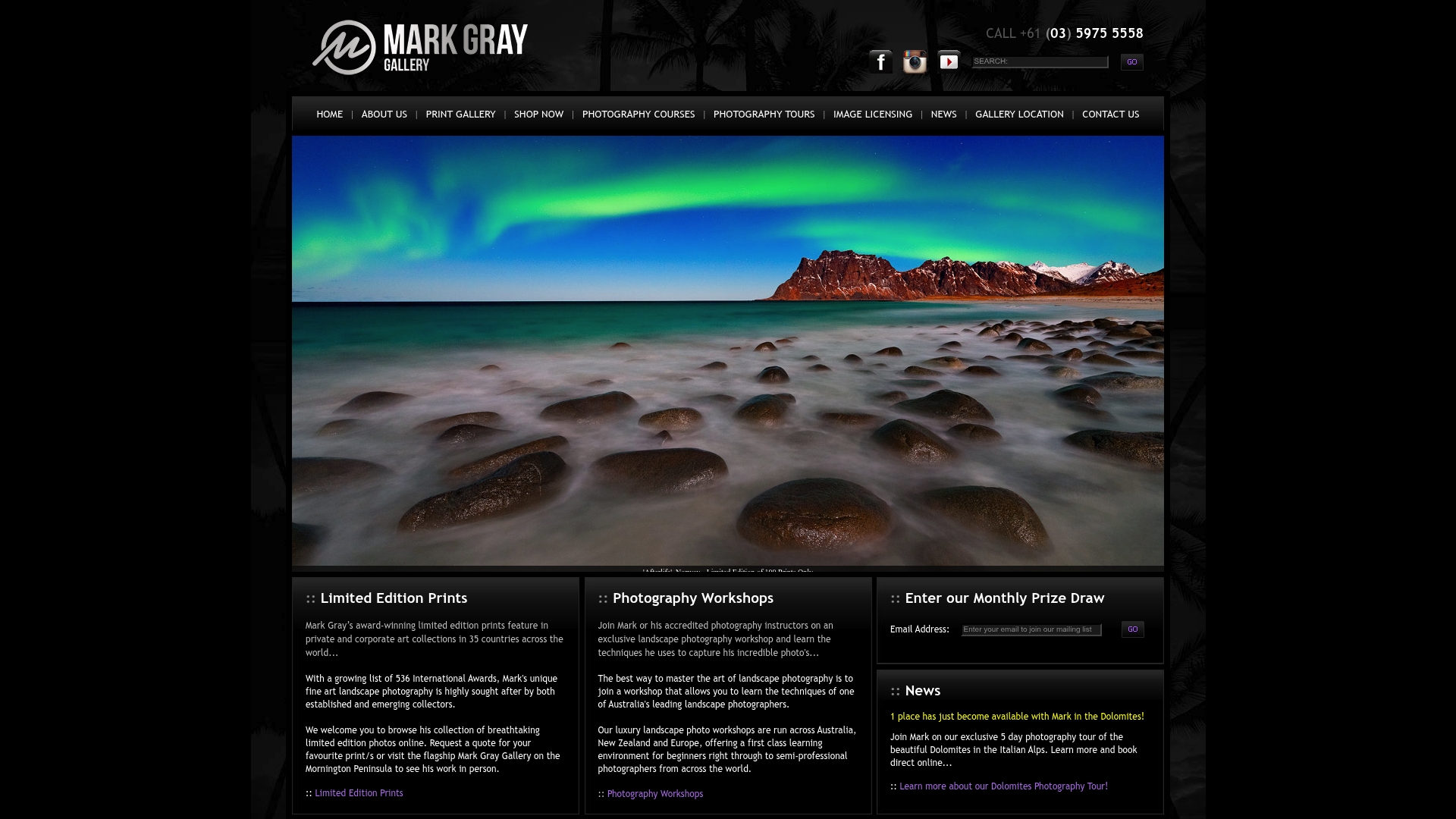
Beyond prints, the same attention to material quality carries through the gallery's photography workshops and tours, where you can learn firsthand how these landscape images are captured and printed. If you're ready to see a collection or need advice on framing a specific piece for long-term display, visit to browse available editions and request guidance directly.
Sources
- WIR Canson fine art and photo papers final report (Wilhelm Imaging Research)
- 5.4 Creating long-lasting inkjet prints — NEDCC
- Canon CHROMALIFE 100/100+ | Canon U.S.A., Inc.
FAQ
How long do archival prints last?
A quality pigment print on archival paper, framed under UV glazing and kept in stable conditions, can carry ratings from several decades to over 100 years; dye-based prints under regular display often last only tens of years.
What makes a print "archival" in the first place?
An archival print pairs a stable colorant, typically pigment ink, with an acid-free, buffered paper and has been tested under named conditions by an independent lab rather than simply labeled "archival" without supporting data.
Is a 10-year-old printer still good for archival prints?
The printer's age matters less than whether it can still lay down the specific OEM ink formulation it was designed for; consistent output and clean nozzles matter more than the calendar year of manufacture.
How long can a printer sit without being used?
Extended idle periods risk dried or clogged ink lines, especially with pigment inks, so printers left unused for many weeks often need a cleaning cycle or nozzle check before producing gallery-quality output again.
Why do longevity claims vary so much between sellers?
Claims depend on the exact ink-and-paper pairing tested, the lab that ran the test, and whether the rating covers display conditions or dark storage, which is why asking for named test data matters more than the headline number.