
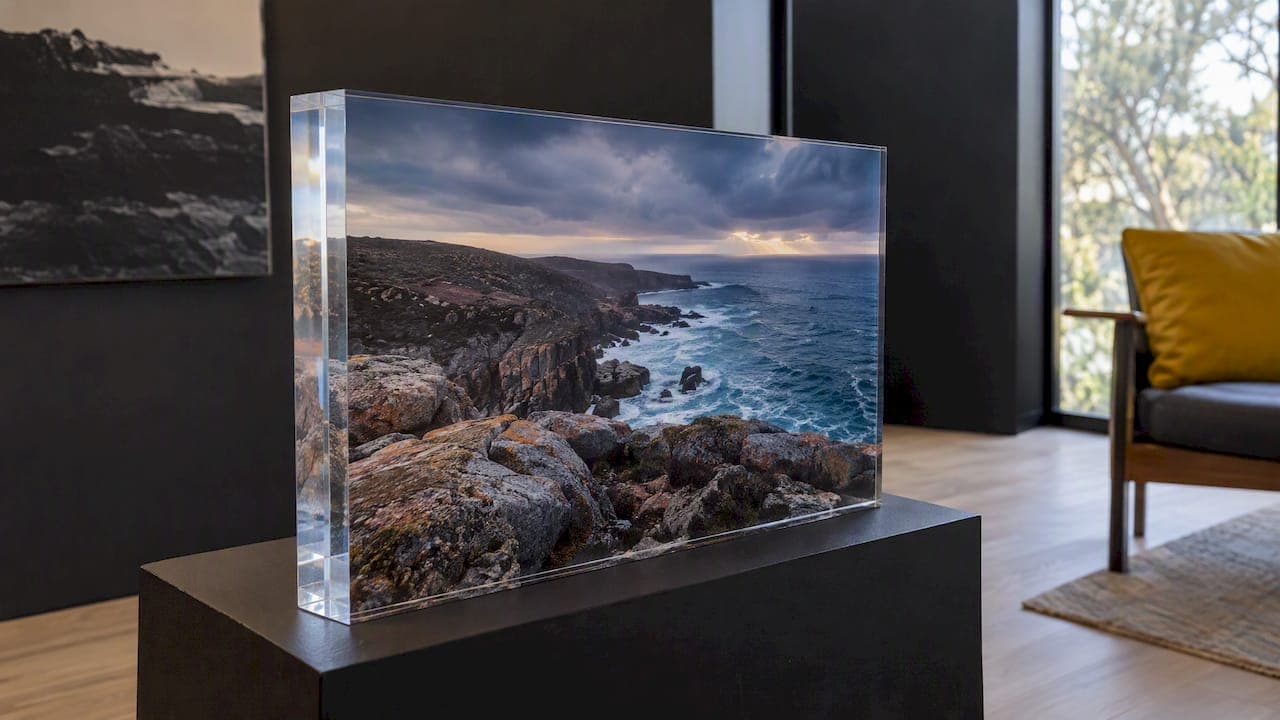
A UV-printed acrylic photo block is the best freestanding option for a vibrant, gallery-style photo display or gift. UV-curable inks, white-base printing, and ACRYLITE® UV-filtering acrylic combine to produce rich color, real depth, and a finish that holds up for years. The main things to check before you order are image resolution and where the block will sit, since harsh direct sunlight will fade even a well-made print over time.
TL;DR:
- Using UV-filtering acrylic like ACRYLITE® OP3 significantly reduces UV light transmission, helping to prevent photographic fading over time.
- Thicker acrylic in the 18mm to 25mm range enhances depth effects but adds weight and cost, while thinner options around 7mm to 10mm cost less and sit flatter.
- White-ink opacity and proper adhesion testing are critical for achieving vibrant colors and durability, especially on clear acrylic with white bases.
- Placement affects longevity; avoid direct sunlight on displays, and choose UV-filtering acrylic or test samples if the piece will sit in bright or sunlit areas.
- High-resolution images with accurate color profiles and proper cropping are essential to ensure sharpness and color fidelity, especially for large or detailed prints.
Table of Contents
- What a UV-printed acrylic photo block actually is
- How UV printing works and what to ask your printer
- Materials, thickness, and size options to consider
- Keeping colors vibrant: care and UV protection
- Choosing options and preparing your files for the best result
- Why photographer-level capture and print workflows matter
- What buyers get wrong about UV-printed acrylic blocks
- Ordering a Mark Gray acrylic block for your next gift
- FAQ
- Sources
What a UV-printed acrylic photo block actually is
A UV-printed acrylic photo block starts as a photograph printed directly onto, or just beneath, a slab of clear acrylic using UV-curable inks that harden instantly under ultraviolet light. The result looks nothing like a standard framed print. Light passes through the clear acrylic, refracts, and bounces back off the printed layer, giving the image a sense of depth that makes a landscape or portrait feel like it is floating inside the glass.
That optical effect is the whole point of choosing acrylic over paper and frame. Buyers notice the glossy surface, the way colors seem to glow, and the sense that the photo has real dimension rather than sitting flat behind glass.
Common traits buyers look for include:
- A polished freestanding base that lets the block stand on a desk, mantel, or shelf without extra hardware.
- Crystal-clear edges that catch light and add to the three-dimensional illusion.
- A finish suited to both personal keepsakes and corporate or wedding gifts, since the format feels more modern than a traditional frame.
How UV printing works and what to ask your printer
Getting from a digital photo to a finished block is a fairly short process, but each step affects the final look.
- The file is prepped and color-corrected, then checked against the acrylic's intended thickness and finish.
- A UV inkjet printer applies the image directly to the acrylic surface, laying down a white base layer first if the piece will be printed on clear or tinted material.
- UV lamps cure the ink almost immediately, locking in color and hardness rather than letting it air-dry over hours.
- Depending on the supplier, a protective varnish or a second acrylic layer is added to sandwich the print and shield it from scratches.
The white base ink matters more than most buyers expect. Clear acrylic lets light through, so without an opaque white layer behind the colors, images look washed out and dull. A denser white base produces punchier color.
Front, reverse, and double-sided printing each have trade-offs. Printing on the front keeps texture visible but exposes ink to handling. Reverse printing, where the image sits behind the acrylic and is viewed through the clear face, protects the ink and boosts the glossy depth effect, which is the finish most UV-printed acrylic photo blocks use. Sandwiched or double-sided prints add durability and weight but cost more.

Before ordering, ask your printer about white-ink opacity, whether they test ink adhesion, and whether sandwiching or varnish is available. Production methods like these, including white ink density and adhesion testing, are standard questions covered by Australian printing production guides.
Pro Tip: Ask for a small test swatch in your chosen finish before committing to a large or multi-block order, especially if your photo has deep shadows or skin tones that need accurate color.
Materials, thickness, and size options to consider
Thickness changes both the look and the price of a block. Thinner pieces, often in the 7mm to 10mm range, sit flatter and cost less, while thicker blocks around 18mm to 25mm give a more pronounced depth effect because light has further to travel before it hits the printed layer.
Material choice matters just as much. Standard clear extruded acrylic is the common default, while UV-filtering gallery acrylic such as ACRYLITE® OP3 is formulated to absorb close to 99.7% of UV light between 200 and 390 nanometers, according to ACRYLITE's own technical brief. That level of filtering is the same reasoning behind UV-protective picture-frame glazing, and it is worth requesting if your block will sit somewhere with regular light exposure.
Things that shape your final choice:
- Thickness, which affects both the depth illusion and how heavy the piece feels.
- Aspect ratio, since square and rectangular crops display differently as freestanding pieces versus wall-mounted ones.
- Edge finish, usually a polished edge for a premium look.
- Pricing factors, including white-ink coverage, sandwiched layers, and overall size.
Keeping colors vibrant: care and UV protection
Indoor display still exposes photos to UV light, just at lower intensity than outdoors. ARPANSA, Australia's radiation protection authority, tests how much UV radiation passes through films, glass, and plastics, and its testing confirms that different materials block UV to very different degrees. That is precisely why UV-filtering acrylic exists as a separate product category from standard clear sheet.
UV-filtering acrylic such as ACRYLITE® OP3 absorbs a very high percentage of UV light in the 200 to 390 nanometer range, which is the band most responsible for fading photographic inks over time, according to ACRYLITE's technical data. For a deeper look at how fading happens and what slows it down, our piece on archival print longevity covers the broader picture.
Simple care habits go a long way:
- Clean with a soft microfiber cloth and a dedicated acrylic cleaner, never a paper towel or household glass spray.
- Avoid abrasive cloths or dry wiping, since acrylic scratches more easily than glass.
- Keep blocks away from windowsills that receive direct afternoon sun, and prefer LED lighting with a lower UV output over halogen.
If your display spot gets regular sunlight, ask your printer directly whether UV-filtering acrylic or a sample test swatch is available before you commit to a large order.
Choosing options and preparing your files for the best result
A little preparation before ordering saves disappointment later. Walk through these steps first.
- Decide where the block will live, since a sunny windowsill calls for UV-filtering acrylic while a shelf or desk is more forgiving.
- Check your photo's resolution against the block size, aiming for around 300 dpi at the finished print dimensions for small to medium blocks.
- Review the crop and any edge bleed, since acrylic blocks often lose a small margin at the edges during trimming.
- Confirm the color profile your printer expects, and request a digital proof if your image has subtle tones like skin, sky gradients, or deep shadow detail.
- Ask about turnaround time and packaging, particularly if the block is a gift and needs to arrive by a specific date.
Our guide on how to assess photography print quality walks through resolution and color checks in more depth if you want a fuller checklist before sending a file off.
Pricing generally scales with size, thickness, white-ink coverage, and whether the print is sandwiched between two layers of acrylic. A custom quote is usually the only accurate way to compare suppliers once your specifications are set.
Why photographer-level capture and print workflows matter
A UV-printed acrylic block only looks as good as the file behind it. Dynamic range, accurate color management, and careful exposure control at the moment of capture determine whether shadows hold detail and skies avoid harsh clipping once the image is blown up and lit from behind clear acrylic.
Photographer Mark Gray has written extensively on print mounting and lighting choices, including guidance on acrylic face mounting and the lighting conditions that keep displayed prints looking their best. Images with strong depth cues, layered foregrounds, or a clear focal point tend to benefit most from acrylic's refractive quality, which is one reason collectors often choose a limited edition landscape print as the source image for a block rather than a casual snapshot.
What buyers get wrong about UV-printed acrylic blocks
Most buying advice treats UV-printed acrylic as a one-size-fits-all gift item, and that undersells what separates a forgettable block from one that still looks sharp five years on. The ink and the acrylic get the attention, but the original photo file is where quality is won or lost. A low-resolution phone snapshot blown up to fill a 20cm block will show soft edges and muddy color no matter how good the printer's equipment is.
The other overlooked factor is placement. Buyers obsess over thickness and finish, then set the finished block on a sunny windowsill and wonder why colors shift within a year. UV-filtering acrylic solves a real problem, but only when the buyer is honest about where the piece will actually live.
If you take one thing from this guide, let it be this: choose your source photo as carefully as you choose your acrylic thickness, and match your material to your display spot rather than defaulting to whatever is cheapest.
— Mark
Ordering a Mark Gray acrylic block for your next gift
Our Acrylic Blocks are built around the same gallery-curated landscape imagery we print as limited editions, so the depth effect works with photographs chosen specifically for the medium rather than an arbitrary crop. Each block is priced per item, with postage and handling fees varying based on destination; current prices are on the pricing page.
A few things worth knowing before you order:
- Our acrylic blocks suit both personal keepsakes and gifts, with packaging that holds up well for mailing as a present.
- If you are buying for someone else and are not sure which image they would choose, a Gift Certificate starting at $50 lets them pick later.
- Our product page lists the sizing and finish details so you can match a block to the photo you have in mind.
Visit the Acrylic Blocks page to see current options and place an order.
FAQ
Does perspex block UV light?
Standard clear perspex or acrylic blocks some UV light naturally, but not all of it, and the amount varies by product and thickness. Specialized UV-filtering acrylic such as ACRYLITE® OP3 is formulated to absorb approximately 99.7% of UV light between 200 and 390 nanometers, according to ACRYLITE's technical brief, which is far more than standard clear sheet.
Will UVB radiation pass through acrylic?
Standard clear acrylic transmits some UV radiation, including part of the UVB range, though the exact amount depends on the sheet's formulation and thickness. ARPANSA tests how different films, glass, and plastics perform at blocking UV radiation, since materials vary widely in how much they let through. UV-filtering acrylic grades are specifically designed to reduce that transmission.
Can acrylic absorb UV light?
Yes, acrylic can be formulated to absorb significant UV light, and UV-filtering grades like ACRYLITE® OP3 are built for exactly this purpose. That grade absorbs approximately 99.7% of UV light in the 200 to 390 nanometer range, which covers most of the wavelengths responsible for fading photographic prints over time, per ACRYLITE's published data.
How much does UV printing on an acrylic sheet typically cost?
UV printing costs vary by supplier and depend on block size, thickness, white-ink coverage, and whether the print is sandwiched between two layers of acrylic. Our Acrylic Blocks have pricing that varies depending on the size and delivery location; current prices are detailed on the product page. For other suppliers, a custom quote based on your specific size and finish is usually the most accurate way to compare pricing.
Sources
- Film, glass and materials testing | ARPANSA
- ACRYLITE® Extruded Light Transmission & Reflectance information (technical brief)