
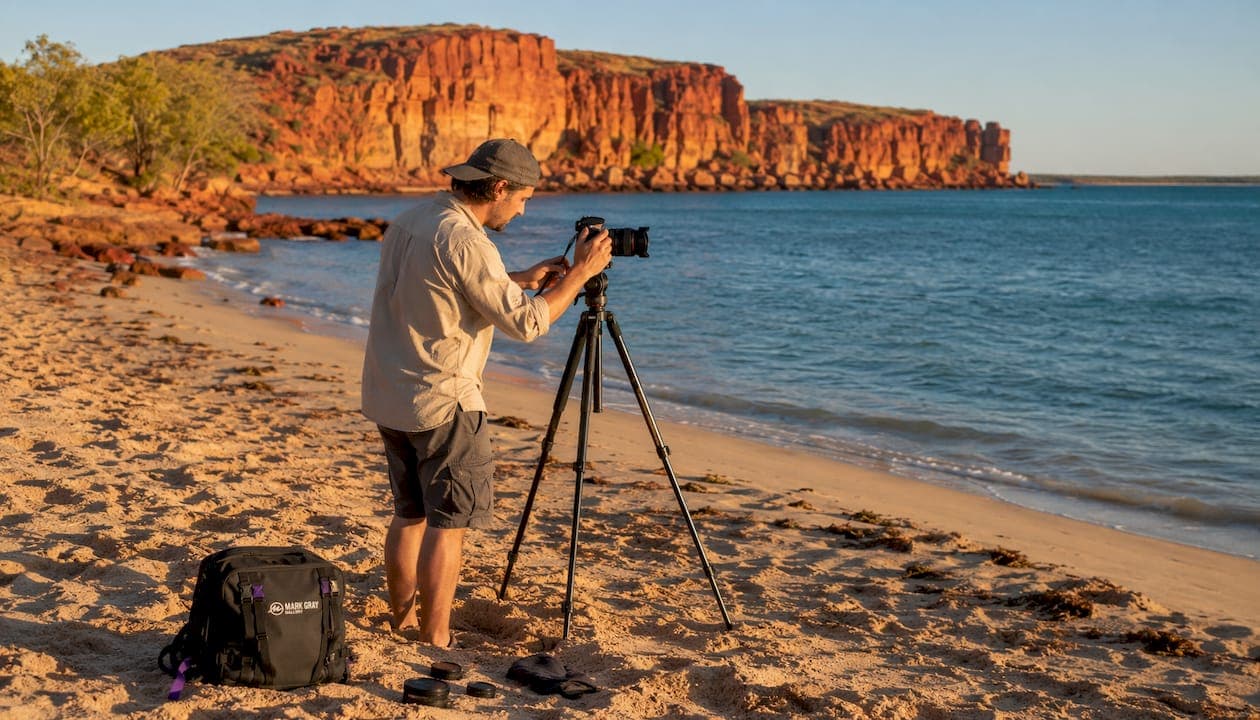
Kimberley landscape photography is the specialized art of capturing one of the world's last great untouched wildernesses, located in northern Western Australia. The region delivers a visual drama unlike anywhere else on earth: red pindan soils, blinding white sands, and cobalt blue coastal waters collide in compositions that feel almost impossible. This is not simply wide-vista photography. It is an immersive discipline that demands technical skill, cultural awareness, and a genuine respect for an environment of extraordinary ecological significance.
What defines Kimberley landscape photography at its core:
- Color contrast: The interplay of red cliffs, aqua water, and bleached sand creates a palette found nowhere else in Australian photography.
- Geological drama: Ancient rock formations, gorges carved over 350 million years, and tidal waterfalls give every frame a sense of deep time.
- Cultural depth: Indigenous rock art, sacred sites, and living Aboriginal heritage add layers of meaning that elevate images beyond pure scenery.
- Remoteness: The Kimberley's near-inaccessibility shapes the photographic experience itself, making preparation as important as composition.
- Ecological rarity: The Kimberley region contains some of the largest intact natural areas on the planet, comparable in scale and significance to the Great Barrier Reef and the Amazon rainforest.
Table of Contents
- What makes Kimberley landscape photography stylistically distinct?
- Where are the best places for Kimberley photography?
- Photography tips for capturing the Kimberley effectively
- Mark Gray on the Kimberley's photographic power
- Key Takeaways
What makes Kimberley landscape photography stylistically distinct?
The artistic hallmarks of this style go well beyond pointing a camera at a pretty view. Landscape photography at its best combines natural light, contrast, texture, and color to create emotionally resonant images, and the Kimberley provides all four in abundance. The challenge is learning to work with them rather than simply recording them.
Dramatic natural light is the defining tool. The Kimberley's low-latitude sun produces intense midday harshness, but the golden hours at dawn and dusk transform the red rock faces into something almost molten. Photographers who time their shots around this light consistently produce images with depth and warmth that midday shooting cannot replicate.
The color palette is distinctive and consistent across the region:
- Earth tones: Deep ochre, burnt sienna, and rust red from the pindan soils and sandstone cliffs.
- Water blues: From pale aqua in shallow coastal flats to deep cobalt in open ocean bays.
- Stark whites: Bleached sand beaches and dry-season riverbeds that anchor compositions against vivid backgrounds.
- Seasonal greens: Paperbark trees, monsoon-fed vegetation, and gorge-side ferns that appear during and after the wet season.
Composition in the Kimberley leans heavily on natural lines: river bends, cliff edges, tidal channels, and rock strata all guide the eye through the frame. Indigenous art sites, when photographed with permission and respect, introduce human scale and cultural narrative into what might otherwise be pure geological abstraction. The modern definition of landscape photography is broad enough to encompass all of this, from vast panoramas to intimate close-ups of shell-encrusted altars or ancient petroglyphs.
Pro Tip: Shoot in RAW format to preserve the full dynamic range of the Kimberley's extreme contrast between bright sky and shadowed gorge walls. Post-processing in Adobe Lightroom or Capture One gives you the latitude to recover both ends of the exposure.
Where are the best places for Kimberley photography?
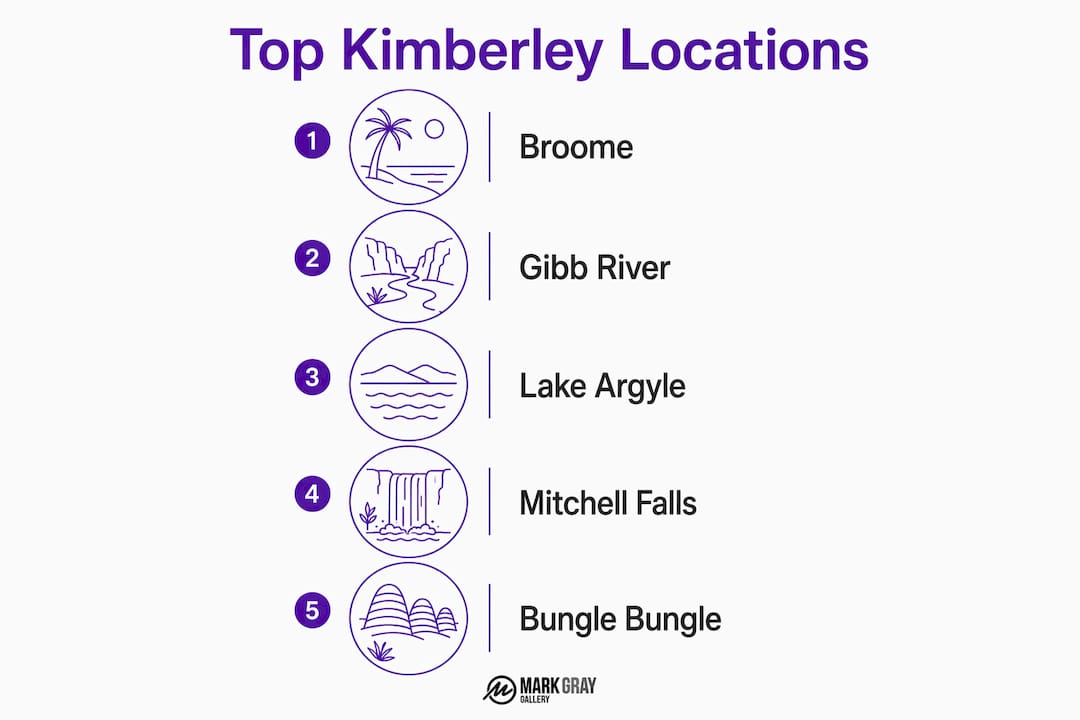
The Kimberley covers an area larger than many countries, so knowing where to focus your time is half the battle. Each location below offers a genuinely distinct photographic experience.
| Location | Key Subject | Best Access |
|---|---|---|
| Broome | Cable Beach sunsets, Gantheaume Point rock colors | Year-round, sealed roads |
| Gibb River Road | Gorge country, Bell Gorge, Windjana Gorge | Dry season, 4WD required |
| Lake Argyle | Vast inland water, sunrise reflections | Year-round, sealed roads |
| Mitchell Plateau | Mitchell Falls, remote wilderness | Dry season, 4WD or charter flight |
| Bungle Bungle Range (Purnululu) | Striped sandstone domes, Cathedral Gorge | Dry season, 4WD or helicopter |
Broome sits at the southern gateway to the Kimberley and rewards photographers at almost any hour. Gantheaume Point, where solidified desert and beach sands have blended into extraordinary colors and textures, contrasts sharply against the aqua-blue Indian Ocean. Cable Beach in late afternoon, with camel trains silhouetted against a burning sky, is one of the most photographed scenes in Australian landscape photography.
Gibb River Road takes you into what photographers call "gorge country." The ancient riverine systems have carved spectacular gorges from geology more than 350 million years old, and locations like Bell Gorge and Lennard River Gorge reward those willing to navigate rough, isolated tracks. Windjana Gorge is a particular highlight, with late afternoon light turning the cliff walls a deep amber and freshwater crocodiles adding unexpected foreground interest.
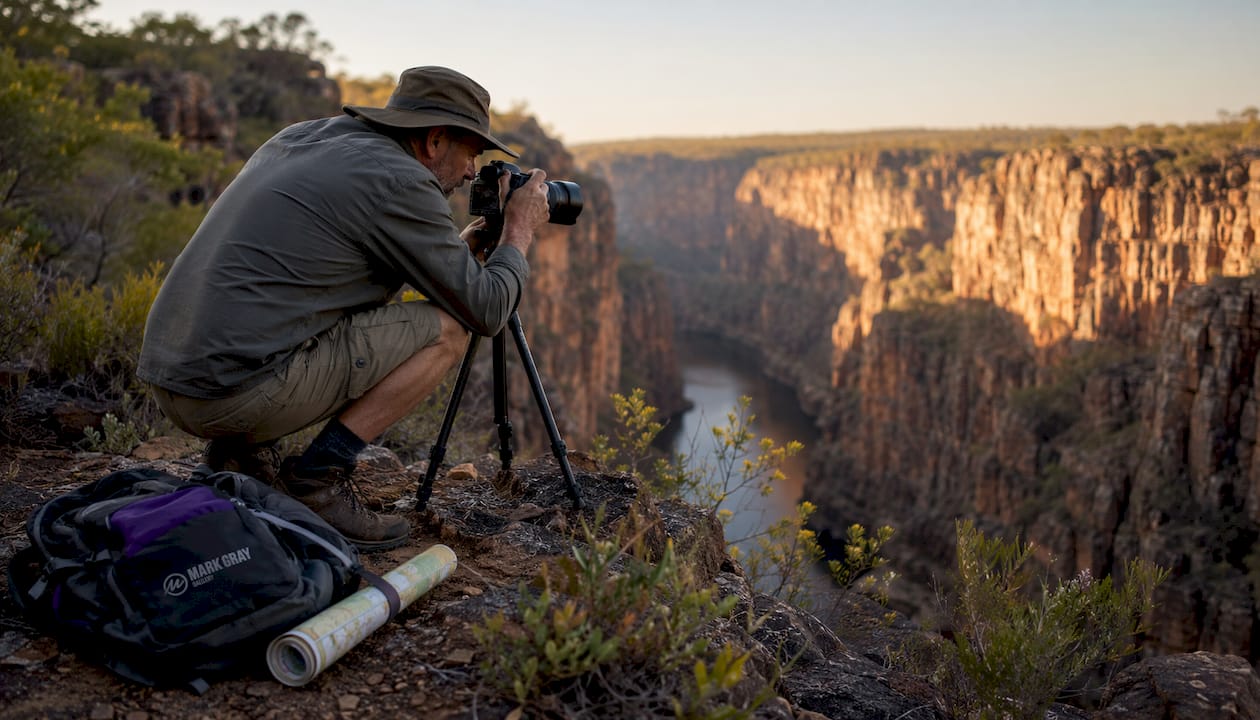
Lake Argyle offers something rare in the Kimberley: a vast, calm water surface that mirrors the surrounding hills at sunrise. Based out of Kununurra, it pairs well with nearby Mirima National Park for panoramic views of the eastern Kimberley ranges.
Mitchell Plateau is genuinely remote. The Mitchell Falls are among the most spectacular tiered waterfalls in Australia, and the surrounding plateau offers aerial photography opportunities that few locations can match. Charter flights from Derby or Kununurra are the practical option for most photographers.
Bungle Bungle Range at Purnululu National Park presents one of the most visually arresting geological formations on earth: rounded sandstone domes striped in alternating bands of orange and dark lichen. The five-hour drive from Kununurra to Turkey Creek, followed by a 4WD track into the park, filters out casual visitors and rewards those who make the effort with near-solitary access to extraordinary subjects. For a broader look at Australia's scenic photography routes, the Kimberley sits at the top of any serious list.
Photography tips for capturing the Kimberley effectively
Preparation separates a productive Kimberley shoot from a frustrating one. The region's remoteness, extreme weather, and rugged terrain demand more advance planning than almost any other photography destination in Australia.
Timing your visit correctly
The dry winter season, running roughly from May through September, is the only practical window for most Kimberley photography. Roads that are perfectly passable in July become completely impassable after the wet season begins in October and November. The build-up period brings cyclonic rain that closes tracks for months. Plan your visit for June through August for the best combination of road access, comfortable temperatures, and clear skies.
Gear suited to the conditions
- A sturdy tripod rated for wind and uneven terrain is non-negotiable for gorge and waterfall work.
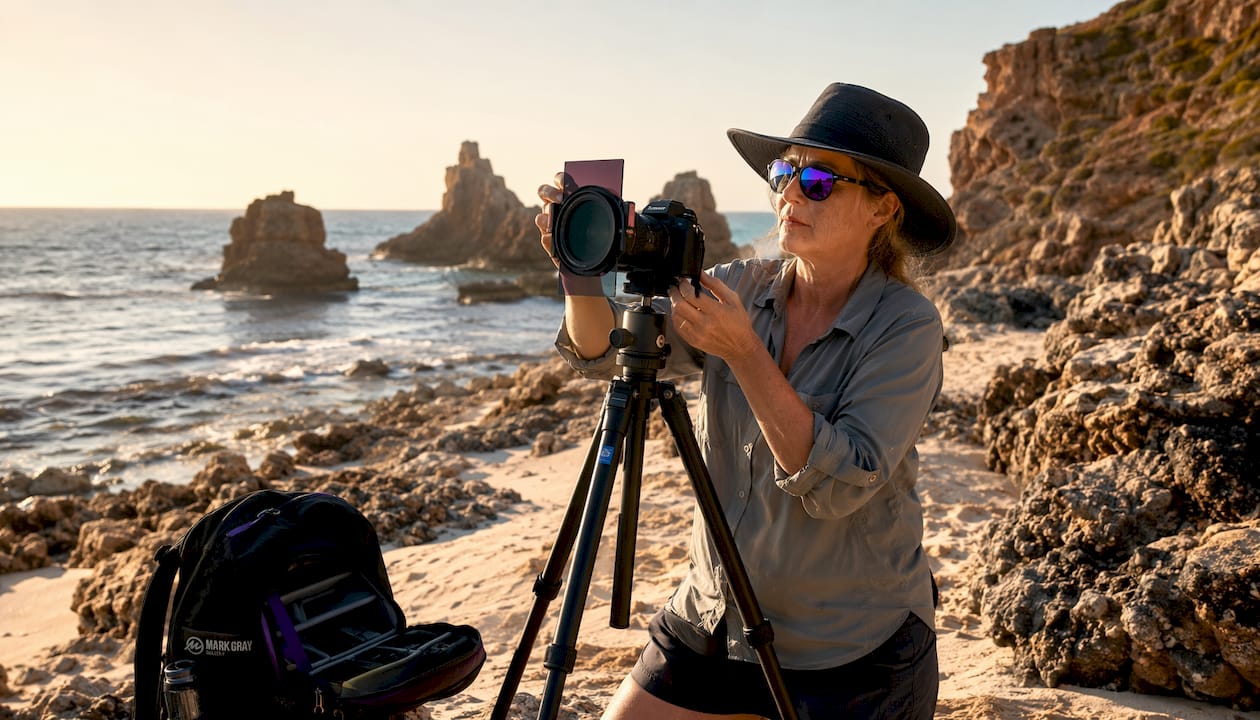
- ND filters (6-stop and 10-stop) allow long-exposure shots of tidal waterfalls and moving water in bright conditions.
- Manual camera controls give you the flexibility to handle the Kimberley's extreme dynamic range.
- Dust-sealed camera bodies and lenses protect against the fine red pindan dust that infiltrates everything on dirt roads.
- Carry more memory cards and batteries than you think you need. Power and resupply points are genuinely scarce.
Experienced photographers working the Kimberley recommend robust tripods and ND filters as the two pieces of gear that most consistently separate professional results from tourist snapshots.
Ethical and cultural responsibilities
Respect for cultural heritage is not optional in the Kimberley. Photographers must follow ethical guidelines to avoid damaging indigenous sites, and many locations require permits or prior permission from Traditional Owners before photography is permitted. Never photograph sacred sites without explicit consent, and always follow posted guidelines at national parks managed by the Western Australian Department of Biodiversity, Conservation and Attractions. The landscape's integrity, both natural and cultural, depends on every visitor treating it with care.
Pro Tip: Scout locations the afternoon before your planned shoot. The Kimberley's terrain changes dramatically with the light, and what looks flat and uninteresting at noon can become extraordinary at 6:00 AM.
Mark Gray on the Kimberley's photographic power
Mark Gray is an internationally renowned Australian landscape photographer whose work across the Kimberley has earned him recognition well beyond Australia's borders. His prints, workshops, and educational resources reflect decades of direct experience with the region's unique challenges and rewards.
The Kimberley demands that you collaborate with the environment rather than simply photograph it. The tidal ranges, the ancient rock art, the sheer scale of the gorges — none of it yields to a photographer who arrives unprepared or in a hurry. When you commit to understanding the light, the seasons, and the cultural significance of what you are standing in front of, the Kimberley gives you images that carry genuine emotional weight. That is what separates a Kimberley photograph from a Kimberley snapshot.
This philosophy runs through everything Mark brings to his photography workshop tours, where participants work directly in the Australian wilderness to develop both technical mastery and creative vision. The Kimberley's compositional challenges are real: huge tidal ranges, rapidly changing light, and terrain that requires physical commitment. Mastering them means balancing equipment knowledge with an instinct for when and where the landscape will reveal itself most powerfully.
For photographers drawn to the artistic depth of landscape wall art, the Kimberley's color contrasts and geological drama translate exceptionally well from screen to print. The region's palette, those deep reds against cobalt blue, holds its impact at large format sizes in ways that subtler landscapes often do not. Understanding Australian outback landscapes more broadly also sharpens your eye for what makes the Kimberley's particular visual language so distinctive.
Key Takeaways
Kimberley landscape photography rewards photographers who combine technical preparation, seasonal planning, and genuine respect for one of the world's most ecologically and culturally significant wilderness regions.
| Point | Details |
|---|---|
| Define the style correctly | Kimberley photography goes beyond wide vistas, capturing color contrast, texture, and cultural depth specific to northern Western Australia. |
| Dry season is essential | Visit between May and September; wet-season roads become impassable after October, cutting off most key locations. |
| Gear for rugged conditions | Bring a sturdy tripod, ND filters, dust-sealed equipment, and extra batteries for remote locations with no resupply. |
| Cultural respect is mandatory | Many sites require permits from Traditional Owners; photographing sacred indigenous sites without consent is both unethical and potentially illegal. |
| Expert guidance accelerates results | Mark Gray's workshops provide direct field experience in the Kimberley, combining technical instruction with immersive environmental engagement. |
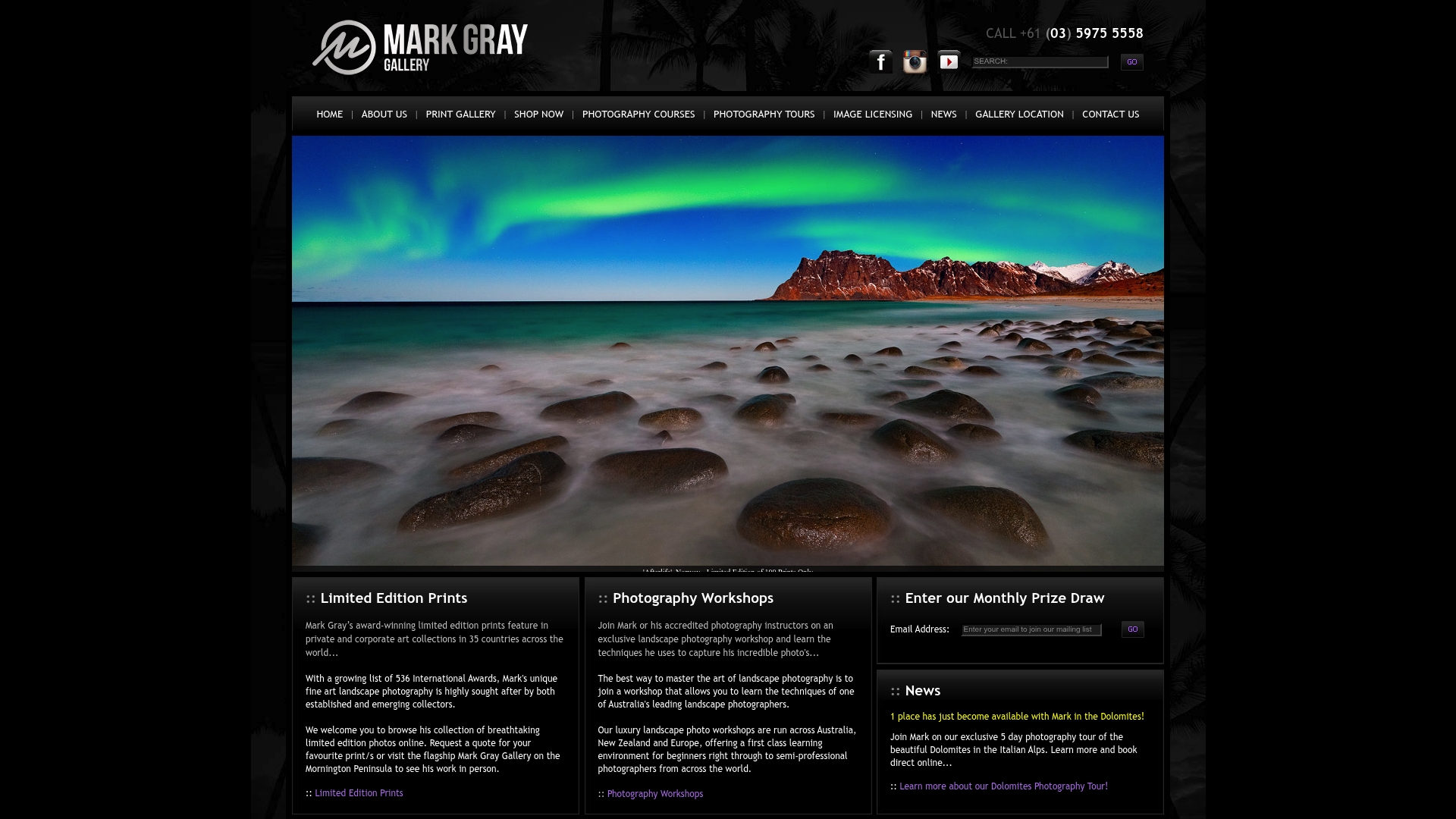
Mark Gray's award-winning Kimberley prints and photography workshop tours are available at markgray.com.au. Whether you are looking for a limited edition print to bring the Kimberley's extraordinary color and scale into your home, or you want to develop your own landscape photography skills alongside one of Australia's most celebrated photographers, the gallery offers both.