
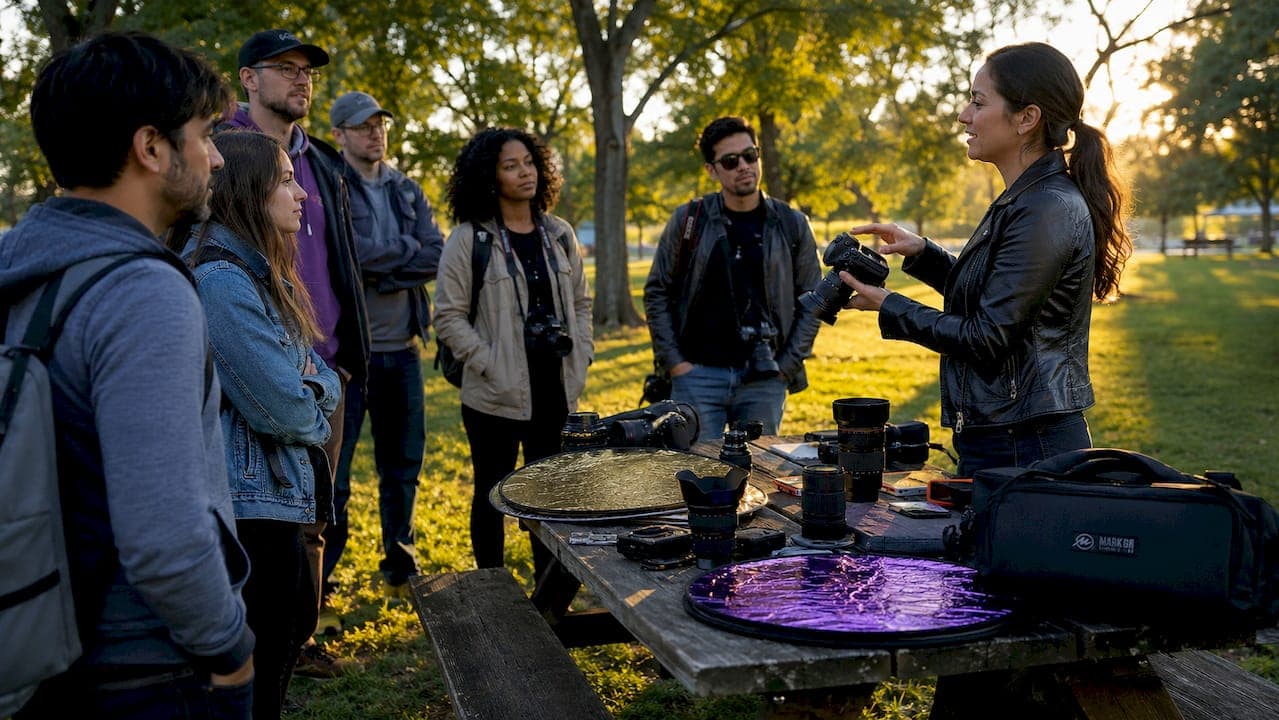
A photography masterclass is an intensive, expert-led training experience designed to accelerate your photographic skills through personalized instruction and real-world application. Unlike self-study or passive online tutorials, these workshops place you in a structured environment where immediate feedback shapes every shot you take. Understanding why attend photography masterclass explained as a concept matters because the format itself is what drives results. The combination of hands-on practice, live critique, and expert mentorship produces outcomes that solo learning simply cannot replicate. This guide covers the core benefits, what separates masterclasses from other formats, and how to get the most from your investment.
Why are photography masterclasses more effective than other learning methods?
The defining advantage of a photography masterclass is the immediate feedback loop. Immediate feedback during workshops helps prevent bad habits that often go unnoticed when learning alone. That distinction matters enormously. A bad habit reinforced over months of solo practice becomes a deeply embedded obstacle. A mentor who corrects your grip, your framing, or your exposure decision in real time stops that habit before it takes root.
The immersive environment of a masterclass removes the distractions that derail online learning. No notifications, no pausing to check another tab, no skipping ahead. You are present, focused, and accountable to both your instructor and your peers. That psychological pressure is productive. It forces you to engage with each decision rather than passively absorbing content.
In-person photography workshops result in 75% greater practical knowledge retention than pre-recorded tutorials. That gap reflects the difference between watching someone else solve a problem and solving it yourself under guidance. Online masterclasses inspire but do not substitute the tactical, hands-on training available only in live mentor-led sessions.
"Masterclasses challenge photographers to negotiate attention and instinct to truly understand photographic effectiveness." The best workshops teach you why an image works, not just what it looks like.
The key differences between formats come down to three factors:
- Feedback speed: In-person correction happens in seconds. Online feedback, if it comes at all, arrives hours or days later.
- Environment control: Workshops place you in real lighting conditions with a mentor present to guide your response.
- Peer learning: Watching fellow participants make and correct mistakes accelerates your own understanding in ways no tutorial can replicate.
What are the main benefits of attending a photography masterclass?
The benefits of a photography masterclass extend well beyond technical skill. Photographers who attend structured workshops gain confidence, portfolio material, professional connections, and a clearer creative vision. Each of these outcomes compounds over time.
The core photography training advantages are:
- Faster skill acquisition. Structured instruction compresses months of trial and error into days. You learn skills in landscape photography courses that would take years to develop independently.
- Personalized critique. An experienced photographer reviewing your actual images identifies weaknesses you cannot see yourself. That specificity is the most direct path to improvement.
- Access to professional resources. Many workshops provide access to exclusive locations, professional models, and specialized equipment that participants could not arrange independently.
- Portfolio development. You leave with real images shot under expert guidance. Those images reflect a higher standard than work produced in isolation.
- Networking. Workshops connect you with peers at similar skill levels and with instructors who often become long-term mentors. Those relationships open doors to collaborations, exhibitions, and referrals.
Masterclasses expand your visual vocabulary by exposing you to pressure situations and varying light conditions with active mentor guidance. That exposure teaches you to read a scene, not just react to it.
Financial investment in workshops creates a psychological commitment that increases engagement and accelerates skill absorption. When you have paid for an experience, you show up prepared and attentive. That mindset shift alone produces measurably better outcomes than free or low-cost alternatives.
Pro Tip: Bring a printed or digital portfolio of your recent work to your first masterclass session. Instructors who can see your starting point give far more targeted feedback than those working blind.
How should you prepare to get the most from a photography masterclass?
Preparation determines how much value you extract from any workshop. Photographers who arrive organized and mentally ready absorb significantly more than those who show up unprepared.
Many beginners struggle in workshops if they lack a basic camera operation understanding, missing advanced learning opportunities. Before attending, you should be comfortable with aperture, shutter speed, and ISO. If those concepts are unfamiliar, spend time with your camera manual or a foundational online course first. Arriving with that baseline lets you focus on composition, light, and creative decision-making rather than struggling with settings.
Practical preparation steps include:
- Gear check: Charge all batteries, format memory cards, and pack a lens cleaning kit. Equipment failures during a workshop waste irreplaceable shooting time.
- Portfolio review: Select 10–15 of your strongest recent images and be ready to discuss what you were trying to achieve with each one.
- Research your instructor: Understanding their style and body of work helps you ask more specific, productive questions.
- Mindset: Arrive open to direct critique. Honest feedback is the product you are paying for. Defensiveness blocks the learning process.
Pre-shoot briefings that explain light and composition are critical and distinguish teaching workshops from simple guided tours. When evaluating a workshop, confirm that pre-shoot briefings are part of the program. A workshop that skips this step is a photo tour, not a masterclass.
Pro Tip: Take written notes during critique sessions. Memory fades fast after an intense shooting day. A notebook entry like "overexposed by one stop in backlit scenes" becomes a permanent reference point.
How do masterclass formats, costs, and specializations compare in 2026?
Photography masterclasses vary widely in structure, price, and focus. Choosing the right format depends on your current skill level, your goals, and how much time you can commit.
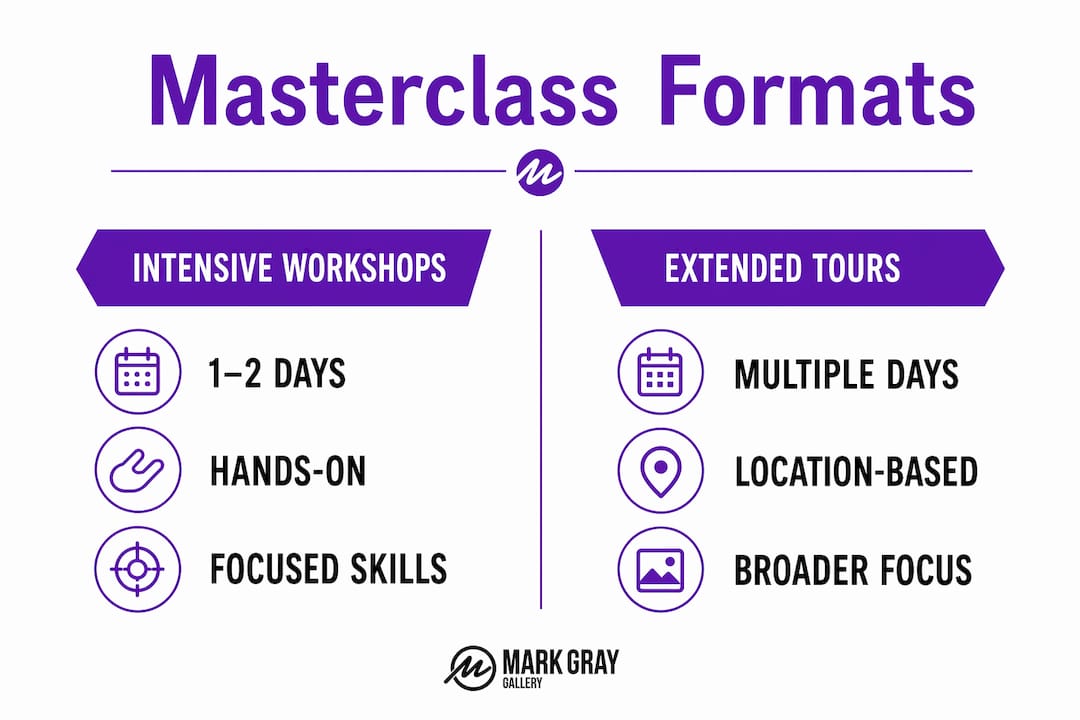
Photography masterclasses often span 1–2 days intensively or longer for travel tours, costing several thousand dollars for specialized experiences. That investment scale reflects the depth of instruction, the quality of locations, and the expertise of the instructor. A single-day urban portrait workshop and a 10-day Iceland landscape tour occupy very different price brackets, but both deliver concentrated learning unavailable through self-study.
| Format | Duration | Best for | Typical focus |
|---|---|---|---|
| Intensive day workshop | 1–2 days | Beginners and intermediates | Technique, composition, light |
| Multi-day workshop tour | 3–7 days | Intermediate to advanced | Location-specific landscape or travel |
| Extended expedition | 8+ days | Serious enthusiasts and professionals | Portfolio-grade work, specialist niches |
| Hybrid model | Varies | Flexible learners | Online theory combined with in-person practice |
Specialized niches now include landscape, portrait, travel, commercial, and wildlife photography. Each niche demands different technical skills and creative approaches. A landscape photography workshop tour focuses on long exposures, golden hour timing, and natural light reading. A portrait masterclass prioritizes lighting setups, directing subjects, and post-processing skin tones.
When selecting a workshop, confirm three things: the instructor's published work and credentials, the student-to-instructor ratio, and whether critique sessions are included. A ratio above 10:1 reduces the personalized attention that makes masterclasses worth the investment. Use a practical workshop selection guide to assess your options against your specific goals before committing.
Key Takeaways
Attending a photography masterclass accelerates skill development faster than any other learning format because it combines expert feedback, immersive practice, and real-world shooting conditions in a single structured experience.
| Point | Details |
|---|---|
| Retention advantage | In-person workshops produce 75% greater practical knowledge retention than pre-recorded tutorials. |
| Feedback loop | Immediate mentor correction prevents bad habits from forming during the learning process. |
| Preparation matters | Arrive with basic camera skills and a portfolio to access advanced instruction from day one. |
| Format selection | Match workshop duration and specialization to your skill level and creative goals. |
| Investment mindset | Financial commitment to a workshop increases engagement and accelerates skill absorption. |
What I have learned from years of leading photography workshops
The photographers who get the most from a masterclass are rarely the most technically gifted. They are the ones who arrive with genuine curiosity and a willingness to be challenged. I have watched participants with entry-level cameras produce portfolio-defining images simply because they engaged fully with every critique and every briefing.
The most common mistake I see is treating a workshop like a passive experience. Photographers who hang back, avoid asking questions, and resist feedback leave with slightly better images but the same underlying habits. The ones who lean into discomfort, who ask why their shot did not work rather than defending it, leave transformed.
Physical presence matters in ways that are hard to quantify until you experience them. Standing in a location at golden hour with a mentor pointing out the light falling across a ridge, adjusting your position by two steps, and watching the composition lock into place. That moment does not happen on a screen. It happens in the field, and it stays with you permanently.
My honest view is that one well-chosen masterclass is worth more than a year of online tutorials. Not because online learning has no value. It does. But it cannot replicate the sensory, social, and creative pressure of shooting alongside experts and peers in a real environment. If you are serious about your craft, commit to the in-person experience. The results will prove the investment right.
— Mark
Mark Gray's landscape photography workshops
Mark Gray is an internationally award-winning Australian landscape photographer whose workshops take participants to some of the most inspiring locations across Australia and worldwide.
Com's photography courses and multi-day workshop tours are built around the same principles this article describes: pre-shoot briefings, live critique, small group sizes, and access to extraordinary locations. Whether you are looking for a one-day course across Australia or an extended international tour, each program is designed to produce real portfolio results under expert guidance. Explore upcoming workshop dates and secure your place at markgray.com.au.
FAQ
What is a photography masterclass?
A photography masterclass is an expert-led, immersive workshop focused on accelerating skill development through hands-on practice, live critique, and structured instruction. It differs from a photo tour by including pre-shoot briefings and post-shoot feedback sessions on participants' actual images.
Is a photography masterclass worth the cost?
Yes. In-person workshops deliver 75% greater knowledge retention than pre-recorded tutorials, and the financial commitment itself increases engagement and learning outcomes.
What should I bring to a photography masterclass?
Bring your camera with fully charged batteries, formatted memory cards, and a selection of your recent work. Basic camera operation skills are required to benefit from advanced composition and lighting instruction.
How do I choose the right photography workshop?
Match the workshop's specialization and duration to your current skill level and creative goals. Confirm the student-to-instructor ratio, the instructor's credentials, and whether critique sessions are included in the program.
Can beginners attend a photography masterclass?
Beginners can attend, but they should acquire basic camera skills first. Participants who cannot operate their camera confidently miss the advanced instruction that makes masterclasses valuable.