
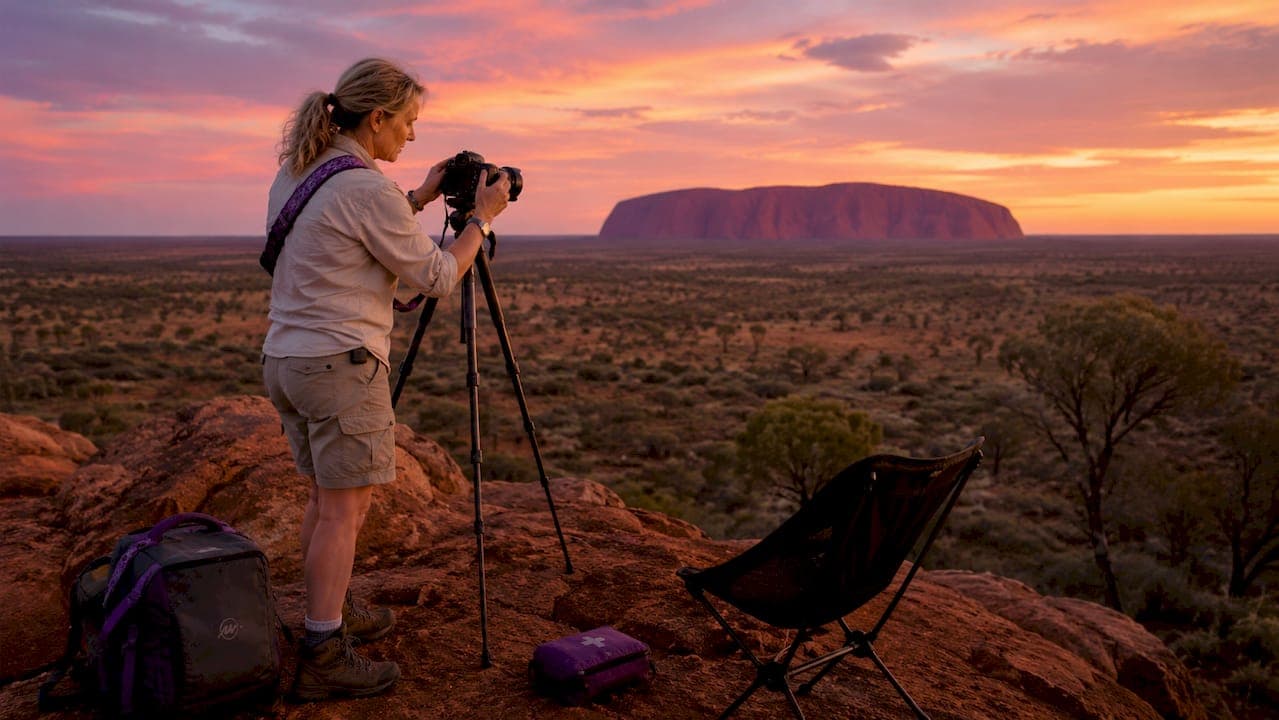
Guided photography tours in Australia are expert-led, small-group experiences designed to help travelers capture stunning images of the continent's most dramatic landscapes, from the red rock formations of the Outback to the misty valleys of the Blue Mountains. These tours blend hands-on instruction, logistical support, and exclusive location access into a single, immersive program. For anyone serious about improving their photography while exploring Australia, a guided tour delivers results that independent travel simply cannot match. The benefits of guided photography tours in Australia extend well beyond better photos. They transform how you see, think, and connect with the world around you.
1. How do guided photography tours offer tailored instruction for all skill levels?
Professional photographers leading tours help participants choose their own level of instruction, from detailed technical training to light composition tips. That flexibility is the defining advantage of expert-led tours over self-directed travel. A beginner learning to control aperture and shutter speed gets the same quality of attention as an experienced shooter refining their long-exposure technique.
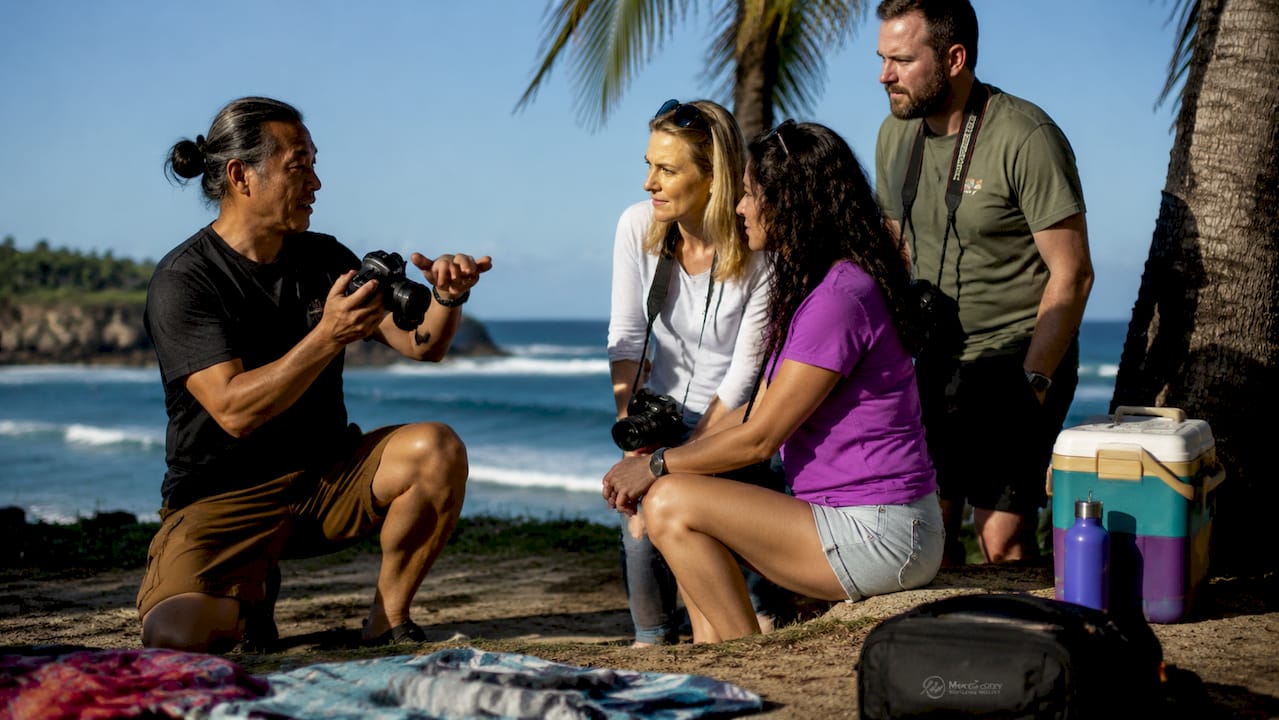
Instruction happens in the field, not in a classroom. Your guide watches you frame a shot, identifies the problem in real time, and corrects it before you press the shutter. That kind of immediate feedback accelerates skill development faster than any online course or photography book.
The best tours also provide take-home materials to reinforce what you learn. Printed tutorial sheets help participants recall camera settings and techniques long after the tour ends. Relying solely on memory during fast-paced shoots is ineffective. A printed cheat sheet covering exposure triangles, composition rules, and white balance settings keeps critical knowledge accessible when you need it most.
- Guides adapt instruction to your current skill level, not a fixed curriculum
- Real-time coaching corrects mistakes before they become habits
- Take-home materials extend learning beyond the tour itself
- Beginners and advanced shooters can participate in the same group without either feeling left behind
Pro Tip: Before your tour begins, tell your guide your three biggest photography frustrations. That single conversation shapes the entire instructional experience around your specific needs.
2. What logistical advantages do guided tours offer that independent travelers miss?
Tour operators handle permits, transport, accommodation, meals, and scheduling so travelers maximize shooting time with minimal planning stress. That is a significant advantage. Researching national park permit requirements, scouting access roads, and timing arrivals around sunrise adds hours of work before you ever pick up your camera.
Investing in a photo tour saves substantial time and effort that independent travelers spend on logistics, allowing more focused shooting time. The math is straightforward. Every hour you spend booking accommodation or reading trail reports is an hour you are not shooting.
Here is what a well-organized guided tour handles on your behalf:
- Permit acquisition for national parks and restricted photography zones
- Transport between locations, including four-wheel-drive access to remote sites
- Accommodation selected for proximity to prime shooting locations
- Meals and timing structured around early morning and late evening shoots
- Weather contingency plans with backup locations ready when conditions change
The result is a trip where your only job is to show up, observe, and photograph. That mental freedom produces better creative work. When you are not worried about where to sleep or how to reach a location, your attention stays on light, composition, and the moment in front of you.
3. Why does small group size make such a difference on photography tours?
Guided photography tours typically feature small group sizes of 4–10 participants for personalized instruction and better access to remote locations. That number is not arbitrary. Groups larger than ten create crowding at viewpoints, reduce instructor availability, and dilute the quality of feedback each participant receives.
Small group dynamics also accelerate creative growth through shared focus and emphasize quality instructor interaction that large tours simply lack. When six photographers stand at the same cliff edge at sunrise, each person sees something different. Sharing those perspectives in real time sharpens everyone's eye.
- Groups of 4–10 give each participant direct access to the guide
- Fewer people at a location means less competition for the best shooting positions
- Smaller groups move faster and quieter, which matters for wildlife photography
- Participants form genuine friendships built around a shared creative passion
"The community and shared focus provide emotional support and motivation beyond technical learning." — Luxury Safari Magazine
That social dimension is often what participants remember most. The photos are extraordinary, but the friendships formed during a pre-dawn shoot at Cradle Mountain or a golden-hour session in the Flinders Ranges last far longer than any single image.
4. How do tours provide access to Australia's top photography locations at the right time?
Expert guides lead photographers to optimal spots with fewer crowds and better timing than independent travelers can reliably achieve. Knowing a location exists is not the same as knowing when to be there. A guide who has photographed Karijini Gorge or the Twelve Apostles across dozens of seasons knows exactly which angle catches the first light and which season produces the most dramatic color.
Tours are structured around "chasing the light" with early morning and sunset sessions, often including astrophotography and light walking. Daily walks average 2–3 km. That physical commitment is what separates a guided tour from a standard sightseeing trip.
| Approach | Location access | Light timing | Crowd management |
|---|---|---|---|
| Independent travel | Public viewpoints only | Trial and error | No control |
| Guided photography tour | Iconic and lesser-known sites | Planned around sunrise, sunset, and night | Small group, off-peak timing |
The difference in output quality is measurable. An independent traveler arriving at Uluru at 10 a.m. on a Saturday faces harsh midday light and hundreds of other visitors. A guided group arrives before dawn, positions at a pre-scouted viewpoint, and captures the rock's color shift from deep purple to blazing orange as the sun clears the horizon.
Pro Tip: Ask your tour operator for a sample itinerary before booking. The best operators schedule at least two golden-hour shoots per day and include at least one astrophotography session. If the itinerary shows only daytime activities, look elsewhere.
You can explore some of Australia's most iconic photography locations to understand what makes certain sites so compelling before you book.
5. What are the mental, physical, and creative well-being benefits of photography tours?
The combination of physical activity with creative purpose during tours offers a powerful mental and physical well-being boost beyond typical holidays. Walking 2–3 km before sunrise through a national park is not a burden. It is purposeful movement with a clear creative goal at the end of it. That combination produces a satisfaction that passive tourism rarely delivers.
Preparing for irregular hours, including early mornings and late nights, is critical for fully benefiting from the tour. Participants who underestimate this adjustment often miss the best shooting conditions of the entire trip. The reward for a 4:30 a.m. alarm is a sky that no afternoon traveler ever sees.
- Physical exercise through purposeful walking builds energy and focus throughout the day
- Exposure to natural environments reduces stress and improves mood, supported by decades of environmental psychology research
- Creative accomplishment from capturing a technically strong image fuels long-term motivation to keep shooting
- Social connection with fellow photographers provides ongoing creative support well after the tour ends
Photography tours are not just sightseeing with a camera. They immerse participants in observing light, composition, and environment to turn a hobby into an art. That shift in perspective is the most lasting benefit of all. You return home not just with better photos but with a trained eye that changes how you see every scene you encounter afterward.
For those interested in building these skills further, photography courses are a proven way to accelerate progress between tours.
Key Takeaways
The most effective way to improve your travel photography in Australia is to join a guided tour that combines expert instruction, prime location access, and small-group dynamics into a single, purposeful experience.
| Point | Details |
|---|---|
| Tailored instruction for all levels | Guides adapt coaching in real time, from beginner basics to advanced composition techniques. |
| Full logistical support | Tours handle permits, transport, meals, and timing so you focus entirely on photography. |
| Small groups of 4–10 | Limited group sizes deliver more instructor access, better shooting positions, and stronger creative community. |
| Optimal light timing | Schedules built around sunrise, sunset, and astrophotography sessions produce dramatically better images. |
| Well-being and creative growth | Purposeful physical activity combined with creative focus delivers lasting mental and artistic benefits. |
What I have learned from years of leading photography tours in Australia
I have led photographers of every skill level through some of Australia's most extraordinary locations, and the pattern is always the same. The people who gain the most from a guided tour are not necessarily the most technically skilled. They are the ones who arrive open to instruction, willing to wake before dawn, and genuinely curious about the world in front of their lens.
The biggest misconception I encounter is that guided tours are only for beginners. That is simply not true. Some of the most rewarding sessions I have run have been with experienced photographers who arrived thinking they had little left to learn. Within two days, they were rethinking compositions they had used for years. Expert guidance does not replace your vision. It sharpens it.
I also want to be honest about the physical side of these tours. Early starts and late finishes are not optional extras. They are the entire point. The light that makes an image extraordinary exists for minutes, not hours. If you are not prepared to commit to that schedule, you will miss the moments that make the trip worth taking.
What stays with me most, though, is the community. I have watched strangers become close friends over a shared sunrise at Lake Eyre or a night shoot under the Milky Way in the Kimberley. That creative bond is something no solo trip can replicate.
— Mark
Experience Australia through Mark Gray's guided photography tours
Mark Gray is one of Australia's most celebrated landscape photographers, with award-winning work spanning the Outback, coastal ranges, and ancient forests. His guided photography tours and landscape photography workshops are designed for travelers who want more than a holiday. They are built for people who want to return home with images they are genuinely proud of, and skills that last a lifetime. Groups are kept small, logistics are fully managed, and every itinerary is built around the best light Australia has to offer. Whether you are picking up a camera for the first time or refining a decade of experience, Mark's tours deliver an inspiring, educational, and unforgettable experience across some of the continent's most sensational locations.
FAQ
What are the main benefits of guided photography tours in Australia?
Guided photography tours provide expert instruction, full logistical support, small-group access to prime locations, and shoots timed around optimal natural light. Participants consistently improve their technical skills and return with images that independent travel rarely produces.
How large are the groups on guided photography tours?
Group sizes typically range from 4 to 10 participants, which allows for personalized instruction and better access to remote or restricted photography locations across Australia.
Are guided photography tours suitable for beginners?
Yes. Professional photographers leading tours tailor instruction to each participant's skill level, from camera basics to advanced composition, so beginners and experienced shooters benefit equally from the same tour.
What locations do guided photography tours in Australia typically cover?
Tours access both iconic sites such as Uluru, the Twelve Apostles, and Cradle Mountain, as well as lesser-known locations that independent travelers find difficult to reach. Guides schedule shoots around sunrise, sunset, and astrophotography sessions for maximum visual impact.
How physically demanding are guided photography tours?
Daily walks average 2–3 km, with pre-sunrise starts and occasional night shoots. The physical demands are moderate but require mental preparation, particularly for early morning sessions that capture the most dramatic lighting conditions.