
For the fastest route to gallery-quality, region-organized Australian scenic prints, Mark Gray Gallery is the recommended starting point. The collection pairs limited-edition photographic prints with a clear region-by-region structure, so you can browse by place rather than scroll through hundreds of unrelated images. Two things set it apart: gallery-grade production standards (giclée printing, archival inks, made-to-order fulfillment) and a curation approach built on Mark Gray's decades of field work across every Australian state and territory.
Quick-start picks by region:
- NSW coastal: A dramatic sunrise over the Northern Beaches or Byron Bay headland, ideal for living rooms with a coastal palette
- TAS wilderness: Cradle Mountain reflected in Dove Lake, a statement piece for any neutral-toned interior
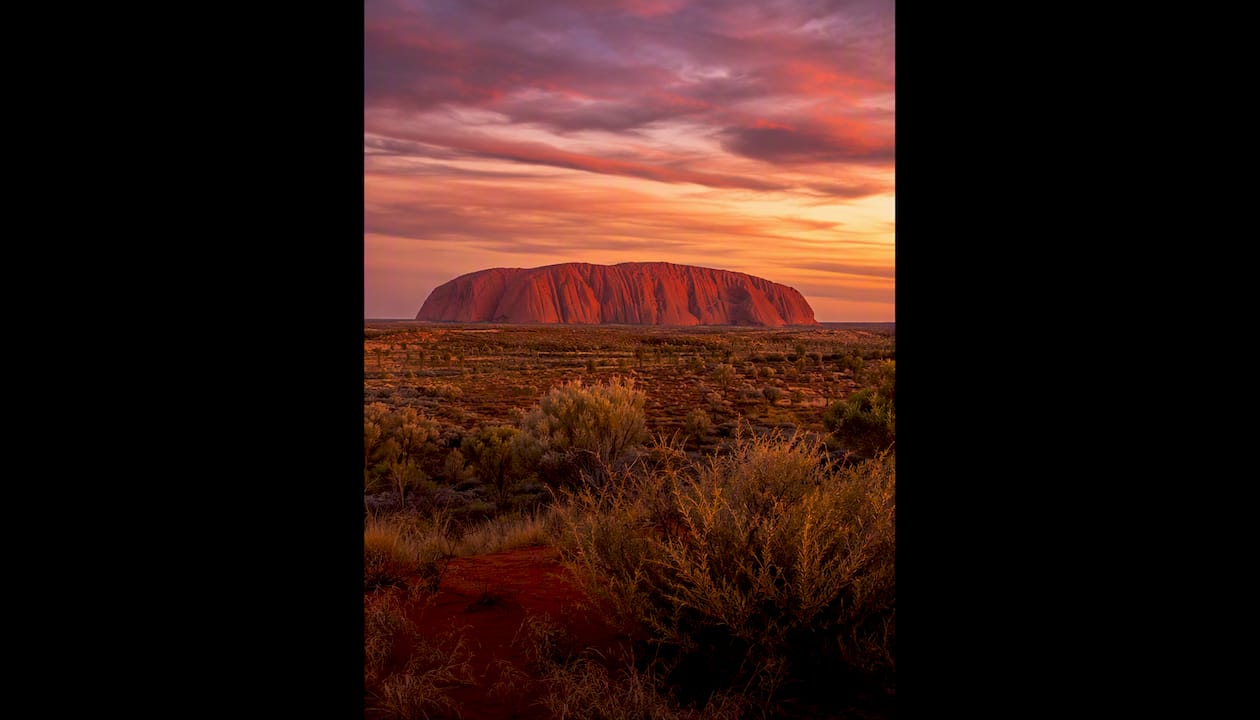
- NT outback: Uluru at golden hour, printed large for entryways or open-plan dining spaces
Pro Tip: Before you browse, measure your wall and note the dominant colors in the room. Knowing your maximum print width (in inches) and your color palette narrows the choice from dozens to three or four prints in under five minutes.
Browse the full collection and limited-edition availability at markgray.com.au.
Table of Contents
- What are the best scenic Australia prints by region?
- What print finishes and materials should you choose?
- How do limited editions and authenticity certificates work?
- What do U.S. buyers need to know about shipping and pricing?
- Why trust these regional picks? Mark Gray's curation approach
- Key Takeaways
- Why regional curation is the only approach worth taking
- Mark Gray Gallery makes it easy for U.S. buyers to find the right print
What are the best scenic Australia prints by region?
The regional organization used here reflects a simple principle: photographic quality, iconic location representation, and suitability for real interiors. "Best" means a print that holds up at room scale, captures a scene that is genuinely representative of its region, and is produced to a standard that collectors and decorators can rely on. The Australian Natural Landscapes to Explore: 2026 Guide provides strong context for why certain locations earn their place in any serious regional shortlist.
Organizing prints by state and territory reduces buyer friction considerably, as lifestyle presentation examples on sites like Life in Style illustrate how curated collections connect with buyers. Shoppers can match a print to a travel memory, a regional gift, or a themed interior scheme far more quickly than searching by subject alone.
New South Wales
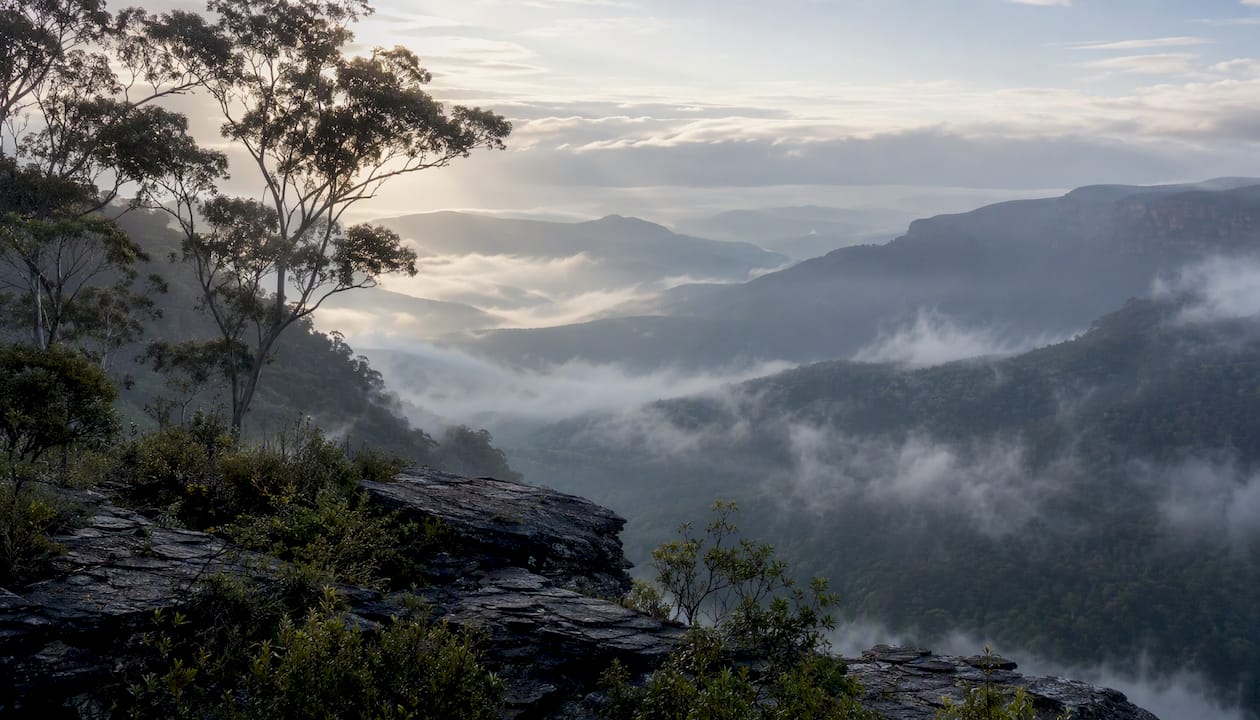
NSW delivers the widest tonal range of any Australian state. Coastal scenes from Bondi, Manly, and the Northern Beaches bring electric blues and warm sand tones that work beautifully in beach houses, coastal apartments, and any room with white or pale-gray walls. Further north, Byron Bay headland prints capture that distinctive soft-gold morning light. Inland, the Blue Mountains offer dramatic escarpments and eucalyptus haze, a cooler, more contemplative mood suited to studies and reading rooms.
Victoria
The Great Ocean Road is the defining VIC subject: the Twelve Apostles at sunrise, Port Campbell's limestone stacks, and the long sweeping coastal curves between Torquay and Warrnambool. These prints carry bold contrast and deep ocean blues, making them strong choices for contemporary living rooms and hospitality spaces. The Grampians add a different dimension — ochre rock faces and wide, open skies that suit earthy, warm-toned interiors. The Best Scenic Drives Australia Photography Guide highlights why the Great Ocean Road consistently produces the most photogenic vantage points in the state.
Queensland
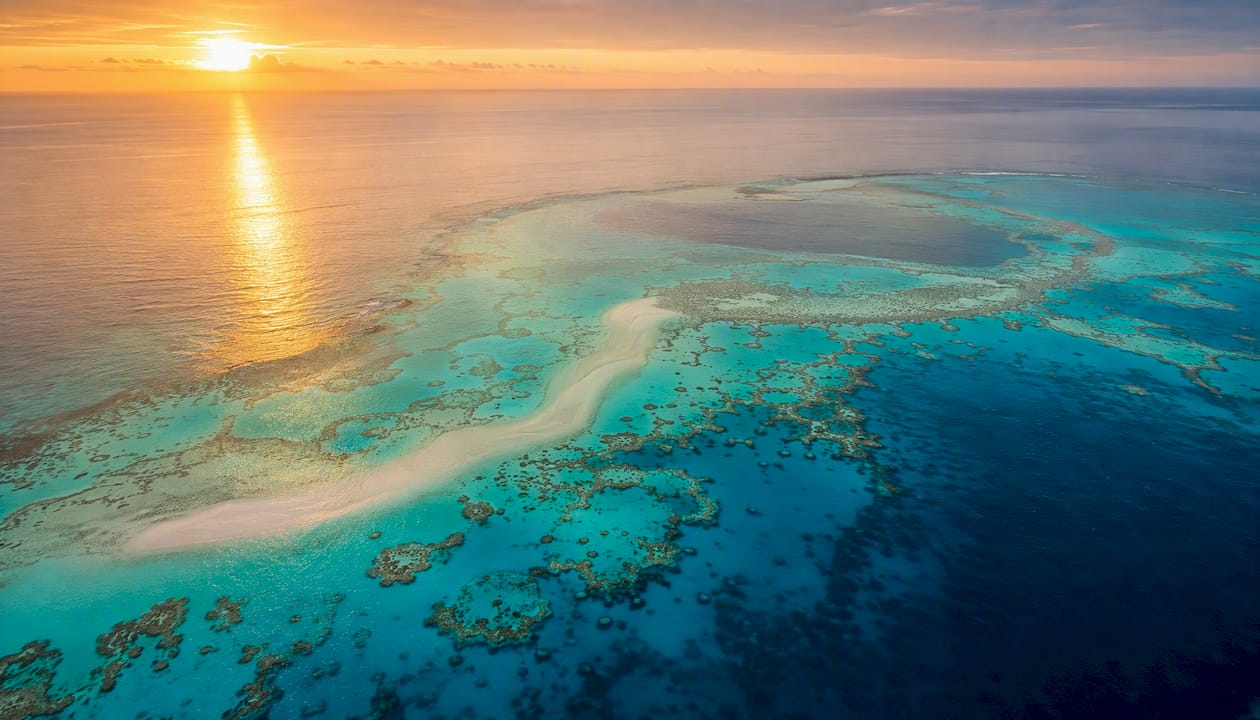
QLD's photographic strength lies in its layered color. The Great Barrier Reef, shot aerially or from the water's surface, produces turquoise-to-cobalt gradients that are almost unmatched in Australian landscape photography. The Daintree Rainforest offers the opposite mood: dense green canopy, filtered light, and rich shadow detail. Both subjects work well in large-format prints. Whitsunday aerial shots, with their white-sand sandbars and shallow reef patterns, are among the most popular regional Australia wall art choices for resort-style interiors and open-plan homes.
Western Australia
WA is where Australian landscape photography gets genuinely otherworldly. Margaret River's rugged coastline and ancient karri forests photograph with a quiet drama that suits large statement prints. Busselton Jetty at sunset, with its long timber structure reflected in still water, is one of the most requested WA subjects. Esperance and Lucky Bay deliver white sand and turquoise water that rivals the Whitsundays in color intensity. The role of regional photography in Australian gifts notes that WA prints are among the most popular choices for corporate gifting and office art, partly because the landscapes feel both distinctly Australian and visually striking at professional scale.
South Australia
SA's photographic identity splits between two very different worlds. The Flinders Ranges offer ancient geology: red rock gorges, dry creek beds, and vast open skies that photograph with extraordinary tonal depth. These prints carry warm ochre and rust tones that pair well with natural timber furniture and rammed-earth interiors. The Barossa Valley, by contrast, brings soft greens, golden vineyard rows, and a pastoral calm that suits dining rooms and kitchen spaces. Kangaroo Island adds coastal drama, with rugged limestone cliffs and wildlife subjects that make for compelling focal-point prints.
Tasmania
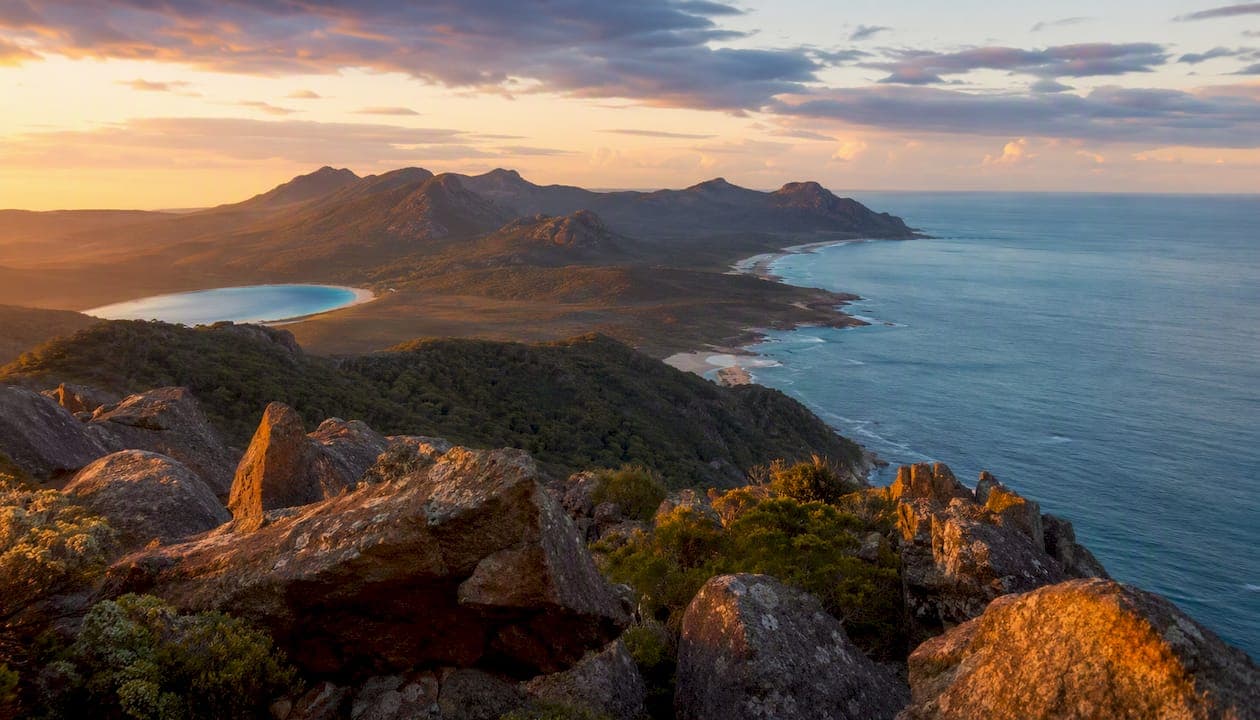
TAS consistently produces the most dramatic wilderness prints in the collection. Cradle Mountain reflected in Dove Lake is the signature subject: a perfectly composed, high-contrast scene that reads powerfully at any size from 12 inches to over four feet wide. Freycinet Peninsula and Wineglass Bay deliver a softer coastal mood, with pink granite peaks and clear turquoise water. These prints suit neutral, Scandinavian-influenced interiors particularly well. The wilderness palette of TAS prints (deep greens, slate grays, clear blues) makes them among the most versatile for rooms that need a strong focal point without competing with existing color schemes.
Northern Territory
NT prints carry a visual authority that no other Australian region quite matches. Uluru at golden hour, with its shifting reds and long shadows, is the most iconic single subject in Australian landscape photography. Printed large, it commands an entryway or feature wall with immediate presence. Kakadu's wetlands and escarpments add a different dimension: layered greens, ancient rock art country, and dramatic wet-season skies. These subjects photograph best in wide-format orientations and suit open-plan spaces where the scale of the landscape can be properly appreciated.
What print finishes and materials should you choose?
The direct answer: choose based on the look you want. Paper gives a classic gallery-matte finish with fine tonal detail. Canvas adds texture and warmth, suits casual or rustic interiors, and ships more easily without glass. Acrylic and metal deliver a modern, high-impact look with vivid color saturation, best suited to contemporary spaces.
| Finish | Best for | Archival life | Framing | Care notes |
|---|---|---|---|---|
| Giclée paper | Gallery walls, collectors, fine detail | 100+ years with UV glass | Requires framing | Avoid humidity; clean frame glass only |
| Canvas | Casual living rooms, rustic interiors | 75+ years | Unframed or float-framed | Dust with soft dry cloth; avoid moisture |
| Acrylic face-mount | Contemporary, commercial, hospitality | over a century of display life | Ready to hang | Wipe with damp microfiber; avoid abrasives |
| Metal (aluminum) | Modern interiors, outdoor-covered spaces | 50+ years | Ready to hang | Wipe clean; UV-resistant coating standard |
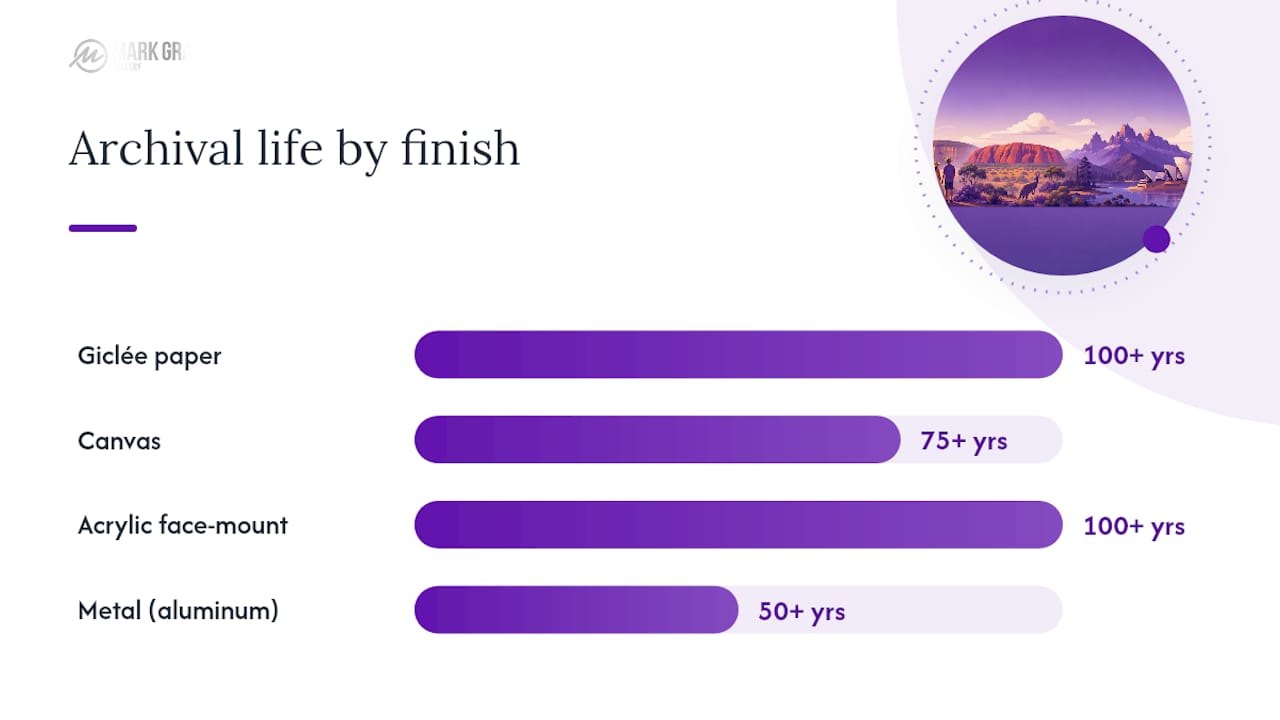
Archival giclée printing on FSC-certified fine art paper, using pigment-based inks, is the production standard that most directly affects long-term print quality and collector confidence. Archival production standards for gallery-grade prints include 230gsm or heavier fine art paper stock, pigment inks rated for over a century of display life, and UV-safe glazing when framed.
For framing, black frames suit bold, high-contrast prints (Great Ocean Road, Uluru). Oak or natural timber frames complement warm-toned landscapes (Flinders Ranges, Barossa). White frames work best with coastal and soft-light subjects (Freycinet, Whitsundays). Unframed canvas or acrylic mounts are the practical choice for buyers who want to skip the framing step entirely.
Care by material:
- Paper prints: keep below 60% relative humidity; never hang in direct sunlight without UV-protective glass
- Canvas: avoid steam and direct moisture; re-stretch if the canvas sags after shipping
- Acrylic: use only a clean, damp microfiber cloth; avoid any solvent-based cleaner
- Metal: wipe with a soft damp cloth; the aluminum substrate is the most forgiving of the four for humidity
How do limited editions and authenticity certificates work?
Limited editions are the right choice for collectors focused on long-term value. Open editions offer the same photographic quality and production standards at greater accessibility, without the scarcity premium. For a first purchase, open editions are a low-risk entry point. For a serious collection, limited editions with a numbered certificate are the standard.
A certificate of authenticity for a limited-edition print typically includes: the artist's name, the print title, the edition number and total edition size (e.g., 3/50), the paper type and ink specification, the artist's signature, and the date of production. These fields are what distinguish a collectible print from a decorative reproduction.
Steps to verify authenticity before purchase:
- Confirm the edition number and total size are stated clearly on the product page
- Check that the certificate lists paper type, ink specification, and artist signature
- Review the artist's biography and exhibition history on the gallery site
- Confirm the gallery's return policy covers authenticity disputes
- Keep the original receipt and certificate together with the print
Gallery-quality prints versus souvenir prints differ most visibly in these provenance details. A print without a numbered certificate and documented production specs is decorative, not collectible.
What do U.S. buyers need to know about shipping and pricing?
The total cost for a U.S. buyer ordering from Mark Gray Gallery includes the print price, international shipping, and potentially import duties. Size, material, edition type, and shipping speed are the four main cost drivers. Pricing guidance for landscape photography prints by size and finish is covered in detail in the pricing landscape photography prints guide.
Estimated pricing ranges by category (AUD, as listed):
| Category | Typical range | Notes |
|---|---|---|
| Small open-edition paper print | — | Unframed; most accessible entry point |
| Medium limited-edition paper print | — | Numbered, signed, with certificate |
| Large limited-edition paper or canvas | — | Made-to-order; longest lead time |
| Framed print (any size) | — | Depends on frame finish and glass type |
All prices are in Australian dollars as listed by the gallery. U.S. buyers should check the current AUD/USD exchange rate at time of purchase.
Made-to-order prints typically require 5–10 business days for production before shipping. International delivery to the U.S. adds approximately 7–14 business days via standard courier, or 3–5 business days with expedited freight. Large framed prints ship in custom-built crates and may attract additional freight charges.
U.S. import duties: Most fine art prints imported into the U.S. for personal use fall under HTS code 9701 or 4911, which carry a 0% duty rate for original photographic prints. Buyers should confirm classification with their customs broker, as framed prints may be assessed differently depending on the frame material.
Buyer checklist for international orders:
- Measure the wall and confirm the exact size before ordering
- Decide on framed vs. unframed before checkout (framed prints are harder to return)
- Read the gallery's return and damage policy before purchase
- Check the AUD/USD rate and factor in any bank conversion fees
- Confirm your address format is correct for international courier delivery
Why trust these regional picks? Mark Gray's curation approach
The prints recommended in this guide were selected for three qualities: photographic excellence, genuine representation of their region's most iconic locations, and proven suitability for interior display at multiple scales. That is not a marketing claim. It reflects a curation process built on years of field work across every Australian state and territory.
Mark Gray's credentials and proof points:
- Internationally recognized Australian landscape photographer with a career spanning multiple decades
- Award-winning body of work exhibited in galleries across Australia and internationally
- Author of photography workshops across regional Australia, where print selections are tested in the field with workshop participants
- Collection available at markgray.com.au includes limited and open edition prints, workshop bookings, and commercial licensing
The production process matters as much as the photography. Every print in the Mark Gray Gallery collection is made to order using giclée printing technology, archival pigment inks, and fine art paper or canvas substrates. This is not a print-on-demand commodity operation. Each order is produced individually, inspected, and packed for safe international transit.
Field-testing is a genuine part of the process. Workshop participants across regional Australia provide real-world feedback on how images read at scale, which tonal adjustments hold up in different lighting conditions, and which compositions translate most powerfully from screen to wall. That feedback directly informs the final print specifications available in the collection.
Key Takeaways
The most reliable way to buy curated scenic Australian prints by region is through a gallery that combines archival production standards, numbered limited editions, and a region-organized collection backed by the photographer's own field work.
| Point | Details |
|---|---|
| Choose by region first | Matching a print to a specific Australian region narrows choices and connects the work to place and memory. |
| Scale before style | Measure your wall before browsing; a print covering 60–75% of wall width reads as intentional, not accidental. |
| Verify edition details | A numbered certificate listing paper type, ink spec, and artist signature is the minimum standard for a collectible print. |
| Budget for U.S. import | Factor in AUD/USD conversion, international shipping (7–14 business days standard), and confirm duty classification before checkout. |
| Mark Gray Gallery | Offers limited and open edition prints organized by region, made-to-order with archival standards, and ships internationally to U.S. buyers. |
Pro Tip: Regional prints also make exceptional gifts. The guide to choosing a landscape print as a gift covers sizing, framing, and personalization options for every budget.
Why regional curation is the only approach worth taking
The conventional wisdom in landscape photography print sales is to organize by subject: seascapes here, mountains there, deserts in another tab. It sounds logical. In practice, it strips the work of its most powerful quality, which is place.
A print of Cradle Mountain is not just a mountain. It is Tasmania. It carries the specific quality of light that exists only in that latitude, at that altitude, in that season. When you organize prints by region, you give the buyer permission to connect the image to an experience, a memory, or an aspiration. That connection is what makes a print worth living with for decades rather than redecorating around in three years.
The other thing the subject-first approach misses is interior coherence. A buyer furnishing a coastal Queensland home does not want a generic "seascape." They want the Whitsundays. The color temperature, the specific turquoise, the aerial perspective that only exists in that part of the world. Regional organization makes that specificity possible without requiring the buyer to already know what they are looking for.
For collectors, the regional frame also matters for provenance. A limited-edition print of Uluru by an internationally recognized Australian photographer carries a different weight than "outback landscape, edition of 50." The place is part of the work's identity, and that identity is part of its value.
Mark Gray Gallery makes it easy for U.S. buyers to find the right print
Ordering a gallery-quality Australian landscape print from the U.S. used to mean navigating uncertain shipping, unclear edition details, and no real aftercare guidance. Mark Gray Gallery addresses all three directly. The collection is organized by region, every print is made to order with archival production standards, and international shipping to the U.S. is a standard part of the fulfillment process, not an afterthought.
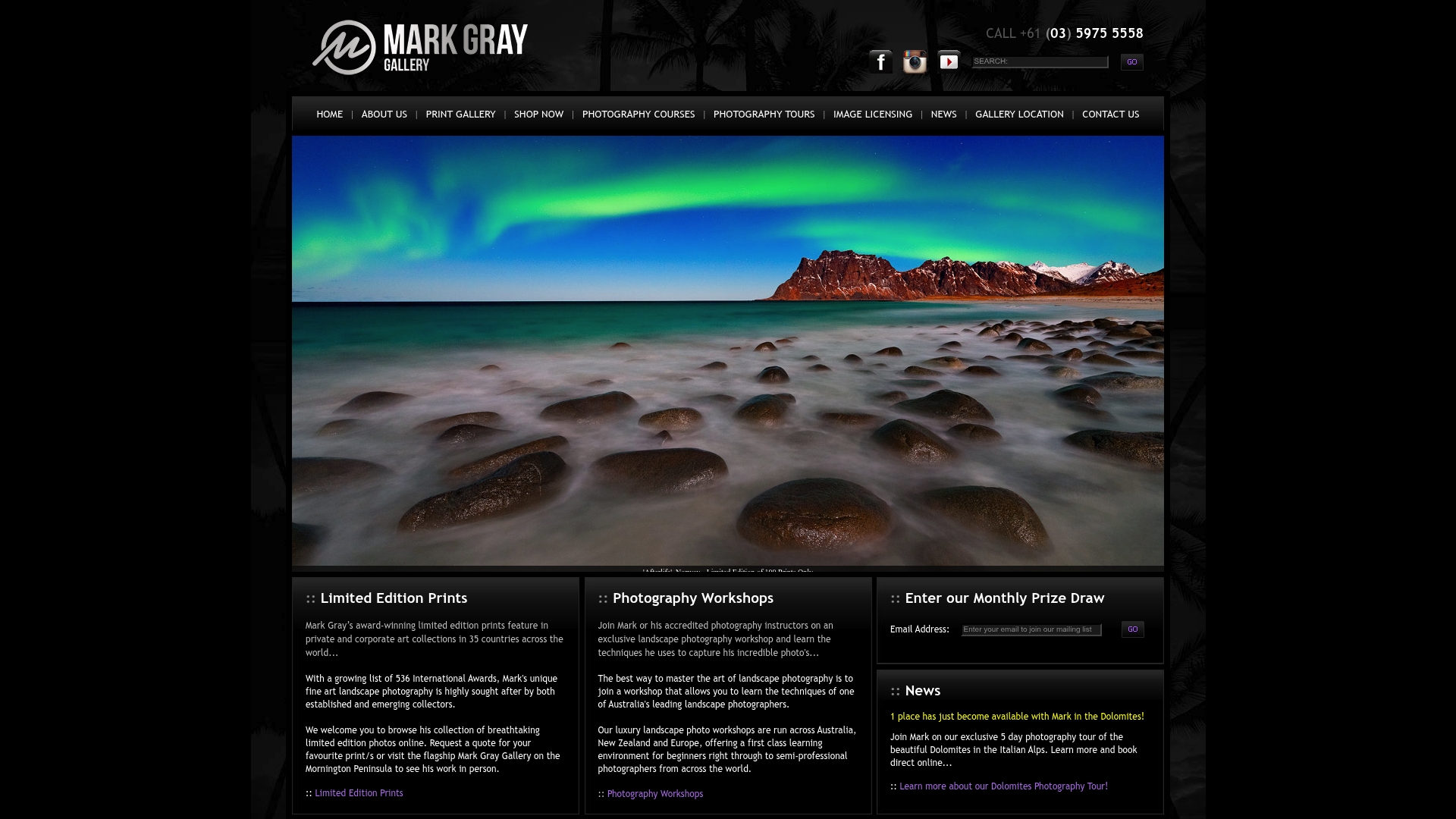
Custom sizing, framing options (black, oak, white), and expedited shipping are available on request. Every order includes production and tracking details, and the gallery's return policy covers damage in transit. Care instructions specific to your chosen material (paper, canvas, acrylic, or metal) are included with every shipment.
Browse the full regional collection, check limited-edition availability, and place your order at markgray.com.au. For gifting guidance or corporate art inquiries, the regional photography gifts guide is a practical starting point.
Useful sources and further reading
The following pages expand on the topics covered in this guide:
- Mark Gray - Award-winning landscape photography by leading Australian photographer
- Australian Natural Landscapes to Explore: 2026 Guide
- Best Scenic Drives Australia Photography Guide
- Photography workshops in regional Australia: top options
- The role of regional photography in Australian gifts
- Aerial Photography Wall Art Print | Kati Thanda-Lake Eyre – Olive et Oriel