
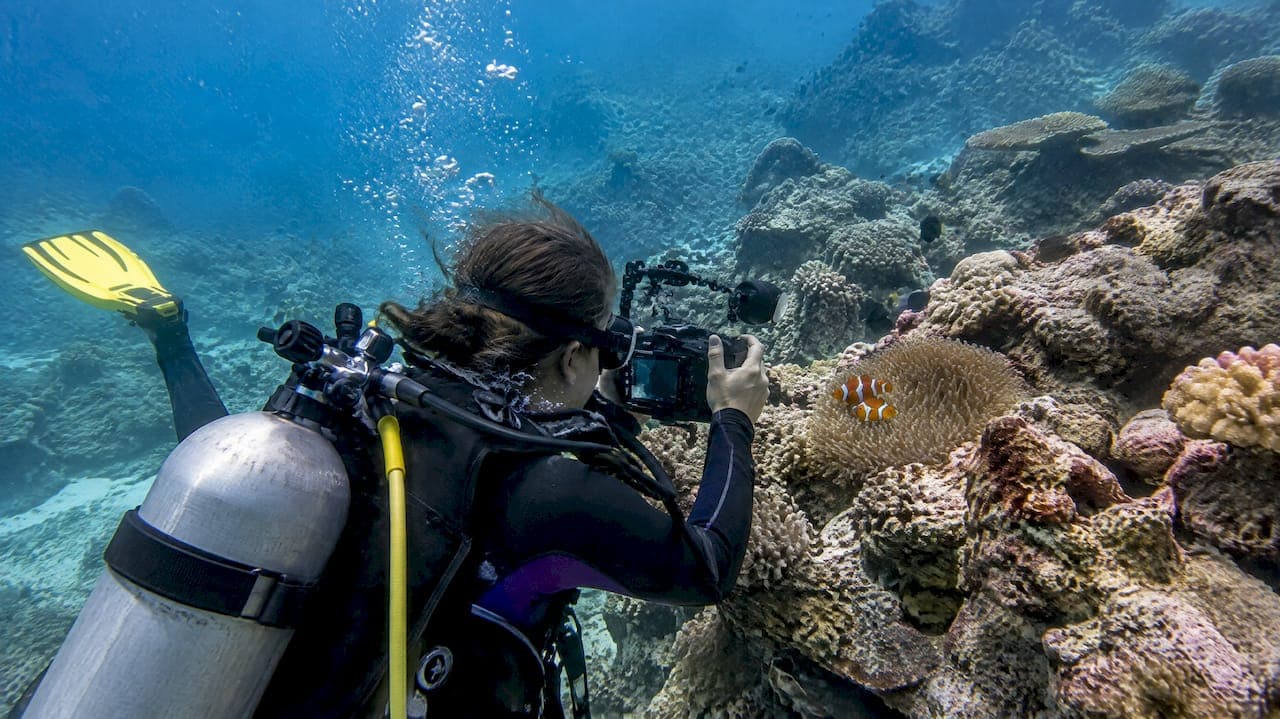
The sharpest Great Barrier Reef images come from three priorities working together: getting physically close to your subject, controlling light to restore color, and following the Reef Authority's low-impact recording rules. Underwater, aerial, and wildlife or seascape photography each demand different gear, but all three reward photographers who respect the guidelines set by GBRMPA and recognized by UNESCO's World Heritage listing.
TL;DR:
- Underwater photography is ideal for capturing coral textures and fish behavior but is limited by water clarity, depth, and backscatter issues.
- Aerial shots effectively showcase the reef's scale and patterns but depend heavily on weather conditions, aircraft access, and proper drone regulations.
- Most reef photography qualifies as low-impact recording, but commercial shoots or drone use require permits and adherence to strict distance and activity restrictions.
- To produce sharp, vibrant images, photographers should set shutter speeds of at least 1/125 underwater and 1/1000 for aerial work, shoot in RAW, and avoid excessive strobe power.
- Visiting during the dry season from May to October offers the best visibility, calm seas, and optimal wildlife activity, especially in outer reefs and offshore sites.
Table of Contents
- Choosing between underwater, aerial, and wildlife photography
- Equipment and camera settings that deliver sharp, colorful images
- Permits and low-impact recording: the GBRMPA rules every photographer must know
- Best reef locations and timing for visibility and wildlife
- Post-processing essentials and where to find or buy reef images
- How guided workshops and licensing accelerate results
- A photographer's checklist for a responsible reef shoot
- Capture or collect reef imagery with Mark Gray
- FAQ
- Sources
Choosing between underwater, aerial, and wildlife photography
Each mode produces a visually distinct result, and the right choice depends on what story you want to tell and how much logistics you can handle.
Underwater photography delivers intimate detail: coral texture, fish behavior, the glow of a strobe-lit clownfish against anemone tentacles. It demands the most equipment and the most skill, since water absorbs red and orange light within meters of the surface.
Aerial photography captures the reef's scale, the turquoise mosaic of bommies and channels that no single dive can show. It depends heavily on aircraft or drone access and calm, clear conditions.
Wildlife and seascape photography sits between the two, often shot from a boat or shoreline with a long lens, and rewards patience over equipment complexity.
- Underwater: best for coral detail, fish portraits, and macro subjects, but limited by depth, clarity, and air supply.
- Aerial: best for reef patterns and scale, but dependent on weather, aircraft availability, and exclusion zones.
- Wildlife/seascape: best for turtles, seabirds, and coastline drama, with lower gear and training barriers than diving.
Equipment and camera settings that deliver sharp, colorful images
Gear choices differ by mode, but the underlying goal is the same: fight the medium between you and your subject.

For underwater work, a housing rated for your intended depth, one or two strobes, and a wide-angle lens for reefscapes (or a macro lens for small subjects) cover most situations. Strobes restore the reds and oranges that water filters out within the first few meters, but pointed directly at a subject they bounce off suspended particles and create backscatter. Backscatter forms when light reflects off debris between the lens and the subject, and anglers reduce it by angling strobes outward rather than straight ahead, and by closing the distance to the subject so less water sits between camera and reef.
For aerial work, a mid-range zoom avoids the distortion of extreme wide angles, and a fast shutter speed matters more than a slow aperture, since aircraft vibration and forward motion blur detail quickly. Open-door flights avoid the refraction and glare of cabin windows, but only with a secure safety tether on every piece of gear and clear coordination with the pilot on altitude and flight path.
- Set shutter speed to at least 1/1000 for aerial work and 1/125 or faster underwater to freeze motion.
- Shoot in RAW and set a custom white balance underwater to recover natural color before it is lost to the blue cast.
- Balance ISO and aperture for available light rather than pushing strobe power, which worsens backscatter.
Pro Tip: Get closer before you get brighter: moving a meter nearer your subject often fixes a backscatter problem that more strobe power cannot.
Permits and low-impact recording: the GBRMPA rules every photographer must know

Most photography in the marine park does not require a permit, provided it qualifies as low impact recording, meaning hand-held or freestanding equipment that never touches coral, causes no disturbance to wildlife, and avoids unusual lighting or pyrotechnics. Commercial shoots, certain drone operations, and anything that strays from these principles usually need a permit through the Permits Online System.
Specific distances apply to wildlife and aircraft alike. Remotely operated units must stay at least 20 meters from marine turtles, 30 meters from dugongs and crocodiles, and 75 meters from seabirds, with tighter aircraft restrictions around whales and designated exclusion zones at sensitive sites such as Heron Island Reef and Low Isles.
- Confirm whether your planned activity, location, and equipment weight qualify as low impact before you travel.
- Check for site-specific exclusion areas, since some zones prohibit low-flying aircraft or drones even when general park rules would allow them.
- Apply for a permit in advance if your shoot is commercial, involves wildlife viewing for payment, or uses equipment beyond hand-held limits.
Best reef locations and timing for visibility and wildlife
Water clarity swings with the seasons. The dry season, roughly May through October, brings calmer seas and clearer water, while the wet season increases runoff and reduces visibility closer to the coast. Outer reefs and offshore bommies tend to hold clearer water year-round than inshore sites, since they sit farther from river sediment.
Sheltered lagoons and cays offer calmer conditions for beginners and aerial work, while exposed outer reef edges reward divers chasing dramatic drop-offs and bigger fish life. Timing your trip around wildlife events adds another layer: humpback whales migrate through reef waters roughly June through whale and dugong watching regulations that govern approach distances during that season, turtle nesting peaks over the warmer months, and coral visibility is generally sharpest in the dry season window.
- Favor outer reefs and bommies for the clearest water and the most reliable coral color.
- Plan dive or aerial trips in the dry season months for calmer seas and better light.
- Check seasonal wildlife calendars before booking, since whale and turtle activity shifts your best vantage points.
Tides also shape both access and light, a factor worth planning around in detail, as covered in our tides and coastal photography guide.
Post-processing essentials and where to find or buy reef images
Recovering a reef photo's true color starts in RAW: pull back the blue cast with white balance adjustments, apply dehaze sparingly to cut through water haze, and use local contrast to bring back texture lost to scattering.
- Remove backscatter spots individually rather than with blanket noise reduction, which flattens fine coral detail.
- Sharpen selectively, since underwater images already carry softness from water density and oversharpening exaggerates noise.
- For finished imagery rather than a DIY shoot, UNESCO's Great Barrier Reef gallery offers curated reference photography, while stock libraries and specialist galleries of limited-edition prints serve collectors and commercial buyers.
Seascape-specific techniques, including long exposure and composition for coastline drama, get fuller treatment in our ocean seascape photography guide.
How guided workshops and licensing accelerate results
Local launch points, skipper knowledge, and site-specific permit handling are hard to arrange solo, and that gap is where guided instruction earns its keep. One-day courses and multi-day workshops pair in-field critique with someone who already knows which bommie is clear that week and which exclusion zone to avoid.
For photographers who prefer finished artwork over logistics, gallery-quality limited-edition prints and legitimate image licensing offer a direct route to reef imagery without the permit research. Readers weighing structured instruction against solo planning will find a fuller comparison in our guide to guided photography tours, and commercial photographers exploring brand or editorial shoots may find useful context in Dock Street Studio's piece on editorial photography logistics.
A photographer's checklist for a responsible reef shoot
Check local exclusion zones before you shoot, never touch coral, hold wildlife approach distances, and skip bright strobes near hatchlings. Confirm permits ahead of time, and log unusual sightings with official reef resources.
— Mark
Capture or collect reef imagery with Mark Gray
Whether you want hands-on instruction or a finished piece for your wall, we offer a practical path to gallery-quality reef photography without sorting through permit paperwork alone.
- Our 1 Day Photography Courses and Photography Tours handle logistics, local knowledge, and in-field coaching.
- Our Limited Edition Prints bring high-quality reef and landscape imagery straight to your collection.
- Our Image Licensing service clears commercial use of our photography for your own projects.
Browse the full collection at Markgray and book the course or print that fits what you want to achieve.
FAQ
Do I need a permit to photograph the Great Barrier Reef?
Most hand-held, non-commercial photography counts as low impact recording and does not require a permit. Commercial shoots, certain drone operations, and activities that disturb coral or wildlife usually do need one, applied for through the Permits Online System.
How close can a drone get to turtles or seabirds on the reef?
Remotely operated units must keep at least 20 meters from turtles, 30 meters from dugongs and crocodiles, and 75 meters from seabirds. Some sites carry additional aircraft exclusion zones on top of these general distances.
What causes backscatter in underwater reef photos and how do I avoid it?
Backscatter happens when a strobe or flash reflects off particles suspended between the lens and the subject. Angling strobes outward and moving closer to the subject rather than increasing strobe power reduces the effect.
When is the best time of year to photograph the reef?
The dry season, roughly May through October, generally brings calmer water and better clarity than the wetter months. Wildlife timing adds nuance, since humpback whale season and turtle nesting shift the best vantage points within that broader window.
Where can I find authentic Great Barrier Reef photography to buy?
UNESCO's Great Barrier Reef gallery offers curated reference imagery, while collectors seeking finished artwork can choose Limited Edition Prints or Open Edition Prints from our gallery.
Sources
- Other types of permits | Reef Authority
- Backscatter underwater (underwater photography lighting guide)
- Great Barrier Reef - Gallery - UNESCO World Heritage Centre