
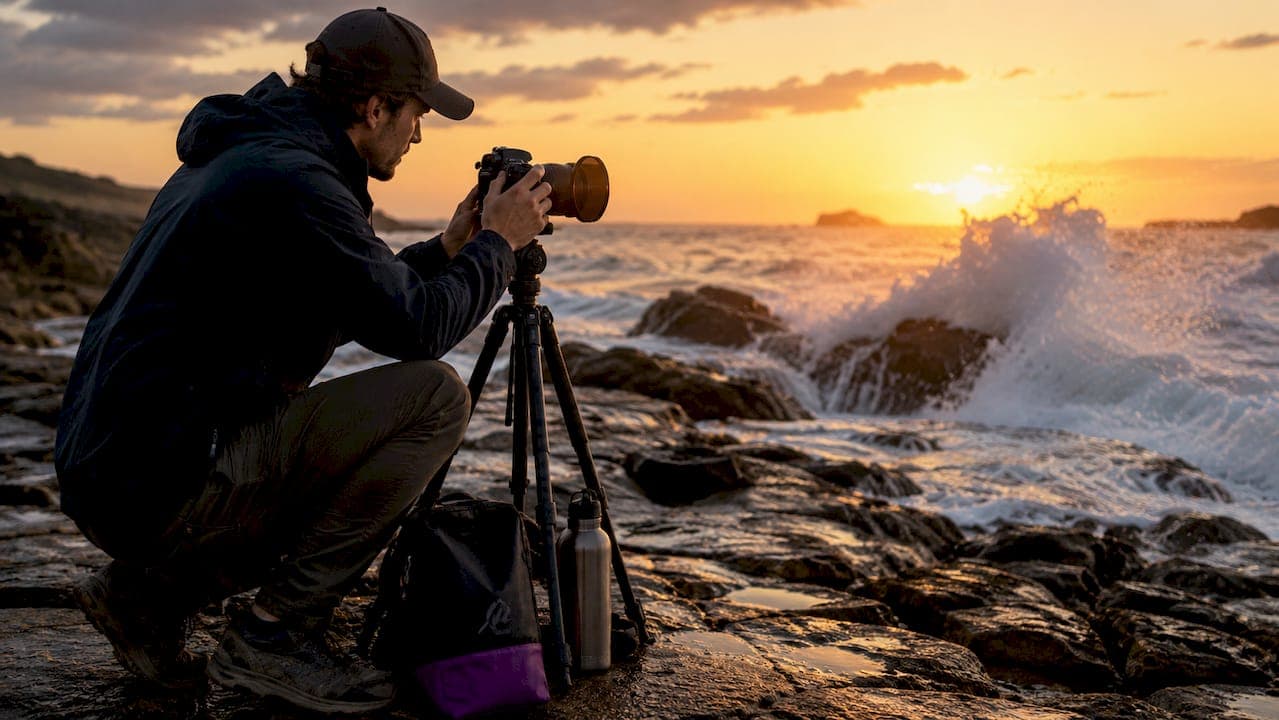
Ocean seascape photography is defined as a specialized branch of landscape photography that focuses on saltwater bodies as the primary subject, using deliberate technique to convey the movement, atmosphere, and raw power of the sea. Unlike standard coastal snapshots, this discipline demands precise control of shutter speed, exposure, and timing to transform chaotic water into something emotionally resonant. Photographers working in this genre use tools like neutral density filters, tripods, and shutter release remotes to shape how the ocean appears in the final image. The result is never just a picture of water. It is a record of the ocean's mood at a specific, unrepeatable moment.
What is ocean seascape photography and how does it differ from landscape work?
Ocean seascape photography sits within the broader category of landscape photography techniques, but it carries its own distinct demands. The ocean is never still. Every frame captures a subject that is actively moving, changing color, and shifting in intensity from one second to the next. That volatility is both the challenge and the reward.
Standard landscape photography often rewards patience with a static scene. A mountain does not move. A forest does not surge toward your tripod. The ocean does all of that and more. Seascape photographers must account for wave timing, tidal cycles, swell direction, and wind speed before they even think about composition or exposure settings.
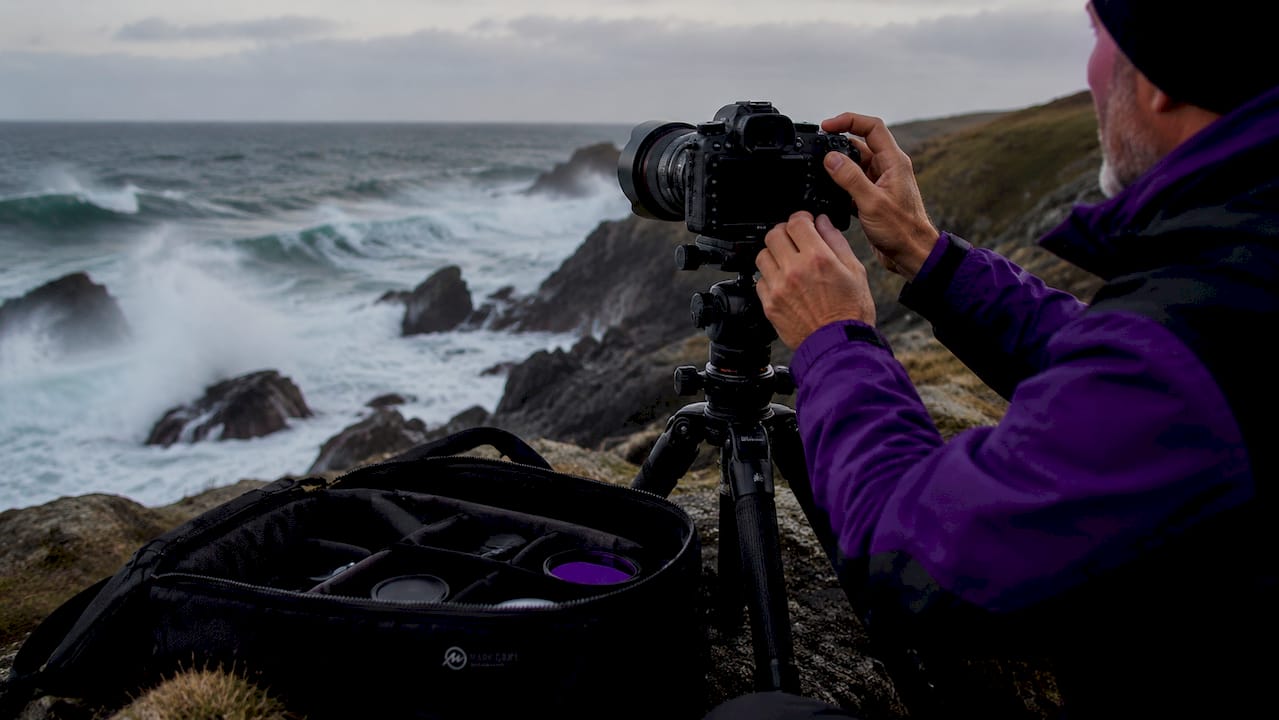
The genre also places a premium on atmosphere over literal accuracy. A technically perfect exposure of flat, calm water rarely produces a compelling image. The most celebrated seascape photographs capture tension, energy, or stillness in a way that makes the viewer feel the salt air. That emotional dimension separates skilled seascape work from ordinary coastal photography.
What are the key techniques for capturing ocean movement and mood?
Shutter speed is the single most powerful tool in seascape photography. Different shutter speeds from 1/8s to 30s produce dramatically different water textures, and choosing the right one defines the mood of the entire image.
Here is how shutter speed choices translate to visual outcomes:
- 1/500s and faster: Freezes individual water droplets and breaking wave crests. Best for dramatic action shots where you want to show raw power and spray.
- 1/30s to 1/8s: Creates a soft blur across moving water while retaining some texture and foam detail. This range works well for mid-energy surf.
- 1s to 4s: Produces the classic silky water effect, smoothing out wave movement into flowing streaks. Rocks and shoreline remain sharp.
- 10s to 30s: Turns the ocean into a glassy, ethereal surface. Requires a solid tripod and a neutral density filter to avoid overexposure in daylight.
Timing your shot within the wave cycle matters as much as shutter speed. The receding wave phase, when water pulls back across rocks or sand, creates natural leading lines that draw the viewer's eye into the frame. Shutter release cables or wireless remotes let you trigger the shutter at the exact right moment without introducing camera shake from pressing the button manually.
Neutral density filters are non-negotiable for long exposures in daylight. A 6-stop or 10-stop ND filter blocks enough light to allow shutter speeds of several seconds even in bright midday sun. Combine this with a sturdy tripod and you have the foundation for controlled, repeatable results.
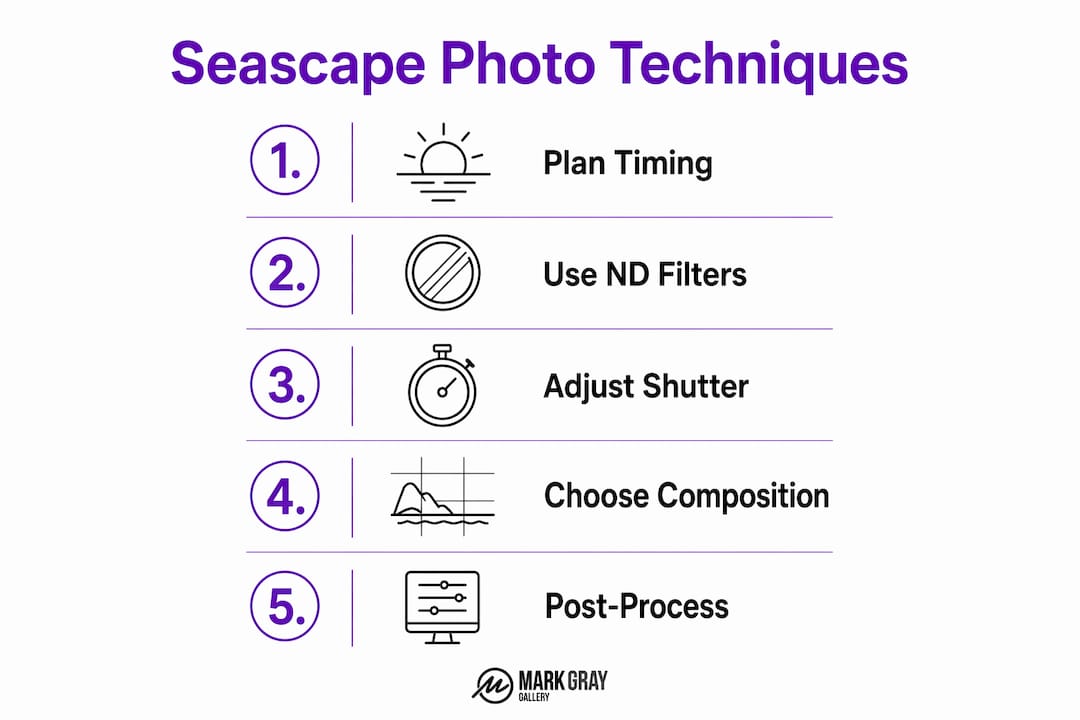
Pro Tip: Shoot in bursts during the wave's peak and receding phases, then review the sequence to identify which moment produced the strongest water texture and leading line. Seascape keeper rates are naturally low because the subject is so volatile. Shooting more frames is not laziness. It is the correct strategy.
How does composition shape a compelling seascape image?
Composition in seascape photography works best when you let the ocean do the directing. Forced symmetry produces weaker results than compositions guided by natural directional elements like wave movement and cloud formations. The ocean already contains curves, diagonals, and converging lines. Your job is to recognize and frame them, not impose artificial structure on top.
Practical composition principles that work consistently in seascape work:
- Rule of thirds: Place the horizon on the upper or lower third of the frame, not the center. A dramatic sky deserves more space. A rich foreground of wet rocks or tide pools deserves more space. Decide which element carries the image and give it room.
- Foreground anchoring: Rocks, tide pools, kelp, and sea foam all serve as foreground anchors that give the image depth and scale. Without a foreground element, the ocean can feel flat and distant.
- Natural leading lines: Receding waves, curved shorelines, and rows of sea stacks all guide the viewer's eye through the frame. Use them deliberately.
- Sky as mood setter: A stormy, cloud-filled sky adds drama and contrast. A flat gray sky can produce soft, even light that works beautifully in black and white conversions.
"Stormy fronts, flat grey light, and mist often produce better contrast and emotion in seascape photos than clear, sunny days." — Sony Scene
Weather is a creative tool, not an obstacle. Overcast and stormy conditions eliminate harsh shadows and blown-out highlights, giving you a more even tonal range to work with. Mist softens distant headlands and creates depth through atmospheric perspective. Returning to the same location across multiple weather conditions reveals which mood suits the scene best.
Black and white processing is worth considering for high-contrast scenes. Removing color forces the viewer to focus on texture, form, and tonal contrast, all of which the ocean provides in abundance.
What safety precautions and gear care are essential at the coast?
Seascape photography carries genuine physical risk. Approximately 700 sea-related deaths occur annually in the USA, and a significant portion involve people who underestimated wave energy near rocky coastlines. That number puts the stakes in clear perspective. No photograph is worth your life.
Before you set up your tripod, complete a site assessment:
- Check swell height and period: Larger swell with a longer period generates more powerful wave surges that travel further up the shore than they appear to from a distance.
- Study the tide tables: Shooting at low tide gives you more foreground to work with. Shooting near high tide on a rocky headland puts you in a genuinely dangerous position.
- Identify your retreat path: Know exactly where you will move if a larger set wave arrives. Do not let composition decisions trap you against a cliff or rock face.
- Never turn your back on the ocean: Rogue waves arrive without warning. Keep the water in your peripheral vision at all times.
Gear care is equally serious. Saltwater and spray aggressively damage camera components, including weather-sealed bodies and lenses. Salt crystals left on glass surfaces etch the coating over time. Sand particles work into lens barrels and focus rings.
Pro Tip: Carry several sacrificial microfiber cloths dedicated solely to wiping spray off your lens and filter. Use one cloth per session and discard it rather than reusing a salt-contaminated cloth that will scratch your glass. Wipe the front element immediately after any wave spray, before the water dries and leaves a salt residue.
How does exposure management and post-processing enhance seascape images?
Exposure in seascape photography is genuinely difficult. High dynamic range and rapidly changing light create a situation where bright water reflections and deep shadow areas exist in the same frame simultaneously. A single exposure often cannot capture both ends of that tonal range cleanly.
Two approaches address this problem directly:
| Method | How it works | Best for |
|---|---|---|
| Exposure bracketing / HDR | Shoot 3–5 frames at different exposures, then blend in post-processing | Scenes with extreme contrast between sky and water |
| Graduated ND filter | Physical filter darkens the sky in-camera during the shot | Simpler scenes with a clean, straight horizon |
| Exposure compensation | Dial in positive or negative compensation based on the dominant tonal area | Quick adjustments when light is changing fast |
Bracketed HDR imaging handles bright highlights and deep shadows more reliably than relying on a graduated ND filter alone, particularly when the horizon is broken by rocks, sea stacks, or crashing waves. A graduated filter works best on a clean, flat horizon.
Post-processing for seascape images should amplify what was already present in the scene, not invent something that was not there. Increasing clarity and texture in the water brings out foam and wave detail. Pulling back highlights in the sky recovers cloud structure. Lifting shadows in the foreground rocks reveals color and texture that flat light often hides. Software like Adobe Lightroom and Capture One both handle these adjustments well. For a deeper look at how editing shapes the final image, the role of post-processing in landscape work covers the full workflow in detail.
Long exposure techniques and their relationship to ND filters are also covered thoroughly in the long exposure landscape guide, which is worth reading alongside this article for a complete technical picture.
Key Takeaways
Ocean seascape photography rewards photographers who combine technical control of shutter speed and exposure with patient, repeated observation of the ocean's rhythm and conditions.
| Point | Details |
|---|---|
| Shutter speed defines mood | Use 1/500s to freeze action or 10s–30s for silky, ethereal water effects. |
| Composition follows the ocean | Let wave movement and cloud shapes serve as natural leading lines instead of forcing symmetry. |
| Safety comes before creativity | Assess swell, tide, and retreat paths before setting up gear at any coastal location. |
| Gear needs immediate care | Wipe salt spray from lenses immediately using sacrificial microfiber cloths to prevent coating damage. |
| Bracketing beats guessing | Exposure-bracketed shots handle high dynamic range scenes more reliably than a single exposure. |
What I have learned from years at the water's edge
Most photographers arrive at the coast expecting to capture a great image in a single session. That expectation is the first thing the ocean corrects. The scenes that have produced my strongest seascape work almost never happened on the first visit. They happened on the third or fourth return, when I had already mapped the wave patterns, identified the best foreground rocks, and learned how the light moved across that particular stretch of shore at that particular time of day.
Patience is not a passive quality in this genre. It is an active skill. Reading the ocean means watching a set of waves roll through, counting the interval between them, and anticipating where the next surge will reach. That knowledge changes how you position yourself, when you trigger the shutter, and which part of the wave cycle you choose to capture.
The other lesson that took me longer to accept is that bad weather is often good photography. My most celebrated coastal images were made in conditions that most photographers would have stayed home to avoid. Overcast skies, incoming storms, and sea mist create the kind of atmosphere that clear sunny days simply cannot replicate. The discomfort is part of the process.
— Mark
Mark Gray's seascape and landscape photography work
Mark Gray is an internationally recognized Australian photographer whose award-winning portfolio spans some of the world's most dramatic coastal and landscape locations, from Iceland and Norway to French Polynesia and the Australian coastline. His work demonstrates exactly the kind of technical precision and atmospheric sensitivity that ocean seascape photography demands at its highest level.
Photographers looking for inspiration and technical insight can explore the full landscape photography portfolio at the Mark Gray Gallery, where limited edition fine art prints are available alongside a gift range and licensing options. For those ready to develop their own skills in the field, Mark offers one-day photography courses across Australia and multi-day workshop tours both domestically and worldwide. These sessions cover everything from exposure management to composition and post-processing in real coastal environments.
FAQ
What is ocean seascape photography?
Ocean seascape photography is a specialized branch of landscape photography that uses saltwater bodies as the primary subject, emphasizing movement, atmosphere, and the power of the sea through deliberate technical choices.
What shutter speed should I use for seascape photography?
Shutter speeds from 1/8s to 30s cover the full range of water movement effects. Faster speeds freeze wave action while longer exposures create smooth, silky water textures.
Do I need a tripod for seascape photography?
A tripod is required for any exposure longer than 1/30s. Without one, camera shake ruins the sharpness of stationary elements like rocks and shoreline during long exposures.
What are the biggest safety risks in seascape photography?
Unexpected wave surges on rocky coastlines are the primary hazard. Always assess swell height, tide timing, and your retreat path before positioning yourself near the water.
Is post-processing necessary for seascape images?
Post-processing is standard practice in seascape photography. Exposure bracketing and selective editing in tools like Adobe Lightroom recover highlight and shadow detail that a single in-camera exposure cannot capture cleanly.