
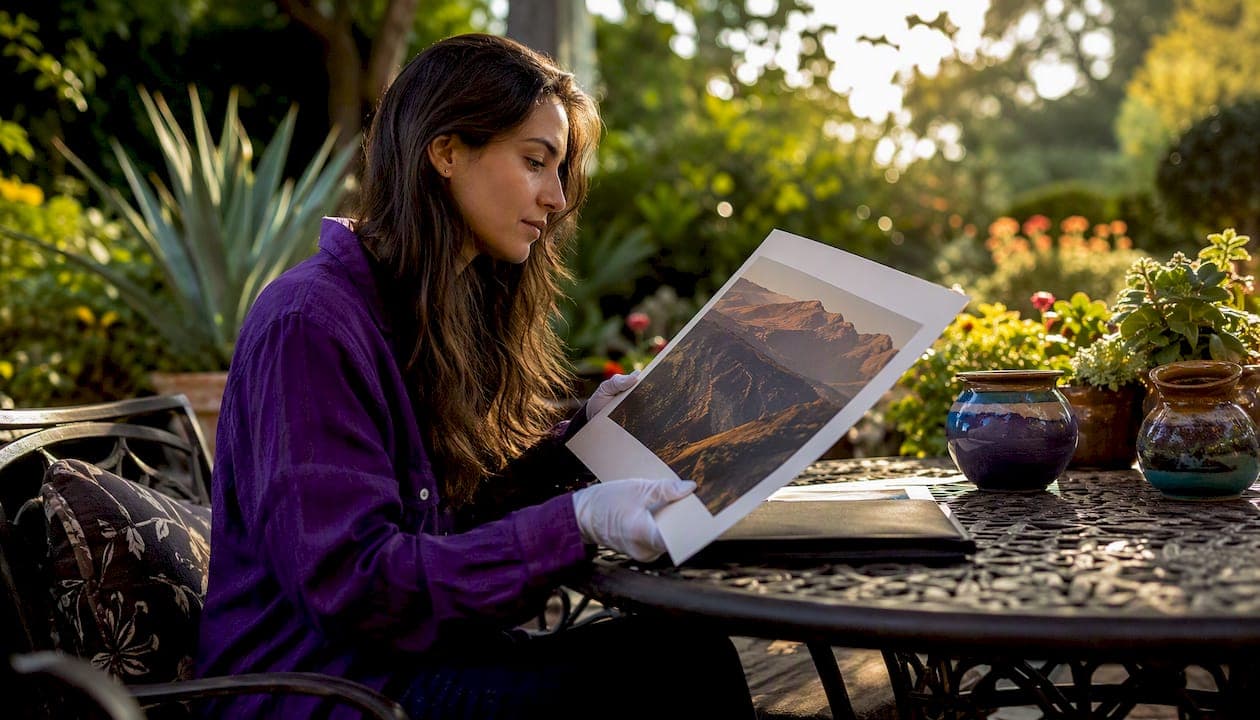
If you're collecting for investment or legacy, limited edition landscape prints are the clear choice. If you want beautiful imagery for your walls without a premium price, open editions deliver that without compromise. The distinction isn't just philosophical: scarcity, provenance, and artist involvement are the specific forces that separate a collectible asset from a decorative reproduction, and Sotheby's specialists have long identified these as the primary value drivers in the editioned print market.
Before you buy either format, check these four things:
- Edition size and numbering: A fraction like 12/50 tells you exactly where a print sits within a fixed run.
- Certificate of authenticity (COA): A credible COA names the edition size, print method, paper, and artist signature details.
- Paper and print method: Archival pigment inks on acid-free cotton rag paper are the standard for collector-grade prints.
- Signature presence and placement: A hand-signed print from the artist carries meaningfully more provenance than a printed signature.
Serious collectors and investors: prioritize limited editions with edition sizes below 200, strong documentation, and gallery provenance. Buyers decorating a home or gifting a print: open editions from a reputable studio offer excellent quality at a fraction of the price.
Table of Contents
- What "limited edition" and "open edition" actually mean for landscape prints
- The edition abbreviations every collector should recognize
- Why limited editions generally command higher prices
- What to check before you buy a landscape print
- How prints are priced and what resale actually looks like
- Pitfalls and misleading practices collectors should watch for
- When an open-edition landscape print is the right choice
- How Mark Gray Gallery approaches editioning
- Key Takeaways
- The case for buying with your eyes open
- Mark Gray Gallery: collector-grade limited editions, ready to ship
- Useful sources for collectors
What "limited edition" and "open edition" actually mean for landscape prints
The terminology sounds straightforward, but the definitions carry real legal and commercial weight when you are spending money on art.
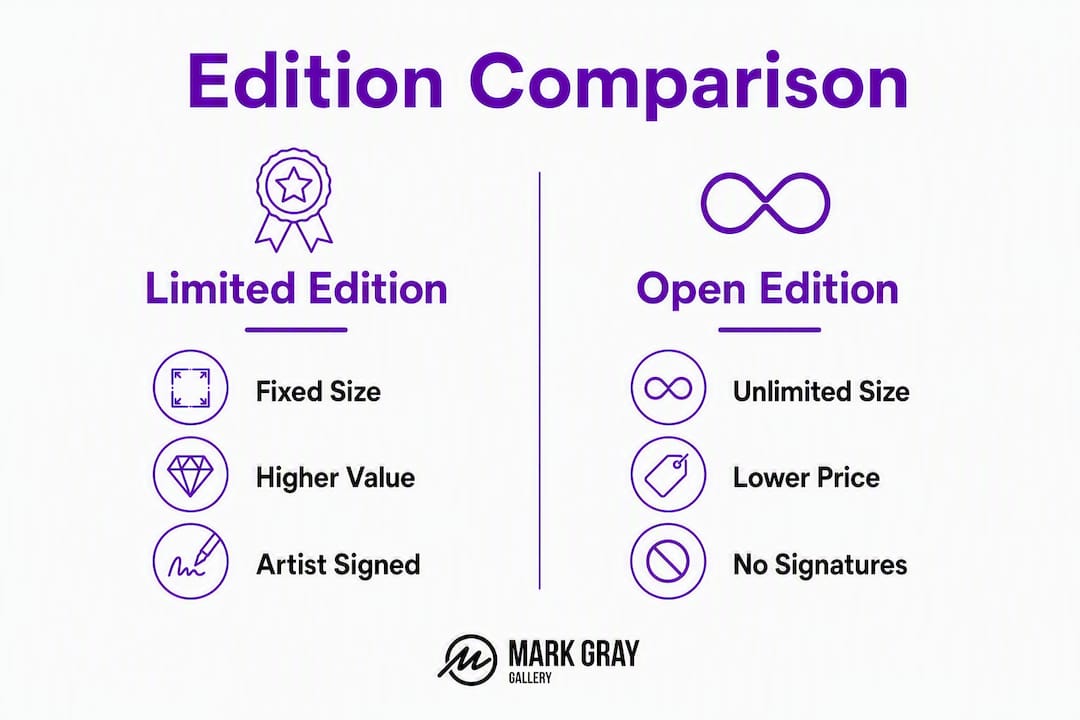
A limited edition print has a fixed, pre-announced total number of impressions. Once that number is reached, no further prints are produced from that image in that format. Each print is numbered as a fraction (for example, 3/50 means the third print from a run of fifty), and the edition is typically accompanied by a signed COA. The artist's signature on the print itself, combined with gallery documentation, creates the provenance chain that underpins long-term value.
An open edition print carries no fixed cap. It can be produced on demand indefinitely, reprinted as technology improves, or discontinued at the publisher's discretion without any formal announcement. Open editions are generally priced for volume rather than scarcity, and they rarely include a COA or hand-signed numbering. That doesn't make them low quality, but it does make them decorative reproductions rather than collectible assets.
Common notation you'll encounter on prints and COAs:
- 3/50: The third print from a total edition of fifty.
- AP or A/P (Artist's Proof): A print outside the numbered edition, historically retained by the artist; should total no more than roughly 10% of the edition.
- H.C. (Hors de Commerce): "Not for sale" in French; originally trade copies, now sometimes misused as additional inventory.
- PP (Printer's Proof): A working proof retained by the print studio; legitimate when documented, a red flag when excessive.
The edition abbreviations every collector should recognize
Understanding the shorthand on a COA or invoice separates informed buyers from those who get misled. Here's the glossary that matters in practice:
- AP / A/P (Artist's Proof): — Traditionally the artist's personal copies, numbered separately (e.g., AP 1/5). Artsy's collector guidance recommends that artist's proofs account for no more than roughly 10% of the announced edition. An edition of 50 with 20 APs is a red flag.
The total of all proofs (AP, PP, H.C.) should be documented on the COA alongside the main edition number. When a seller cannot account for all proof categories, treat that as incomplete documentation.
Pro Tip: Ask the gallery or seller to provide a full breakdown of all impression categories: numbered edition, APs, PPs, and any H.C. copies. A reputable studio will have this on file and will share it without hesitation.
Why limited editions generally command higher prices
The price premium on a limited edition landscape print isn't arbitrary. It reflects several converging forces, each of which you can evaluate independently before buying.

Scarcity and edition size are the most direct levers. Editions under 200 are treated as fine art by many serious collectors, while editions above that threshold are frequently considered commercial multiples. A run of 25 prints from a celebrated photographer carries a fundamentally different market position than a run of 500, even if the image and print quality are identical.
Provenance and documentation amplify scarcity into verifiable value. A COA signed by the artist, combined with gallery records and auction visibility, creates a paper trail that future buyers can verify. Sotheby's specialists note that artist importance and institutional presence are among the strongest predictors of long-term edition value. An edition tied to a museum exhibition or a defining career moment holds its ground in ways that a standalone release often cannot.
Artist involvement and production control matter because they signal intent. When an artist signs each print individually, approves the color proofing, and commits to destroying or archiving the source files after the edition closes, collectors know the scarcity is genuine rather than manufactured. That commitment is what transforms an image from a decorative piece into a collectible asset.
Materials and print technique support long-term value in a practical sense. Giclée printing with archival pigment inks on acid-free cotton rag paper can last well over a century under proper conditions. A print that fades or yellows within a decade has no resale story to tell. The fine art printing process used by reputable studios is a direct investment in the print's physical longevity.
| Attribute | Limited Edition | Open Edition |
|---|---|---|
| Edition size | Fixed, pre-announced cap | No cap; produced on demand |
| Numbering | Fraction (e.g., 12/50) | None |
| COA / signature | Standard; hand-signed | Rarely included |
| Print materials | Archival pigment inks, cotton rag | Variable; often standard photo paper |
| Resale potential | Meaningful for small editions | Minimal |
| Price point | Premium, reflects scarcity | Volume-priced |
| Collector perception | Fine art / collectible asset | Decorative reproduction |
What to check before you buy a landscape print
A collector's checklist is only useful if it's specific. These are the questions and verification steps that matter at the point of purchase.
- Confirm the total edition size. Ask for the exact number of impressions in the main edition, not just the number on your print. A print numbered 7/500 is a very different proposition from 7/25.
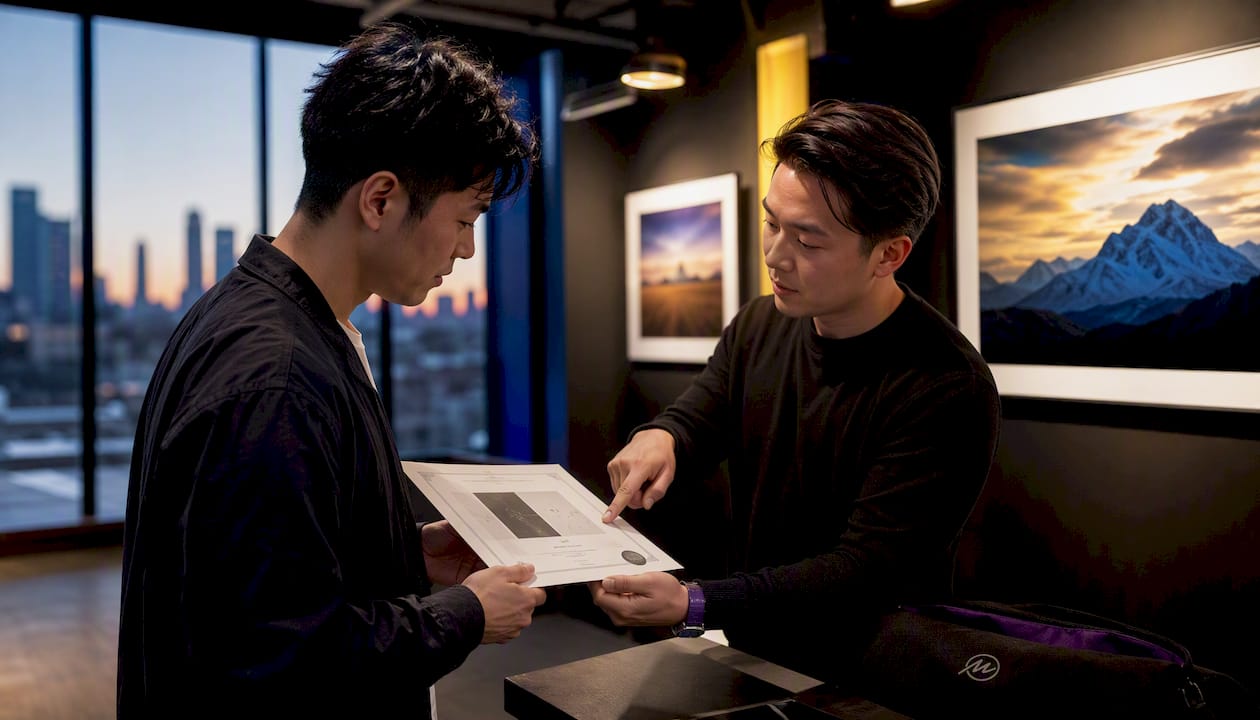
- Request the full COA. The certificate should name the artist, image title, edition size, your print's number, paper type, ink type, print dimensions, print date, and the artist's signature. Missing fields are missing provenance.
- Check the signature. A hand-signed print carries more weight than a printed or stamped signature. Ask whether the artist signed in person or whether the signature was applied mechanically.
- Account for all proof categories. Ask how many APs, PPs, and H.C. copies exist alongside the numbered edition. The total should be disclosed on the COA.
- Identify the printer and studio. Reputable limited editions name the print studio and the specific equipment used. Anonymous production is a warning sign.
- Verify the print method and substrate. Giclée on archival cotton rag is the collector standard. Chromogenic (C-print) and dye-transfer prints have their own archival properties; ask for specifics rather than accepting "high quality" as an answer.
- Ask about plate or file archiving. Will the digital files or negatives be permanently archived or destroyed after the edition closes? A credible answer protects your investment.
- Check the condition report. For secondary-market purchases, request a written condition report noting any fading, foxing, or handling marks.
- Understand the returns policy. A gallery confident in its documentation will offer a clear returns window and a satisfaction guarantee.
- Verify remotely when buying online. Cross-reference the edition against the gallery's published edition records, the artist's website, or auction databases. For significant purchases, request a video call with the gallery to inspect the COA in person.
Pro Tip: A credible COA is printed on the gallery's letterhead, references a specific print number, and carries the artist's original signature alongside the gallery director's. A COA that arrives as a generic template with no print-specific details is not adequate documentation for a collector-grade purchase.
How prints are priced and what resale actually looks like
Pricing in the editioned print market follows a logic that rewards scarcity and penalizes ambiguity. Understanding the mechanics helps you evaluate whether a price is fair before you commit.
Edition size is the primary multiplier. Industry pricing benchmarks from Let's Talk Shop show that very small editions of around 10 prints can sell at 4–5 times the equivalent open-edition price. Editions of 50 typically command a 2.5–3x multiplier. As edition sizes climb toward 200 and beyond, that premium compresses until the pricing difference becomes negligible.
Open editions are priced for volume. A standard 11x14" open-edition print from an established photographer typically runs in the $25–$65 range according to the same industry guidance, priced to move rather than to appreciate.
| Edition Size | Typical Multiplier vs. Open Edition | Collector Classification |
|---|---|---|
| 1–10 | 4–5x | Rare / fine art |
| 11–50 | 2.5–3x | Collector grade |
| 50–200 | 2–3x | Fine art / emerging |
| — | 1–2x | Commercial multiple |
| Open edition | Baseline | Decorative reproduction |
Resale value is driven by factors beyond edition size alone. Auction visibility and institutional presence are among the strongest predictors of secondary-market performance. A print from an artist with a museum exhibition history, gallery representation, and auction records will hold its value more reliably than an equally beautiful print from an artist with no institutional footprint.
Time horizon matters, too. Treating a limited edition print as a short-term speculative asset is a mistake most experienced collectors avoid. The photography print investment basics that apply here are the same ones governing any illiquid collectible: buy what you love, document everything, and think in decades rather than months.
This article provides general information about the art print market and is not financial or investment advice. Consult a qualified art advisor or financial professional before making significant purchasing decisions.
Pitfalls and misleading practices collectors should watch for
The editioned print market has its share of practices that blur the line between genuine scarcity and manufactured perception. Knowing the red flags protects both your money and your collection's integrity.
- Inflated "limited" editions: An edition of 2,000 labeled as "limited" is technically accurate but practically meaningless for collector purposes. Editions above 200 are frequently considered commercial multiples rather than fine art by serious collectors.
- Missing or vague COAs: A certificate that doesn't specify the edition size, print number, paper type, or artist signature details is not a collector-grade document.
- Excessive artist proofs: When APs, PPs, and H.C. copies together exceed roughly 10% of the announced edition, the effective scarcity of the numbered run is diluted.
- Unsigned prints marketed as limited: A numbered print without the artist's hand signature carries weaker provenance than one that is signed.
- Undisclosed posthumous editions: Prints produced after an artist's death from archived files or plates, without clear disclosure, undermine the integrity of earlier editions.
- Secret reprints: Reputable artists and publishers destroy or permanently archive plates and digital files after an edition closes. Undisclosed second printings destroy collector trust and erode the value of every print in the original edition.
If you suspect a documentation issue, ask the gallery for publisher records, a provenance chain, and any auction history. A gallery with nothing to hide will answer those questions directly.
When an open-edition landscape print is the right choice
Open editions aren't a compromise. For the right buyer and the right context, they're the sensible choice, and understanding when they fit helps you spend your budget where it counts.
- Decorating multiple spaces: Furnishing a home, office, or hospitality venue with large-format landscape imagery is expensive at limited-edition prices. Open editions let you fill a space beautifully without the collector premium.
- Gifting: An open-edition print from a respected photographer makes a meaningful, visually striking gift. For guidance on selecting the right image and size, choosing a landscape print as a gift covers the key decisions.
- Testing an image before committing: Some collectors buy an open-edition version of an image to live with it before purchasing a limited edition of the same or a related work. It's a low-risk way to evaluate how a photograph performs on your wall.
- Budget-conscious collecting: Building familiarity with an artist's body of work through open editions is a legitimate entry point. Many collectors start here and move to limited editions as their knowledge and budget grow.
- Volume display needs: Curating a landscape photography wall gallery across multiple rooms often calls for a mix of formats; open editions fill supporting roles without competing with the limited editions that anchor the display.
Quality still matters on open editions. Look for archival pigment inks, a reputable print studio, and a substrate that won't yellow or fade within a few years. A high-quality open edition on cotton rag paper from a respected photographer is a genuinely satisfying object, even without collector documentation.
Many studios deliberately maintain a product mix weighted toward open editions for volume, with limited editions reserved for collector-level work. Industry guidance suggests a shop mix of roughly 60–70% open editions, 20–30% limited editions, and a small premium tier, which reflects how artists and galleries balance accessibility with exclusivity.
How Mark Gray Gallery approaches editioning
Mark Gray Gallery's editioning practice is built on the principles that matter most to serious collectors: transparency, archival quality, and clear documentation from the moment a print is produced.
- Fixed, clearly stated edition sizes: Every limited edition in the gallery's collection carries a pre-announced cap, with the total edition size published alongside the print listing. No ambiguity about how many impressions exist.
- Hand-signed prints and COAs: Each limited edition print is hand-signed by Mark Gray and accompanied by a certificate of authenticity that specifies the edition number, image title, print dimensions, paper type, and ink system.
- Archival materials: The gallery uses archival pigment inks on acid-free substrates, consistent with the fine art printing standards that support long-term physical integrity and collector confidence.
- Geographic range: Limited editions are available from locations across Australia, New Zealand, Norway, Iceland, French Polynesia, Spain, and the United Kingdom, giving collectors access to a genuinely international body of landscape work.
- Workshop and author credentials: Mark Gray's standing as an internationally recognized photographer, combined with his active photography workshop and tour program, provides the institutional presence that Sotheby's identifies as a key value driver for editioned work.
- US-market shipping and service: The gallery ships to collectors in the United States, with condition guarantees and customer service that meet the expectations of a collector-grade purchase.
Pro Tip: When purchasing a limited edition from Mark Gray Gallery, ask for the full edition breakdown including any artist's proofs. The gallery's documentation standards mean this information is readily available, and having it on file from the point of purchase strengthens your provenance record for any future resale.
Key Takeaways
Limited editions command higher prices and stronger resale potential because scarcity, provenance, and archival materials combine to create a verifiable collectible asset, while open editions serve decorative and budget-conscious buyers with excellent quality at accessible prices.
| Point | Details |
|---|---|
| Edition size drives value | Editions under 200 are treated as fine art; editions above that threshold are typically commercial multiples. |
| Documentation is non-negotiable | A credible COA names the edition size, print number, paper, inks, and carries the artist's original signature. |
| Proof counts matter | Artist's proofs and printer's proofs combined should not exceed roughly 10% of the announced edition. |
| Open editions have a legitimate role | For decoration, gifting, or budget collecting, high-quality open editions from reputable studios are a sound choice. |
| Mark Gray Gallery | Offers hand-signed, COA-documented limited editions on archival substrates, with US shipping and full provenance records. |
The case for buying with your eyes open
There's a version of the limited-edition conversation that focuses almost entirely on investment returns, and it misses the point. The collectors I've seen build the most satisfying collections are the ones who buy because an image genuinely moves them, and then do the work to make sure the documentation supports whatever the print might become over time.
What I'd push back on is the idea that open editions are somehow lesser. A beautifully produced open-edition landscape print, printed on archival paper with pigment inks by a photographer whose work you admire, is a real and lasting thing. The difference is that it doesn't carry the provenance story that a limited edition does, and provenance is what the market rewards.
The pitfall I see most often isn't collectors buying open editions when they should buy limited. It's collectors buying poorly documented "limited" editions, often with edition sizes in the hundreds and no meaningful COA, because the word "limited" was on the label. Edition size and documentation are the two variables that actually matter. Everything else follows from those.
Mark Gray Gallery: collector-grade limited editions, ready to ship
For collectors who want the confidence of clear documentation, archival materials, and a photographer with genuine international standing, Mark Gray Gallery offers a collection of premium limited edition landscape prints spanning some of the world's most extraordinary locations.
Every limited edition comes hand-signed, numbered, and accompanied by a full certificate of authenticity. The gallery's archival production standards mean your print is built to last, and the provenance documentation means it's built to hold its story. Open editions are also available for buyers who want the quality of Mark Gray's photography without the collector premium.
Beyond prints, the gallery offers photography workshops and multi-day landscape tours across Australia and worldwide, giving serious photography enthusiasts a direct connection to the creative process behind the work. Browse the current collection, check edition availability, and contact the gallery directly at markgray.com.au.
Useful sources for collectors
These are the primary references used in this article, each offering authoritative guidance on different aspects of the editioned print market:
- What Makes an Artist Limited Edition Valuable? | Sotheby's: Expert analysis of the value drivers for limited editions, including scarcity, provenance, and institutional presence.
- What to Know When Buying Limited Editions | Artsy: Practical collector guidance on edition integrity, proof counts, and authentication steps.
- How to Price Art Prints | Let's Talk Shop: Industry pricing benchmarks for both limited and open editions, including edition-size multipliers and typical price bands.
- Edition Sizing and Print Sales | Artsume: Guidance on edition-size thresholds and how they affect collector perception and market positioning.
- Limited Edition Prints Explained | Artelino: Detailed explanation of edition types, proof categories, and the importance of plate/negative archiving.
- The Art of Scarcity: The Value of Limited Edition Prints | Luma Prints: Collector sentiment research on how scarcity transforms perception from decorative to collectible.
- Limited Edition Print Value Explained for Collectors | Mark Gray Gallery Blog: Gallery-level context on why limited editions carry collector value and how to evaluate them.
- Photography Print Investment Basics for Art Collectors | Mark Gray Gallery Blog: Investment-focused guidance on edition size, artist reputation, and resale considerations.