
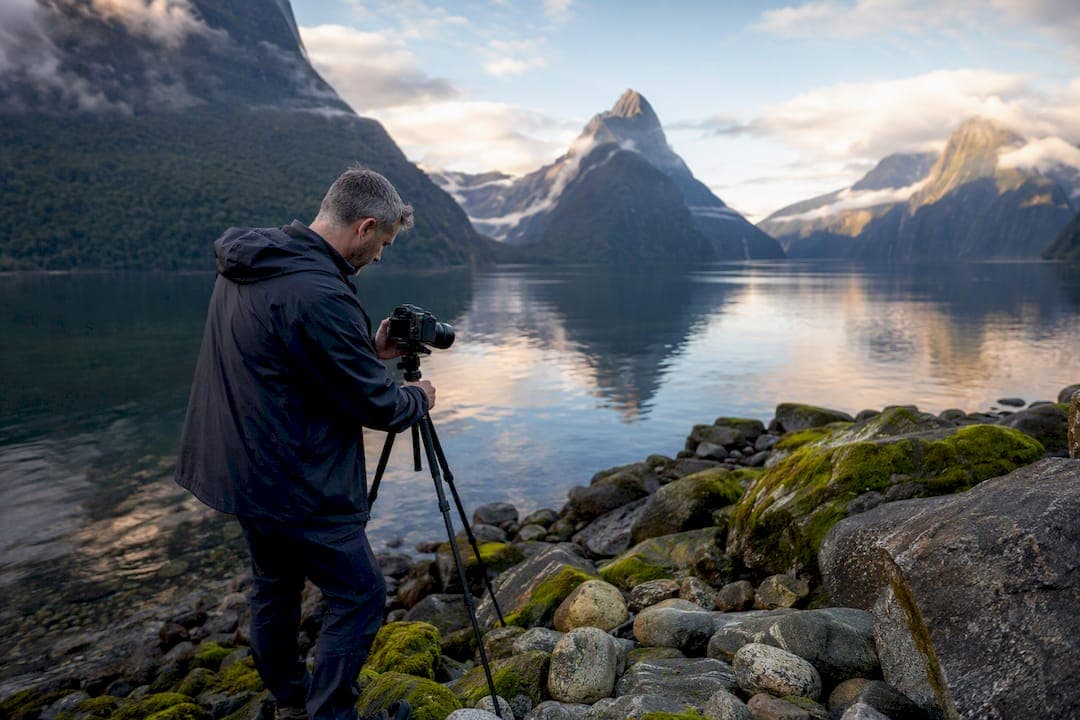
Start at the foreshore beneath Mitre Peak, and go early. That single vantage point delivers the reflected, mist-wrapped shot most people picture when they picture Milford Sound, and it rewards photographers who show up before the light gets flat. Pack a wide-angle lens and genuine weather protection for your camera and bag, because rain here is frequent, not occasional. Once you have that shore-based shot, add a cruise or scenic flight for the angles a tripod on land simply cannot reach.
TL;DR:
- Shooting early in the morning before the light flattens is essential to capture the iconic reflections and misty scenery at Milford Sound.
- Protective gear like waterproof packs, rain covers, and silica gel is critical to safeguarding equipment in Milford's frequent rain.
- Optimal camera settings vary by subject, with landscape shots best at f/8 to f/16, and wildlife requiring fast shutter speeds of 1/500s or higher.
- Visiting during shoulder seasons and overnight stays improve chances for dramatic lighting and clear, dark skies for astrophotography.
- Commercial shooting requires permits and coordination with the Department of Conservation, unlike casual visitation which needs no special authorizations.
Table of Contents
- Best Milford Sound Photo Spots and What to Shoot There
- What Gear Protects Your Camera in Wet Conditions?
- What Camera Settings Work Best at Milford Sound?
- When Should You Visit for the Best Light?
- Is It Safe to Photograph Kea and the Foreshore?
- How Do You Plan a Milford Sound Photography Trip?
- Do You Need a Permit to Photograph Milford Sound?
- Author Perspective: Field Lessons From Teaching at Milford Sound
- Take Your Milford Sound Images Further
- Sources
Best Milford Sound Photo Spots and What to Shoot There
Every serious Milford Sound photography guide starts with the foreshore, but the fiord offers a string of distinct opportunities along the drive in, and treating each one as its own mini-shoot pays off.
- Foreshore and Mitre Peak. The foreshore walk is the quintessential spot, with sunrise or sunset producing reflected peaks and light beams across the water. Watch the tide and the rocks underfoot; they get slippery fast.
- Mirror Lakes. A short boardwalk off the main road delivers glass-still reflections, best caught in early morning before wind disturbs the surface.
- Eglinton Valley. Wide grassy foregrounds and a famously straight road make for strong leading-line compositions, with several safe pullover spots for parking.
- Monkey Creek and Homer Tunnel. Roadside kea sightings and dramatic tunnel-mouth framing against granite walls make this stretch worth slowing down for.
- Lake Marian. A beech forest and swingbridge lead to a valley view most day-trippers never see. Budget several hours for the return journey.
- Cruise vantage points. Stirling Falls, Fairy Falls, and Lady Bowen Falls all get you close enough to feel the spray, so shoot from a braced stance rather than a fixed tripod.
- Scenic flights. Aerial routes reveal Mitre Peak's silhouette against the fiord's full topography, though flights stay weather dependent year round.
What Gear Protects Your Camera in Wet Conditions?
Milford Sound punishes gear that isn't ready for it. A wide-angle lens in the 16 to 35mm equivalent range handles the fiord's scale, while a 70 to 200mm covers kea portraits and dolphin action from the boat deck.
- A rain cover and a genuinely waterproof daypack matter more here than almost anywhere else you'll shoot.
- Carry lens cloths, silica gel packets, and both disposable and reusable covers for sudden downpours.
- A small travel tripod works on the foreshore; a bean bag laid across a boat rail stabilizes shots when a tripod is impractical.
- A circular polarizer cuts glare off wet rock and deepens the sky; ND filters let you stretch waterfall exposures on land.
- Keep spare batteries and memory cards in a dry sack inside your pack, not loose in a jacket pocket.
Pro Tip: Fog a lens the moment you step off an air-conditioned bus into Fiordland's humidity, and you'll lose your first five minutes of shooting. Let the camera acclimate in your bag for a few minutes before you uncap it.
What Camera Settings Work Best at Milford Sound?
Different subjects at Milford Sound call for different technical approaches, and switching between them quickly is part of the skill.
- Landscapes: Shoot around f/8 to f/16 at base ISO, and consider focus stacking when a foreground rock or fern sits close to the lens while Mitre Peak looms behind it.
- Waterfalls: Use a tripod or bean bag with an ND filter for multi-second exposures on land; from a moving cruise boat, switch to a faster shutter speed instead and accept a sharper, less silky look.
- Wildlife: Kea and dolphins move fast, so shoot at 1/500s or faster, use burst mode, and reach for your longer lens rather than walking closer.
- Boat shooting: Brace against the rail, raise your shutter speed to compensate for engine vibration and spray, and keep a lens cloth within reach at all times.
- Astrophotography: A fast wide lens at f/2.8 or wider, exposures of roughly 15 to 25 seconds depending on focal length, and a dark patch of sky away from lodge lighting will get you a usable star field.
- Composition: Lean on reflections in still water, place a strong foreground element to anchor scale, and use telephoto compression to stack mountain layers behind the fiord.
Our lighting conditions guide breaks down how to read golden hour light more precisely if you want to go deeper on timing your exposures.
When Should You Visit for the Best Light?
Rain is not the enemy of a good Milford Sound photo. Heavier rain swells the waterfalls and adds mood; embrace it rather than waiting it out, as long as your gear is protected.
- Calm reflections need early morning or a sheltered, windless day, since the fiord's surface ripples the moment a breeze picks up.
- Late afternoon and sunset produce the dramatic light beams across Mitre Peak that define the postcard shot.
- Shoulder seasons, March through May and September through October, bring fewer crowds and softer light than midsummer.
- Staying overnight near the sound raises your odds of catching that ideal light window and cuts your risk of driving Milford Road after dark.
- Clear autumn and winter nights near Milford Sound Lodge offer some of the darkest skies in Fiordland for astrophotography.
Weather here shifts by the hour, and our piece on how weather shapes landscape photography covers how to plan a shoot around conditions you can't control.
Is It Safe to Photograph Kea and the Foreshore?
Kea are curious to the point of destructive. They peck at camera straps, rubber lens hoods, and car door seals, so never feed them and never leave gear unattended near a parked vehicle.
- Check tide times before stepping onto foreshore sand or rocks; an incoming tide can cut off your return path faster than expected.
- Avoid stopping on blind corners along Milford Road. Eglinton Valley's marked pullovers are far safer than an improvised roadside stop.
- On cruise decks, secure loose gear, follow crew instructions, and wear grippy footwear. Wet decks and camera bags do not mix well.
Pro Tip: Zip your bag fully closed the moment you set it down anywhere near kea territory, even for thirty seconds. They work fast, and they specifically target zippers and straps.
How Do You Plan a Milford Sound Photography Trip?
Self-drive gives you the freedom to stop at Mirror Lakes and Eglinton Valley on your own schedule, while a coach or guided tour trades that flexibility for a driver who handles the notoriously winding road.
- Allow at least one overnight near the sound so you can shoot both a sunrise and a sunset instead of racing the daylight on a single pass.
- Book cruises and flights with an eye on their weather policies, and request deck access or an early or late departure for the best light.
- Build a sample day: foreshore at sunrise, Mirror Lakes and Eglinton Valley through midday, then a cruise in the afternoon for the waterfalls and Mitre Peak from the water.
A lodge with a genuine outlook, the kind our lodging partner describes here, can turn even your pre-dawn coffee into a usable frame. For wider trip context, our New Zealand landscape guide covers logistics beyond the fiord itself.
Do You Need a Permit to Photograph Milford Sound?
Casual and enthusiast photography at Milford Sound's public viewpoints, the foreshore, Mirror Lakes, Eglinton Valley, and Lake Marian, requires no permit. These are managed as part of Fiordland National Park, and standard visitor access rules apply the same way they do to any hiker or sightseer.
The picture changes if you're shooting for commercial purposes: advertising work, stock sales tied to a brand campaign, drone operation, or any shoot involving tripods, crew, or props that go beyond what a typical visitor carries. Commercial and drone activity inside Fiordland National Park is managed by the Department of Conservation, and operators generally need a concession or permit before filming. If your work is destined for commercial licensing rather than a personal print or portfolio, check current requirements with DOC before your trip rather than assuming your usual travel photography rules apply.
Cruise operators also set their own onboard rules. Some restrict tripod use on deck for safety reasons, and a few limit drone launches entirely regardless of DOC permissions. Confirm both sets of rules when you book, especially if your shoot depends on a specific piece of gear.
Author Perspective: Field Lessons From Teaching at Milford Sound
Teaching photography courses and multi-day landscape workshops sharpens which advice actually holds up in changing weather versus what only sounds good on a blog. Framing a shot for a fine-art print changes your choices in the field. You start favoring a cleaner foreground and a more deliberate horizon line, because a print forgives nothing a phone screen would hide.
— Mark
Take Your Milford Sound Images Further
Reading about camera settings only gets you so far when the wind is up and the light is changing by the minute. Mark Gray's one-day photography courses and multi-day landscape workshops put you in the field applying the techniques covered above, with real-time feedback on framing, exposure, and timing that no article can replace. If shooting your own images isn't the goal, the gallery of limited-edition prints offers gallery-quality Milford Sound and Fiordland imagery ready for your wall, along with licensing options for commercial use. Visit the site to check upcoming workshop dates, book a course, or browse available prints for your next purchase.
Sources
- Milford Sound Photography Locations | Milford Sound Information
- Finding Milford Sound’s Best Photography Hot Spots | Milford Lodge
- The Ultimate Milford Sound Photography Guide