
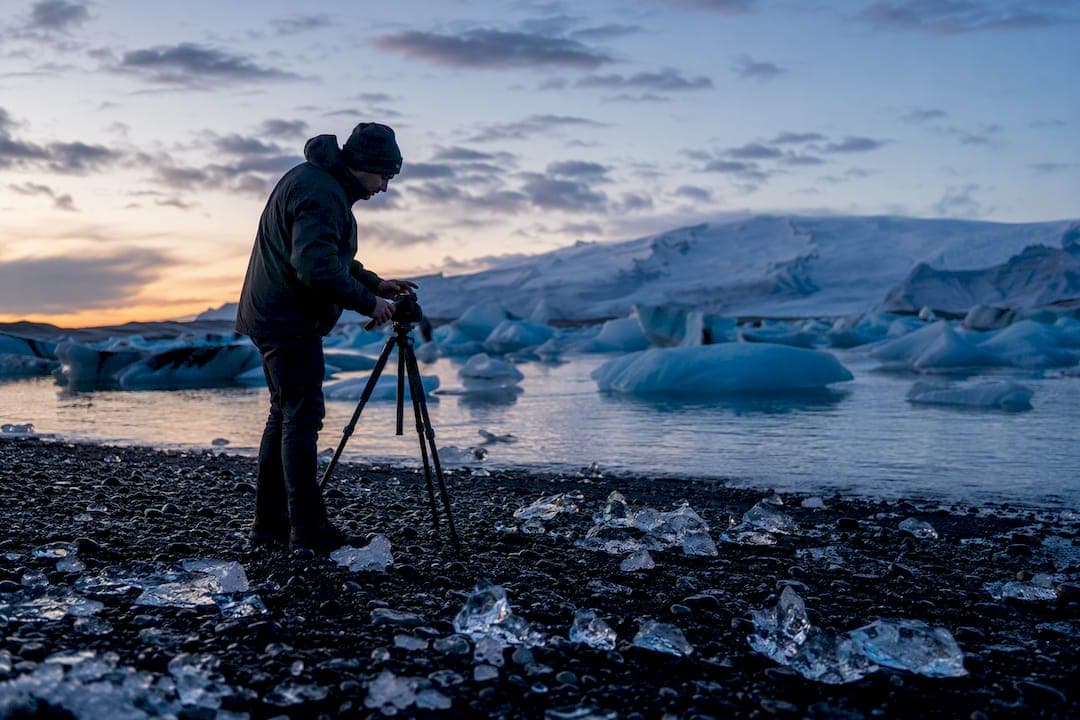
The most breathtaking Iceland photography destinations are Vestrahorn, Kirkjufell, Jökulsárlón Glacier Lagoon, Diamond Beach, Seljalandsfoss, Skógafoss, Reynisfjara, Fjaðrárgljúfur, Landmannalaugar, Svartifoss, Dynjandi, and Latrabjarg. Each earns its place for a different reason: Kirkjufell rises 463 meters as Iceland's most photographed mountain peak, while Vestrahorn's dramatic spine produces mirror reflections across black sand at low tide. Jökulsárlón delivers drifting icebergs; Diamond Beach scatters them across volcanic sand like glass. Waterfalls dominate the south coast, Landmannalaugar brings rhyolite color to the highlands, and the Westfjords close the list with cliffs, puffins, and near-total solitude.
- Vestrahorn: dramatic peak with tidal reflection pools
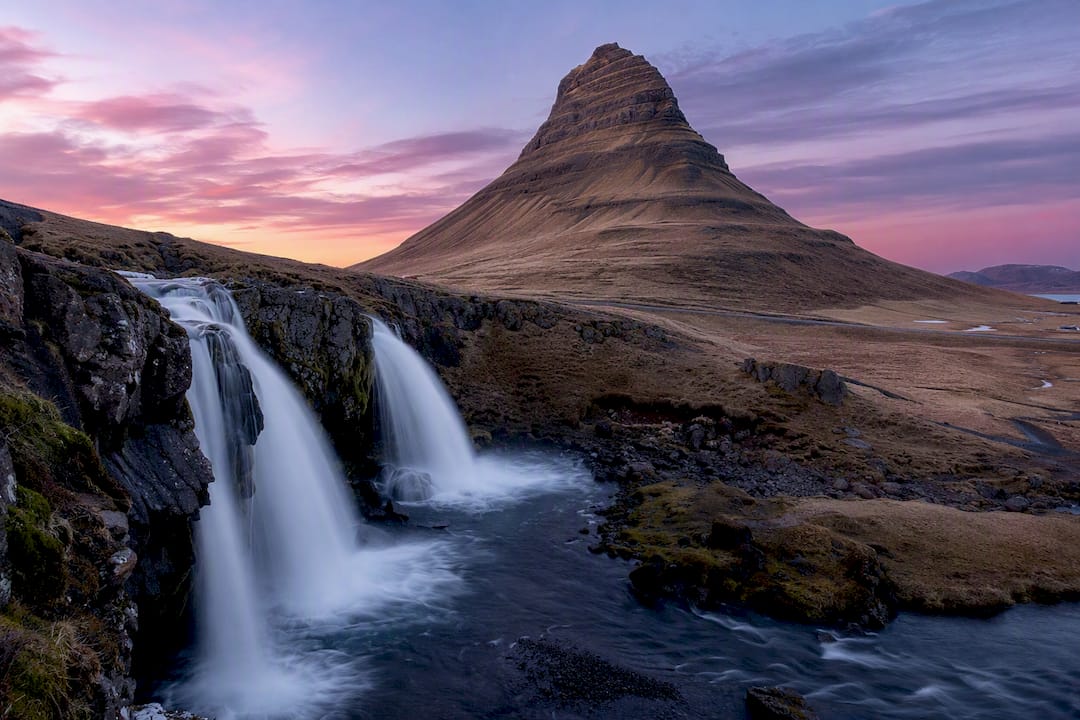
- Kirkjufell: iconic cone paired with Kirkjufellsfoss
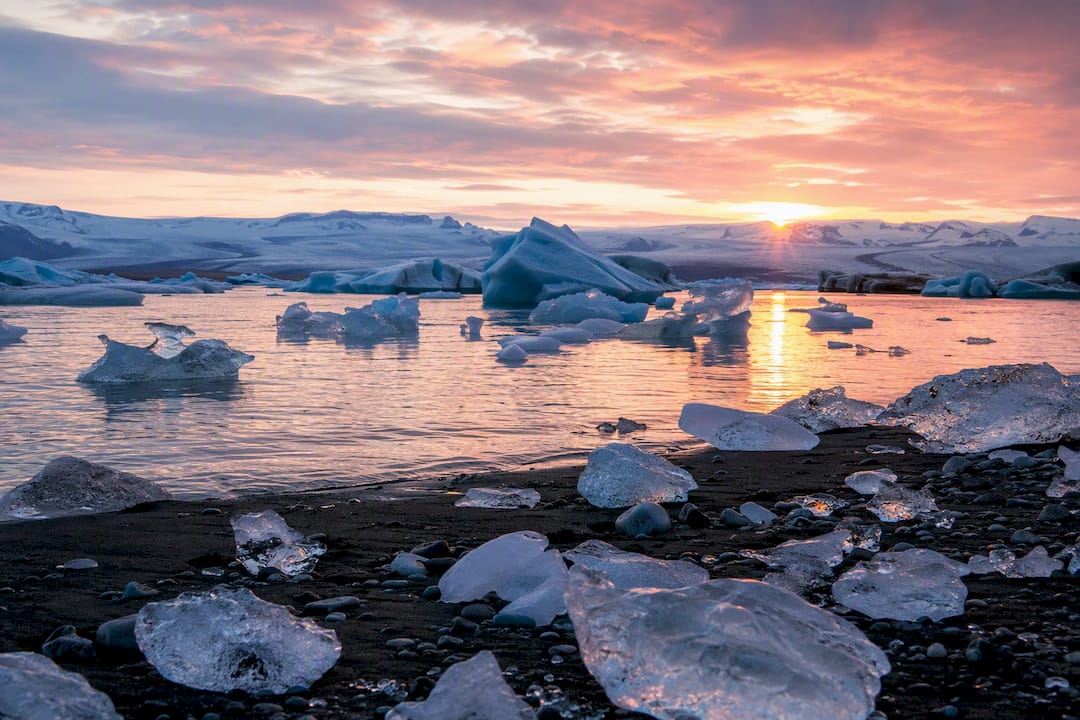
- Jökulsárlón & Diamond Beach: icebergs on black volcanic sand
- Seljalandsfoss: walk-behind waterfall at sunset
- Skógafoss: powerful curtain with frequent rainbows
- Reynisfjara: basalt columns and sea stacks (extreme caution required)
- Fjaðrárgljúfur: layered canyon walls in early light
- Landmannalaugar: rhyolite mountains in shifting colors
- Svartifoss: waterfall framed by black basalt columns
- Dynjandi: tiered "wedding cake" waterfall in the Westfjords
- Latrabjarg: sea cliffs and puffin colonies at Iceland's westernmost point
Key Takeaways
The most breathtaking Iceland photography destinations reward photographers who match location to tide, season, and light rather than chasing every stop on a single trip.
| Point | Details |
|---|---|
| Prioritize tide-dependent spots | Time Vestrahorn and Diamond Beach visits around low or high tide for the strongest compositions. |
| Respect sneaker wave warnings | Keep significant distance from the surf at Reynisfjara and Diamond Beach at all times. |
| Match season to your goal | Choose summer for Midnight Sun light, autumn for color, winter for aurora windows. |
| Build weather buffers | Add one to two extra hours per day for unpredictable conditions and unplanned stops. |
| Learn the locations firsthand | Com's guided Iceland photography workshops teach this exact shot list on location. |
Table of Contents
- Where to Capture Iceland's Beauty: A Spot-by-Spot Breakdown
- When to Shoot: Season, Light, and Tide Windows
- Practical Considerations for Shooting Across Iceland
- Gear and Composition Checklist for Icelandic Landscapes
- A Sample 3-Day South Coast Photography Itinerary
- Turn This List Into Your Own Iceland Portfolio by boosting your online presence with photography SEO services designed to get your work discovered and book more shoots.
- Frequently Asked Questions
- Sources
Where to Capture Iceland's Beauty: A Spot-by-Spot Breakdown
These are the locations worth planning a trip around, in the order most photographers actually visit them.
1. Vestrahorn (Stokksnes). Shoot the jagged ridge from the black sand flats south of the peak, ideally within two hours of sunrise when the light rakes across the dunes. Low tide exposes reflection pools that double the mountain in your frame, and a 16-35mm lens captures both the peak and its watery mirror image without losing the dune texture in front.
Pro Tip: Stokksnes runs its own microclimate. Check a Stokksnes-specific forecast the morning of your shoot, since fog and gale-force wind can appear even when Höfn, ten minutes away, is perfectly clear.
2. Kirkjufell and Kirkjufellsfoss. The classic composition places the waterfall's twin cascades in the foreground with Kirkjufell's cone rising behind, and it's arguably Iceland's most photographed mountain. A 24-70mm lens handles the standard frame; go wider if you want foreground rocks in the falls themselves. This spot doubles as one of West Iceland's best aurora foregrounds in winter.
3. Jökulsárlón Glacier Lagoon and Diamond Beach. Treat these as one extended session rather than two stops. Photograph the lagoon at sunrise when the water sits glassy and calm, then cross the road to Diamond Beach at high tide, when surf action animates the ice against black sand. A 70-200mm isolates individual iceberg chunks; a 16-35mm captures the sweeping shoreline. Never turn your back on incoming surf here.
4. Seljalandsfoss. The path circling behind the curtain makes this Iceland's signature walk-behind waterfall shot. Sunset backlights the falling water and, on clear evenings, adds a warm glow through the spray. Bring a lens cloth. You will need it constantly.
5. Skógafoss. A wide, powerful drop that throws mist far enough to produce rainbows on sunny mornings and afternoons. A 24-70mm from the base captures the full height; climbing the adjacent staircase gives you a top-down alternative most visitors skip.
6. Reynisfjara and Reynisdrangar. The hexagonal basalt columns and offshore sea stacks make this one of the most striking black sand beaches anywhere, but sneaker waves here have killed and seriously injured visitors. Stay well back from the waterline, never turn your back on the ocean, and treat posted warning signs as non-negotiable, not decorative.
7. Fjaðrárgljúfur. Early morning delivers soft, even light across the canyon's layered green walls, before midday sun creates harsh shadows in the gorge. A 24-70mm from the marked viewpoints is all you need; leaving the trail damages moss that takes decades to regrow.
8. Landmannalaugar. Rhyolite mountains streak orange, pink, and green depending on mineral content and sun angle, best captured in late afternoon light. This is highland terrain, reachable only by F-road in summer.
9. Svartifoss. Basalt columns frame the falls like an organ pipe backdrop. A short uphill hike from Skaftafell visitor center rewards you with one of Iceland's most structurally unique waterfall compositions.
10. Dynjandi. The Westfjords' tiered "wedding cake" waterfall spreads wider as it descends. Wide-angle shots from the base show the full six-tier structure; the region also holds some of southern coast's best lesser-known alternatives for photographers avoiding crowds.
11. Latrabjarg. Iceland's westernmost point and one of Europe's largest bird cliffs. Puffins nest close enough for a 70-200mm without disturbing them; stay back from the crumbling cliff edge regardless of how tempting the angle looks.
When to Shoot: Season, Light, and Tide Windows
Summer's Midnight Sun stretches golden hour into a multi-hour event, letting you shoot warm, low-angle light well past midnight without rushing between locations. Autumn, roughly late August through October, trades that light for saturated foliage color and a return of proper darkness. Winter brings aurora season alongside the harshest driving conditions.
- Summer (June to August): Midnight Sun, extended golden hour, easiest road access
- Autumn (late August to October): saturated color and lower sun angle
- Winter (October to March): aurora windows, dramatic but unpredictable weather
- Tide-dependent spots: low tide for Vestrahorn reflections; high tide for dynamic Diamond Beach surf
Pro Tip: Check tide tables the night before shooting Vestrahorn or Diamond Beach. A thirty-minute miss on tide timing can be the difference between a mirror-flat reflection pool and a puddle of mud.
Practical Considerations for Shooting Across Iceland
Give yourself more time than the map suggests. Iceland's unpredictable weather rewards flexible scheduling, since the best light often shows up right after a route change you didn't plan.
- F-roads to Landmannalaugar open only in summer and require a 4x4; check status before committing
- Reynisfjara and Diamond Beach both carry sneaker wave risk; keep serious distance from the surf line at all times
- Glacier lagoon shorelines and ice can shift unexpectedly, so treat glacier terrain with the same caution as moving water
- Latrabjarg's cliff edges crumble; stay on marked paths near puffin colonies
- Budget two to three hours per major stop, not the fifteen minutes a tour bus allots
Pro Tip: Build one buffer hour into every driving day. Iceland's incremental rewards, a rainbow, a break in cloud cover, a herd of horses in perfect light, almost always appear when you have room to pull over.
Gear and Composition Checklist for Icelandic Landscapes
Pack a weather-sealed body, a sturdy tripod, ND filters for waterfall exposures, and a wide-angle in the 16-35mm range alongside a 70-200mm for isolating detail. Waterproof boots and a stack of lens cloths matter more here than almost anywhere else you will shoot.
- Foreground interest (rocks, ice, moss) to anchor wide landscape frames
- Reflections at low tide or in glacial pools for symmetry
- Layering distant peaks behind mid-ground elements for depth
- Long exposures (one to four seconds) for silky waterfall motion
- Wide apertures and high ISO, paired with manual focus techniques for sharp aurora foregrounds
- 16-35mm: Vestrahorn, Jökulsárlón, Landmannalaugar
- 24-70mm: Seljalandsfoss, Skógafoss, Svartifoss
- 70-200mm: Diamond Beach ice details, Latrabjarg puffins
A Sample 3-Day South Coast Photography Itinerary
This route hits the highest-return locations without the burnout of a full Ring Road drive.
- Day 1: Sunrise at Seljalandsfoss, midday at Skógafoss, sunset scouting Reynisfjara from a safe distance
- Day 2: Early light at Fjaðrárgljúfur, afternoon drive to Jökulsárlón, evening at Diamond Beach for high tide
- Day 3: Sunrise reflections at Vestrahorn, then a buffer afternoon for weather-driven detours before heading back
Add one to two hours daily beyond Google's drive-time estimate. Weather and unplanned pullovers are part of the plan, not an interruption to it.
A Note From Mark Gray
These twelve locations represent decades of collective photographer experience distilled into a working shot list. I've built entire landscape photography workshops around teaching exactly this kind of timing, tide, and light discipline, because knowing where to stand matters less than knowing when.
Turn This List Into Your Own Iceland Portfolio by boosting your online presence with photography SEO services designed to get your work discovered and book more shoots.
Reading a shot list gets you close. Standing in the right spot at the right tide, with someone who has scouted the light in advance, gets you the image. Com runs small-group Iceland photography workshops built around the exact locations covered here, so you're not guessing at tide tables or aurora windows alone in a rental car.
If a guided trip isn't the right fit yet, browse the limited edition Iceland print collection for a gallery-quality preview of what these locations look like at their absolute best, or start planning your own itinerary around the season that matches the shots you want.
Frequently Asked Questions
What is the single most breathtaking Iceland photography destination for a first-time visitor? Jökulsárlón Glacier Lagoon paired with Diamond Beach delivers the highest visual payoff for the effort involved, since both sites sit minutes apart and reward a single well-timed session.
When should I visit Iceland for the best photography light? Summer's Midnight Sun gives you hours of extended golden light, autumn delivers saturated color, and winter opens the aurora season, so your choice depends on which look you want.
Is Reynisfjara safe to photograph? Yes, if you stay well back from the waterline and never turn your back on the ocean. Sneaker waves at Reynisfjara have caused serious injuries and deaths, and posted warnings should be followed exactly.
Do I need a 4x4 to reach Landmannalaugar? Yes. The F-road into Landmannalaugar is open only in summer and requires a capable vehicle; it is impassable the rest of the year.
What lens should I pack if I can only bring one? A 16-35mm wide-angle covers the majority of these locations, from Vestrahorn's reflection pools to Jökulsárlón's sweeping shoreline, though a 70-200mm helps for detail shots at Diamond Beach and Latrabjarg.
Sources
- Iceland Photo Spot Finder – Best Photography Locations
- Reynisfjara beach — beauty, danger and what every traveler should know
- Iceland Photography Guide: Southern Coast & Westfjords — Chasing Hippoz
- Kirkjufell Iceland | Iconic Mountain & Waterfall Views