
The most celebrated landscape photography destinations on earth span Monument Valley's sandstone spires, Antelope Canyon's sculpted light beams, Yosemite's granite valley, the Grand Canyon, White Sands, Hawaii's volcanic coastlines, Iceland's waterfalls and aurora skies, Norway's Lofoten Islands, New Zealand's South Island, Patagonia's Torres del Paine, Italy's Dolomites, and the Faroe Islands. This guide serves collectors evaluating limited-edition prints, photographers planning shoots or workshops, and commercial clients licensing images from these top scenic locations for photographers.
Table of Contents
- What are the most iconic landscape photography locations worldwide?
- How do you pick the right location for prints, portfolio, or licensing?
- What permits and access rules do photographers need to know?
- Practical shooting tips for timing, composition, and gear
- How collectors evaluate limited-edition prints and licensing options
- A practical planning checklist for your landscape photography trip
- Key Takeaways
- Why iconic locations still reward photographers who bring personal vision
- Mark Gray Gallery: prints, workshops, and licensing from iconic locations
- Useful sources and further reading
What are the most iconic landscape photography locations worldwide?
Every site below has earned its place in the global photography canon through a combination of extraordinary light, geological drama, and proven print-market demand. Organized by region for easy trip planning.
North America
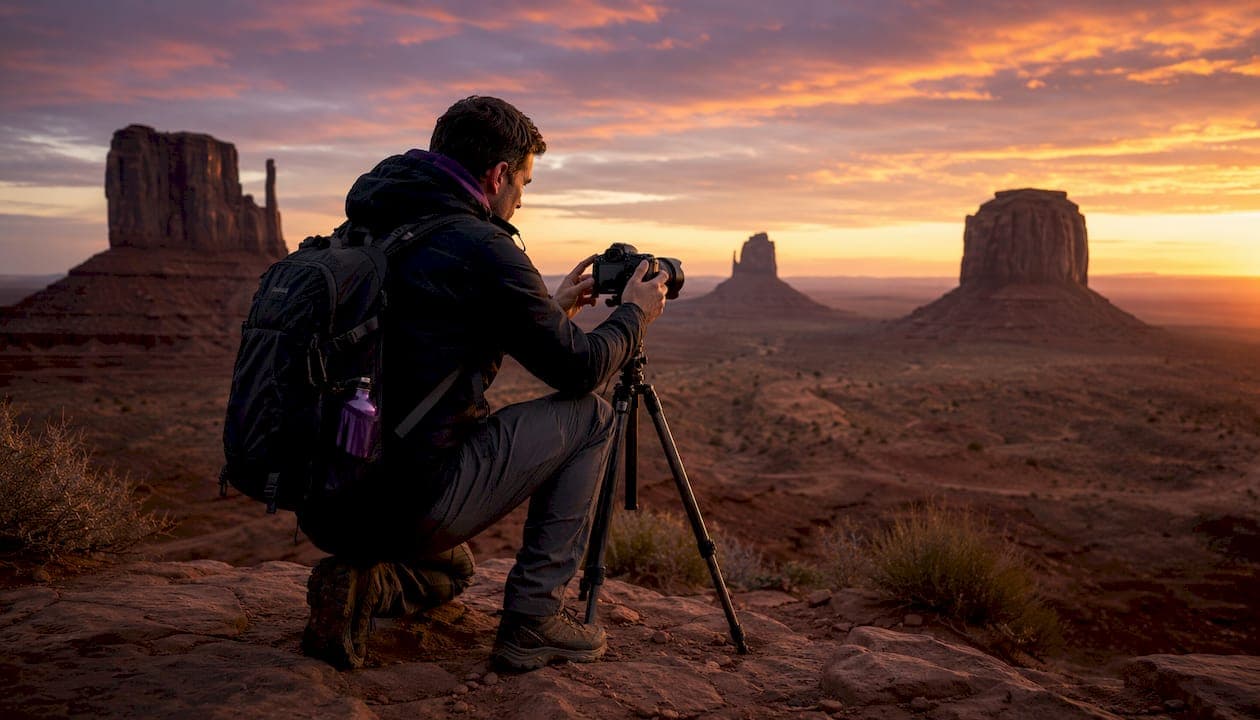
Monument Valley Navajo Tribal Park, Arizona/Utah towers between 400 and 1,000 feet of sandstone. The classic Merrick Butte sunrise shot is the most reproduced, but the real prize is the Ear of the Wind arch, accessible only via authorized Navajo-guided Jeep tours. Photography permits are mandatory for commercial, portrait, and wedding sessions. Best light: October through March, when low sun angles paint the buttes deep amber.
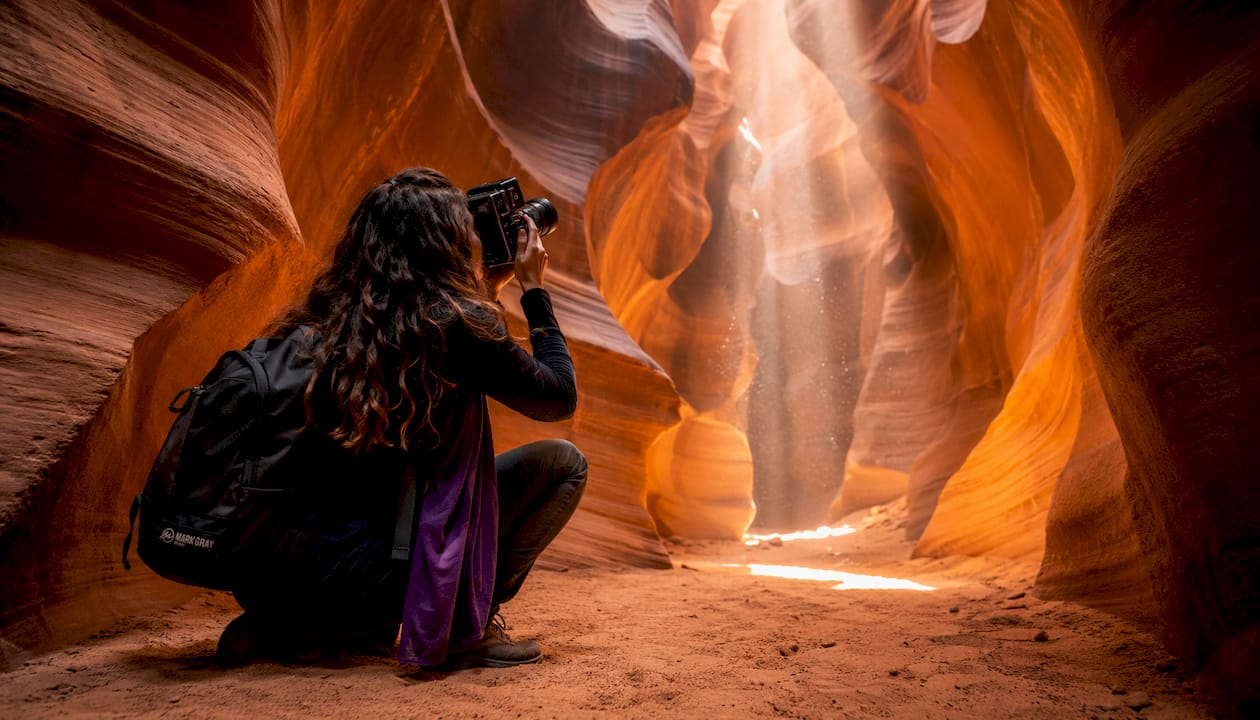
Antelope Canyon, Arizona produces its famous shaft light beams between March and October. Upper Antelope is tour-guided and tightly scheduled; Lower Antelope allows slightly more compositional freedom. Midday visits in spring yield the strongest beams. Book guided access weeks in advance.
White Sands National Park, New Mexico demands a completely different technical approach. The gypsum dunes create near-white tonal fields that challenge metering and reward long exposures at blue hour. Polarizing filters are less useful here than graduated neutral-density filters for balancing sky and sand.
Yosemite National Park, California remains one of the best landscape photography destinations for both collectors and portfolio builders. Valley View offers multiple compositions year-round; winter reveals foreground elements hidden by summer foliage, and the Merced River's level changes the reflection quality dramatically. Arrive 1–2 hours before sunrise to secure your position before crowds arrive.
Grand Canyon, Arizona rewards photographers who move beyond the South Rim's crowded overlooks. The North Rim offers dramatically different light angles and far fewer visitors. Guided photography experiences through operators such as Grand Canyon Journeys provide access to less-trafficked viewpoints.
Hawaii, Big Island combines active volcanic landscapes at Hawaii Volcanoes National Park with dramatic coastal lava-meets-ocean scenes. Lava flow photography requires current NPS access advisories; conditions change rapidly. Sunrise from Mauna Kea's summit, above the cloud layer, produces some of the most otherworldly landscape images available anywhere in the United States.
Europe and Scandinavia
Iceland is a perennial favorite among famous nature photography spots. Vestrahorn's black sand beach and mountain reflection, Skógafoss's rainbow mist, and Seljalandsfoss's walk-behind waterfall are signature shots. The current solar cycle peak in 2026 increases aurora activity, making this an exceptional year for aurora landscape work. Summer's midnight sun and winter's blue-hour palette are equally compelling.
Lofoten Islands, Norway deliver dramatic red fishing cabins against snow-capped peaks. Hamnøy, Reine, and Uttakleiv are the most photographed spots, but conservation rules protecting arctic tundra from erosion require staying on marked paths. Winter offers the Northern Lights and dramatic storm light; summer brings the midnight sun.
Dolomites, Italy offer layered alpine drama. Tre Cime di Lavaredo at sunrise, the Seceda ridgeline, and Lago di Braies's mirror reflections are the signature compositions. Late September brings warm foliage color without the peak-summer crowds.
Faroe Islands, Denmark remain one of the least-visited yet most visually striking destinations on any serious photographer's list. Gásadalur's waterfall dropping directly into the ocean and the sea stacks at Drangarnir are world-class subjects. Weather is notoriously unpredictable; plan for multiple shooting days.
South America and Oceania
Torres del Paine, Patagonia, Chile centers on the iconic granite towers, best photographed at sunrise from Mirador Las Torres. Wind is constant and fierce; a sturdy tripod is non-negotiable. The W Trek provides access to multiple compositions across several days.
New Zealand, South Island delivers Milford Sound's mist-draped fiords and Aoraki/Mount Cook's glacial reflections in Hooker Lake. The South Island's compressed geography means you can move between alpine, coastal, and pastoral scenes within a single day's drive, making it ideal for diverse portfolio building.
Pro Tip: At any of these high-profile viewpoints, the most original compositions come from short hikes away from the main parking area. Moving even 200 meters off the primary trail changes your foreground entirely and removes competing tripods from your frame.
How do you pick the right location for prints, portfolio, or licensing?
Match your primary objective to the location's defining characteristics before booking flights.
For limited-edition prints, prioritize locations with high-contrast light and singular, recognizable compositions: Monument Valley's buttes, Antelope Canyon's beams, and Yosemite's El Capitan reflection carry strong collector recognition and resale potential. Provenance tied to an iconic angle adds measurable value.
For portfolio standouts, choose locations with rare light phenomena or extreme seasonal conditions: Iceland's aurora, Hawaii's active lava, and the Faroe Islands in storm light produce images that are genuinely difficult to replicate.
For commercial licensing, versatility matters. White Sands, the Dolomites, and New Zealand's South Island produce images that translate across advertising, editorial, and interior design uses.
Four questions to ask before booking a workshop:
- What is the maximum group size, and how many participants share each guide?
- Does the leader have published work or exhibition credits from this specific location?
- Does the itinerary include pre-dawn scouting sessions and post-processing instruction?
- Who owns the images you create, and are there any restrictions on commercial use?
Workshops that mix varied environments, such as volcanic coastlines paired with alpine scenes, accelerate technical learning faster than single-environment programs. Consider Iceland photography workshops for exactly this kind of environmental contrast.
What permits and access rules do photographers need to know?
Several of the world's most celebrated sites require permits or guided access, and arriving without the correct paperwork can mean denied entry or fines.
Antelope Canyon's slot canyons are entirely tour-operated. No independent access is permitted; all photography happens within a guided group. Upper Antelope tours are timed and brief, so communicate your photography goals to the operator when booking.
US National Parks (Yosemite, Grand Canyon, White Sands, Hawaii Volcanoes) require commercial photography permits for any shoot intended for sale or licensing. Personal/editorial photography generally does not require a separate permit, but drone use is prohibited in all NPS units without a specific waiver.
Environmental and cultural responsibility checklist:
- Stay on marked trails at all times, particularly in Lofoten and fragile desert environments
- Follow all guide instructions at Navajo Tribal Parks and slot canyons
- Do not move, disturb, or collect natural objects (rocks, sand, vegetation)
- Respect vendors, ceremonies, and sacred sites; ask permission before photographing people
- Pack out all waste, including used batteries and packaging
Practical shooting tips for timing, composition, and gear
Timing and light cycles consistently produce stronger results than location selection alone. A mediocre composition at golden hour outperforms a technically perfect frame shot in flat midday light.
Stepwise shooting checklist:
- Arrive on location 1–2 hours before your target light window to scout and claim your composition
- Identify foreground interest that anchors the frame (rock formations, water, vegetation)
- Bracket exposures across at least three stops to enable exposure blending in post
- Use a remote shutter release and mirror lock-up for exposures longer than 1/30 sec
- Shoot RAW to preserve full dynamic range for post-processing flexibility
- Check drone regulations before flying; NPS sites prohibit drones without a specific permit
For print-focused shoots, a full-frame sensor and a 24–70mm lens cover most iconic compositions. Long-exposure seascapes (Lofoten, Faroe Islands) benefit from a 10-stop neutral-density filter. Desert tonal work at White Sands rewards a circular polarizer for sky contrast. Review the landscape photography gear essentials list for a complete kit breakdown.
Pro Tip: Scout your primary composition the evening before your target shoot. Walk the site in daylight, note where the sun will rise or set relative to your subject, and identify two backup compositions in case your primary position is occupied.
How collectors evaluate limited-edition prints and licensing options
Collectors look for provenance, edition size, archival materials, and image uniqueness tied to a specific location and moment. A print of Antelope Canyon's light beams carries more collectability when it is tied to a named photographer, a specific date, and a documented edition.
Print quality checklist for buyers:
- File resolution sufficient for the intended print size (minimum 300 DPI at final dimensions)
- Archival pigment inks on acid-free fine-art paper or metal substrate
- Certificate of authenticity stating edition number, total edition size, and photographer signature
- Edition size of 50 or fewer for investment-grade prints; open editions carry lower resale value
Licensing checklist for photographers:
- Define usage type clearly: editorial, advertising, interior design, product packaging
- State territory (US only, worldwide, specific regions) and duration (one year, perpetual)
- Specify exclusivity: exclusive licenses command a premium; non-exclusive licenses allow broader distribution
- Include a high-resolution watermarked sample and a clean delivery file upon payment
Location provenance matters in licensing too. A recognized angle of Yosemite's El Capitan or Monument Valley's Mittens carries immediate brand recognition for commercial clients, which translates to faster approvals and stronger negotiating positions.
A practical planning checklist for your landscape photography trip
3–12 months before travel:
- Research permit requirements for each target location (NPS, Navajo Nation, local operators)
- Book guided tours for restricted sites (Antelope Canyon, Monument Valley Jeep tours) well in advance
- Reserve accommodation nearest to your primary shooting locations
- Confirm workshop availability and leader credentials if joining a guided program
60–90 days before travel:
- Confirm all gear is functioning; arrange backup camera body and memory cards
- Arrange travel insurance covering equipment and trip cancellation
- Clarify image rights for any commercial shoot with your workshop operator or guide
72 hours before shooting:
- Check weather forecasts and local light timing using a sun-tracking app
- Charge all batteries and format memory cards
- Clean all lenses and filters; pack lens cloths and a blower
Seasonal timing shapes everything. How seasons change landscape photography is worth reviewing before finalizing your travel window, particularly for locations like Yosemite and Iceland where the difference between seasons is the difference between a good image and an extraordinary one.
Key Takeaways
The most iconic landscape photography locations worldwide reward photographers who combine precise timing, proper permits, and deliberate composition with archival print quality and clear licensing terms.
| Point | Details |
|---|---|
| Timing beats location | Antelope Canyon's light beams appear March–October; Yosemite's best compositions shift with season and river level. |
| Permits are non-negotiable | Monument Valley requires special-use permits; Antelope Canyon allows no independent access. Check NPS and tribal authority sites before travel. |
| Edition size drives print value | Collectors favor editions of 50 or fewer with a certificate of authenticity and archival materials. |
| Licensing needs clear terms | Define usage type, territory, duration, and exclusivity before delivering any licensed image. |
| Mark Gray Gallery | Offers limited-edition archival prints, multi-day workshop tours, and commercial image licensing across iconic global locations. |
Why iconic locations still reward photographers who bring personal vision
The conventional wisdom says iconic sites are "shot out." Every angle has been captured, every sunrise documented. That view underestimates what a skilled photographer with genuine vision actually brings to a place.
The difference between a tourist snapshot of Monument Valley and a collectible print from the same location is not the subject. It is the decision to arrive before dawn, to move 300 meters off the parking lot, to wait for a specific cloud formation, and to process the RAW file with restraint rather than saturation. Those decisions are craft, and craft is what collectors pay for.
Workshops at iconic locations accelerate this understanding faster than solo travel. When a group of photographers works the same scene under expert guidance, the debrief reveals why one composition succeeds and another does not. That feedback loop is the real value of a structured workshop, not just the location itself.
Ethical shooting matters too. Respecting Navajo access rules at Monument Valley, staying on marked paths in Lofoten, and following guide instructions at Antelope Canyon are not bureaucratic inconveniences. They protect the locations that make this work possible.
Mark Gray Gallery: prints, workshops, and licensing from iconic locations
Mark Gray Gallery offers a direct path from these celebrated destinations to your wall or commercial project. Limited-edition archival prints from Iceland, Norway, New Zealand, and beyond are produced on museum-quality substrates with certificates of authenticity and edition documentation that serious collectors require.
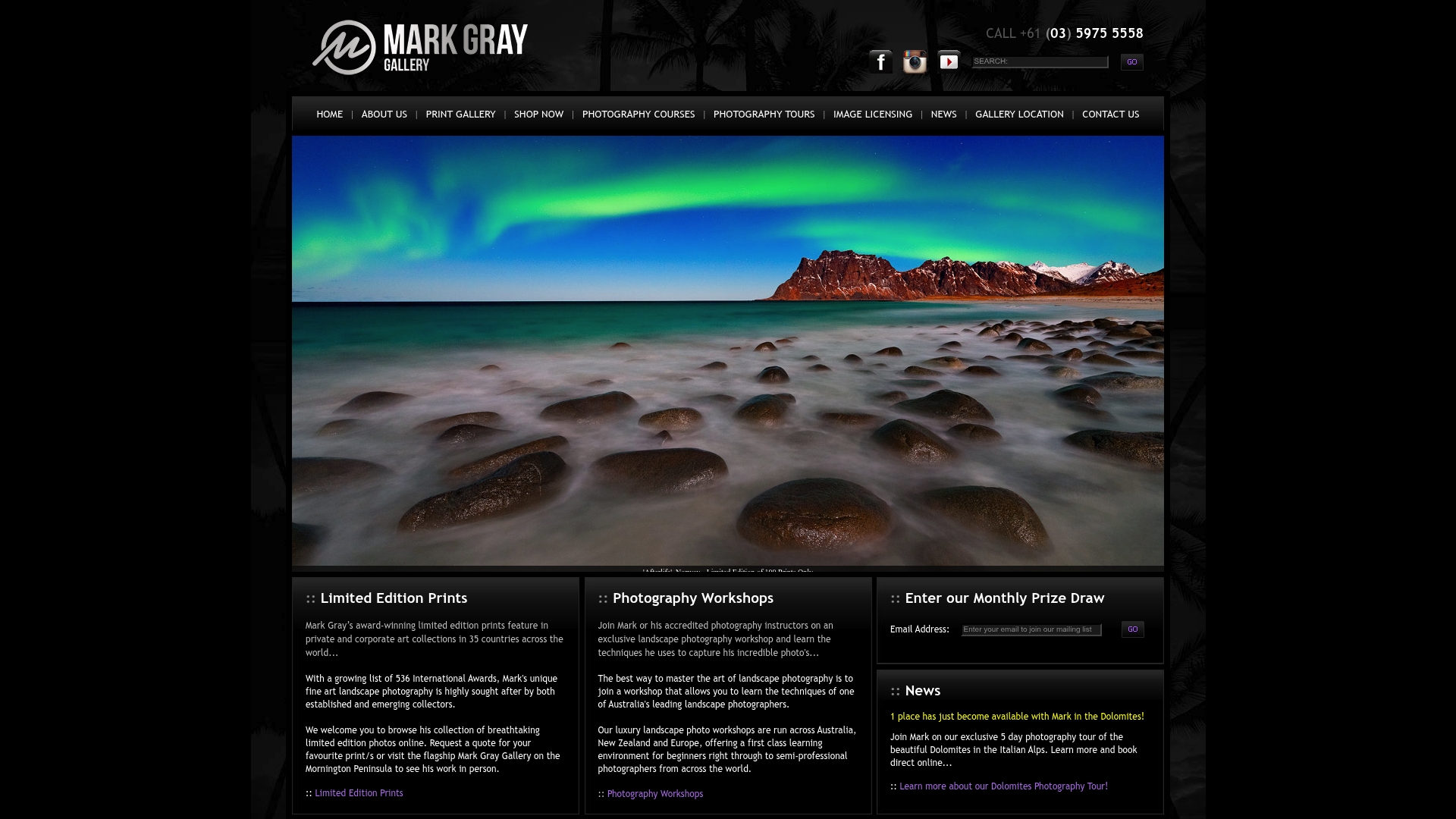
Multi-day workshop tours place photographers inside these locations with expert guidance, small group sizes, and itineraries built around optimal light windows. Commercial licensing is available for splashbacks, signage, websites, brochures, and more. Visit Mark Gray Gallery to browse the current print collection, check upcoming workshop dates, and submit a licensing inquiry.
Useful sources and further reading
- Monument Valley, Navajo Nation Parks & Recreation — Official permit requirements, guided tour operators, and access rules for the Navajo Tribal Park.
- Valley View, Yosemite National Park — Seasonal composition notes, crowd timing, and astrophotography orientation for Yosemite's Valley View.
- Chasing Hippoz: Best Photography Locations in the World — Broad global location list with timing notes for Antelope Canyon and other iconic sites.
- Visual Travel Spots: Lofoten Landscape Photography Guide 2026 — Conservation rules, aurora timing, and composition guidance for Lofoten and Iceland.
- Nature TTL: Best Travel Photography Locations in the USA — Technical and gear guidance for White Sands, Hawaii, and other US locations.
- Passport and Pixels: 25 Spectacular Travel Photography Destinations — Broader destination context including Lofoten, Patagonia, and New Zealand.
This article provides general planning information. Permit rules, access conditions, and conservation regulations change. Always confirm current requirements directly with the relevant park authority, tribal office, or tour operator before travel.