
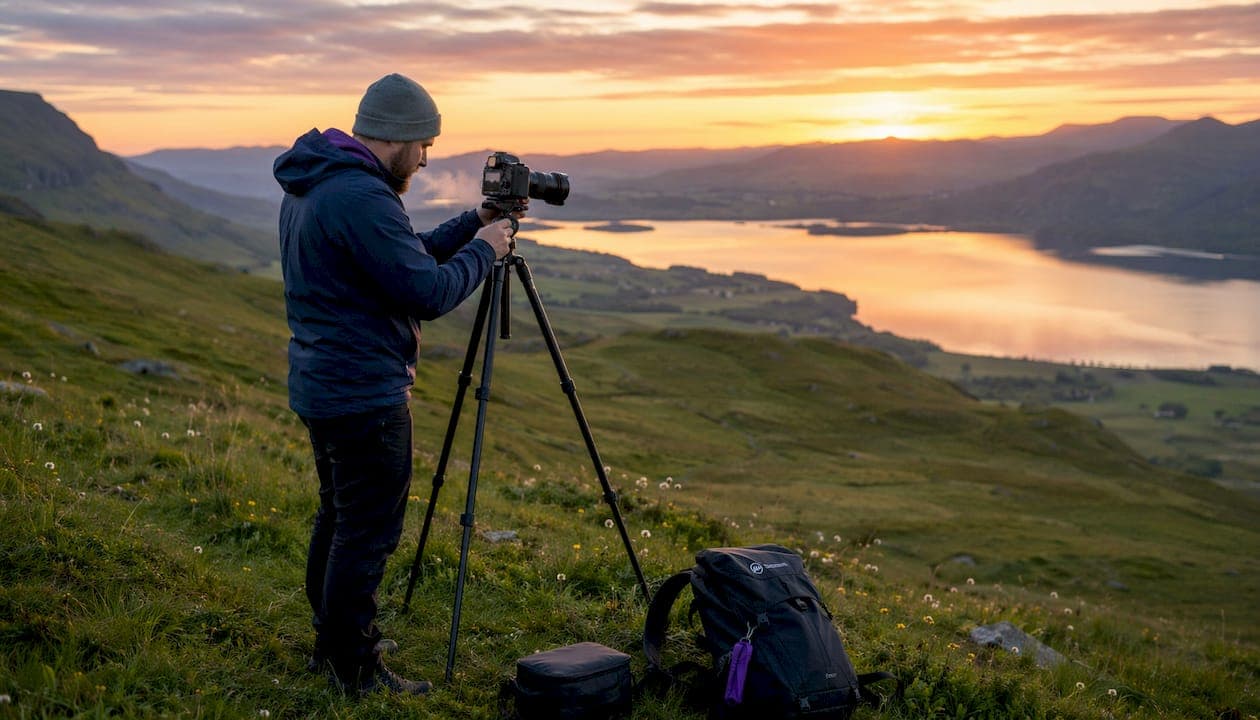
The world's finest scenic spots for photographers share three qualities: extraordinary light, accessible vantage points, and visual subjects that reward patience. From the geothermal wonders of Yellowstone National Park to the volcanic coastlines of Iceland, the locations below represent the most inspiring landscape photography trips available to photographers in 2026. Whether you shoot at golden hour over Utah's canyon country or blue hour along Norway's fjords, these destinations deliver frames worth keeping.
Top landscape photography destinations at a glance:
- Yellowstone National Park (Grand Prismatic Spring, Old Faithful, Artist Point, Mammoth Hot Springs)
- Acadia National Park, Maine
- Yosemite National Park, California
- Bryce Canyon National Park, Utah
- Monument Valley, Arizona/Utah
- Mt. Rainier National Park, Washington
- Mono Lake, California
- Iceland (waterfalls, glaciers, black sand beaches)
- Faroe Islands (Gásadalur Waterfall, dramatic seascapes)
- Patagonia, Chile (Torres del Paine)
- Sossusvlei, Namibia
- Lofoten Islands, Norway
- Antarctica
- Maroon Bells, Colorado
What makes a destination world-class for landscape photography?
The best locations for landscape photography are defined by the specific combination of light, access, and visual reward that justifies the planning overhead, not simply by how scenic a place looks on a map. A location that delivers dramatic light for only 20 minutes at dawn, requires a permit, and demands a 90-minute hike is still a world-class destination if the resulting frame is unrepeatable. That calculus separates serious photography travel from ordinary tourism.
Geography matters, but timing matters more. The same mountain range looks flat and gray at midday and transcends at golden hour, when low-angle light sculpts every ridge and valley. Photographers who plan around these windows, rather than treating them as a bonus, consistently return with stronger work.
1. Iceland: year-round drama across every terrain
Iceland earns its reputation as one of the top photography destinations on earth. Snow-capped mountains, thundering waterfalls, black sand beaches, calving glaciers, and icy lagoons are all accessible within a single road trip on the Ring Road. Summer delivers the midnight sun, giving photographers extended golden-hour windows that last hours rather than minutes. Winter brings the aurora borealis and stark, monochromatic ice landscapes.
Key locations include Vatnajökull National Park's ice caves, the Skaftafell glacier, and Kirkjufell mountain on the Snæfellsnes Peninsula. Permits are not required for most outdoor locations, though some ice cave tours require booking through licensed guides for safety reasons.
- Best season: September through march for northern lights; june through august for midnight sun
- Gear priority: Wide-angle lens, polarizing filter for waterfalls, tripod for long exposures
- Light window: Extended golden hour in summer; brief but intense at winter sunrise
2. Faroe Islands: dramatic seascapes without the crowds
The Faroe Islands offer spectacular scenery and seascapes with a pace and solitude that most European destinations cannot match. Gásadalur Waterfall, which drops directly into the ocean, is the signature shot, but the archipelago rewards photographers who explore beyond it. Cliffside villages, sheep-dotted hillsides, and fog-wrapped sea stacks appear around nearly every bend.
Crowds are minimal even in peak season, which means you can set up a tripod at the edge of a cliff without negotiating around tour groups. The weather shifts rapidly, so overcast conditions are common, but that diffused light suits moody, atmospheric compositions beautifully.
- Best season: May through august for green landscapes; october through february for dramatic storms
- Gear priority: Neutral density filters for waterfall composites, weather-sealed body
- Permit note: No photography permits required; respect private farmland
3. Patagonia, Chile: towers at first light
Torres del Paine National Park in Chilean Patagonia is one of the most demanding and rewarding landscape photography trips on earth. The granite towers of the Paine Massif catch alpenglow at dawn in shades of orange and pink that last only minutes. Wind is the defining challenge here: gusts regularly exceed 60 mph, making tripod stability critical and filter use difficult.
The park requires an entrance fee and advance booking for camping or lodge accommodation, particularly during the November through march high season. Photographers willing to hike the W Circuit gain access to viewpoints that day visitors never reach.
- Best season: November through march for stable weather and long days
- Gear priority: Heavy tripod, wide-angle zoom, weather-sealed body
- Light window: Pre-dawn alpenglow on the towers; golden hour over Grey Glacier
4. Sossusvlei, Namibia: red dunes at sunrise
Sossusvlei in Namibia's Namib Desert produces some of the most graphic landscape compositions available anywhere. The towering red dunes, some exceeding 300 meters, cast sharp geometric shadows at sunrise that disappear within an hour as the sun climbs. Deadvlei, the white clay pan studded with ancient dead camel thorn trees, is the defining image of the region.
Access requires an entry fee to Namib-Naukluft National Park, and the gate opens at sunrise. Arriving before the gate opens and waiting is standard practice among serious photographers. The light window is short and unforgiving.
- Best season: May through september for cooler temperatures and clearer skies
- Gear priority: Telephoto lens for compressed dune layers, wide-angle for Deadvlei
- Safety note: Temperatures exceed 45°C (113°F) by mid-morning; carry significant water
5. Lofoten Islands, Norway: Arctic light over fishing villages
The Lofoten Islands sit just inside the Arctic Circle and are widely regarded as one of the best places for photography in the world. The combination of jagged peaks rising directly from the sea, traditional red fishing cabins (rorbuer), and the extraordinary quality of Arctic light creates images that are immediately recognizable. Winter brings the polar night and northern lights; summer delivers the midnight sun.
The islands are accessible by ferry or a short flight from Bodø. No photography permits are required for outdoor locations, though some private properties and fishing operations request courtesy notice before shooting.
- Best season: January through february for northern lights and snow; june through july for midnight sun
- Gear priority: Wide-angle zoom, fast prime for aurora, tripod
- Light window: Extended golden hour in summer; aurora windows from 10 PM to 2 AM in winter
6. Antarctica: the ultimate landscape photography destination
Antarctica sits at the top of most serious landscape photographers' bucket lists for good reason. Icy landscapes, mirror-calm bays, majestic glaciers, icebergs the size of houses, and clear wintry light combine to create conditions that are virtually impossible to replicate anywhere else. The continent's extreme remoteness means images carry an inherent rarity.
Access is exclusively by expedition cruise from Ushuaia, Argentina, typically during the austral summer (november through march). Photographers must follow strict Antarctic Treaty guidelines: no approaching wildlife within five meters, no removing any material, and no visiting outside designated landing zones. These rules protect the environment and, practically, keep images authentic.
- Best season: November through march (austral summer)
- Gear priority: Weather-sealed body, multiple memory cards, lens cloths for salt spray
- Permit note: Antarctic Treaty regulations apply; expedition operators brief all passengers
7. Maroon Bells, Colorado: mirror reflection at sunrise
Maroon Bells, outside Aspen, Colorado, exemplifies how timing at a location defines photographic outcomes. The twin peaks reflected in Maroon Lake at sunrise produce one of the most celebrated landscape images in the American West, but the window is narrow. Wind typically picks up by 8 AM, breaking the reflection. Photographers who arrive before dawn and set up in darkness capture the frame; those who arrive at 7:30 AM often miss it.
A timed entry reservation is required from late june through october, managed through the Aspen Skiing Company shuttle system. Private vehicles are not permitted during peak season. The reservation system is competitive and books out weeks in advance.
- Best season: Late september for fall foliage reflected in the lake
- Gear priority: Wide-angle zoom, graduated ND filter, sturdy tripod
- Light window: 30–45 minutes before sunrise through the first hour after
8. Guilin and the Li River, China: karst reflections
The karst limestone pillars rising from the Li River in Guilin, southern China, have defined the visual identity of Chinese landscape painting for centuries. Photographing from a bamboo raft at dawn, with mist hanging between the peaks and the river surface still, produces images that feel timeless. The light is soft and directional in the early morning, ideal for revealing the texture of the karst formations.
No photography permits are required for river access, though organized boat tours are the standard way to navigate the river. The town of Yangshuo, downstream from Guilin, offers additional viewpoints and is worth an extra day.
- Best season: April through june for mist and green foliage; october through november for clear skies
- Gear priority: Telephoto zoom for compressed karst layers, polarizing filter
- Light window: Dawn through the first two hours of morning
9. Shirakawa-go, Japan: winter farmhouses under snow
Shirakawa-go, a UNESCO World Heritage village in the Japanese Alps, transforms in winter into one of the most atmospheric landscape photography subjects in Asia. The traditional gassho-zukuri farmhouses, with their steep thatched roofs designed to shed heavy snow, sit beneath mountains and beside a river that reflects the scene on calm mornings. The village lights up on selected winter evenings for illumination events that draw photographers from across Japan.
Access is by bus from Nagoya or Kanazawa. The illumination events require advance registration through the Shirakawa-go Tourism Association. Photographing from the Shiroyama viewpoint above the village gives the classic elevated perspective.
- Best season: January through february for snow; illumination events in january
- Gear priority: Wide-angle zoom, tripod for low-light evening shots
- Light window: Blue hour during illumination events; dawn for snow-covered rooftops
10. Varanasi, India: Ganges ghats at dawn
Varanasi is one of the most visually complex and rewarding photography destinations in the world. The ghats (stone steps) descending to the Ganges River fill with pilgrims, priests, and ritual activity from before dawn, and the light at sunrise turns the river gold while smoke from the cremation ghats drifts across the water. The scene is simultaneously ancient and alive.
Photographing respectfully here requires sensitivity. The cremation ghats at Manikarnika are sacred spaces; photography is permitted in some areas but not others, and local guides help navigate the boundaries. A 70–200mm telephoto lens allows candid, respectful distance.
- Best season: October through march for cooler temperatures and clearer skies
- Gear priority: Telephoto zoom, fast prime for low-light dawn work
- Cultural note: Ask permission before photographing individuals; dress modestly
11. Tuscany, Val d'Orcia, Italy: rolling hills at golden hour
The cypress-lined roads of Pienza and Monticchiello in Tuscany's Val d'Orcia region are among the most beautiful agricultural landscapes in the world. Late afternoon light turns the rolling hills gold, and the hilltop towns glow against darkening skies. Spring (april through may) brings green fields and wildflowers; late june brings golden wheat before harvest.
No photography permits are required for outdoor locations. The most celebrated viewpoints, including the road to Monticchiello and the chapel near San Quirico d'Orcia, are accessible by car. Arriving at least 90 minutes before sunset allows time to scout and compose before the light peaks.
- Best season: April through may for green hills; late june for golden wheat
- Gear priority: Telephoto zoom for compressed hill layers, graduated ND filter
- Light window: 90 minutes before sunset through golden hour
Destination comparison at a glance:
| Destination | Best Season | Primary Subject | Permit Required |
|---|---|---|---|
| Iceland | Year-round | Waterfalls, glaciers, aurora | No (ice caves: guided tour) |
| Faroe Islands | May–August | Waterfalls, seascapes | No |
| Patagonia, Chile | Nov–March | Mountain towers, glaciers | Park entry fee |
| Sossusvlei, Namibia | May–Sept | Red dunes, Deadvlei | Park entry fee |
| Lofoten Islands, Norway | Jan–Feb / June–July | Arctic light, fishing villages | No |
| Antarctica | Nov–March | Icebergs, glaciers, wildlife | Treaty guidelines apply |
| Maroon Bells, Colorado | Late September | Peak reflection at sunrise | Timed entry reservation |
| Guilin, China | April–June | Karst river reflections | No |
| Shirakawa-go, Japan | January–February | Snow farmhouses | Illumination event registration |
| Varanasi, India | Oct–March | Ganges ghats at dawn | No |
| Tuscany, Italy | April–May / June | Rolling hills, cypress roads | No |
The best US landscape photography spots you need to visit
The United States contains a concentration of iconic national parks that rivals any region on earth for landscape photography. The diversity is extraordinary: active geothermal fields, granite monoliths, desert hoodoos, volcanic peaks, and ancient lakebeds all within a single country. These are the locations that define American landscape photography.
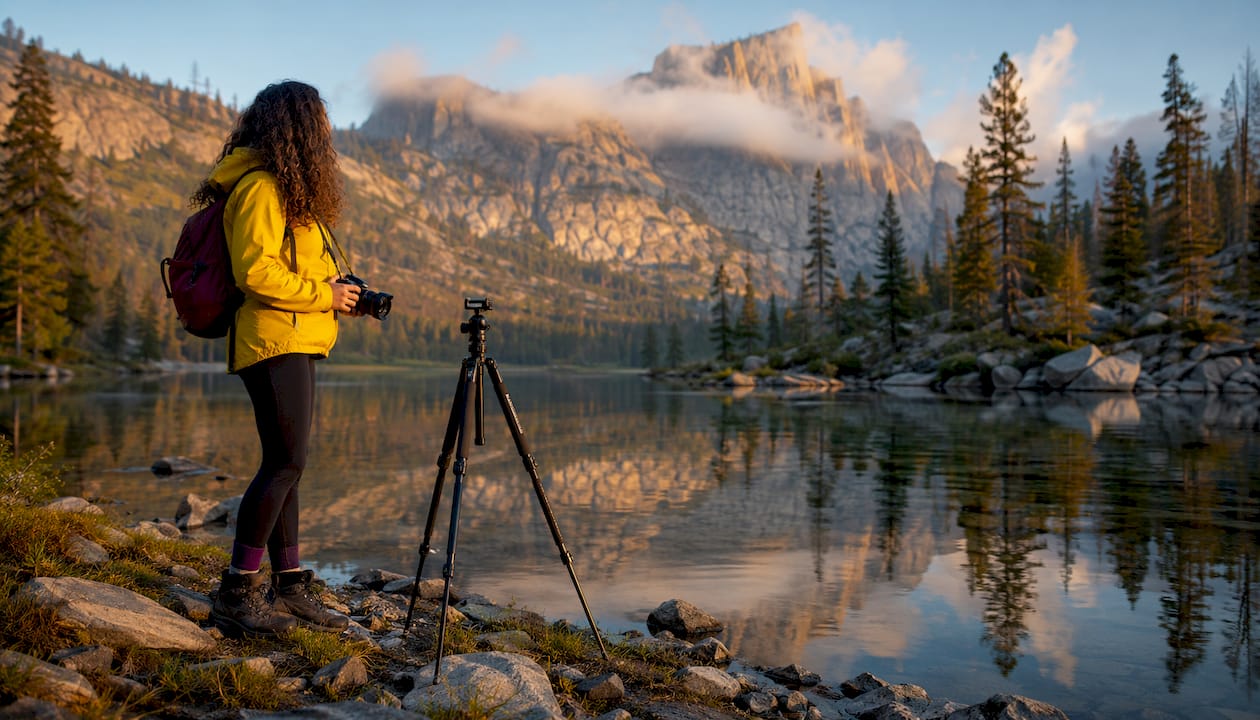
Yellowstone National Park, Wyoming
Yellowstone is the most geothermally active landscape on earth, and for photographers, that translates to subjects found nowhere else. The four signature locations are Grand Prismatic Spring, Old Faithful, Artist Point, and Mammoth Hot Springs.
- Grand Prismatic Spring: The vivid rings of color, produced by heat-loving bacteria, photograph best from the Grand Prismatic Overlook trail, which opened in 2017 and provides an elevated perspective unavailable from the boardwalk below. Morning light from the east illuminates the spring's full color spectrum.
- Old Faithful: The geyser erupts approximately every 90 minutes and reaches heights of 100–180 feet. Shooting with a telephoto lens from the upper boardwalk compresses the geyser against the sky; a wide-angle from the benches captures the crowd and context.
- Artist Point: This overlook above the Grand Canyon of the Yellowstone offers the classic view of the Lower Falls, a 308-foot drop into a yellow-walled canyon. Early morning light from the east illuminates the falls directly; midday produces flat, harsh results.
- Mammoth Hot Springs: The terraced travertine formations at Mammoth change constantly as water flow shifts, meaning no two visits produce identical compositions. Overcast light suits the pale, sculptural terraces better than direct sun.
Permit note: No photography permits are required for non-commercial photography. Commercial photography and filming require a permit from the National Park Service.
Yosemite National Park, California
Yosemite Valley concentrates an extraordinary density of iconic subjects within a small area: El Capitan, Half Dome, Bridalveil Fall, and Tunnel View. The valley floor floods with photographers at sunrise, but the crowds thin quickly on trails above the valley rim. Glacier Point, reached by a 4.8-mile trail or a seasonal road, delivers the most celebrated elevated view of Half Dome and the High Sierra.
The seasonal and lighting conditions at Yosemite shift dramatically across the year. Spring brings peak waterfall flow from snowmelt (april through may). Winter delivers snow-covered valley floors and dramatic storm light. The "Firefall" phenomenon at Horsetail Fall, where the setting sun illuminates the waterfall to resemble flowing lava, occurs for approximately two weeks in mid-february when conditions align.
- Best season: April through may for waterfalls; mid-february for Horsetail Fall Firefall
- Gear priority: Wide-angle zoom, telephoto for Half Dome compression, tripod
- Timed entry: Required for day visitors from late march through october; book through Recreation.gov
Bryce Canyon National Park, Utah
Bryce Canyon's hoodoos, the orange and red spires of eroded limestone, are among the most distinctive geological formations on earth. Sunrise Point and Sunset Point deliver the classic elevated views across the amphitheater, but photographers who descend into the canyon on the Navajo Loop Trail find compositions unavailable from the rim. The hoodoos glow intensely at golden hour, particularly in the 30 minutes after sunrise when low-angle light rakes across the spires.
Winter transforms Bryce Canyon. Snow-dusted hoodoos against a blue sky produce some of the most striking images the park offers, and crowds drop substantially from november through march.
- Best season: November through march for snow-dusted hoodoos; april through may for clear skies
- Gear priority: Wide-angle zoom, polarizing filter, tripod
- Light window: 30 minutes after sunrise at Sunrise Point; 30 minutes before sunset at Sunset Point
Monument Valley, Arizona/Utah
Monument Valley's sandstone buttes, the Mittens and Merrick Butte, are among the most recognizable landscape subjects in the world. The Navajo Nation Tribal Park charges an entry fee and requires photographers to stay on designated roads and viewpoints unless accompanied by a Navajo guide. Guided tours, available from the visitor center, open access to locations like Hunt's Mesa, which provides an elevated view across the valley floor at sunrise.
The valley floor road is unpaved and requires a high-clearance vehicle. Dawn and dusk are the only times worth shooting; midday light flattens the buttes completely.
- Best season: March through may and september through november for mild temperatures
- Gear priority: Wide-angle zoom, telephoto for butte compression, polarizing filter
- Permit note: Navajo Nation Tribal Park entry fee required; guided tours for off-road access
Mt. Rainier National Park, Washington
Mt. Rainier, a 14,411-foot active stratovolcano, dominates the skyline of western Washington and offers some of the most dramatic mountain photography in the lower 48 states. Reflection Lakes, on the south side of the park, mirror the peak on calm mornings from july through september. Paradise Meadows, at 5,400 feet, burst with wildflowers in late july and august, creating foreground interest against the glaciated summit.
The mountain generates its own weather, and cloud cover obscures the summit frequently. Photographers who plan multiple-day visits and monitor forecasts closely are rewarded far more often than those who arrive on a fixed schedule.
- Best season: July through september for wildflowers and clear summit views
- Gear priority: Wide-angle zoom, telephoto for summit detail, polarizing filter
- Light window: Dawn at Reflection Lakes for mirror reflections; golden hour at Paradise Meadows
Acadia National Park, Maine
Acadia is the first national park in the eastern United States to see sunrise each morning, and Cadillac Mountain, at 1,530 feet, is the highest point on the eastern seaboard. From october through march, it is the first place in the continental US where the sun rises. Bass Harbor Head Lighthouse, perched on pink granite ledges above the Atlantic, is the park's most photographed subject at dusk. Jordan Pond, surrounded by spruce forest, delivers clean reflections of the Bubbles peaks on calm mornings.
- Best season: September through october for fall foliage; october through march for first sunrise
- Gear priority: Wide-angle zoom, ND filter for ocean long exposures, tripod
- Light window: Pre-dawn at Cadillac Mountain; 30 minutes before sunset at Bass Harbor Lighthouse
Mono Lake, California
Mono Lake, east of Yosemite in the Eastern Sierra, is one of the most otherworldly landscapes in North America. The tufa towers, calcium carbonate formations that rise from the lake's surface, photograph best at sunrise when low-angle light turns them gold against a pink sky. The lake's high salinity and alkalinity create a mirror-flat surface on calm mornings, producing reflections that double the visual impact of the tufa formations.
South Tufa Area, managed by the US Forest Service, charges a small day-use fee. The best tufa formations are accessible via a short trail from the parking area. Late september through october brings migrating shorebirds that add wildlife interest to landscape compositions.
- Best season: Late september through october for birds and fall light; april through may for spring clarity
- Gear priority: Wide-angle zoom, polarizing filter, tripod for long exposures
- Light window: 30 minutes before sunrise through the first hour after
Pro Tip: At Mono Lake, arrive at least 45 minutes before sunrise and wade into the shallows (wear waterproof boots) to position tufa towers as foreground elements against the sky. The reflection disappears once wind picks up, typically by 8 AM.
How to plan your landscape photography trip for the best results
Effective trip planning separates photographers who return with extraordinary images from those who return with competent snapshots. The difference is almost never equipment. It is preparation.
Research lighting and seasonal conditions first. Every destination in this guide has a specific window when conditions align: the right season, the right time of day, and ideally the right weather. Understanding how seasons change landscape photography at your chosen destination before you book flights is the single highest-leverage planning step available.
Gear selection should match the destination's demands. For landscapes, cityscapes, and architecture, wide-angle zoom lenses with f/2.8 apertures handle low-light conditions at golden hour without pushing ISO into degradation territory. A sturdy tripod is non-negotiable for long exposures, reflection shots, and pre-dawn work. Neutral density filters extend exposure times for waterfall and ocean compositions.
- Golden hour: The 30–60 minutes after sunrise and before sunset, when light is warm, directional, and low-angle. This window defines most of the images in this guide.
- Blue hour: The 20–30 minutes before sunrise and after sunset, when the sky holds a deep blue tone and artificial lights balance naturally with ambient light. Ideal for coastal lighthouses, urban skylines, and illuminated landmarks.
- Permits and access: Research permit requirements at least 60 days before departure. Timed entry systems at Yosemite, Maroon Bells, and Arches National Park book out weeks in advance. Navajo Nation permits for Monument Valley require planning. Antarctic expedition berths sell out 12–18 months ahead.
- Safety considerations: Desert locations like Sossusvlei and Monument Valley require substantial water, sun protection, and awareness of heat. Antarctic expeditions require physical fitness assessments. Mountain locations like Torres del Paine and Mt. Rainier demand appropriate footwear and weather layers.
- Local etiquette: At sacred sites like Varanasi's ghats and Navajo Nation lands, photography is a privilege extended by the community. Ask permission before photographing individuals, follow posted guidelines, and prioritize respectful presence over the shot.
Pro Tip: Use PhotoPills or The Photographer's Ephemeris to calculate exact sunrise and sunset times, golden-hour duration, and Milky Way positioning for any location on earth before you arrive. Knowing the sun's angle at your target location on your specific travel date lets you pre-visualize compositions and arrive at the right spot at the right moment.
Expert insights on choosing and photographing top landscape destinations
Choosing the right destination is not simply about selecting the most photogenic place. It is about matching your technical strengths, your available time, and your creative goals to a location that rewards them. Mark Gray, whose landscape photography courses and multi-day workshop tours span Australia and destinations worldwide, approaches destination selection with a framework built on three priorities: light quality, compositional variety, and logistical reality.
Light quality is the foundation. The Arctic light of the Lofoten Islands, the geothermal steam diffusing sunrise at Yellowstone, and the mirror-calm reflections at Mono Lake all share one characteristic: they produce light conditions that are genuinely difficult to replicate through post-processing. Photographers who prioritize these windows over convenience consistently produce more compelling work.

Compositional variety matters for portfolio depth. Destinations that blend coastal, nature, and city elements, such as Cape Town or Istanbul, yield more diverse photographic content than single-subject locations. For photographers building a body of work rather than a single iconic image, this variety is worth factoring into destination selection.
Key expert recommendations:
- Prioritize destinations where golden-hour light is predictable and dramatic, not merely pleasant
- Plan at least two full days at any major location to account for weather and to explore beyond the obvious viewpoints
- Invest in composition planning before arrival: study images from the location, identify the viewpoints that interest you, and plan your approach
- Carry a weather-sealed body and at least one backup battery at every outdoor location
- Seek out the second-tier viewpoints at famous locations. At Yellowstone's Grand Prismatic Spring, the overlook trail delivers a perspective that the boardwalk cannot. At Bryce Canyon, the Navajo Loop trail puts you inside the hoodoos rather than above them.
- Respect permit systems and access regulations. They exist to protect the landscapes that make these destinations worth visiting.
The photographers who return from these locations with extraordinary work share one habit: they treat the planning phase with the same seriousness as the shooting phase. Understanding lighting conditions at a destination before arrival is not preparation for the shot. It is the shot.
Key Takeaways
The most rewarding landscape photography trips combine extraordinary light windows, advance permit planning, and destination-specific gear choices to produce images that no amount of post-processing can replicate.
| Point | Details |
|---|---|
| Light defines the destination | Golden hour and blue hour windows, not scenic beauty alone, determine whether a location produces extraordinary images. |
| US national parks lead globally | Yellowstone, Yosemite, Bryce Canyon, Monument Valley, Mt. Rainier, Acadia, and Mono Lake collectively offer unmatched photographic diversity within one country. |
| Permits require early action | Timed entry systems at Yosemite and Maroon Bells, and expedition berths for Antarctica, book out weeks to months in advance. |
| Gear must match conditions | Wide-angle zooms with f/2.8 apertures handle low-light golden-hour work; weather-sealed bodies protect in coastal, desert, and polar environments. |
| Planning equals the shot | Researching seasonal conditions, sun angles, and access logistics before departure is the highest-leverage step any landscape photographer can take. |