
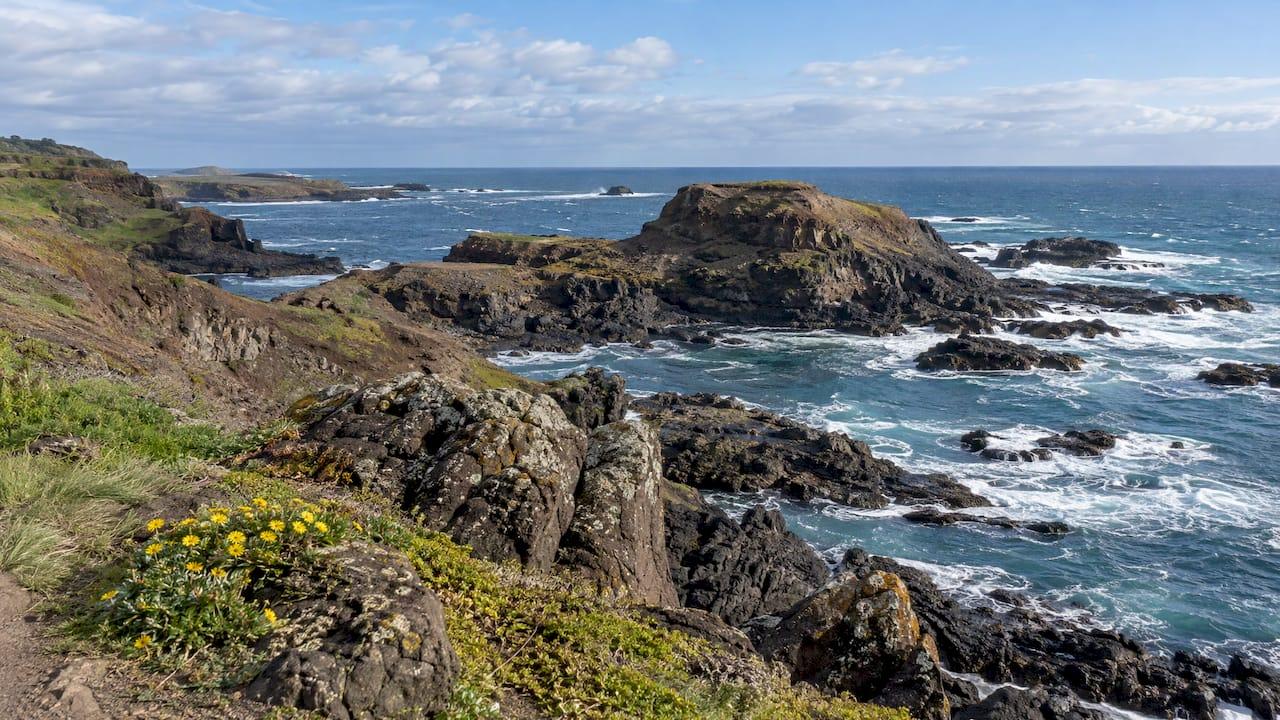
Phillip Island rewards photographers who plan around three things: the place, the light and the rules. Cape Woolamai gives you cliffs and 360-degree views, the Nobbies give you the dramatic western coast, and Rhyll Inlet and the Koala Conservation Reserve give you wildlife. Add early or late light, a wide lens and a telephoto, and you can make strong images in a single weekend. If you want to take that eye further, our 1 Day Photography Courses are a natural next step.
TL;DR
- Start at Cape Woolamai for cliffs, beach and sweeping views, then work west to the Nobbies and Pyramid Rock for sea and rock formations.
- Shoot in the early morning and the hour before sunset. Whale season runs from mid-May to September, peaking in June and July.
- Pack a wide-angle lens for landscapes, a telephoto for wildlife, a tripod and filters.
- Stay on paths, keep your distance from wildlife and remember the Penguin Parade is a no-photography zone for the general public.
- Check the tides before any coastal walk, and never fly a drone near the Penguin Parade.
Table of Contents
- The best places to photograph on Phillip Island
- Quick guide: which location for which subject
- When to go: light, season and tide
- Gear and technique for coast and wildlife
- Rules that protect the island and you
- A sample two-day plan
- Learn to shoot coastlines with Mark Gray
- Our perspective: photograph the place, not the checklist
- FAQ
- Sources
The best places to photograph on Phillip Island
The island is small, but its coastline changes character every few kilometres. Think of it as four photographic zones: the surf coast and cliffs of the south-east, the rugged southern shore, the western tip, and the sheltered woodland and wetlands inland and to the north.

Cape Woolamai: cliffs, beach and the Beacon lookout
Cape Woolamai is the island's highest point at 112 metres. According to Phillip Island Nature Parks, the Beacon lookout gives 360-degree views of the island and San Remo and, on clear days, Wilsons Promontory. The same page describes a golden beach and walking tracks along cliffs carved by wind and waves.
For landscape work this is the place for layered compositions: foreground rock or beach grass, a curve of cliff, and the sea beyond. A wide-angle lens lets you place the walking tracks or cliff edges as leading lines.
Cape Woolamai is also a wildlife site. The Nature Parks report that the area supports hooded plovers and roughly half a million short-tailed shearwaters. The shearwaters arrive in late September after a 16,000 km migration from the Aleutian Islands, and whales may pass from late May to early July. Spring evenings here can combine a landscape and a living subject in one frame.
Pyramid Rock and the southern coast
A camera club handout describes Pyramid Rock as a viewpoint with rugged southern-coast scenery stretching from Cape Woolamai to Point Grant. The walk toward Berrys Beach may also offer wallabies and other wildlife. Bring a telephoto as well as a wide lens, because the coast rewards both sweeping frames and tight details of rock and surf.
The Nobbies and the western coast
The Nobbies are the island's most photographed western-coast subject, with lookout trails that frame the distinctive rock formations against the Southern Ocean. This is a place for long exposures of surging water, so a tripod and a neutral density filter earn their weight. The exposed headland is also where the weather turns fastest, so dress for wind.
Rhyll Inlet: mudflats, mangroves and birds
The east side of the island is quieter and gentler. The Nature Parks' One Day Itinerary highlights protected saltmarsh, mudflats, mangroves and tidal flats at Rhyll Inlet, where photographers can look for spoonbills, oystercatchers, herons, egrets and cormorants. The Conservation Hill boardwalk is 1.2 km, with a longer 4 km return route toward Rhyll.

Shorebirds here are small and wary, so this is telephoto territory. Time your visit to the tide, because it changes where the birds feed and how much mud or water fills your frame.
Koalas and woodland wildlife
The same itinerary describes the Koala Conservation Reserve as offering treetop boardwalks and woodland trails for photographing koalas among eucalyptus trees, plus echidnas and wallabies. The treetop boardwalks put you closer to eye level with koalas, which makes for better portraits than shooting straight up. A tourism guide also notes that eucalyptus trees filter the light at the Koala Conservation Centre, which helps soften contrast in the middle of the day.

Oswin Roberts Reserve is another option. The camera club handout lists eucalypt woodland, rural and distant landscapes, cloudscapes, birds, wallabies, possums, bats, echidnas and koalas there.
Quick guide: which location for which subject
| Location | Best for | Lens suggestion | Watch out for |
|---|---|---|---|
| Cape Woolamai | Cliffs, beach, panoramic views, shearwaters | Wide-angle, mid telephoto | Severe weather changes, very high tides |
| Pyramid Rock | Rugged southern coast, wallabies | Wide-angle and telephoto | Cliff edges |
| The Nobbies | Rock formations, surging sea | Wide-angle, tripod, ND filter | Wind and spray |
| Rhyll Inlet | Wading birds, mangroves, tidal flats | Long telephoto | Tide timing |
| Koala Conservation Reserve | Koalas, echidnas, wallabies | Telephoto | Dappled, contrasty light |
When to go: light, season and tide
Light
Early morning light helps saturate the colours and textures of the island's landscapes, and the warm light just before sunset flatters coastal scenes and rock formations, according to a local photography guide. That matches what most coastal photographers find anywhere in Australia. Hard midday sun flattens cliffs and bleaches sand, so use those hours for woodland, boardwalks and scouting.
Season
Spring and autumn bring milder weather, which makes long sessions on exposed headlands more comfortable. Each season offers something different:
- Late May to September: the Whale Discovery Trail runs from mid-May to September, with peak sightings in June and July. Calm days make whales easier to spot, since choppy water hides movement, according to Visit Phillip Island.
- Late September onward: short-tailed shearwaters return to Cape Woolamai after their long migration.
- Summer: longer days give you more time at the coast, though beaches are busier.
Tide
Tides shape both the picture and the safety of a walk. The Nature Parks warn in their Cape Woolamai guide that Cape Woolamai is exposed to severe weather changes and that walks may be impassable on very high tides. Check the tide table before you set out. Our practical guide to tides and coastal photography explains how to read them for composition as well as safety.
Gear and technique for coast and wildlife
A simple kit covers almost everything on the island. A regional tourism guide recommends a wide-angle lens for landscapes, a telephoto for wildlife, a tripod for sunset and night work, and filters to manage light.
Turning that into a routine:
- Scout first. Arrive before the light and choose your foreground. Cliffs and rock formations reward patience.
- Use the tripod early. In the last light of the day, shutter speeds drop. A tripod lets you keep the ISO low and the water silky.
- Balance the sky. A graduated or neutral density filter holds detail in a bright sky above dark rock.
- Go long for wildlife. Keep your distance, use a telephoto and let the animal behave naturally.
- Check the edges. Wind and spray reach your lens at the Nobbies and Cape Woolamai, so carry a cloth.
The settings and composition habits are much the same as on other southern coastlines. Our Great Ocean Road photography guide covers camera settings for sea stacks and cliffs, and they carry over to Phillip Island's rock formations.
Rules that protect the island and you
Phillip Island's wildlife is the reason many people visit, and the rules exist to protect it. The Nature Parks' filming and photography permit conditions say permit holders must stay on designated paths, keep at least 3 metres from wildlife except where a stated exception applies, and never feed or handle wildlife. The document explains these conditions are imposed to protect natural and cultural features and visitors' enjoyment.
Some points that matter to every photographer:
- Penguin Parade: it is a no-photography zone for the general public. Authorised crews may film only under strict conditions.
- Drones: launches are not authorised near the Penguin Parade. Other locations are available seasonally under a separate permit and very strict conditions, so check with the Nature Parks before you plan any aerial work.
- Cliffs: stay on paths near steep drops, as the Nature Parks advise at Cape Woolamai.
- Driving: the Nature Parks ask drivers to take care at dawn, dusk and night, when wildlife is most active, as noted in their Know Your Nature Parks update. Those are exactly the hours photographers keep.
- Dogs: keep them on leashes on beaches, as Visit Phillip Island urges, to support wildlife safety.
A sample two-day plan
Day one: south-east and south coast. Reach Cape Woolamai before sunrise and walk to the Beacon for the first light. Spend the middle of the day around the woodland and the Koala Conservation Reserve, where filtered light is kinder. Return to Pyramid Rock for late-afternoon colour over the southern coast.
Day two: west and north. Begin with the Nobbies at first light, when long exposures of water over rock work best. Move to Rhyll Inlet for birds, timed to the tide, and walk the Conservation Hill boardwalk. Use the last hour of light wherever the sky looks most promising.
If you are coming from the city, the island is about an hour and a half from Melbourne, so a night's stay saves you the sunrise drive. Our Melbourne photography locations guide and the best scenic drives photography guide can help you plan the route and the stops along it.
Learn to shoot coastlines with Mark Gray
If you want guidance in the field rather than a list of places, we run small-group photography workshops led by Mark Gray and his team of professional instructors, with luxury arrangements. Our 1 Day Photography Courses run across Australia, and our Photography Tours are multi-day landscape workshops across Australia and worldwide. Private Lessons are also available.
If you would rather bring the coast home, our award-winning Open Edition Prints of Australia and our Limited Edition Prints are made with panoramic medium format film and digital cameras. Our Gift Certificates start from 50 AUD. You can also see more coastal work in our curated scenic prints by region.
Our perspective: photograph the place, not the checklist
After years of photographing coastlines across Australia and overseas, we have learned that the best images rarely come from ticking off a list of famous viewpoints. They come from arriving early, staying late and reading the conditions.
Phillip Island suits that approach. Its headlands, rock formations and wetlands are all close together, so you can respond to the weather rather than fight it. If the wind drops, go to the water. If cloud rolls in over the cliffs, look for texture and mood.
Our prints are collected in 35 countries, and they are made with panoramic medium format film and digital cameras for exceptional detail. That detail begins in the field, with patient composition, a tripod and a considered choice of lens. Our workshops are small-group for that reason: you get time and attention at the moment the light changes.
Whether you come to learn with us or take your own camera to the island, respect the wildlife and the paths. Great landscape photography depends on the places we photograph staying wild.
Mark
FAQ
What is the best time of day for Phillip Island photography?
Early morning and the hour before sunset give the warmest, most saturated light on cliffs and rock formations, according to a local photography guide. Midday suits woodland and wildlife in filtered shade. Always check tides first if you plan a coastal walk.
When is whale season on Phillip Island?
The Whale Discovery Trail runs from mid-May to September, with peak sightings in June and July. Calm days make whales easier to see because choppy water hides movement. Bring a telephoto and plan to scan the ocean patiently.
Can I photograph the Penguin Parade?
The Penguin Parade is a no-photography zone for the general public, according to the Nature Parks' permit conditions. Authorised crews may film only under strict conditions. Photograph other wildlife and the coastline instead, and enjoy the parade without a camera.
Can I fly a drone on Phillip Island?
Drone launches are not authorised near the Penguin Parade. Other locations are available seasonally under a separate permit and very strict conditions. Contact Phillip Island Nature Parks before planning any aerial photography.
What lenses should I bring?
Bring a wide-angle lens for cliffs and seascapes and a telephoto for wildlife such as koalas, wallabies and wading birds. Add a tripod and filters for sunset and long exposures. Keep at least 3 metres from wildlife where the permit rules apply.
Sources
- Cape Woolamai Recreation Area, Phillip Island Nature Parks
- Cape Woolamai guide, Phillip Island Nature Parks
- See the Sites One Day Itinerary, Phillip Island Nature Parks
- Filming and photography permit conditions
- Know Your Nature Parks, Spring 2025
- Phillip Island camera club handout
- The Best Photography Spots on Phillip Island
- Photography on Phillip Island: Best Spots for Landscapes
- Whale Discovery Trail
- Whale Watching, Visit Phillip Island
- A Guide to Summer on Phillip Island