

Pigment inks are made of fine solid particles that sit on or near the paper surface. Dye inks are fully dissolved colorants that soak into the paper's coating. For photographs you want to keep, pigment inks are generally the more stable choice. Dye inks can look brilliant on glossy paper but are more exposed to light and chemical degradation. The right answer still depends on the paper, the display conditions and what the print is for.
This guide explains the chemistry in plain words, compares the two on the things that matter to photographers and collectors, and shows how to choose, whether you are buying a printer or buying a print for your wall.
TL;DR
- Pigment ink is solid particles suspended in liquid. It is usually more resistant to light-induced fading, which is why "archival" prints are almost always pigment-based.
- Dye ink is colorant dissolved in liquid. It tends to give a wide, vivid color range on glossy and luster papers, but it is more susceptible to light and chemical degradation.
- Paper matters as much as ink. Lightfastness ratings depend on the ink set and the paper together, so never judge permanence from the ink name alone.
- Do not mix the two in one printer. Printheads are engineered for one formulation, and the wrong ink can clog or damage them.
- For collectors, ink is one part of longevity. Framing, glass, light and storage decide how a print ages on your wall.
Table of Contents
- What is the difference between pigment and dye ink?
- Side-by-side comparison
- How each ink affects color, detail and paper choice
- Longevity and what "archival" really means
- The disadvantages of pigment ink, and how to work with them
- Choosing between pigment and dye
- Can you mix pigment and dye inks, or swap one for the other?
- Which popular printers use which ink?
- Our perspective
- See the quality for yourself
- Frequently asked questions
- Sources
What is the difference between pigment and dye ink?
The difference is physical. Pigment ink consists of fine solid particles suspended in a liquid, while dye ink consists of colorants fully dissolved in the liquid. That one distinction drives almost everything else: how the ink meets the paper, how it handles light, and how it behaves in a printer.
A useful picture is sugar and sand in a glass of water. Sugar disappears into the water and the water stays clear but sweet. Sand stays as separate grains and can settle. Dye behaves like the sugar. Pigment behaves like the sand, although in a printer the particles are microscopic and engineered to stay evenly dispersed.

Because dye is dissolved, it is absorbed into the paper's receiving layer. Because pigment is particulate, it tends to rest on the surface or lodge in its texture. Dye inks are absorbed into the surface coating and are more susceptible to light and chemical degradation, while pigment inks sit on the paper surface, are usually more resistant to light-induced fading and are more vulnerable to abrasion.
Side-by-side comparison
| Factor | Pigment ink | Dye ink |
|---|---|---|
| Colorant | Solid particles suspended in liquid | Colorant dissolved in liquid |
| Behavior on paper | Sits on or near the surface | Absorbed into the coating |
| Light stability | Usually more resistant to fading | More susceptible to light and chemical degradation |
| Color range | Tends to be smaller, though modern sets are closing the gap | Often wide and vivid on suitable glossy papers |
| Scratch and rub resistance | More vulnerable to abrasion on some surfaces | Generally less of an issue once absorbed |
| Best papers | Matte, fine art and textured papers | Glossy, luster and semi-gloss absorbent papers |
| Cartridge cost | Tends to be higher | Tends to be lower |
Treat the table as a set of tendencies, not laws. Ink chemistry has improved on both sides, and individual product lines can break the pattern.
How each ink affects color, detail and paper choice
Color and gamut
Dye inks have long been prized for saturated, clean color on glossy stock. Pigment inks have traditionally had a narrower range. The conservation field puts it plainly: pigment-based inks are more stable than dye-based inks but tend to have a smaller color range and a greater tendency toward metamerism. Metamerism means the print can look slightly different under different light sources, for example daylight versus warm gallery lighting.
Manufacturers have worked hard on that gap. Epson, for instance, describes UltraChrome pigment inks as using resin-coated particles to increase color gamut while retaining the excellent longevity of pigment inks. Canon's recent professional ink development has gone after surface problems directly: its newer imagePROGRAF formulation adds crystalline wax to improve scratch resistance on glossy and semi-glossy media and a reformulated Chroma Optimiser to reduce bronzing and uneven glossiness. In practice, a well-made pigment print today holds fine detail and rich tonality that would have surprised photographers twenty years ago.
Paper compatibility
Ink and paper are a pair. Dye inks typically perform best on glossy, luster and semi-gloss papers designed to absorb ink, while pigment inks need slightly roughened surfaces on matte or fine art papers to trap the particles effectively. That is why pigment prints on cotton rag or textured fine art stock look so natural, and why a dye print on a high-gloss photo paper can look so punchy.
If you are weighing surfaces, our guide to photographic paper versus fine art paper goes deeper on how each base changes the look and feel of a landscape image.
Water and smudge resistance
Water behavior depends on both ink and paper. Epson's technical brief notes that DURABrite inks are water- and smudge-resistant on supported papers, while conventional dye inks are water-resistant on many glossy papers but not on matte papers. It is an older document, but the principle holds: a dye print on matte stock is the most vulnerable combination if it meets a splash.
Longevity and what "archival" really means
"Archival" is a marketing word with no single legal definition, so it helps to understand what actually decides how long a print survives. Three points from the research and conservation literature are worth remembering.
- Ink and paper together set the rating. Print lightfastness ratings depend on both the ink set and the paper on which the print is made. A rating quoted for one paper does not transfer to another.
- The whole system counts. Longevity depends on the combination of ink, media, protection, mounting and framing materials, a point also made by Australian ink suppliers.
- Display and storage conditions can undo good materials. The Northeast Document Conservation Center advises storing prints in a dark, dry, cool place at 68°F (20°C) or lower with 30 to 40 percent relative humidity, away from light and oxidizing materials. It also notes that displaying prints behind glass decreases airflow, which reduces fading from gases and some UV exposure problems.
The same logic applies far beyond photography. If you are curious how other print technologies compare, there is a useful breakdown of how long printing methods last on everyday objects, and the lesson is the same: the method, the material and the care all count.
For collectors, we have written more on this in archival print longevity and on UV protection for prints.
The disadvantages of pigment ink, and how to work with them
Readers often ask about the downsides of pigment ink. Framed as choices, they come down to three things.
- Color range and metamerism. Pigment sets tend to have a smaller range than dye sets. Choose a paper and ink combination designed together, and view proofs under the lighting where the print will hang.
- Surface sensitivity. Because particles sit near the surface, abrasion matters more. Handle prints by the edges, use cotton gloves for unframed work and protect finished pieces with proper framing.
- Cost. Pigment cartridges tend to cost more than dye cartridges because they must be carefully formulated for stability and quality. For prints meant to last decades, the extra cost per print is small compared with the value of the image.
None of these is a reason to avoid pigment for work you intend to keep. They are reasons to match the paper, the lighting and the framing to the ink.
Choosing between pigment and dye
The conservation guidance is clear for anything intended to last: choose pigment-based inks for greater stability, accept the smaller color range, and match the media and paper correctly for optimum permanence. Here is how that plays out in common situations.
You print photos for display or sale
Use pigment inks on a fine art or high-quality photo paper made for them. Test a small proof, check it under the light of the intended room, and keep your paper and ink combination consistent so results are repeatable. Our walkthrough on how the fine art printing process works explains the steps from file to finished print, and how to assess photography print quality gives a practical checklist.
You print family snapshots, school projects or short-lived material
A dye-based home printer on glossy photo paper is an economical, cheerful option. Longevity is not the priority, and the lower cartridge cost suits the volume.
You are buying a print to hang
Ask the seller three things: which ink type and paper were used, how the print is protected, and what display conditions they recommend. A confident seller will answer specifically. Then plan the framing, because glass, mounting and light exposure all affect how the print ages. We cover the practical side in caring for fine art photography prints and framing limited edition prints.
Can you mix pigment and dye inks, or swap one for the other?
No. Printers are designed around one ink formulation. Printer manufacturers formulate inks for particular printheads, and printers designed for dye ink cannot generally work correctly with pigment ink, and vice versa. The same source warns that combining different ink types or formulations can make the chemicals react and coagulate, potentially clogging or damaging printheads.
Manufacturers say the same. HP states that pigment and dye inks are not interchangeable, and using the wrong type can damage a print head engineered for one formulation. Primera explains that mixing dye and pigment in its LX3000 and LX4000 printers can cause quality problems and clogged print heads, and that switching types means removing the other ink first and following the conversion-kit instructions. Epson's L3210 specification adds a warranty note: the printer is designed for genuine Epson inks, and non-Epson or unspecified ink could cause damage not covered by Epson's warranties.
If you want to move from dye to pigment, buy a printer built for pigment rather than trying to convert a dye machine.

Which popular printers use which ink?
Many readers arrive here because they are checking a specific model. Always confirm on the manufacturer's page, since lines change. Three examples from official Australian and manufacturer specifications:
| Printer | Ink type | Source |
|---|---|---|
| Epson EcoTank L3210 | Dye, in black, cyan, yellow and magenta | Epson product page |
| Epson EcoTank Photo ET-8550 | Pigment black plus dye photo black, with cyan, magenta, yellow and grey as dye | Epson Australia |
| Canon MAXIFY GX7060 | Pigment, GI-66 black, cyan, magenta and yellow | Canon Australia tech sheet |
The ET-8550 shows that hybrid systems exist: a pigment black for crisp text and dye colors for photo work. It is a reminder to read the specification, not assume.
Our perspective
We make landscape photographs to be lived with, in homes, offices and collections, for decades. That shapes how we think about ink.
The pigment versus dye question is a good one, but it is only the start. A collector is really asking whether an image will still look the way it did on the day it was chosen. Ink is one answer. Paper, framing, glass and where the print hangs complete it.
Our prints are award-winning and collected in 35 countries. They begin with panoramic medium format film and digital cameras, because exceptional detail at capture gives a print more to preserve. We encourage every collector to ask about materials, to see the work in person where they can, and to plan display and care from the start.
If you photograph yourself, we say the same thing in our workshops: control the whole chain, from the moment you press the shutter to the wall the print hangs on.
Mark
See the quality for yourself
Reading about ink is helpful, but a print in the hand tells you more. Explore our limited edition prints and open edition prints from Australia and around the world, made for collectors who care about detail and quality.
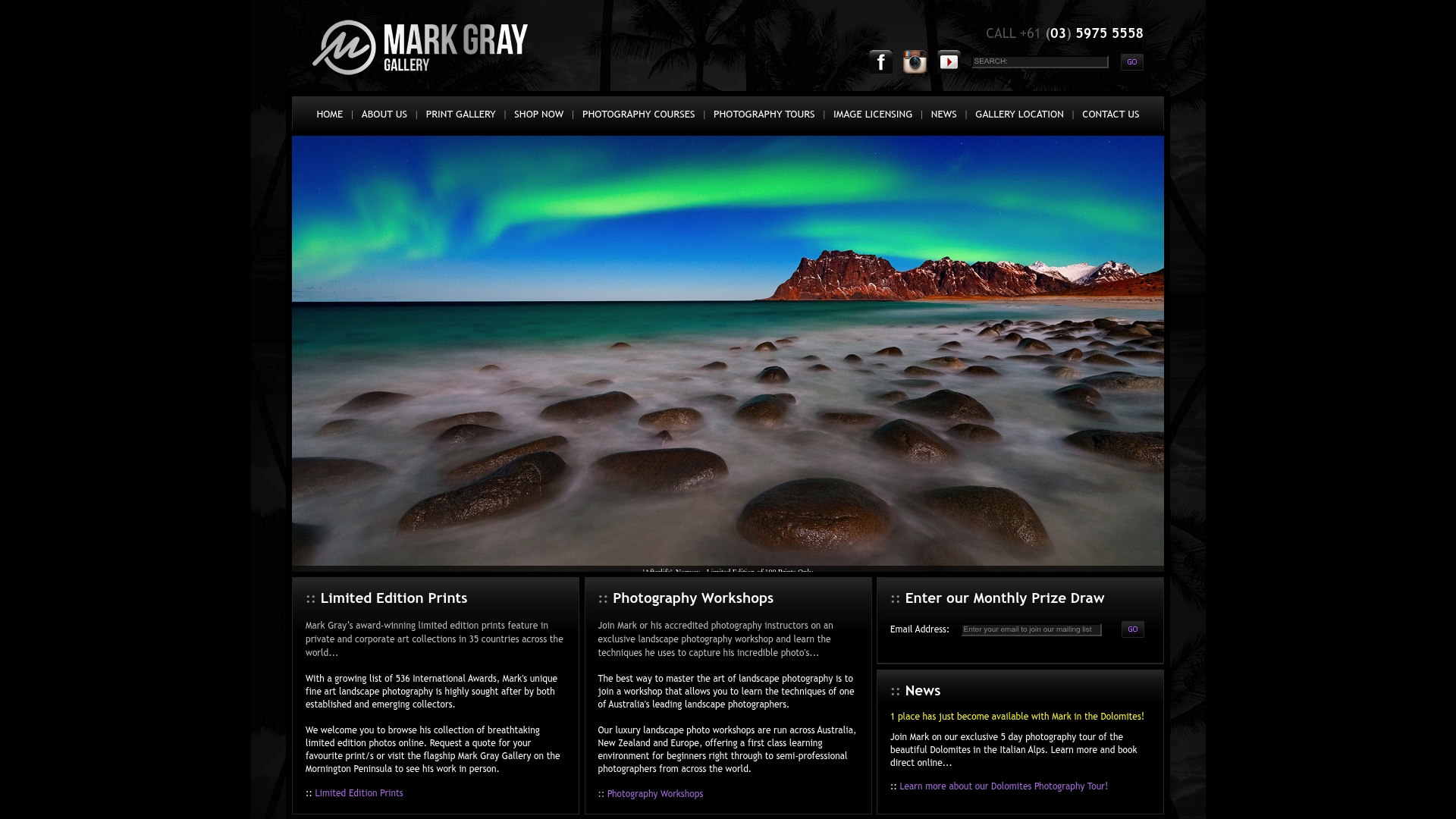
If you would like a smaller keepsake, our acrylic blocks are $295 each, with Australia-wide postage and handling of $24.95. Gift certificates start from $50 and let someone choose their own image. And if you want to learn how to create stronger landscape images yourself, our 1 day photography courses and photography tours are led by Mark and his team of professional instructors in small groups.
Frequently asked questions
Is the Epson L3210 ink pigment or dye?
The Epson EcoTank L3210 uses dye ink. Epson's specification identifies the ink technology as dye and lists black, cyan, yellow and magenta as dye. It suits everyday photo and document printing, but it is not the first choice for prints meant to hang for decades.
Are pigment inks always better than dye inks?
Not always. Pigment inks are usually more resistant to fading and suit matte and fine art papers, so they are the better choice for work you want to keep. Dye inks can deliver vivid color on glossy paper at lower cost, which suits casual printing.
Can you mix pigment ink with dye ink?
You should not. Printheads are engineered for one formulation, and mixing can cause the inks to react, clog the head and void warranty cover. Use only the ink type your printer manufacturer specifies.
What are archival pigment inks?
The term describes pigment-based ink sets marketed for long print life. The real permanence of a print depends on the ink and paper together, plus framing, light exposure and storage, so look for the specific paper and ink combination, not the word alone.
How should I display a pigment print so it lasts?
Keep it out of direct sunlight, frame it behind glass, and avoid hot or damp spots. Conservators recommend cool, dry, dark storage for anything not on display. Our guide to protecting prints from UV covers glazing options.
Sources
- The quest for good-looking, long-lasting prints, Photo Review
- Thinking about Inks, Photo Review
- Ink Technology Rules, Epson Australia
- DuraBrite Ink Technical Brief, Epson
- Creating Long-Lasting Inkjet Prints, NEDCC
- Ink Information, Australian ink supplier
- Plotter Ink Types, HP Large Format
- Canon imagePROGRAF Pro Series announcement, Canon Australia
- Converting LX3000/LX4000 between dye and pigment, Primera
- Ink Specifications for the L3210, Epson Support
- EcoTank L3210 product page, Epson
- EcoTank Photo ET-8550, Epson Australia
- MAXIFY GX7060 tech sheet, Canon Australia
- How long printing methods last