
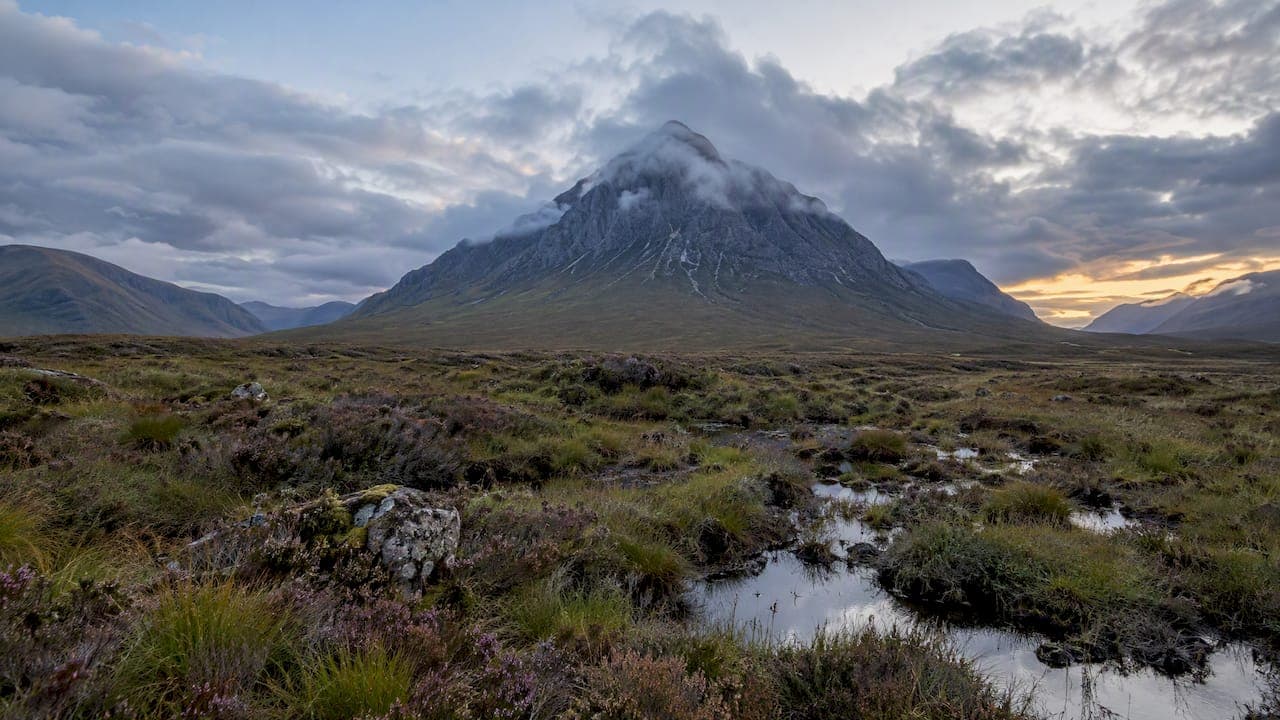
Skye and Glencoe reward photographers faster than anywhere else in the Highlands, but the single factor that decides whether a trip delivers strong images is not the destination. It is how well you read timing and weather and how willing you are to shift plans when the sky tells you to. What follows pairs an ordered location shortlist with field-tested shooting notes, technical tactics, and the logistics that keep a Highlands trip productive rather than frustrating.
TL;DR:
- Optimal photo results depend on reading weather and timing carefully, as well as being flexible enough to change plans based on sky conditions.
- Key locations like Old Man of Storr and Buachaille Etive Mòr are best shot at specific times, such as sunrise or dawn, with appropriate lenses for the scene.
- Weather, season, and light conditions significantly influence the outcome, with overcast days helping water scenes and winter providing shorter golden windows.
- A multi-location itinerary with advance planning, permits, and safety measures enhances shot success and minimizes frustration in remote Highland areas.
- Post-processing of Highland images requires subtle adjustments, especially in skies and water, to preserve mood and avoid artificial effects.
Table of Contents
- Top Highland locations for landscape photography
- Seasons, timing and weather: plan your trip for the right light
- Composition and technical tips for Highlands landscapes
- Planning, access and safety: permits and field logistics
- Field-tested Skye and Glencoe tactics from Mark Gray
- Post-processing for moody Highland skies and color
- Author perspective: balancing iconic images with original vision
- How Mark Gray can help you grow as a photographer
- FAQ
- Sources
Top Highland locations for landscape photography
The Highlands offer a cluster of locations that photographers return to again and again, and for good reason: each rewards a different kind of light and composition. Nature TTL's survey of the region treats Skye, Glencoe and Rannoch Moor, Glen Etive, Glen Affric, Assynt and Coigach, Torridon, and Loch Lomond as the core set worth building an itinerary around.
- Old Man of Storr, Skye. Shoot at sunrise when the rock pinnacle catches the first light from the east. A 24 to 35mm lens captures the scrambled boulders in the foreground against the spire; arrive early to beat the crowds that gather by mid-morning.
- Quiraing, Skye. The jagged ridgeline works best in soft evening light. A wide-angle lens around 16 to 24mm handles the sweeping scale, and walking fifteen minutes past the main viewpoint often clears the crowd of tripods entirely.
- Fairy Pools, Skye. Overcast days actually help here, since flat light evens out the contrast between water and rock. A polarizing filter cuts glare on the pools, and a 24 to 70mm lens covers both wide shots and tighter compositions of individual cascades.
- Neist Point, Skye. The lighthouse and cliffs face west, making this one of Skye's best sunset locations. Bring a telephoto lens (70 to 200mm) for compressed shots of the cliff layers from the approach path, which also avoids the steep final descent in poor light.
- Buachaille Etive Mòr, Glencoe. Among the most photographed mountains in Scotland, it rewards a classic foreground of the River Coupall. Shoot wide (16 to 35mm) at dawn when mist often sits in the glen.
- Rannoch Moor. The scattered lochans and Scots pines create natural foreground anchors. Work the edges of the moor rather than the main road pull-ins for less cluttered compositions.
- Glen Etive. The single-track road along the river offers dozens of pull-offs with clean compositions of water, pine, and distant peaks. Late afternoon light works well here since the glen runs roughly east to west.
- Glen Affric. Ancient Caledonian pine forest meets loch and mountain. A mid-range zoom (24 to 105mm) lets you move between forest detail and wider loch views without changing lenses in damp conditions.
- Assynt and Coigach. Home to distinctive standalone peaks like Suilven, this is a region for telephoto compression work. Plan for a longer drive and more isolated shooting with fewer other photographers around.
- Torridon. The sandstone mountains here hold dramatic shadow detail in low light. A graduated ND filter helps balance bright skies against the dark rock faces common in this glen.
- Loch Lomond. Closer to the central belt and easiest to reach, it suits photographers short on time. Early morning calm water gives strong reflection opportunities with a standard 24 to 70mm lens.
Eilean Donan Castle and Loch Coruisk round out the list of frequently photographed spots, the castle for its classic reflection shot from the bridge approach, and Coruisk for photographers willing to hike into Skye's Cuillin range for a quieter, dramatic composition.
Seasons, timing and weather: plan your trip for the right light
Summer gives you long twilight, sometimes past 10 PM in June, which extends your shooting window well beyond a single sunrise or sunset. Winter compresses that same window into just a few hours around a low sun, so every minute of golden light matters more. Autumn adds a narrow color season across Glen Affric and Rannoch Moor when bracken and birch turn before the first hard frosts.
Multiple-location planning increases your odds more than chasing one perfect sunrise. Walkhighlands' guidance on landscape photography recommends checking sun direction, weather, and tide times before committing to a dawn or dusk shoot, since Highland weather shifts fast enough to ruin a single-location plan.
A short planning checklist before you commit to a shoot:
- Check sun direction and angle for your chosen location and time of day.
- Review the forecast for cloud cover, wind, and precipitation changes through the shoot window.
- Confirm tide times for any coastal locations like Neist Point or Elgol.
- Identify safe parking in advance, since many Skye and Glencoe pull-ins fill early.
- Build in spare transit time so a closed road or slow walk-in does not cost you the light.
Multi-base itineraries, where you stay within reach of two or three locations rather than one fixed point, let you pivot when a forecast changes overnight. For a deeper look at reading conditions before you shoot, our guide to landscape photography lighting conditions breaks down how to match light type to subject.
Composition and technical tips for Highlands landscapes
At Buachaille Etive Mòr, that might mean a cluster of heather in the bottom fifth, the mountain filling the middle, and a band of moving cloud above it. Photography tutorials covering the 20-60-20 approach frame it as a way to build depth without overcomplicating the composition.

Lens choice depends on the scene. A wide-angle around 16 to 24mm suits the sweeping ridgelines of Quiraing or Torridon, while a telephoto in the 70 to 200mm range compresses distant peaks in Assynt into layered, graphic shapes. Graduated ND filters earn their place on bright Highland days when the sky reads several stops brighter than the land.
Practical field technique matters as much as gear:
- Use a sturdy tripod on exposed ridges and weigh it down with your bag in wind.
- Bracket exposures by one to two stops either side of your meter reading for scenes with strong sky-to-land contrast.
- Focus stack foreground-to-background shots when working close to heather or rock detail with a wide aperture.
Pro Tip: On windy coastal shoots like Neist Point, shield your lens hood with your body on the exhalation before each shutter press to cut vibration from gusts.
Our composition checklist and guide to landscape photography techniques cover bracketing and focus stacking in more depth.
Planning, access and safety: permits and field logistics
Scotland's access framework gives photographers considerable freedom, but that freedom comes with responsibilities worth understanding before you set up a tripod.
- Follow the Scottish Outdoor Access Code, which grants responsible non-motorised access to most land and water while asking visitors to respect land managers, avoid disturbing wildlife, and stay clear of private areas without clear access.
- Check Forestry & Land Scotland's permission guidance before any higher-impact shoot: vehicle access, fixed camera setups, or commercial filming on FLS land typically requires a request form, and approval can take around six weeks, so apply early.
- Pack sturdy waterproof footwear, a headtorch for pre-dawn approaches, and midge protection for summer evenings in Glen Affric and Torridon.
- Plan your route before you leave, tell someone your expected return time, and park only in designated areas to avoid blocking single-track roads.
- Leave every site as you found it: pack out rubbish and avoid trampling vegetation for the sake of a composition.
Field-tested Skye and Glencoe tactics from Mark Gray
We build Highland itineraries around multiple bases rather than a single fixed location, shifting between Skye and Glencoe as forecasts change through the week. That flexibility turns a single bad forecast into an opportunity rather than a wasted day.
- Change lenses away from open sand on Skye's coastal beaches to keep grit out of the mount.
- Carry a quick-seal bag for immediate lens protection when wind picks up mid-change.
- Scout approach routes the afternoon before a dawn shoot so you are not finding your footing in the dark.
- Favor a weather-sealed body and a lens cloth kept dry in an inner pocket, not a bag side pouch.
Our field-tested Skye photography guide walks through specific routes and timing in more detail.
Post-processing for moody Highland skies and color
Highland images often live or die in the edit, since the mood that drew you to the shot usually needs careful recovery rather than a one-click filter. Start with sky contrast: a graduated adjustment that deepens cloud texture without crushing shadow detail keeps a moody sky believable instead of heavy-handed.

Heather and water respond well to targeted color grading rather than a global saturation boost. Pull the purple-to-magenta range slightly toward a richer, more muted purple to avoid the artificial pink that oversaturation produces, and cool the blue-green range in lochs and rivers just enough to separate water from surrounding rock.
Dehaze and clarity tools work well in small doses on distant ridgelines, where Highland haze softens detail even on clear days. Push them too far, though, and the image starts to look processed rather than atmospheric. Work in luminosity masks where possible so sky and land adjustments stay independent, and always check your edit against the original to confirm you are enhancing the scene rather than inventing one.
Author perspective: balancing iconic images with original vision
Preparation beats luck in the Highlands more often than most photographers expect. The famous angles at Old Man of Storr or Buachaille Etive Mòr are worth capturing once, but the stronger habit is walking past the obvious viewpoint to find your own. Shoot responsibly, respect the ground you stand on, and treat every trip as practice for the next one. Structured learning, whether through a workshop or steady repetition, shortens that curve considerably.
— Mark
How Mark Gray can help you grow as a photographer
Learning to read Highland light takes repetition, and we built our courses to shorten that curve. Our 1 Day Photography Courses give you focused, hands-on practice with composition and exposure technique in a single session, while our Photography Tours take you through multi-day landscape workshops in small groups led with the same preparation-first approach covered above.
For photographers who want closer guidance, we offer Private Lessons tailored to your current skill level and goals. If you would rather bring a finished Highland scene into your collection without picking up a camera, our Limited Edition Prints are made from panoramic medium format film and have been collected in 32 countries. Photographers and businesses needing commercial usage rights can also explore our Image Licensing service for splashbacks, signage, and marketing materials.
- Build technique fast with a 1 Day Photography Course.
- Join a multi-day Photography Tour through the Highlands or further afield.
- Book a Private Lesson for one-on-one feedback on your editing and fieldwork.
Ready to put these techniques into practice? Explore expert Photography SEO Services to increase your online presence and book more shoots, then Browse our Photography Tours and find a workshop that fits your schedule.
FAQ
What are the best places to take pictures in the Scottish Highlands?
Skye's Old Man of Storr, Quiraing, and Fairy Pools, along with Glencoe's Buachaille Etive Mòr and nearby Rannoch Moor, form the core of most Highland photography trips. Glen Affric, Assynt and Coigach, and Torridon round out the list for photographers with more time, as outlined in Nature TTL's location guide.
What is the 20-60-20 rule in photography?
It works especially well in the Highlands, where foreground heather or rock can anchor a sweeping mountain or loch scene, as described in this breakdown of the technique.
What is the most photographed spot in Scotland?
No single authoritative source names one definitive "most photographed" location in Scotland. Eilean Donan Castle, Skye's Old Man of Storr and Quiraing, and Glencoe's Buachaille Etive Mòr are repeatedly featured across travel and photography guides and are best described as among Scotland's most photographed landmarks.
What is the prettiest part of the Scottish Highlands?
This comes down to personal taste, but Skye and Glencoe consistently draw the most photographers for their dramatic, varied terrain within a relatively compact area. Assynt and Coigach and Torridon offer a quieter, equally striking alternative for those willing to travel further off the main routes.
Do I need a permit to photograph in the Scottish Highlands?
Most personal photography falls under the Scottish Outdoor Access Code and needs no permit, but higher-impact activity like commercial filming, vehicle access, or fixed camera setups on Forestry & Land Scotland land often requires formal permission. Processing for those permits can take around six weeks, according to Forestry & Land Scotland's own guidance, so apply well ahead of your trip.
Sources
- Top 8 Landscape Photography Locations in the Scottish Highlands - Nature TTL
- How to Improve your Landscape Photography | Walkhighlands
- Gov
- Isle of Skye - VisitScotland
- Permissions and Permits for FLS Sites | Forestry & Land Scotland