
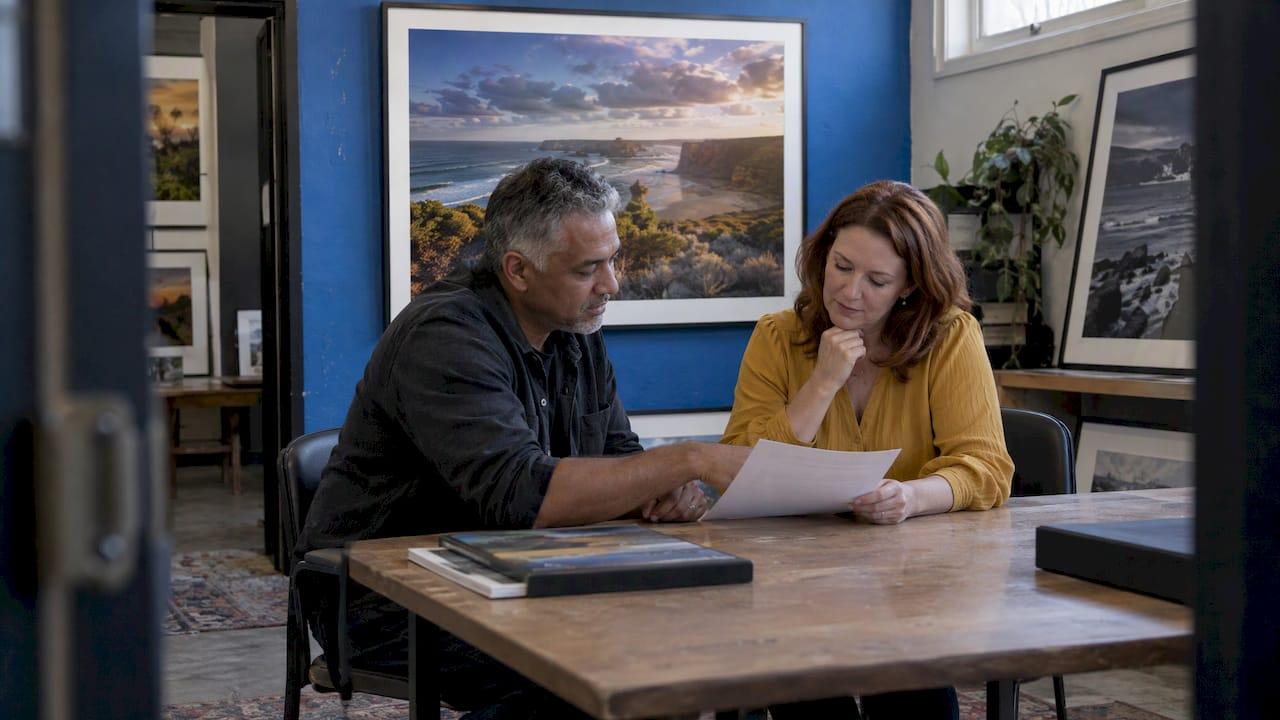
There is no standard price for a commercial photo license in Australia. The fee is set by how you will use the image: where it appears, for how long, in which territory, in front of what audience and whether anyone else can use it. A landscape image on one brochure for a year costs a fraction of the same image on a national billboard campaign with exclusive rights. For landscape photography, the cost is agreed with the photographer, so the most useful thing you can do is arrive with a clear brief. This guide shows what goes into that brief and how each choice moves the fee. We license the work of Mark Gray, so we also explain how a request to our image licensing team works.
TL;DR
- A commercial photo license is priced on usage, not on the file itself: media, placement, duration, territory, audience and exclusivity all move the fee.
- No single percentage or rate card fits every job, so expect a quote for your specific use rather than a fixed public price.
- The photographer is generally the first copyright owner of a photograph, so you license the right to use it and do not buy the image outright.
- Put your use in writing before you ask for a price: the clearer the scope, the faster and more accurate the quote.
- Mark Gray's image licensing is quoted on request, with no published price list.
Table of Contents
- What you are actually paying for
- The six factors that set the fee
- Why there is no universal formula
- A worked example: one landscape, three uses
- What your license agreement should specify
- Matching the license to your use
- Why licensed photography beats free images for business
- How to get an accurate quote
- Budgeting tips for corporate and small-business buyers
- Perspective: what we have learned about landscape licensing
- License a Mark Gray landscape for your project
- FAQ
- Sources
What you are actually paying for
When you license a photograph you are paying for permission, not for pixels. Under Australian law a photograph is protected as an artistic work, and the photographer is generally its first copyright owner, subject to exceptions and agreements, according to the Australian Copyright Council's photography fact sheet. Copyright lets the owner set the terms, including payment, for controlled uses such as reproducing a work or communicating it to the public, as IP Australia explains.
A license is the document that gives you some of those permissions for an agreed purpose. The fee reflects what you are allowed to do and for how long. The Image Makers Association Australia makes the same point: the value of commercial photography depends not only on creating the image but on how it is used.
That is why two businesses can receive very different quotes for the same photograph. They are not buying the same thing.
The six factors that set the fee
Usage-based licensing weighs where the images appear, how long they are used and the audience they reach, according to the Image Makers Association Australia. In practice, six questions decide the number.

1. Media: where will the image appear?
A website banner, a printed brochure, a shop window sign and a product package are all different media. Each has its own reach and its own risk of the image being copied or misused. Print runs, shop signage and packaging usually sit above a single web placement because the image is physically multiplied or displayed at scale. If you plan several media, list every one. Adding a placement later is normally a renegotiation.
2. Duration: how long do you need it?
A license for twelve months is a smaller commitment than a perpetual one. Longer use, and perpetual use in particular, can justify different commercial treatment. Be honest about the real life of the project. A brochure that sits in a rack for three years needs a three-year term, even if the campaign launches this month.
3. Territory: where will it be seen?
An Australia-only license is narrower than a worldwide one. If your business sells overseas or your website is read abroad, rights for use outside Australia may need to be agreed separately. Think about whether your online use is truly local before you accept a territory clause.
4. Audience and print run
An internal presentation is seen by dozens of people. A national retail catalogue is seen by hundreds of thousands. Photographers and licensors often use circulation, impressions or print quantity as a guide to the scale of use. Giving a realistic estimate helps you avoid paying for reach you will not use.
5. Exclusivity
Exclusive use costs more, because it restricts the photographer's ability to license the same image to anyone else. If you want to be the only business in your industry using a particular landscape, or the only one in your region, say so at the start. Non-exclusive use is the usual starting point for stock-style licensing and keeps the cost lower.
6. Modifications and extras
Cropping, colour grading, adding text, compositing and use in derivative products can each be limited by the license. If your designer needs to alter the image, ask for that permission up front. Renewals, extra placements and expansions to new media are also priced on the actual scope, so build in what you expect to need.
Why there is no universal formula
You will find advice online that a license should be a set percentage of the creative fee, or a multiple of some base price. Treat it with caution. Photographers who publish pricing guidance generally agree that scope drives the figure, and that a one-year non-exclusive website license is a very different job from a worldwide paid-advertising, packaging and outdoor campaign. Each use needs its own calculation.
Stock-style licensing of an existing image and a commissioned shoot are also priced differently. With a commission you pay for the photographer's time, crew and creative work, and then for usage on top. A photographer may charge a session fee or other creative fees in addition to the license. With an existing landscape, there is no shoot to fund. You are paying for the right to use work that already exists, which is why a landscape library suits many corporate and small-business needs.

A worked example: one landscape, three uses
This is an illustration of how scope changes, not a price list. Imagine a tourism-adjacent business wants a coastal sunrise photograph.
| Use | Media | Duration | Territory | Exclusivity | Relative scope |
|---|---|---|---|---|---|
| Website header | One web placement | 12 months | Australia | Non-exclusive | Smallest |
| Brochure and flyer | Print, 5,000 copies | 24 months | Australia | Non-exclusive | Medium |
| Brand campaign | Web, print and outdoor | 3 years | Australia and New Zealand | Exclusive in category | Largest |
The same photograph sits behind all three. The third use carries more media, more time, more territory and a restriction on the photographer, so it should cost the most. When you ask for a quote, describing your use in a table like this removes guesswork for everyone.
What your license agreement should specify
The cost means little if the paperwork is vague. A good agreement lists the permitted purpose, the media, the geography, the duration and any restrictions, such as retouching, resale or use by competitors. It should also be explicit about who owns any commissioned photographs. The Australian Copyright Council's guide notes that ownership rules depend on the type and date of the commission and can be changed by agreement.
The general position it describes is this:
- For commissioned photographs taken on or after 30 July 1998 for commercial purposes, the photographer is generally the first copyright owner unless the parties agree otherwise.
- Commissioned private or domestic photographs, such as a family portrait, generally belong first to the client unless agreed otherwise.
- Under the Copyright Agency's ownership guide, absent an agreement, an employer is generally first owner of work an employee creates in the course of the job.
Moral rights sit alongside all of this. The Image Makers Association Australia says photographers keep moral rights separately from licensed usage rights: the right to be credited, to prevent false attribution and to object to prejudicial treatment of the work. Ask in your agreement whether a credit line is required and where it must appear.
If your contract is complex, involves a large campaign or a dispute over ownership, a lawyer who works in intellectual property is the right person to review it.
Matching the license to your use
Different uses carry different checks. Our own guides go into the detail for each:
- Print collateral: the seven items to include when licensing images for brochures cover print run, reprints and distribution.
- Shopfronts and displays: the signage licensing terms explain size, location and duration.
- Websites: how to license photography for websites sets out the placement and term questions.
- Social media: the five licensing settings for small teams help you avoid takedowns.
- Interiors: the licence terms for kitchen splashbacks suit homeowners and designers.
- Background reading: how commercial photography licensing differs and how photo licensing royalties work.
Why licensed photography beats free images for business
Free images often come with unclear terms, no written proof of permission and no one to contact if a claim arrives. A licensed photograph gives you a document that states exactly what you may do. It also gives you a named creator, high-resolution files where available and a point of contact. Our guide to licensed photography versus free images sets out the commercial case in more depth.
How to get an accurate quote
You can shorten the process and get a fair figure by preparing this before you make contact:
- Name the image or the subject. Give the title or location, or describe the mood and region you need.
- List every medium. Web, print, signage, packaging, social, presentations.
- State the term. Twelve months, three years or perpetual.
- State the territory. Australia only, Australia and New Zealand, or worldwide.
- Estimate the audience. Print run, expected visitors or the size of the display.
- Say whether you need exclusivity, and in which category or region.
- Flag any edits. Cropping, text overlays or use in a product.
- Say who will use it. Your business only, or agencies and partners as well.
With those eight answers a photographer can quote your exact use. Without them, you are likely to receive either a high figure that covers every possibility or a back-and-forth that takes weeks.
Budgeting tips for corporate and small-business buyers
Licensing is usually a small part of a campaign budget when it is planned early, and an expensive surprise when it is not. A few habits help.
- License for the use you will actually have. Do not pay for worldwide perpetual rights for a six-month local promotion.
- Bundle related uses. A web header, a brochure and a social campaign using the same image are often cheaper to agree together than one at a time.
- Plan renewals. If a campaign may run longer, ask what an extension would cost at the time of the first quote.
- Keep the paperwork. Store the signed license with the project files, so the next marketing manager knows what the image may be used for.
- Check GST. Confirm whether a quoted figure includes or excludes GST, as published rates from Australian businesses are often quoted ex GST.
Perspective: what we have learned about landscape licensing
We photograph landscapes for a living, and we think a license should feel like a clear, fair agreement, not a puzzle. Mark Gray's work is award-winning and collected in 35 countries, and it is shot on panoramic medium format film and digital cameras to give the detail that large reproduction demands. That detail matters when an image is going onto a splashback, a wall of signage or a printed brochure.
Our landscape photographs can be licensed for stock image use in splashbacks, signage, websites, brochures, flyers and more. Because the same image can serve a small web placement or a large print display, we quote each use on its own scope. That is the fairest way to charge: you pay for what you use, and nothing you do not.
Our advice is to bring your brief, tell us where the image will live and for how long, and let us put the terms in writing. A landscape you love, licensed properly, is an asset your brand can use with confidence.
Mark
License a Mark Gray landscape for your project
If you need landscape photography for a brochure, website, signage or a splashback, our image licensing page is the place to start. Mark Gray's photographs are available for stock image licensing across Australian, New Zealand, Norwegian, Icelandic, French Polynesian, Spanish and British landscapes, and each license is quoted for your use. There is no published price list, so send us your brief and we will respond with terms.
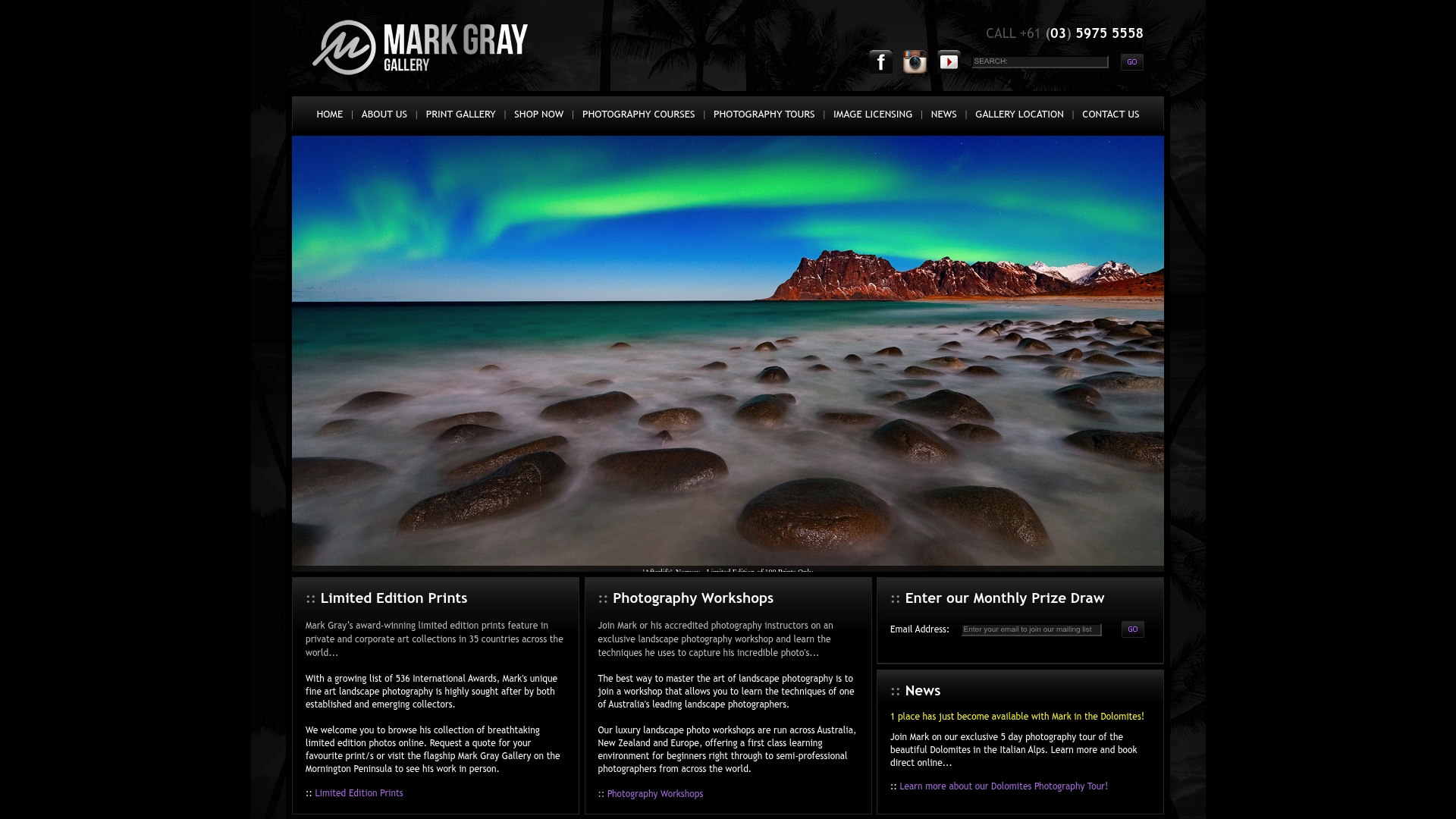
Start with Mark Gray's image licensing page. If you would rather own a finished piece than license a file, our limited edition prints suit corporate offices and collectors.
FAQ
How much does a commercial photo license cost in Australia?
It depends on the use, so there is no single figure. The fee reflects the media, duration, territory, audience and exclusivity you need. A small web use is the lowest end of the scale and a multi-media, exclusive, long-term campaign is the highest. Mark Gray's image licensing is quoted on request.
Do I own the photo after I pay for a license?
No. A license gives you permission to use the photograph in agreed ways, while the photographer generally remains the copyright owner. Ownership can be transferred only by agreement, and commissioned work follows its own rules depending on the type and date of the commission.
Can I use a photographer's image on social media if I paid for a website license?
Only if the agreement covers it. Licenses list specific media, so social posts, print and signage each need to be included. Ask for every placement you expect to use in the one agreement.
Does the photographer have to be credited?
Photographers keep moral rights, which include the right to be credited and to object to prejudicial treatment of their work. Your license should say whether a credit line is required and how it should appear.
Sources
- Understanding Professional Photography, Image Makers Association Australia
- Photography & Copyright, Australian Copyright Council
- Copyright licensing and rights management organisations in Australia, IP Australia
- Ownership, Copyright Agency