
For most collectors in Australia, shipping is the right answer: a well-packed print travels in a rigid tube or board-backed carton, arrives tracked and insured, and reaches you wherever you live. Pickup earns its place when you live near the gallery, when the piece is large and framed, or when you want to see the print under real light before it goes on your wall. This guide sets out how to choose, what each route costs in time and money, and what to check so that your print arrives exactly as the photographer made it.
Our prints are collected in 35 countries, so delivery is how most of our work reaches its owners. That gives us a clear view of what makes a delivery go well, and we share it below.
TL;DR
- Ship when you live outside the gallery's city, when the print is unframed, or when you are buying for a home or office elsewhere. Rolled or flat-packed work in the right packaging travels very well.
- Pick up when the piece is large and framed, when you can transport it flat in your own vehicle, or when you want to view it in person before it hangs.
- For anything of real value, add tracking, Extra Cover and a signature on delivery. Standard postal terms are written around items worth up to $100.
- Packaging, not a Fragile sticker, protects a print: tube, board, corner protection and a moisture barrier.
- Inspect on arrival, keep the packaging and photograph any damage straight away.
Table of Contents
- What you are really choosing between
- When picking up makes sense
- When shipping is the better choice
- What shipping costs and how long it takes
- Insurance, tracking and signature: the part collectors skip
- How a print should be packed
- Checking the print on arrival
- Pickup or shipping: a side-by-side view
- Choosing your prints and your delivery together
- Collecting a print from Mark Gray
- Our view on pickup and shipping
- FAQ
- Sources
What you are really choosing between
Pickup and shipping are not just two ways to move a box. They shift responsibility. With pickup, you take custody at the door and carry the risk yourself from that moment. With shipping, the seller or carrier carries the print through sorting centres, vans and depots, and the quality of the packing decides how it survives.
Three questions settle most decisions:
- Is the print framed or unframed? Unframed work can be rolled or packed flat and shipped economically. Framed work is heavier and more exposed to corner damage, so it needs more protection and costs more to move.
- How large is it? Size decides the carrier, the box and the price. A print that fits a standard tube is simple. A large framed piece is a different job.
- How far away are you? Distance changes both the cost of delivery and the practicality of collecting.
If you answer those three honestly, the choice is usually obvious.
When picking up makes sense
Pickup suits a narrow but real set of situations.
You live near the gallery and the piece is framed. A large framed print is the most vulnerable item to ship. If you can drive it home flat, wrapped and secured, you remove the carrier from the equation altogether. Lay it face up or upright against a padded seat back, never loose in a boot where it can slide.

You want to judge the print in person. A photograph's tonal range, edge sharpness and surface finish are easiest to appreciate in the room. Collectors buying a significant piece often prefer to stand in front of it first. Wall colour and light change how a landscape reads, which is why our guide to lighting for wall art matters just as much as the print itself.
You need it by a fixed date. Postal timetables are targets, not promises. Australia Post's own terms describe delivery timetables as indicative targets. If a print must be on a wall for an opening or a gift handover, collecting removes the uncertainty.
You are taking it straight to a framer. If you plan to have the piece professionally framed, collecting and delivering it to the framer yourself keeps handling to a minimum. Our guide to framing limited edition prints explains what to ask for.
The cost of pickup is your own time, fuel and risk. A cracked frame corner on the drive home is yours to bear, so pack as carefully as a courier would.
When shipping is the better choice
Shipping wins whenever distance, convenience or format favour it, and that covers most buyers.
You are interstate or overseas. Landscape photography collectors rarely live next door to the studio. A print bought from Perth, Hobart or Auckland has to travel, and a properly packed print does so safely. Unframed work is especially suited to long distances: you receive it flat or rolled and have it framed locally to your own taste, which also avoids moving heavy glazed pieces across the country.
You are buying a gift. Shipping directly to the recipient saves a handover and lets the print arrive on the right day. If you are choosing between a print and something smaller, our guide to gifting fine art photography prints covers the options.
You are furnishing an office or commercial space. Corporate buyers often need work delivered to a site with a named person to sign for it. Tracked, signed-for delivery creates a clear record of arrival.
You cannot easily travel. Time off work, a long drive and a flight to collect a single print rarely make sense when a tracked courier does the same job.
What shipping costs and how long it takes
Cost and timing depend on the carrier, the service and the print. Australia Post publishes its parcel options: Parcel Post takes 2 to 6 or more business days and Express Post 1 to 3 or more business days, both with tracking and up to $100 of included compensation for loss or damage. Remote addresses and busy periods can stretch those windows, so allow a margin when a deadline matters.

Delivery charges are calculated from size, weight and destination, so a large framed work costs far more than a rolled print of the same image. That is the practical reason many collectors in distant states choose unframed delivery and frame locally.
As a concrete example of how delivery is priced for our own range, postage and handling on our acrylic blocks is A$24.95 within Australia and A$74.95 internationally, on top of the A$295 price of each block. You can see those figures on the acrylic blocks page. Print delivery for limited edition work is quoted on the individual print page, so check it at the time of purchase.
In short, expect delivery to add a modest cost for a rolled or flat-packed print, and a more substantial one for a large framed piece. Set that against the fuel, parking and time of collecting, and shipping is usually the better value for anyone outside the immediate area.
Insurance, tracking and signature: the part collectors skip
This is where valuable prints are protected or exposed.
Australia Post's general terms state that postal delivery services are generally suitable for items up to $100 in value, and that if an item is worth more than $500 the sender must buy Signature on Delivery. Extra Cover is available for an item's value up to $5,000. Australian art-market guidance goes further: the Australian Contemporary Art market body ACHAA recommends insurance and signature on delivery for any item worth more than $100.
A limited edition photographic print is well above those thresholds. For a piece of that value, treat the following as standard:
- Tracking, so you know where the parcel is.
- Cover for the full value of the print, not just the included compensation.
- Signature on delivery, so the parcel is handed to a person rather than left at a door.
- A delivery address where someone will be home, or a business address with reception.
With pickup, none of this applies, but nor does any protection. Your home contents policy may or may not cover a piece in transit in your car, so it is worth a quick call to your insurer for a high-value purchase.
For the checks to make before you agree to a shipping arrangement, our guide on what collectors must check when shipping fine art prints goes through them in order.
How a print should be packed
Whether you are receiving a print or sending one on, packaging is what decides the outcome. Australia Post is blunt about it: labels such as Fragile offer reassurance but not protection, because the real risk lies in mail bags and sorting facilities. Its guidance on sending artwork points to layers of corrugated cardboard, a strong mailing tube for rolled work and removing glass from framed pictures before posting.
The ACHAA guide adds practical detail:
- A tube is preferred over a rigid mailer, and a tube must be used for anything larger than A3.
- Wrap the work in tissue and consider a plastic sleeve for waterproofing.
- Assess every work individually for texture, ink stability and whether it must stay flat.
For your own handling, the principles are the same. Keep the print flat or in its tube until the moment you hang it. Avoid sticky tape on the surface of the print. Keep it dry, and keep it out of a hot car. If the print is going to be framed, handle it by the edges with clean, dry hands.
Checking the print on arrival
Open the parcel soon after it arrives, ideally in the presence of the courier if you suspect a problem. Before you do:
- Photograph the outside of the packaging, including labels and any dents or tears.
- Open it carefully and keep every piece of packing.
- Photograph the front and back of the print, and close up on any damage.
- Contact the seller promptly with your order number and the photographs.
That sequence gives a seller and a carrier everything they need to resolve a claim quickly. Under Australian Consumer Law, goods that arrive faulty or damaged are assessed against your consumer rights, and clear evidence makes that process quick. Once your print is in good order, our guide to caring for fine art photography prints explains how to keep it that way for decades.
Pickup or shipping: a side-by-side view
| Factor | Pickup | Shipping |
|---|---|---|
| Best for | Local buyers, large framed pieces, viewing before buying | Interstate and overseas buyers, gifts, unframed prints |
| Extra cost | Your travel time and fuel | Delivery charge based on size, weight and destination |
| Timing | You choose the day | Parcel Post 2 to 6 or more business days, Express Post 1 to 3 or more |
| Risk in transit | Yours, from handover | Reduced by packaging, tracking, Extra Cover and signature |
| Protection | Your own vehicle preparation | Packaging, tracking and cover for value |
| Best format | Framed or unframed | Unframed often simplest, framed with extra protection |
If you are unsure, a useful rule is this: pick up what you can carry flat and safely, and ship everything else with full cover.
Choosing your prints and your delivery together
The delivery question is easier when you decide it at the same time as the format. A few pairings work well:
- A large panoramic limited edition for a living room in another state: choose unframed delivery in a tube, then have it framed locally to conservation standard. Our guide to gallery grade framing essentials lists what to specify.
- A statement piece for a corporate foyer: arrange signed-for delivery to the site, and plan the installation using our notes on displaying large format photography prints.
- A regional favourite for a holiday home: browse by place first. Our scenic Australia prints by region is a good starting point, then settle the delivery.
- A framed piece you want to see first: arrange to collect it, and bring blankets and a flat load space.
Once the print is home, the way you hang it matters too, and our guide to print hanging systems covers the options for Australian walls.
Collecting a print from Mark Gray
Our limited edition and open edition prints are made with panoramic medium format film and digital cameras for exceptional detail, and they are collected in 35 countries. If you are ready to choose, you can browse the limited edition prints or the open edition prints and settle how you want yours to reach you. If a print is a gift, a gift certificate, available from A$50, lets the recipient choose the image themselves.
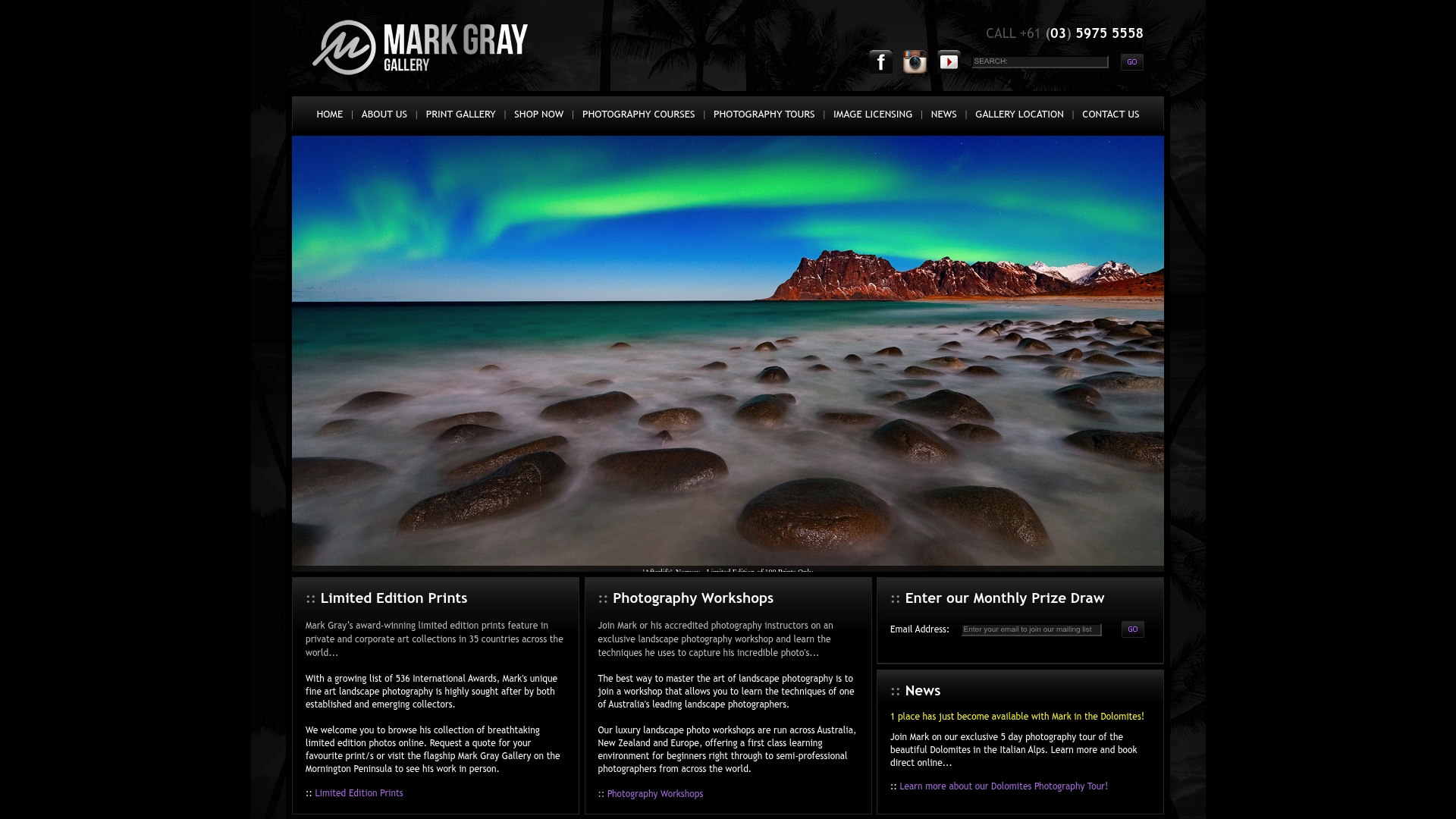
The full range, from landscapes of Australia and New Zealand to Norway, Iceland, French Polynesia, Spain and the United Kingdom, is on markgray.com.au.
Our view on pickup and shipping
A fine art print is a finished object the moment it leaves the lab, and everything after that is about protecting the detail you paid for. We make our prints with panoramic medium format film and digital cameras so that every ridge line and cloud edge holds up on a large wall, and we want that detail to arrive intact.
That is why we think of delivery as part of owning a print, not an afterthought. Our work is collected in 35 countries, and a collector in another country or another state deserves the same experience as someone who walks into a gallery: a print in excellent condition, ready to be framed or hung.
Our advice is simple. Decide on the format first, framed or unframed. Insure for the true value. Ask for a signature. Inspect on arrival. And whichever route you choose, take the same care we take when a print is made.
Mark
FAQ
Is it cheaper to pick up an art print than to have it shipped?
Not always. Pickup avoids the delivery charge, but you spend fuel, parking and time, and you carry the risk of damage yourself. For buyers outside the gallery's city, a tracked delivery usually costs less than the trip. Delivery charges depend on size, weight and destination.
Do I need insurance when an art print is shipped within Australia?
For any print of real value, yes. Australia Post's terms describe standard postal services as suited to items up to $100, and it requires Signature on Delivery above $500. Extra Cover is available for an item's value up to $5,000, so choose cover that matches the price of the print.
Is an unframed or a framed print better to ship?
Unframed is usually the simplest to ship, because it travels rolled in a tube or flat on board and can be framed near you. Framed work needs corner protection and cushioning and costs more to move, so collectors at a distance often choose unframed and frame locally.
What should I do if my print arrives damaged?
Keep all the packaging, photograph the outside of the parcel and then the front and back of the print, and contact the seller promptly with your order number. Damaged or faulty goods are assessed under Australian Consumer Law, and clear photographs help a claim move quickly.
Sources
- Sending artwork by post: A guide for businesses, Australia Post
- Parcels, Australia Post
- Australia Post General Terms and Conditions, July 2026
- ACHAA's Introductory Guide to Shipping and Packaging