
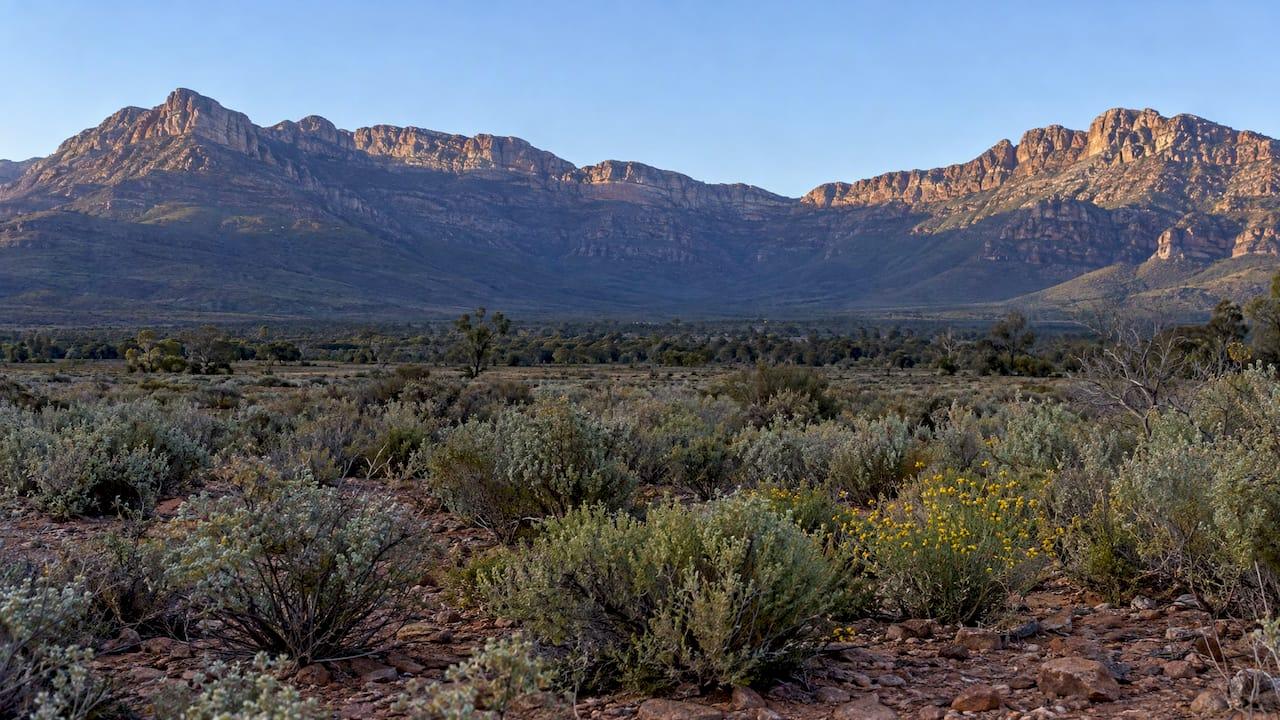
The Flinders Ranges reward photographers who arrive with a plan: sunrise at a ridgetop lookout, late-afternoon light in a gorge, and a cool-season window that keeps the days comfortable and the skies clear. This guide gives you the locations, the seasons, the lenses and the park rules, so your time in one of South Australia's great landscapes ends in images worth printing. If you want an expert beside you for the light and the composition, our small-group photography tours and one day courses are built for exactly that, and the finished frames can become museum-quality prints on your wall.
TL;DR
- Visit between April and October for the most comfortable conditions, and shoot at sunrise and late afternoon, when the orange cliffs and purple ridgelines glow.
- Build every location around three scales: a wide ridge panorama, a gorge scene and a close detail of rock or vegetation.
- Pack a wide-angle lens, a telephoto of 200 mm or more for wildlife, a polariser and a solid tripod for the night sky.
- Commercial photography in South Australian parks can need a permit, and drones are not permitted over national parks without one.
- Allow several days: the ranges are about 500 km from Adelaide, and the best light comes at the edges of the day.
Table of Contents
- Why the Flinders Ranges suit landscape photography
- The best viewpoints and what to shoot at each
- When to go: seasons and light
- Planning compositions: three scales
- Gear for the Flinders Ranges
- The night sky
- Getting there, fees and park rules
- How long to stay
- A sample three-day shot list
- What the Flinders Ranges teach about landscape photography
- Learn with us, or bring the landscape home
- FAQ
- Sources
Why the Flinders Ranges suit landscape photography
The ranges look like a drawing of what Australian landscape photographers hope to find. Australian Geographic describes ripsaw-tooth ridges rising from saltbush plains, with a palette of burnished orange and red cliffs, jade-green native pine, terracotta dirt and silver-grey saltbush. That colour range is the reason these hills photograph so well in low sun: warm rock, cool shadow and pale foreground sit in one frame.
The most famous landform is Wilpena Pound, known in the Adnyamathanha language as Ikara. It is a natural amphitheatre of mountains, and it gives you lookouts, ridgelines and river red gums within a short distance of each other. Beyond it, back roads dip into rocky creek beds and run through tight gorges, so the variety is high even if you stay in a small area.
For a photographer this means one thing: the subject is rarely the problem. The challenge is timing and discipline, because the same hill can look flat at noon and extraordinary 40 minutes after sunrise.
The best viewpoints and what to shoot at each
The Sydney Morning Herald's Flinders Ranges outlooks guide names the lookouts photographers return to. Here is how to use them.
Wilpena Pound and its lookouts
Wilpena Pound has two easily reached lookouts. National Geographic recommends Huck's Lookout for sunrise and Stokes Hill for sunset. The valley below holds river red gums, including the famous tree named for early Australian photographer Harold Cazneaux, whose award-winning photograph of it made it a landmark. Photographing the same gums that a pioneer of Australian photography shot is a good project in itself: look for a different angle, a different light, a different season.
Other named viewpoints in the Wilpena area include Bridal Gap, St Mary Peak and Wangara Lookout. St Mary Peak is a serious climb, so treat it as a half-day commitment and carry less gear than you think you need.
Bunyeroo Valley Lookout
The Herald rates Bunyeroo Valley Lookout as a sunrise spot, where first light sets the scenery alight in orange and red. The ridgetop beyond it is the classic postcard Flinders panorama, facing the almost purple Heysen Range. This is where a wide lens and a patient eye pay off: wait for the first strip of sun to hit the near ridges while the far range is still cool and blue.
Brachina Gorge
The 20 km Brachina Gorge Geological Trail is best in late afternoon, according to the same guide, when orange cliffs contrast with blue river boulders and rock wallabies emerge. The South Australian Government's Ikara-Flinders Ranges itinerary adds that your best chance of seeing yellow-footed rock wallabies in the gorge is in the morning and late afternoon, particularly in hot weather when they bask in the shade. Pack the long lens here.

Pugilist Hill and Black Gap
Pugilist Hill Lookout is recommended for sunset. Black Gap Lookout looks across the Elder Range, the Red Range and Wilpena Pound, which makes it a strong choice when you want to show how the ranges stack up behind one another.
Arkaroo Rock
Arkaroo Rock holds Adnyamathanha rock paintings. The government itinerary says they are best seen in morning light, reached by a 3 km moderate loop hike of about two hours. The national parks guide describes the paintings, in red, yellow, white, ochre and charcoal, as more than 5,000 years old. They are a cultural site first and a photo subject second: stay on the defined track and follow the guidance of park rangers.
When to go: seasons and light
Tourism Australia gives the ideal time to visit as the cooler months from April to October. Many longer walking trails are closed or have limited operating hours from December through February, which is a practical problem for photographers who rely on hiking to reach viewpoints before dawn.
A simple way to think about the year:
| Season | What to expect | Photographic upside |
|---|---|---|
| Autumn (March to May) | Mild days, cooling nights | Clear light, comfortable early starts |
| Winter (June to August) | Cold nights, crisp air | Strong sunrise colour, long dark nights for stars |
| Spring (September to November) | Warming days | Wildflowers possible after good winter rains |
| Summer (December to February) | Very hot, some trails restricted | Limited: only for the early and late hours |
Heavy rain can bring flash flooding and temporary road or track closures, so check conditions before you enter any gorge or drive an unsealed road.
Working with the light
In a landscape this textured, sunrise and late afternoon do most of the work. Low, directional light carves the ridge strata and warms the rock. Midday is for scouting, for sheltered gorges where overhead sun is softened, and for planning the next dawn. If you want to go deeper on the craft, our guides to golden hour landscapes and landscape photography lighting conditions cover the principles that apply here.
Planning compositions: three scales
A reliable way to return with a coherent set of images, rather than a pile of similar sunsets, is to plan each location at three scales:
- The panorama. A wide view from a lookout that shows the ridges layering into the distance. Bunyeroo, Black Gap and the Wilpena lookouts all deliver this.
- The gorge or valley. A mid-distance scene with a leading line: a dry creek bed, a track, a line of river red gums.
- The detail. Tilted rock strata, the bark of a gum, saltbush against red soil. These small frames make the series feel like a place rather than a postcard.
Shoot all three at each location and you will have the raw material for a gallery wall, a photo book or a set of prints. Carry a wide-angle lens and a telephoto: the long lens compresses the ridge layers into graphic bands and isolates a gum or an animal from its background.
Gear for the Flinders Ranges
Photo Review's guide to the national park is clear on the basics. Dust is the constant enemy, so use a dust-protected camera bag, with a blower brush and a microfibre cloth in an outside pocket. Wide-angle lenses suit the scenery. For wildlife it recommends at least 200 mm, and 300 mm for the shy yellow-footed rock-wallaby. A solid tripod earns its weight for night skies and birds.
A practical kit list:
- A wide-angle zoom for panoramas and gorges.
- A telephoto of 200 mm or longer for wallabies, birds and ridge compression.
- A circular polariser to deepen blue sky and cut glare on rock faces.
- A sturdy tripod and a remote release or the camera's timer.
- Spare batteries, since cold winter nights drain them quickly.
- A blower, brush and cloth, and a sealed bag for lens changes.
Change lenses in the car or with your back to the wind. A single speck on the sensor becomes a mark in every sky of a long series.
The night sky
With little light pollution and dry winter air, the ranges are a natural place to photograph stars. Choose a new-moon week, set up a tripod, use a wide, fast lens with manual focus and compose against a silhouette: a river red gum, a ridge, a rock outcrop. Our Milky Way landscapes guide walks through the settings and planning for Australian conditions. Remember that winter nights here can sit near freezing, so dress for standing still in the dark for hours.
Getting there, fees and park rules
The ranges lie about 500 km, a five-hour drive, north of Adelaide, or roughly two hours' drive from Port Augusta Airport, according to Tourism Australia. Most of the top attractions can be reached in a 2WD vehicle, but a 4WD opens up all the tracks. If you are planning the drive as part of a longer trip, our scenic drives photography guide is a useful companion.
South Australia's National Parks and Wildlife Service lists Ikara-Flinders Ranges National Park with vehicle entry at $14.40 per vehicle and accommodation from $12.30 per night, and fees must be paid before entry. Fees change, so confirm them on the park page before you go.
Do you need a permit?
For most visitors taking holiday photographs, no. The Department for Environment and Water draws the line at intent: photography becomes commercial and potentially permit-requiring when the aim is to promote a product or service or to make a financial gain. Under the National Parks and Wildlife Act 1972, commercial filming or still photography in the state's parks may need a Commercial Filming Agreement or Photography Permit. There is an application form for Ikara-Flinders Ranges National Park, the department recommends at least 21 days' notice, and late fees apply to applications received less than 14 days before filming.
This matters if you plan to sell prints, license images or shoot for a business. Read the department page before you travel.

Drones
The national parks service states that it is an offence to fly drones over South Australia's national parks without a permit, and permits are considered for scientific research and commercial filming only. Wilpena Pound is also one of the areas covered by a CASA-approved Special Procedure or Fly Neighbourly Advice, which sets minimum flight heights and offset distances. Plan your Flinders Ranges photography from the ground.
Respecting country
The ranges are Adnyamathanha country. The national parks guide asks visitors to respect cultural and heritage sites, keep to defined tracks, avoid feeding or disturbing wildlife and follow the direction of park rangers, who know local conditions best.
How long to stay
The ranges stretch for several hundred kilometres, from the southern end near Port Pirie and Quorn up through Hawker, Wilpena, Blinman and Leigh Creek to Arkaroola. Even a focused trip to Wilpena, Bunyeroo and Brachina needs three or four days if you want to repeat the best spots in different light. Weather is the variable you cannot control, so allow a spare sunrise or two. Our guide to Australian natural landscapes and the piece on what Australian outback landscapes really are help put the ranges in the wider picture of the country's arid and semi-arid scenery.
A sample three-day shot list
If you have limited time, here is a way to use it:
- Day one, arrival. Scout Wilpena Pound lookouts in the afternoon and shoot Stokes Hill at sunset. Note where the sun sets and where the shadows fall.
- Day two, dawn at Bunyeroo. Catch first light on the ridgetop panorama, then spend the middle of the day on the Brachina Gorge trail. Return in late afternoon for the orange cliffs, blue boulders and wallabies.
- Day three, Wilpena sunrise and Arkaroo. Try Huck's Lookout for first light, then walk to Arkaroo Rock in the morning for the best light on the paintings, respecting the site. Finish at Pugilist Hill for sunset.
If the forecast turns, swap days rather than forcing a flat sky. Weather is part of the story, and storm light over the ridges can be the best frame of the trip.
What the Flinders Ranges teach about landscape photography
The region is a good school. It forces you to think about the order of the day, to choose between wide and long, and to look for structure in a landscape that can seem simple. Photographers who work the three scales return with images that hold together as a set. Those who chase one famous view often return with a good picture, but not a body of work.
Our view on photographing the ranges
I have photographed landscapes across Australia and around the world, and the lesson is always the same: great landscape images are made by being in the right place at the right moment, with the discipline to wait. The Flinders Ranges give you everything: colour, structure, history and light that changes by the minute.
We make our prints with panoramic medium format film and digital cameras so that the detail you see in the field survives on the wall. Our small-group workshops are led by me and our team of professional photography instructors, with luxury arrangements, because we believe the best way to learn light is to stand in it beside someone who can show you what to look for.
Whether you want to learn the craft, take home a fine print, or license an image for your business, we would be proud to help.
Mark
Learn with us, or bring the landscape home
If you want to turn a trip into better photographs, our 1 day photography courses run across Australia, and our multi-day photography tours are small-group workshops in Australia and worldwide, led by Mark Gray and his team of professional instructors. Prefer one-to-one attention? We also offer private lessons.
If you would rather collect than capture, our award-winning landscape prints are collected in 35 countries. Browse the limited edition prints or the open edition prints, or choose a gift certificate, available from 50 AUD, for a photographer or nature lover in your life. Businesses seeking landscape imagery for signage, websites or brochures can ask about image licensing.
FAQ
What is the best time of year for Flinders Ranges photography?
Tourism Australia gives April to October as the ideal time to visit. For photographers that means comfortable days, clear skies and long, cold nights for stars. Spring can add wildflowers after good winter rain, but summer heat and trail restrictions make December to February the hardest months.
Where are the best places to photograph the Flinders Ranges?
Start with the Wilpena Pound lookouts, Bunyeroo Valley Lookout and Brachina Gorge. Huck's Lookout suits sunrise and Stokes Hill suits sunset, Bunyeroo is a sunrise favorite, and Brachina Gorge is strongest in late afternoon. Pugilist Hill and Black Gap add sunset and range-layer views.
Can I fly a drone in the Flinders Ranges?
Not over the national park without a permit. National Parks and Wildlife Service South Australia says flying a drone over the state's national parks without a permit is an offence, and permits are considered only for scientific research and commercial filming. Wilpena Pound also has minimum flight height and offset rules.
Do I need a permit to take photos in Ikara-Flinders Ranges National Park?
Casual photography for personal use generally does not, but photography to promote a product or service or to make money can. The Department for Environment and Water recommends at least 21 days' notice for a commercial application. Check its filming and photography page before you travel.
What lens should I bring?
Bring a wide-angle lens for ridges, gorges and stars, and a telephoto of at least 200 mm for wildlife, with 300 mm better for rock-wallabies. A polariser deepens skies and cuts glare on rock, and a tripod is essential after dark.
Sources
- Flinders Ranges: Jagged beauty, Australian Geographic
- Six of the best: Flinders Ranges outlooks, Sydney Morning Herald
- Ikara-Flinders Ranges itinerary, SA Government
- Photographing sunrises in South Australia, National Geographic
- National parks guide, NPWSSA
- Travel guide to the Flinders Ranges, Tourism Australia
- Ikara-Flinders Ranges National Park, Photo Review
- Ikara-Flinders Ranges National Park, National Parks and Wildlife Service South Australia
- Filming and photography, Department for Environment and Water
- Drones and aircraft, National Parks and Wildlife Service South Australia