
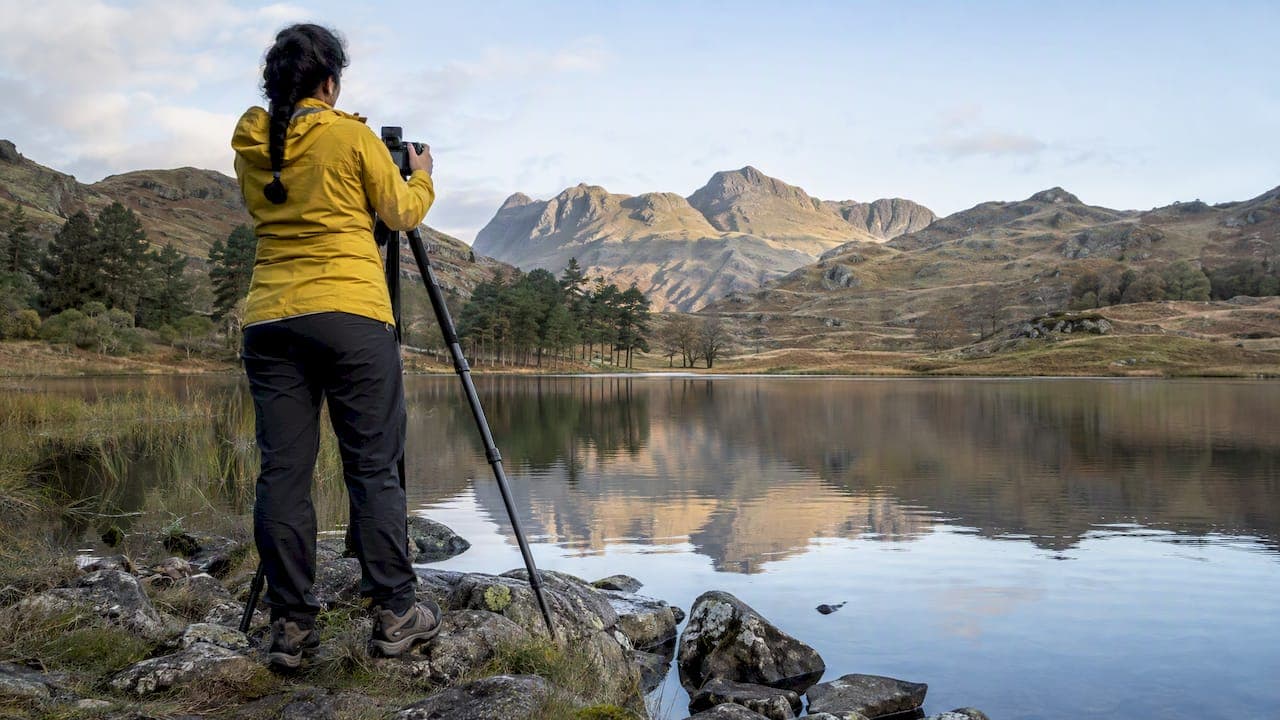
The Lake District rewards photographers who plan around light, weather and access. Start with Buttermere, Derwent Water, Blea Tarn and the Langdale Pikes. Add Aira Force for moving water and Honister Pass for moody fell tops. Then build your days around sunrise, a tripod and a realistic plan for rain. This guide covers where to point your camera, when to go and how to shoot responsibly. It is written for photographers from Australia and beyond who want a trip that returns frames worth printing.
TL;DR
- Buttermere, Derwent Water, Blea Tarn, the Langdale Pikes and Slater's Bridge are reliable, classic subjects for lakes, reflections and peaks.
- Rain is part of the deal: the wettest months usually run from October to January, so pack weather protection and treat cloud as a feature.
- A tripod, a polarizing filter and a wide-angle lens cover most of what you will shoot at dawn and on still water.
- Check access before you go: some routes are easy and accessible, others are narrow, steep and unsuitable for inexperienced drivers.
- Drones are restricted in the national park and not permitted on National Trust land, so plan to shoot from the ground.
Table of Contents
- Why the Lake District suits landscape photography
- The best Lake District photo spots
- Quick comparison of the main locations
- Season, weather and light
- Kit and technique that make a difference
- Planning access, walks and transport
- Shooting responsibly
- Turn your trip into photography skills or wall art
- Planning your own photography trip
- FAQ
- Sources
Why the Lake District suits landscape photography
Few places pack so much variety into so small an area. The national park authority describes the district as a cultural landscape of extraordinary beauty and harmony, with glaciated valleys, steep fells and slender lakes shaped over centuries by farming and later landscape improvements. Coast, lakes, farmland and old industrial sites all sit within the same national park, and that mix has inspired generations of artists and writers.
For a photographer, that means you rarely need to drive far between subjects. A single morning can take you from a mirror-still lake to a tumbling waterfall to a stone bridge framed by bracken. Dry stone walls, farm buildings and old packhorse bridges give you foreground and scale, which is the difference between a pretty view and a composed image.
The same compactness is a trap. Because everything is close, it is tempting to chase ten locations in a day. Photographers who come home with strong work usually choose two or three places and wait for the light.
The best Lake District photo spots
The locations below are the ones that come up again and again in location guides, and each offers something different. Choose by subject and by how much walking you want to do.
Buttermere and Crummock Water
Buttermere is the district's classic reflection location. On a still morning the fells mirror in the water, and the lakeside path gives you several compositions without much effort. A polarizing filter helps manage glare and reveal depth in the water, and a wide-angle lens lets you include foreground rocks and trees. Crummock Water, just next door, is quieter and offers broader, wilder views.
Derwent Water and Catbells
Derwent Water delivers the postcard Lake District: wooded islands, jetties and fells layered into the distance. Its shoreline is easy to reach from Keswick, which makes it a good choice for a first sunrise or a flexible day when the weather is unsettled. Catbells and Maiden Moor, above the lake, add elevated views for those willing to climb.
Blea Tarn and the Langdale Pikes
Blea Tarn is one of the most photographed small bodies of water in the district, with the Langdale Pikes rising behind it. It is also one of the most accessible. The National Trust describes the Blea Tarn trail as easy walking suitable for all abilities, including all-terrain mobility scooters, with iconic views of the Pikes. That makes it ideal if you are travelling with family or carrying heavy kit.
A tripod earns its place here in early, low light. Scenes with a bright sky and dark foreground are high in contrast, so consider bracketing your exposures and blending them later.
Slater's Bridge and Little Langdale
Slater's Bridge is a small, old stone bridge in Little Langdale, set among walls, trees and fells. It suits autumn color and soft overcast light, and it rewards a slower, more intimate approach than the big lake views. Work the details: moss, stone texture and the way the river bends under the arch.

Aira Force
Aira Force, near Ullswater, is the district's showpiece waterfall. According to the National Trust, a metal viewing platform gives the most dramatic perspective of the falls, and in the right light you may catch rainbows in the spray. Use a slow shutter speed for silky water, and keep a microfiber cloth handy because the spray settles on your front element quickly.

Honister Pass
The Honister Pass car park sits 350 meters above sea level and, as the National Trust notes, is a spot to pause for wild fell views. Cloud can make the scene dramatic and eerie as the fell tops vanish and reappear. This is a location where bad weather is the opportunity, so do not write it off on a grey day.
Devoke Water
Devoke Water sits on the western fells and is remote without being hard to reach. Amateur Photographer calls it a good choice for moody landscape photography, especially in late autumn when bracken colors contrast with grey skies. It suits everything from traditional painterly views to close studies of lichen-covered rocks, so bring both a wide lens and something longer.
Loughrigg Fell
Loughrigg is a popular sunrise viewpoint because it is a modest climb with a broad payoff: Windermere, Grasmere, Rydal Water and the Coniston Fells can all be seen from its top. It is a good place to practice layering distant ridgelines, and for a wider primer on how light shapes those layers, see our guide to landscape photography lighting conditions.
Quick comparison of the main locations
| Location | Best for | Effort | Best light |
|---|---|---|---|
| Buttermere | Reflections, fell panoramas | Low to moderate | Sunrise, still mornings |
| Derwent Water | Classic lake scenes, jetties | Low | Sunrise and sunset |
| Blea Tarn | Langdale Pikes backdrop | Low | Early morning |
| Slater's Bridge | Autumn color, details | Low | Soft overcast |
| Aira Force | Waterfall, spray, rainbows | Low to moderate | Overcast, or low sun in spray |
| Honister Pass | Moody fell tops, cloud | Low (roadside) | Cloud and breaking weather |
| Devoke Water | Remote moods, lichen studies | Moderate | Late autumn, grey skies |
| Loughrigg Fell | Multi-lake panoramas | Moderate | Sunrise |
Season, weather and light
Lake District weather is changeable, and you should plan for that rather than hope against it. The national park says the weather is highly changeable and unpredictable. The wettest spot, Sprinkling Tarn, receives roughly 5000 mm a year, and the wettest months typically run from October to January.
For photographers, that rain is not all bad. Wet rock glistens, waterfalls swell and low cloud gives you layered, atmospheric fells. Snow generally falls between November and March, and the national park reports that Fell Top Assessors on Helvellyn provide daily conditions from December to March. If you plan to be up high in winter, check those reports before you leave the valley.
A rough seasonal guide:
- Spring: fresh green, lambs in the fields, clear air after showers.
- Summer: early sunrises and long evenings, but harsh midday light and more visitors.
- Autumn: bracken and woodland color, mist on the lakes, the busiest season for photographers.
- Winter: snow-capped fells, low sun all day, short windows and demanding conditions.
For Australian photographers used to strong, clear light, the soft diffuse light of northern England takes adjusting to. Our articles on how weather shapes landscape photography, how seasons change your images and the quality of light in landscape images explain how to read each condition and respond.
Kit and technique that make a difference
You do not need a huge bag. A focused kit works better on wet, muddy paths.
- A sturdy tripod. It lets you use low ISO and slow shutter speeds at dawn and for waterfalls.
- A polarizing filter. It cuts glare on wet rock and water, and deepens reflections on lakes such as Buttermere.
- A wide-angle zoom. Something in the 14-24mm range handles lakeshore foregrounds and big skies.
- A mid-range telephoto. It isolates ridgelines, farm buildings and details across the water.
- Weather protection. Rain covers, microfiber cloths and a dry bag for spare batteries are not optional here.
Compose in layers: a strong foreground (rocks, a wall, a jetty), a middle ground (water, trees) and a background (fells, sky). Shoot early, because winds usually rise later in the day and break up reflections. Then take your time at the computer. Good editing makes a real difference, and we explain how in our piece on the role of post processing in landscape photography.
Planning access, walks and transport
Much of the district's best photography is close to a car park or bus stop, but some of it is not. The Blea Tarn trail starts at the National Trust car park (grid reference NY295043), and bus 516 stops at the Old Dungeon Ghyll Hotel if you want to leave the car behind. Public transport is worth considering in peak season, when roadside parking fills early.
Be careful with high, narrow routes. The national park says certain unsealed roads, such as the Gatescarth Pass, have severe conditions that are unsuitable for novice drivers, with steep paths less than two meters wide in places. If you are renting a car and driving on the left on unfamiliar lanes, stay on sealed roads and save the adventurous routes for walking.
A sensible day plan looks like this:
- Choose one sunrise location and arrive 45 minutes before first light.
- Shoot a second, nearby spot while the light is soft.
- Rest, edit and refuel in the middle of the day.
- Return for a sunset or blue-hour session only if the sky looks promising.
Shooting responsibly
The Lake District is a working landscape and a national park. Stay on paths, close gates behind you and give farm animals and wildlife space. Tripods and photographers on narrow lanes can block walkers, so set up off the track.
Drones need particular care. The national park states that flying requires landowner permission for take-off and landing and respect for privacy and wildlife, and that drone use is not permitted on National Trust property or designated nature reserves. Because so much of the best scenery is on National Trust land, you should assume you will be shooting from the ground.
Our perspective
A great landscape photograph is rarely an accident of location. It comes from patience, preparation and the willingness to return when the light is not right. When we photograph places such as the Lake District, Scotland and Norway, we think about the finished print from the first frame: where the eye enters the image, how the foreground leads into the distance, and how the light will feel on a wall.
That is why we work with panoramic medium format film and digital cameras, chasing exceptional detail and quality. Our prints are award-winning and collected in 35 countries, and we have found that the discipline of shooting for print makes you a better photographer in the field. You slow down, you compose with care, and you wait.
If you want to learn that approach, our small-group workshops are designed to give you time with our professional instructors in beautiful locations, with luxury arrangements that keep the focus on the photography. Whether you are a first-time visitor to a place like the Lake District or a seasoned traveler, the right guidance saves days of guesswork.
Mark
Turn your trip into photography skills or wall art
A Lake District trip is easier to plan when you already know how to read light and weather. We run one day photography courses across Australia, multi-day landscape photography tours in Australia and worldwide, and private lessons if you prefer one-on-one time with an instructor. Prices are listed on each booking page.
If you would rather bring the landscape home, our limited edition prints are collected from Australia, New Zealand, Norway, Iceland, French Polynesia, Spain and the United Kingdom, and our open edition prints offer another way to start a collection. For a gift, acrylic blocks are $295 each, with Australia-wide postage and handling of $24.95 or international postage and handling of $74.95, and gift certificates start from $50.
Planning your own photography trip
Before you fly to northern England, decide what you want from the trip. If your goal is a set of strong images from two or three classic locations, a week with flexible days is plenty. If you want a broader portfolio, give yourself two weeks and expect to lose several days to rain.
Study other regions for ideas on how to structure a shoot. Our guide to Scottish Highlands photo locations shows how we approach a big landscape with limited time, and our overview of iconic landscape photography locations worldwide can help you compare destinations. When your best images are ready, our look at gallery quality landscape prints and display options for your home will help you decide how to show them. If you need images for business use, you can also explore image licensing.
FAQ
When is the best time of year for Lake District photography?
Autumn is the most popular season for color, mist and moody weather, and late autumn suits remote tarns such as Devoke Water. Spring and winter offer fewer crowds, with snow possible from November to March. Whatever the season, plan for rain, because the wettest months typically run from October to January.
Where should I go for my first Lake District photo trip?
Start with Buttermere, Derwent Water and Blea Tarn. All three are well known, easy to reach and photogenic in a range of light. Add Aira Force if you want a waterfall, and Loughrigg Fell if you are happy to climb for a sunrise panorama.
What gear should I bring?
A tripod, a polarizing filter and a wide-angle zoom cover most situations, with a mid-range telephoto for details. Rain covers, cloths and spare batteries matter more than extra lenses. Keep your bag light so you can walk comfortably to lakeside and fell locations.
Can I fly a drone in the Lake District?
Only within tight limits. The national park requires landowner permission for take-off and landing, and drones are not permitted on National Trust property or designated nature reserves. Check the national park's drone guidance before you travel.
Are the main photo spots accessible?
Some are. The Blea Tarn trail is easy walking suitable for all abilities, including all-terrain mobility scooters. Other locations involve steeper paths or narrow roads, so check each route before you set out.
Sources
- Lake District special qualities, Lake District National Park
- Lake District weather, Lake District National Park
- Flying drones, Lake District National Park
- Gatescarth Pass user guidelines, Lake District National Park
- Blea Tarn trail, National Trust
- Visiting Aira Force waterfall, National Trust
- Exploring Borrowdale, National Trust
- Location guide: Devoke Water in the Lake District, Amateur Photographer