
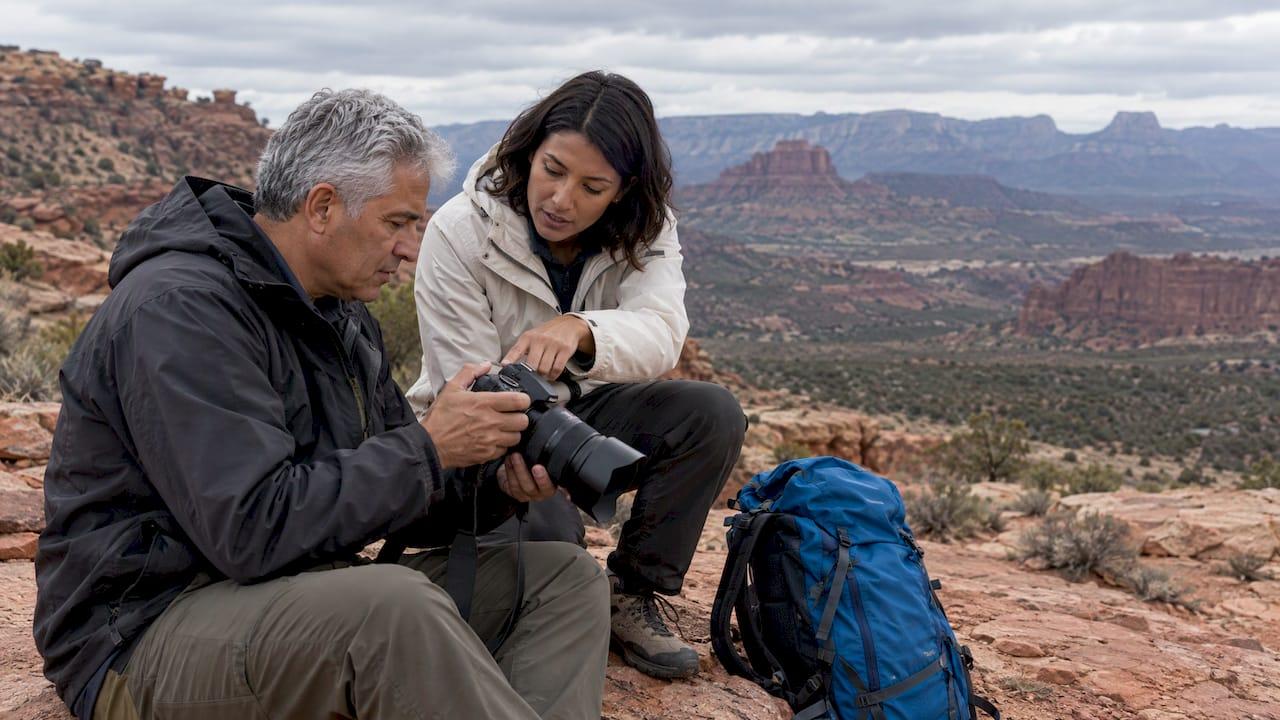
Photography workshop levels describe the skills you should bring and the skills you will build. Beginner workshops assume little or no knowledge of your camera. Intermediate workshops assume you can control exposure yourself. Advanced workshops assume you already shoot confidently and want to refine technique, vision and finish. The labels are not standardized, so every provider draws the lines a little differently. This guide explains what each level usually means, how to judge your own, and how to choose well before you book.
TL;DR
- Beginner: you are new to your camera, or you shoot mostly in automatic modes. You learn settings, focus and basic composition.
- Intermediate: you understand how aperture, shutter speed and ISO work together and want to shoot with intent, in varied light.
- Advanced: you control exposure instinctively and want specialist technique, planning, editing and a personal style.
- Choosing: judge yourself on what you can do, not how long you have owned a camera, and read each workshop's level description closely.
- Not sure? Ask the organizer. A good small-group workshop will happily tell you where you fit.
Table of Contents
- What workshop levels actually mean
- Beginner workshops
- Intermediate workshops
- Advanced workshops
- The three levels side by side
- How to work out your own level
- What to check before you enrol
- Matching a workshop format to your level
- Moving up a level
- Our perspective on workshop levels
- Learn with Mark Gray and his team
- FAQ
- Sources
What workshop levels actually mean
Most providers sort their workshops into three tiers, though the names differ. Some use plain labels such as beginner, intermediate and advanced. Others use themed names for each tier, such as exploration, excursion and expedition. The idea is the same: a ladder from "I want to understand my camera" to "I want to perfect a specialist craft".
The tiers tend to follow a pattern. Training providers that publish formal ability grades describe beginner courses as needing no prior knowledge, and suitable for people who mostly use automatic modes. Intermediate courses expect a firm grasp of how ISO, aperture and shutter speed interact, and comfort with semi-automatic modes such as aperture priority and shutter priority. Advanced courses assume a solid grasp of the exposure triangle and concentrate on camera set-up for particular techniques and specialist areas.

In practice, that means the real dividing line between levels is control. At beginner level you are learning what the dials do. At intermediate level you choose settings deliberately. At advanced level you choose settings, light, location and timing as part of a single creative plan.
Beginner workshops
Who they suit
Beginner workshops suit anyone who has recently bought a camera, anyone who has owned one for years but never left automatic mode, and anyone who wants a structured start rather than piecing it together from videos. You do not need an expensive camera. A basic DSLR or mirrorless camera that lets you change settings is enough, and our guide to DSLR cameras for beginners explains what to look for.
What you typically learn
Expect the foundations:
- How your camera works and what its main controls do
- Manual settings and the basics of exposure
- Aperture, shutter speed and ISO, one at a time
- Focus and depth of field
- Basic composition, such as framing, leading lines and the rule of thirds
The best beginner sessions are practical. You spend most of the time shooting, not watching slides, so the settings stop being abstract.
What to expect in the field
Pace is gentle and group sizes matter. In a small group, an instructor can look over your shoulder, correct a setting in seconds and explain why your image is too bright or soft. You leave with a repeatable routine: check your light, choose your aperture, set your focus, then compose.
If you want a head start, our photography course checklist for beginners covers what to bring and prepare.
Intermediate workshops
Who they suit
You are probably intermediate if you shoot in manual, aperture priority or shutter priority without thinking twice, and your images are technically sound but feel less striking than the scenes you saw. Intermediate is the level people most often underestimate and the one searchers ask about most: the gap between knowing the settings and using them with purpose.
Skills expected on arrival
Providers that publish clear prerequisites for this tier generally ask for the following:
- A firm grasp of how ISO, aperture and shutter speed interact
- Comfort with semi-automatic modes in different light levels
- An understanding of correct exposure combinations, handheld and on a tripod
- An understanding of how focal length changes an image
If you can explain why you would choose f/11 over f/2.8 for a sweeping view, or why a tripod lets you drop the shutter speed, you meet the bar.
What you typically learn
Intermediate content moves from "how" to "why". Typical topics include the exposure triangle in demanding conditions, photographing with intent, advanced composition, creative use of light, working across genres such as landscape, portrait and street, and editing and post-production. Our article on the role of post processing in landscape photography shows why editing becomes part of the workflow at this stage, and why shoot RAW for landscapes explains the file format that gives you room to edit.
What to expect in the field
Fieldwork gets more demanding. You will shoot at dawn or dusk, in changing weather, with filters or a tripod, and you will be asked to make decisions rather than follow instructions. Feedback becomes more personal: your instructor may critique your framing, not just your exposure.
Advanced workshops
Who they suit
Advanced workshops suit photographers who already produce consistent, technically accurate work and want to push into a personal style, a specialist area, or professional output. If you are selling prints, entering competitions or building a portfolio, this is your tier.
What you typically learn
Advanced programs vary more between providers than any other level, because they are specialist. Topics can include advanced landscape capture and editing, planning shoots with mood boards, printing, exhibiting, entering competitions and specialist disciplines such as aerial or underwater work. Camera set-up for specific techniques, such as panoramic stitching, long exposure or focus stacking, is another common theme. Our overview of types of landscape photography techniques shows how wide that territory is.

What to expect in the field
At this level, location and light matter as much as instruction. Advanced photographers often get more from time at a well-chosen destination than from a classroom lesson, which is why multi-day tours are a natural fit. You work with fewer prompts, more critique and the expectation that you will arrive with your own gear and your own ideas.
The three levels side by side
| Beginner | Intermediate | Advanced | |
|---|---|---|---|
| Starting point | Little or no knowledge, often automatic modes | Confident with the exposure triangle and semi-automatic modes | Controls exposure instinctively |
| Main focus | Camera controls, focus, basic composition | Shooting with intent, light, advanced composition, editing | Specialist technique, planning, finishing, personal style |
| Instruction style | Step by step | Guided decisions and critique | Mentoring and refinement |
| Fieldwork | Short, close to base | Varied light and conditions | Demanding locations, early starts, longer days |
| Best format | One-day course | One-day course or short tour | Multi-day tour or private coaching |
How to work out your own level
The most useful self-test is practical. Take your camera outside and try the following without looking anything up.
- Switch to manual and get a correct exposure on a scene in under a minute.
- Explain what happens to your image if you widen the aperture by two stops.
- Choose a shutter speed to blur moving water, and then one to freeze it.
- Decide, before pressing the shutter, where your focus point should be and why.
- Name two composition choices you made on purpose in your last ten photos.
If you struggled with steps one to three, start at beginner level. If steps one to four feel easy but five is harder, you are in intermediate territory. If you completed all five with confidence and want to refine your signature, look at advanced.
Two cautions. First, years of ownership do not equal skill. A photographer who has shot on auto for a decade is still a beginner in the way workshops count. Second, being a strong technician does not mean you are advanced. Some excellent technical shooters join intermediate workshops precisely to work on creative vision, and they come away with the most.
It is also fine to be between levels. If you are unsure, choose the lower level and expect to be challenged, rather than the higher level and spend the day catching up. Some providers send a short pre-course video to fill gaps in knowledge so everyone starts from a similar point, which is worth asking about.
What to check before you enrol
A level label is only a headline. Before you book anything, read the detail. An Australian consumer fact sheet on choosing a training provider recommends asking about the total cost including additional fees, the refund policy, the duration of the course, and how many hours of learning are expected outside the formal sessions. It also suggests asking whether a course leads to a recognized qualification. Most recreational photography workshops are not accredited courses, so confirm what you are actually buying.
For a photography workshop in particular, ask:
- What does the level description say you should already know? Look for specific skills rather than vague words.
- How big is the group? Smaller groups mean more individual feedback, which matters at every level.
- How long is the session? A full day lets you shoot in more than one kind of light.
- What is included? Transport, accommodation, meals and editing time all change the real cost.
- What do you need to bring? Camera, tripod, filters, spare batteries. Our landscape photography gear essentials list is a good starting point.
- What is the refund or rescheduling policy? Weather can move a shoot, so know the rules in advance.
Matching a workshop format to your level
Format matters as much as level. A one-day course is a focused way to lift one skill. A multi-day tour gives you repeated practice, which is where habits form. Private lessons let an instructor build the day around your exact gaps.
Our article on how photography courses improve skills fast explains why guided practice beats solo trial and error, and skills learned in landscape photography courses lists what you can expect to take home. If you are weighing a more in-depth program, why attend a photography masterclass covers that route.
Moving up a level
Progress is rarely a straight line. A sensible path looks like this:
- Beginner to intermediate: shoot weekly in manual or semi-automatic modes until exposure choices feel automatic. Review each outing and ask what you would change.
- Intermediate to advanced: pick one discipline, such as landscape, and go deep. Build a small portfolio, learn to edit RAW files carefully, and test your composition against a checklist such as our landscape composition checklist.
- Keep a learning loop: after every workshop, apply one new idea for a month before adding another.
A workshop works best when it follows a period of practice. Take it, practise, and return when you have new questions.
Our perspective on workshop levels
Levels exist to protect your experience. If a group is pitched too high, you feel lost; too low, you feel held back. The goal is a day where every person is stretched a little and nobody is left behind.
That is why we keep workshops to small groups, led by me and my team of professional photography instructors. With few people in the field, we can adjust to where each photographer actually is, and we can talk about your settings, your light and your composition rather than reading from a script.
My own landscape work is made with panoramic medium format film and digital cameras, and the detail in a print starts with decisions made at the camera: where to stand, when to wait, how to expose. Those are skills anyone can learn, and learning them in beautiful locations, with comfortable luxury arrangements, makes the experience something to remember as well as something to use.
Whatever your level, tell us where you are and what you want to achieve. We will point you towards the format that suits you best.
Mark
Learn with Mark Gray and his team
If you are ready to put your level to work, we run 1 day photography courses across Australia, and multi-day photography tours in Australia and around the world. If you prefer personal attention, private lessons can be shaped around your own skills and goals. Current dates, locations and pricing are on each page.
Know someone who would love to learn? Our gift certificates start from 50 AUD.
FAQ
What is the difference between beginner and advanced photo workshops?
Beginner workshops assume little or no prior knowledge and teach camera controls, exposure basics, focus and simple composition. Advanced workshops assume you already control exposure confidently and focus on specialist technique, planning, editing and personal style. The difference shows up in prerequisites, how much instruction you get versus how much you decide yourself, and how demanding the fieldwork is.
What should I know before joining an intermediate photography workshop?
You should understand how ISO, aperture and shutter speed work together, and feel comfortable using semi-automatic modes in different light. You should also know how focal length changes an image and how to set exposure for handheld and tripod shooting. If you can do those things without a reference sheet, you are ready.
Can I join a higher-level workshop if I am a quick learner?
Yes, if you can already meet the stated prerequisites, because those describe skills rather than time served. If you are close but not certain, talk to the organizer first. Choosing the level where you will be stretched but not lost usually gives the best result.
How do I know if a workshop level description is reliable?
Look for specific skills and topics rather than general words such as "some experience". A clear description lists what you should be able to do and what you will cover. If anything is unclear, ask the organizer how they pitch the day and how big the group is.